
Coffee Explained: A Friendly Guide to Beans, Brewing, and Flavor
You walk into a café or your kitchen and face more choices than you expected. Ethan Cole from Webrewcoffee.com breaks down what matters most so you can pick or make a cup that fits your taste and time. Coffee is simply roasted seeds brewed in many ways, and knowing the core differences — beans, roast, and brew method — lets you choose a better cup every time.
This guide explains what coffee is, how brewing changes flavor, common drinks you’ll see on a menu, and simple tips to improve your home brew. Expect clear, practical help on beans, grinders, brew times, and easy recipes that make a real difference.
Key Takeaways
- Know the basics: beans, roast, and grind shape flavor.
- Brewing method changes taste more than fancy equipment.
- Small technique changes give much better home coffee.
What Is Coffee?
Coffee is a drink made from roasted seeds called coffee beans. It comes from evergreen shrubs and trees, and people brew it hot or cold for flavor and caffeine.
The Origins of Coffee
Coffee likely began in the highlands of Ethiopia, where wild coffee plants grew and locals chewed the berries for energy. The plant then spread to Yemen by the 15th century, where Sufi monks brewed it to stay awake during night prayers. Trade routes carried beans and knowledge across the Arabian Peninsula into Europe and Asia.
By the 17th century, coffeehouses appeared in cities like Istanbul, Venice, and London. Those coffeehouses became places for business, news, and conversation. Over time, colonial powers planted coffee across tropical regions, which shaped global demand and farming practices.
Coffee Plant Varieties
Two main species dominate coffee production: Coffea arabica and Coffea canephora (commonly called Robusta). Arabica beans make up about 60–70% of world production. They usually have milder acidity and more complex flavors. Robusta yields more caffeine and higher bitter notes, and it resists disease better.
Within these species are many varietals like Bourbon, Caturra, SL28, and Gesha. Varietals influence cup flavors, yield, and disease resistance. Farmers choose varietals based on climate, altitude, and market demand. Processing and roasting also shape the final taste.
Major Coffee-Producing Regions
Coffee grows best between the Tropics of Cancer and Capricorn, at various altitudes. Major producers include Brazil, Vietnam, Colombia, Ethiopia, and Indonesia. Brazil leads in volume, supplying both Arabica and Robusta. Vietnam focuses heavily on Robusta exports.
Region affects flavor. Ethiopian coffees often show floral and fruity notes. Colombian beans tend toward balanced acidity and nutty or caramel flavors. Indonesian coffees like Sumatra offer earthy and spicy profiles. Altitude, soil type, and processing methods all shape the bean’s character. Farmers, weather, and global markets influence what appears in a cup.
How Coffee Is Made
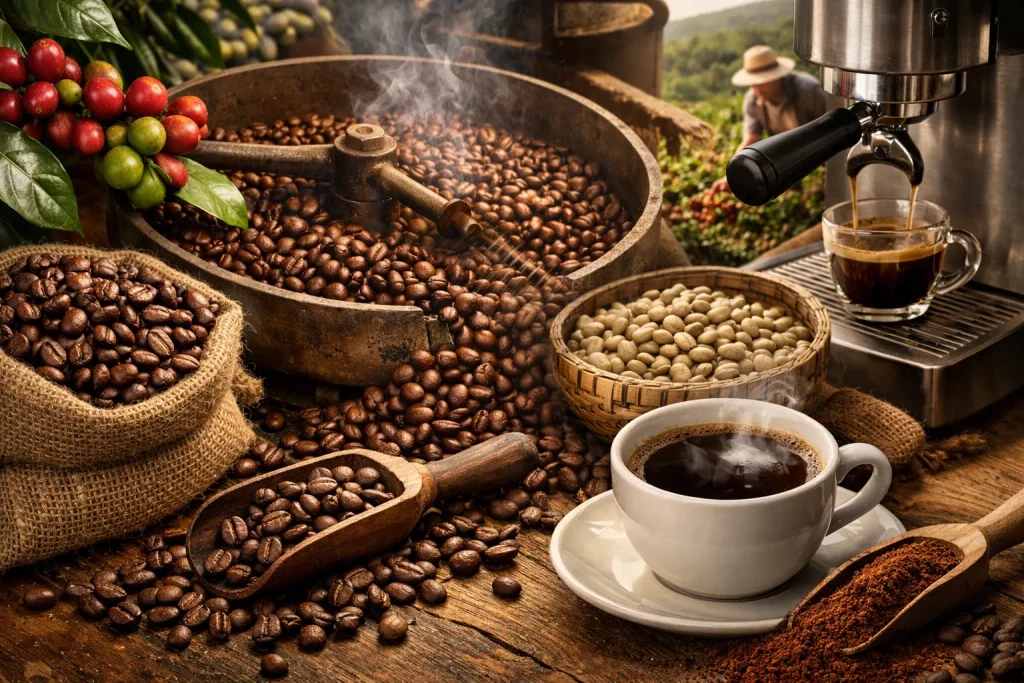
Coffee starts as a fruit on high-altitude trees, then moves through sorting, drying, roasting, and grinding before brewing. Each step changes flavor, acidity, and aroma in clear, measurable ways.
Harvesting and Processing
Workers pick ripe red cherries by hand or machine. Hand-picking allows selection of only ripe cherries, which improves quality. Mechanical harvesting is faster but mixes ripe and unripe fruit, so producers often sort later.
After picking, producers choose a processing method: washed, natural, or honey. Washed processing removes fruit flesh with water and yields cleaner, brighter flavors. Natural processing dries whole cherries and gives fruitier, sometimes heavier body. Honey processing removes skin but leaves some mucilage, creating a balance between clean and fruity notes.
Drying happens on patios or raised beds until moisture reaches about 10–12%. Many farms use solar dryers or mechanical driers to speed the process and avoid mold. Then mills remove the parchment layer, grade beans by size and density, and often perform cup tasting for quality control.
Roasting Methods
Roasting turns green beans brown and creates flavor through Maillard reactions and caramelization. Small-batch roasters use drum or air roasters. Drum roasters tumble beans over indirect heat for deeper, even roast. Air roasters use hot air for a cleaner, brighter roast.
Roast level matters: light roasts keep origin flavors like floral or citrus notes. Medium roasts balance acidity and body. Dark roasts push toward chocolatey, smoky flavors and reduce perceived acidity. Roasters monitor bean temperature and color, and listen for the “first crack” and “second crack” to time roast finish.
Many roasters log roast profiles (time vs. temperature) to reproduce results. Specialty roasters adjust airflow, roast curve, and drop temperature to highlight desired tasting notes. Equipment, batch size, and cooling method all affect the final cup.
Grinding Techniques
Grinding changes extraction speed by altering particle size. Burr grinders produce consistent particle sizes; blade grinders cut unevenly and can overheat beans. Consistency matters most for even extraction.
Match grind size to brew method:
- Extra coarse: cold brew (very slow extraction).
- Coarse: French press.
- Medium: drip coffee makers and pour-over.
- Fine: espresso.
- Extra fine: Turkish coffee.
Grind fresh within minutes of brewing to preserve volatile oils and aroma. For espresso, adjust dose and grind in 0.1 mm steps to fine-tune shot time and crema. For immersion methods, a slightly coarser grind helps avoid over-extraction and bitterness.
Useful resources: see the Specialty Coffee Association’s brewing guidelines for technique details and the USDA for processing standards.
Types of Coffee Drinks
This section breaks down common coffee drinks by how they are made and served. It shows what to expect in flavor, strength, and typical milk or water ratios.
Espresso-Based Coffees
Espresso is a small, strong shot of coffee brewed under pressure. It forms the base for many drinks and changes flavor quickly when milk or water is added.
- Espresso (single/double): Intense, concentrated, about 1–2 oz for a single shot.
- Americano: Espresso diluted with hot water. It keeps espresso flavor but feels like regular coffee.
- Latte: One or two shots of espresso with steamed milk and a small layer of foam. Smooth and milky.
- Cappuccino: Equal parts espresso, steamed milk, and foam. Lighter than a latte and more textured.
- Macchiato: Espresso “stained” with a dollop of milk or foam. Stronger than a latte or cappuccino.
- Flat White: Similar to a latte but smaller with less foam and a velvety microfoam texture.
They vary mainly by the espresso-to-milk ratio and milk texture. Baristas control strength with shot count and grind size.
Brewed Coffee Styles
Brewed coffee covers methods that use hot water passing through grounds without pressure. Each method yields different clarity, mouthfeel, and strength.
- Drip/Pour-over: Water poured over a filter. Clean, bright cup that highlights origin flavors.
- French Press: Immersion brewing with a metal filter. Fuller body and more oils in the cup.
- Percolator/Boiled: Older method that can taste bitter if over-extracted. Not common in specialty shops.
- Siphon: Visual and precise. Produces a clean cup with vivid aromatics.
- Moka Pot: Stove-top espresso-like brew. Strong and rich but not true espresso.
Grind size and brew time matter most here. Finer grind and longer contact time make stronger, sometimes bitter coffee. Coarser grind and shorter time yield milder flavors.
Cold Coffee Varieties
Cold coffee includes drinks brewed hot then chilled, and those brewed cold. Temperature and extraction change sweetness and acidity.
- Iced Coffee: Hot-brewed and cooled over ice. Quick, familiar, and clear-tasting.
- Cold Brew: Coarse grounds steeped in cold water for 12–24 hours. Smooth, lower acidity, often sweeter.
- Nitro Cold Brew: Cold brew infused with nitrogen. Creamy texture and foamy head without milk.
- Iced Latte/Cold Latte: Espresso poured over cold milk and ice. Milk softens espresso bite.
- Affogato (served cold-warm): Shot of hot espresso poured over ice cream. Dessert-style treat.
Cold brewing reduces acidity and highlights sugar and chocolate notes. Dilution from melting ice affects flavor, so some cafes use chilled concentrate.
Specialty Coffee Creations
Specialty drinks combine flavors, brewing techniques, or seasonal ingredients to create unique profiles. They range from simple flavor additions to complex recipes.
- Flavored Lattes: Syrups like vanilla, caramel, or hazelnut mixed with espresso and milk. Predictable sweetness.
- Flat White Variants: Uses alternative milks (oat, almond) that change texture and sweetness.
- Signature House Drinks: Shops may add spices, citrus, or unique syrups to craft a signature cup.
- Single-Origin Showcase: Brewed to highlight one farm or lot, often as pour-over or espresso, to show unique notes.
- Dessert Coffees: Mocha, café con panna, and others that add chocolate, cream, or whipped toppings.
Baristas balance sugar, milk, and espresso to avoid masking the coffee. Single-origin and seasonal choices often cost more but highlight specific flavors.
Coffee Brewing Methods
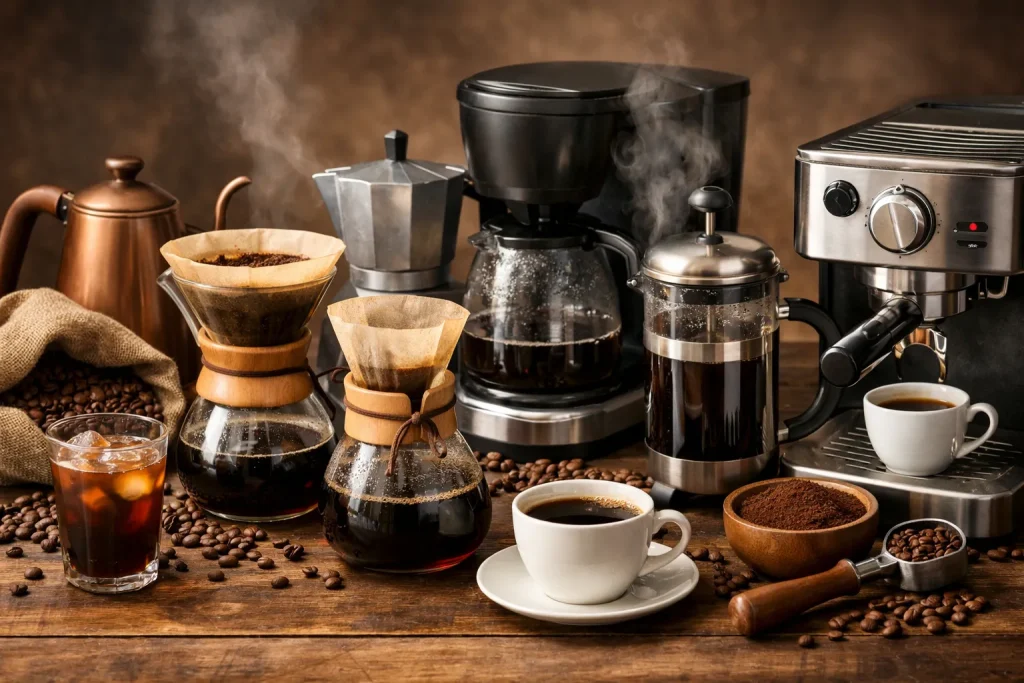
Different brewing methods change the cup’s body, clarity, and strength by altering grind size, water temperature, and contact time. Each method below shows the key steps, the grind to use, and what the drink will taste like.
Pour Over
Pour over uses a cone or dripper and a paper or cloth filter to produce a clear, bright cup. Use a medium-fine grind (similar to table salt). Heat water to 195–205°F (90–96°C), wet the grounds with a short bloom of 30–45 seconds, then pour slowly in concentric circles over 2.5–4 minutes depending on dose.
This method highlights acidity and single-origin flavors. It reduces oils and sediment thanks to the paper filter, making the cup cleaner than immersion methods. For gear, a gooseneck kettle or a scale helps control pour rate and yield consistent results. For a trusted resource on technique and ratios, see the Specialty Coffee Association’s brewing guidelines.
French Press
French press is an immersion method that yields a full-bodied, heavier cup with more oils and mouthfeel. Use a coarse grind (like sea salt). Add grounds to the carafe, pour water just off boil (about 200°F / 93°C), stir gently, and steep for 4 minutes before pressing the metal mesh plunger slowly.
Because the mesh filter allows oils and fine particles through, the coffee is richer and can taste bolder. It works well for darker roasts and blends that benefit from full extraction. For cleaner results, let fines settle for a minute after pressing, and decant into another vessel to avoid over-extraction.
Moka Pot
A Moka pot brews by forcing steam pressure through finely ground coffee to make a strong, espresso-like brew. Use a fine grind slightly coarser than espresso. Fill the lower chamber with water just below the safety valve, add grounds to the basket without tamping, and heat on medium-low. The brew takes 3–5 minutes and stops when you hear a hissing sound.
Moka pot coffee is intense, slightly bitter, and concentrated—good for milk drinks or a bold black cup. Avoid overheating or boiling, which causes burnt flavors. For step-by-step safety and care tips, consult manufacturer guides from brands like Bialetti.
Factors Affecting Coffee Flavor
Flavor comes from where beans grow, how they are roasted, and the water and ratios used to brew. Each stage changes acidity, sweetness, body, and aroma in clear ways the drinker can notice.
Bean Origin and Variety
Bean origin means the country, altitude, and farm conditions. Beans from Ethiopia often show floral and berry notes. Beans from Brazil tend to be chocolatey and nutty. Higher altitudes usually yield brighter acidity and more complex fruit or floral flavors.
Variety refers to the coffee plant type, like Arabica vs. Robusta or specific cultivars such as Typica or SL28. Arabica varieties usually offer more nuanced flavor and acidity. Robusta gives stronger bitterness and more crema but less complexity.
Processing method also ties to origin. Washed processing emphasizes acidity and clean fruit notes. Natural (dry) processed beans often taste sweeter and fruitier. Honey processing falls between the two, adding body and mild sweetness. Together, origin, variety, and processing shape the bean’s base flavor before roasting.
Roast Level
Roast level describes how long and hot beans are heated. Light roasts keep more of the bean’s origin traits: bright acidity, floral or fruity notes, and lighter body. Medium roasts balance origin flavors with caramel and toasty sugar notes.
Dark roasts reduce acidity and highlight roast flavors: chocolate, smoke, and sometimes bitter or burnt notes. They also decrease perceived complexity tied to origin. Roast development matters too: slower roast profiles can bring out sweeter, more even flavors while fast, hot roasts may produce sharper bitter edges.
Roasters tweak time and temperature to hit target flavors. Small changes in roast curve—first crack timing, end temperature—move a cup from clean and bright to deep and roasty. Drinkers should pick roast based on whether they want origin clarity or roast-driven taste.
Brew Ratio and Temperature
Brew ratio means how much coffee to water. A common starting point is 1:16 (1 gram coffee to 16 grams water). Stronger espresso-style drinks use much lower ratios, while lighter filter brews use higher ratios. Ratio affects concentration, perceived strength, and balance of sweetness versus bitterness.
Temperature controls extraction speed. For most filter and pour-over methods, 90–96°C (195–205°F) extracts desirable acids and sugars. Lower temperatures favor delicate, floral notes but risk under-extraction and sourness. Higher temperatures extract more bitterness and body but can overcook delicate flavors.
Brewing time and grind size work with ratio and temperature. Coarser grinds and longer contact times suit immersion methods like French press. Finer grinds and shorter contact times suit espresso. Adjusting these three variables—ratio, temperature, and grind—lets the brewer shape clarity, body, and strength in the cup.
Health and Coffee
Coffee delivers caffeine, antioxidants, and small amounts of vitamins and minerals. It can boost alertness and may lower risk for some diseases, but effects depend on dose, timing, and the person’s health.
Caffeine Content
Caffeine amounts vary widely by brew and serving size. A typical 8-ounce (240 mL) cup of brewed coffee has about 80–100 mg of caffeine. Espresso shots (1–1.5 oz) usually hold 60–80 mg per shot. Instant coffee often contains 30–90 mg per cup, while decaf is not caffeine-free and generally has 2–7 mg per cup.
Factors that change caffeine level:
- Bean type (Robusta has more than Arabica).
- Roast and grind (lighter roasts keep slightly more caffeine).
- Brewing method (French press and drip often extract more than pour-over; cold brew can be stronger per ounce). People metabolize caffeine differently due to genetics, age, and medications, so effects like jitteriness or sleep disruption can vary.
Potential Health Benefits
Many studies link regular coffee drinking with lower risk of certain conditions. Observational research shows lower rates of type 2 diabetes, Parkinson’s disease, and some liver conditions among moderate coffee drinkers. Coffee is also a major source of antioxidants like chlorogenic acids, which can reduce oxidative stress.
Benefits depend on pattern and amount. Moderate intake—commonly defined as 3–4 cups per day—associates with lower all-cause mortality in several large studies. Some improvements in mood, concentration, and exercise performance occur shortly after drinking. These benefits do not mean coffee prevents disease for everyone, and most evidence comes from population studies rather than randomized trials.
Considerations for Consumption
Not everyone should aim for the same intake. Pregnant people are usually advised to limit caffeine to about 200 mg/day. People with certain heart rhythm issues, severe anxiety, or insomnia may need lower amounts or no caffeine. Medications like some antidepressants and antibiotics can change caffeine breakdown and increase effects.
Added sugar, cream, and flavored syrups raise calories and reduce health benefits. Late-day coffee can disturb sleep; stop caffeine 6–8 hours before bedtime if sleep problems occur. If someone experiences palpitations, severe jitters, or digestive upset, they should reduce intake or try decaf.
Coffee Culture Around the World
Coffee marks daily life, social habits, and special ceremonies in many places. People drink it to wake up, to connect, and to honor tradition.
Traditional Serving Styles
Different countries serve coffee in distinct ways that shape taste and speed of service. Italy centers on short, strong espresso shots served standing at the bar. Spain and parts of Latin America favor café con leche—equal parts espresso and hot milk—served in a cup for a leisurely morning.
Turkey and Greece use finely ground coffee brewed in a cezve/ibrik and poured unfiltered into small cups, often with grounds settling at the bottom. Scandinavian countries prefer drip or filter coffee, usually light-roasted and served in larger mugs for long, social drinking.
Table: Common serving styles
- Italy: Espresso, small cup, quick standing drink
- Turkey/Greece: Unfiltered cezve/ibrik, small cups, grounds settle
- Spain/Latin America: Café con leche, larger cup, milk-forward
- Scandinavia: Filter/drip, large mugs, light roast
Coffee Rituals and Customs
Rituals shape how people meet and celebrate around coffee. In Ethiopia, coffee ceremonies can last an hour and include roasting beans, brewing in a jebena, and serving three rounds of coffee to guests as a sign of respect. The ceremony invites conversation and reinforces community bonds.
In many Arab countries, serving cardamom-flavored coffee is a gesture of hospitality; the host pours small cups and may refill them until the guest indicates they are done. In Japan, precise pouring and attention to temperature appear in specialty coffee shops, where slow brewing methods highlight balance and clarity.
Sustainable Coffee Practices
Sustainable coffee blends fair pay and good farming. It aims to protect farms, water, and wildlife while keeping coffee tasty and reliable for buyers.
Ethical Sourcing
Ethical sourcing focuses on fair pay and clear supply chains. Buyers look for certifications like Fairtrade or direct-trade agreements that guarantee farmer prices above local market rates. This helps farmers cover costs, invest in tools, and plan for bad seasons.
Traceability matters. Roasters track farm origin, harvest date, and processing method so buyers can reward responsible farms. Contracts that fix prices or pay premiums for quality reduce income swings for smallholder farmers.
Support often goes beyond money. Training on pest control, soil health, and post-harvest processing improves cup quality and yields. Many programs also fund community projects like schools or clean-water systems tied to coffee revenues.
Environmental Impact
Sustainable farming reduces chemical use and protects ecosystems. Shade-grown coffee preserves tree cover and birds, while organic methods avoid synthetic fertilizers and pesticides that harm soil and rivers.
Soil and water care matter. Practices like composting, cover crops, and contour planting prevent erosion and keep moisture in the ground. Efficient irrigation cuts water use and lowers costs during dry seasons.
Climate resilience gets attention. Farmers plant diverse varieties, move plots to higher altitudes when feasible, and use agroforestry to buffer temperature swings. Buyers often fund climate adaptation projects or pay premiums for beans produced with low-impact methods.
The Future of Coffee
Coffee will keep changing as technology and tastes evolve. Producers will use more precise farming tools like sensors and data to protect crops from heat and pests. This helps keep beans consistent and helps farmers plan for weather shifts.
Shops and brands will offer more ready-to-drink and functional options. Cold brew, nitro, and drinks with added vitamins or adaptogens will appear more often on menus. Consumers will pick drinks that match their health and convenience needs.
Sustainability will shape many choices. Packaging will get lighter and more recyclable. Traceable sourcing and direct trade will grow so buyers can see where beans come from and how workers are paid.
Automation and AI will change production and roasting. Smart roasters and inventory systems will speed up work and reduce waste. Small roasters may still focus on craft, while larger firms scale tech to meet demand.
New niches will grow alongside classic coffee culture. Single-origin and specialty beans will stay popular with enthusiasts. Meanwhile, mass-market products will innovate on flavor, convenience, and price.
- Key trends: sustainability, tech-driven farming, RTD beverages, traceability.
- What to watch: climate impact on yields, new brewing tech, and shifts in consumer health trends.
FAQS
What is coffee?
Coffee is a drink made from roasted coffee beans. It starts as seeds from coffee cherries and moves through roasting, grinding, and brewing.
How much caffeine is in a cup?
Caffeine varies by bean and brew. A typical 8-ounce cup has about 80–120 mg, while espresso shots hold more per ounce but come in smaller servings.
Does coffee go bad?
Ground or brewed coffee loses flavor over days. Whole beans stay fresher longer if kept in an airtight container away from light and heat.
What is the best brewing method?
There is no single best method. Pour-over, French press, espresso, and drip each highlight different flavors. People choose by taste, time, and gear.
Is decaf caffeine-free?
Decaf still has small amounts of caffeine. It is much lower than regular coffee but not zero.
How should coffee be stored?
Store beans in a cool, dark place in an airtight container. Avoid the fridge or freezer for daily beans; those can add moisture and odors.
Can coffee be healthy?
Moderate coffee drinking links to some health benefits for many people. Effects depend on amount, additives like sugar and cream, and individual health conditions.
Quick tips:
- Grind just before brewing for better flavor.
- Use clean equipment to avoid stale tastes.
- Try different beans and methods to find a favorite.
Conclusion
Coffee connects many parts of life, from farm to cup. It reflects climate, care, and craft, and people shape its final taste.
Readers can choose beans, roast, and brew to match their mood. Small changes make a clear difference in flavor and experience.
Enjoying coffee can be simple or curious. It invites learning, sharing, and daily comfort.