
You hold more flavor power than you think. The coffee flavor wheel gives you a simple map to name what you taste, spot good beans, and improve your brewing fast. Use the wheel and you can point to notes like chocolate, citrus, or floral with confidence, so each cup teaches you something new.
Ethan Cole at Webrewcoffee.com often recommends using the wheel while you sip, jotting down one or two clear notes each time. This practice turns guessing into skill and helps you choose beans and methods that match your taste.
Key Takeaways
- The wheel helps you identify and name coffee flavors quickly.
- Practice with a few notes per cup to sharpen your tasting skills.
- The wheel guides better bean and brew choices for your preferences.
What Is the Coffee Flavor Wheel?
The coffee flavor wheel breaks down coffee aromas and tastes into clear categories and specific descriptors. It helps people name what they smell and taste so they can compare notes and improve their skills.
History and Development
The wheel first appeared in the 1990s, created by sensory scientists to give tasters a shared vocabulary. It built on tasting tools used in wine and beer, then adapted for brewed coffee.
Organizations like the Specialty Coffee Association revised the wheel over time. Major updates appeared in 2009 and again in 2016 to reflect new research and wider tasting feedback. These revisions added more precise terms and reorganized categories for clarity.
The wheel became a living tool. Researchers and cuppers use it to test new descriptors, ensuring the list stays relevant as coffee varieties and processing methods evolve. That steady update process keeps the wheel practical for both professionals and hobbyists.
Purpose and Importance
The wheel’s main goal is clear: make coffee tasting consistent and precise. It gives a step-by-step way to move from broad flavor groups to exact notes, like going from “fruit” to “blackberry.”
Cuppers, roasters, and buyers use it to describe beans in a common language. This reduces misunderstandings when buying, selling, or grading coffee. It also helps train new tasters by showing what to look for and how to describe sensations.
For quality control, the wheel supports repeatable assessments. Teams can compare results across sessions. For consumers, the wheel makes tasting notes on packaging more understandable and useful when choosing beans.
How to Read the Coffee Flavor Wheel
Start at the center and work outward. The center shows broad categories such as “fruit,” “floral,” or “spice.” Move to the next ring for sub-categories, then to the outer ring for specific descriptors like “lemon,” “jasmine,” or “cinnamon.”
Use a cup of brewed coffee while consulting the wheel. Smell first, then sip and notice taste, acidity, body, and aftertaste. Pinpoint the general category, then narrow it down to a precise term.
Tip: keep a tasting sheet or checklist. Note one or two dominant descriptors rather than listing everything. This keeps notes focused and makes comparisons easier across different coffees.
Core Flavor Categories
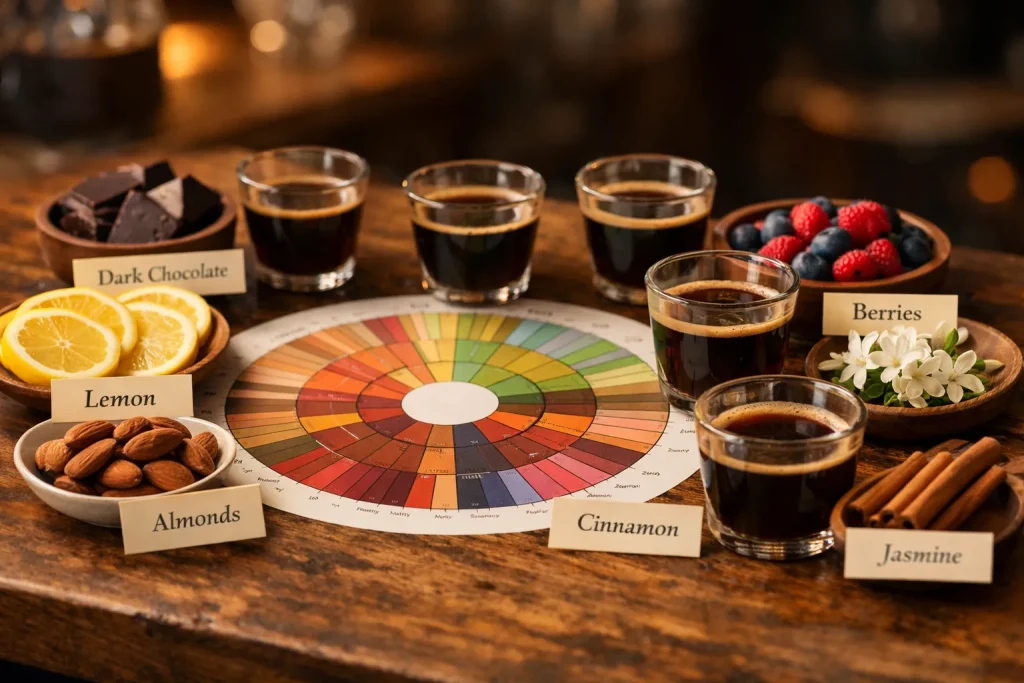
The coffee flavor wheel groups wide scent and taste types, then breaks them into specific notes and fine distinctions. Readers will see broad families like fruity or floral, linked sub-flavors such as citrus or jasmine, and ways to read layered complexity in a single cup.
Main Flavor Families
The wheel starts with broad families at its center: fruity, floral, sweet, nutty, spicy,* and roasted/earthy.
Each family signals a cluster of related sensations. For example, “fruity” can mean berry, citrus, or stone fruit, while “roasted” covers caramel, chocolate, and smoky notes.
Use these families to name a coffee’s main character quickly. Tasters often begin by picking one or two families that dominate a sample.
The Specialty Coffee Association and World Coffee Research helped standardize these families; more detail on their work appears on the SCA site.
Sub-Flavors and Nuances
Moving outward on the wheel reveals sub-flavors like lemon, blackberry, jasmine, honey, and clove.
These finer descriptors let tasters name precise impressions. For instance, “berry” breaks into raspberry, blueberry, and blackberry.
Sub-flavors guide roast and origin decisions. A light roast highlights floral and citrus notes, while darker roasts emphasize caramel and toasted flavors.
Tasters often list 3–5 sub-flavors per cup to capture aroma, taste, and aftertaste. This practice builds a clear tasting record.
Understanding Complexity
Complexity arises when multiple families and sub-flavors interact.
A coffee might show fruity acidity, floral aroma, and chocolate body all at once.
To read complexity, note where flavors appear: aroma, first sip, mid-palate, and finish.
Also watch balance—whether acidity, sweetness, and bitterness support each other. World Coffee Research’s sensory lexicon explains methods to score these attributes and refine vocabulary; readers can consult it for technical terms at World Coffee Research.
Using the Coffee Flavor Wheel for Tasting
The flavor wheel helps the taster move from broad categories to specific notes, use a repeatable tasting routine, and compare coffees side-by-side. It also supports targeted palate training and clear, consistent tasting notes.
Step-by-Step Tasting Process
Begin with a dry sniff of the ground coffee to catch initial aromas like floral, fruity, or nutty. Record one or two dominant smells; don’t force more than you notice.
Brew a consistent cup—use the same ratio, grind, and water temperature for every sample. Sip with short, sharp breaths (the “slurp”) to spread coffee across the tongue and bring aroma into the nasal passage.
Use the wheel: start at broad groups (Fruit, Floral, Sweet, Nutty) then move outward to specific descriptors (e.g., “blackberry,” “jasmine,” “brown sugar,” “almond”). Note acidity, body, and aftertaste alongside flavor terms.
Write a short tasting note with three parts: top aroma, mid-palate flavor, and finish. Keep measurements consistent so later comparisons are meaningful.
Training Your Palate
Practice with single-note samples like lemon, dark chocolate, or honey to learn basic references. Smell and taste each sample daily for a week to build memory.
Work through the flavor wheel a few categories at a time. For example, spend two tastings focused on “Fruity” notes, then two on “Spice” notes. Use a flavor kit or common foods to match wheel terms.
Attend cuppings or follow guided exercises from the Specialty Coffee Association to see how professionals describe the same coffee. The SCA and World Coffee Research offer resources to expand vocabulary and calibration.
Keep a log of repeated tastings. Over time, the taster will notice consistent cues and reduce guesswork.
Comparing Flavor Profiles
Taste coffees side-by-side using identical brewing and serving conditions. Place them in neutral cups and label them A, B, C to avoid bias.
Compare broad categories first: which is more acidic, sweeter, or spicier? Then use the wheel to pinpoint differences—maybe A shows “citrus — orange” while B leans “dried fruit — raisin.” Record those exact wheel terms.
Use a simple table to capture contrasts:
| Attribute | Coffee A | Coffee B |
|---|---|---|
| Acidity | Bright, lemon | Mild, apple |
| Body | Light | Medium |
| Key flavors | Orange, floral | Raisin, caramel |
Discuss patterns across roast levels, origins, or processing methods to draw practical conclusions. This makes selection and blending decisions clearer for roasters, baristas, and home brewers alike.
Applications in Coffee Industry
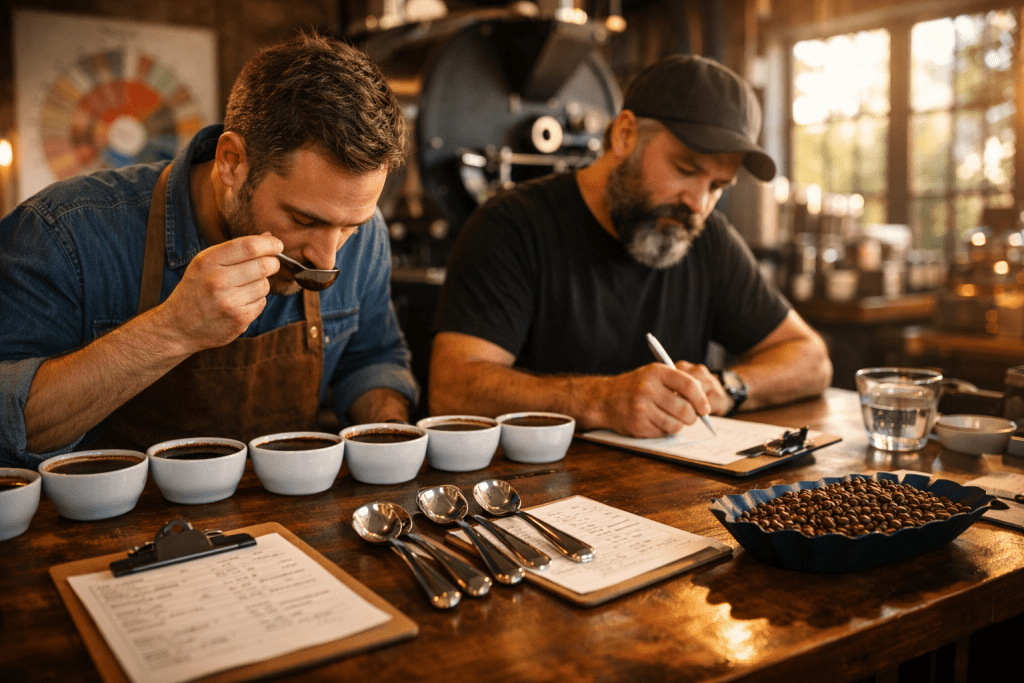
The flavor wheel guides tasting, product checks, and training with clear labels and shared language. It helps teams describe specific aromas, track roast changes, and teach consistent tasting methods.
Baristas and Roasters
Baristas use the wheel to dial in extraction and describe flavors to customers. They match brew parameters (grind size, dose, water temperature) to target notes like chocolate, citrus, or floral. This helps when adjusting recipes for single-origin coffees or blends.
Roasters read the wheel to assess roast development and post-roast changes. They compare green bean cues to roasted results and note defects such as “rubbery” or “fermented.” Roasters record wheel descriptors after cupping to guide roast curves and blending decisions.
Both baristas and roasters share wheel vocabulary on menus and tasting sheets. This creates clearer customer communication and faster internal feedback during daily quality checks.
Quality Control
Quality teams use the wheel during cuppings to flag consistency and defects. They score samples against expected profiles and list specific off-flavors like “stale” or “earthy.” That makes root-cause analysis faster.
Labs link wheel descriptors to measurable data like moisture, roast level, or brew TDS. They keep records to spot trends across lots, harvests, or equipment changes. This helps prevent recurring quality issues.
Producers and importers also use the wheel during green coffee inspections. It standardizes reports so buyers can compare lots based on clear sensory terms rather than vague descriptions.
Coffee Education
In training, instructors use the wheel to build tasting vocabulary step by step. Trainees start with broad categories (fruity, sweet, bitter) and then learn precise terms like “blackberry” or “brown sugar.” This improves accuracy during cupping.
The wheel supports exercises like blind tastings and flavor matching. Teachers create drills where students identify specific notes and link them to brewing or roasting causes. Visual aids and tasting sheets reinforce learning.
Schools and certification programs adopt the wheel so graduates speak a common language in the trade. That consistency helps new professionals move between cafes, roasteries, and labs without relearning terms.
Popular Coffee Flavor Wheels
These flavor wheels list clear aroma and taste descriptors, group them from broad to specific, and help tasters match what they smell and taste to shared words. They differ by who made them, how detailed they are, and whether they focus on training, quality control, or regional character.
SCA Flavor Wheel
The SCA (Specialty Coffee Association) Flavor Wheel is the industry standard for professional cuppers. It started in 1995 and was updated in 2016 with input from World Coffee Research. The wheel arranges descriptors from main categories like “fruity,” “floral,” and “sweet” down to precise terms such as “blackberry,” “jasmine,” or “brown sugar.”
It helps teams use the same vocabulary in quality checks and competitions. The wheel is hierarchical: users move from general groups to specific notes, which speeds up sensory training and improves consistency across tasters. Many coffee courses and labs use it as the baseline reference.
Counter Culture Coffee Flavor Wheel
Counter Culture Coffee created a version that focuses on practical tasting for roasters and baristas. It trims some scientific terms and highlights everyday descriptors roasters and café staff encounter, like “caramel,” “citrus peel,” and “nutty.” The layout often prioritizes clarity over exhaustive lists.
This wheel works well for training staff and guiding roast profile changes. It links tasting notes directly to roast and origin decisions, making it useful during sample roasting and QC sessions. Some versions include suggested brewing tips tied to specific notes.
Regional Variations
Some wheels adapt descriptors to reflect regional coffee profiles and language. For example, wheels used by producers in East Africa emphasize floral and citrus subcategories, while Latin American-focused wheels may expand chocolate, nut, and citrus descriptors. Local terms or fruit names common in a region sometimes appear to aid farmer and buyer communication.
These variations help exporters and processors describe beans in terms familiar to buyers and cupper teams. They also support farm-level quality programs by aligning tasting words with market expectations, which can improve traceability and pricing discussions.
Tips for Exploring Coffee Flavors
This section gives concrete steps to record what a coffee tastes like and to judge coffee at home. It lists tools, simple methods, and practical checks to sharpen tasting skills.
Keeping Flavor Notes
They should use a small notebook or phone app to log each cup. Write the coffee name, roast date, brew method, dose, water temperature, and grind setting. These facts help link flavor changes to technique.
For tasting, note aroma, acidity, sweetness, body, and aftertaste. Use short descriptors from the flavor wheel like “lemon,” “black tea,” “caramel,” or “chocolate.” Rank intensity on a 1–5 scale to make comparisons easier.
Keep entries short: one line for the setup, three lines for main flavors, and one line for a score or quick tip. Review notes after several cups to spot patterns. They will learn which beans and methods suit their taste.
Evaluating Coffee at Home
They should taste coffee in a quiet, neutral-smelling room and use a clean cup for each sample. Smell the dry grounds, then the brewed coffee, and finally sip with small, deliberate sips to spread flavor across the tongue.
Use a consistent brew recipe when comparing beans — same dose, grind, water, and time. If trying different roasts, change only one variable at a time to see its effect.
Check for common faults: overly bitter (over-extraction), thin or sour (under-extraction), or stale/flat (old beans). Adjust grind, dose, or brew time and retaste. Track changes in the flavor notes log to learn what adjustments improve the cup.
Evolution of Coffee Flavor Terminology
Coffee tasting language moved from simple, general words to a richer set of precise descriptors tied to specific aromas, origins, and processing methods. This shift helps tasters name tastes like bright citrus, molasses sweetness, or wet-husk fermentation and match them to farming or roasting choices.
Changing Flavor Descriptions
Early coffee descriptions used broad words like “bitter” or “strong.” Today, tasters use terms such as brown sugar, black tea, dried cherry, cocoa nibs, and lemon zest to pinpoint flavors. Those terms link direct sensory notes to bean origin and processing—for example, Ethiopian natural coffees often show berry and floral notes while washed Central American coffees lean toward citrus and clean acidity.
The Specialty Coffee Association and World Coffee Research helped standardize this vocabulary with the Coffee Taster’s Flavor Wheel and a sensory lexicon. That guide groups flavors into categories and subcategories, which makes training and quality control easier. Roasters, buyers, and cup tasters now communicate more clearly about desired profiles and defects.
| Old Terms | Modern Examples | What It Indicates |
|---|---|---|
| Bitter | Dark chocolate, toasted almond | High roast or overextraction |
| Fruity | Berry, stone fruit, citrus zest | Varietal characteristics or natural processing |
| Acidic | Bright lemon, green apple | High elevation, washed processing |
Emerging Trends in Coffee Tasting
Sensory vocabulary now includes fermentation notes, tea-like descriptors, and terroir-linked terms. Tasters describe anaerobic fermentation with notes like fermented apple or funky tropical, and they note subtle floral or savory cues tied to microclimates. This helps buyers choose beans for specific roast and brew styles.
Technology and research also shape the lexicon. The World Coffee Research sensory lexicon mapped hundreds of precise descriptors, which producers use to guide post-harvest decisions. Cupping labs use the wheel and lexicon to train teams, spot defects, and develop flavor maps for lots. As a result, flavor talk has become more data-driven and actionable for growers, roasters, and cafes.
FAQS
What is the coffee flavor wheel used for?
It helps tasters name and organize the smells and tastes in coffee. It moves from broad categories to specific notes so people can describe coffee more clearly.
Who should use the wheel?
Anyone who wants to taste coffee more carefully can use it. Professionals use it for cupping, and home brewers use it to learn what they notice.
How does one read the wheel?
Start at the center for general groups like “fruity” or “nutty.” Move outward to find more precise descriptors such as “berry” or “almond.” This stepwise approach guides clear tasting notes.
Can the wheel improve tasting skills?
Yes. Regular use builds vocabulary and focus. It also helps people compare coffees and spot brewing issues.
Is the wheel a strict rulebook?
No. It’s a tool to guide observation, not a test. Tastes and language vary, so it offers common words to help people talk about coffee together.
Where to find an official version?
The Specialty Coffee Association (SCA) maintains the Coffee Taster’s Flavor Wheel. They and World Coffee Research update it and provide printable versions and guides.
Tips for beginners
- Smell first, then sip.
- Use clean water and fresh grounds.
- Take notes with simple words and grow the vocabulary over time.
Conclusion
The coffee flavor wheel helps people name and share what they taste. It gives a clear map of aromas and flavors, so they can describe coffee with less guesswork.
Using the wheel makes tasting more consistent. It links common words to specific notes, which helps in buying, roasting, and brewing.
They can learn the wheel slowly, starting with broad categories first. Practice and reference will turn small gains into steady skill.
Keep the wheel nearby during tastings. It acts as a simple guide that grows more useful over time.