
How to Taste Coffee: A Friendly Guide to Cupping, Notes, and Brewing
You can learn to taste coffee like a pro by focusing on a few clear steps: notice the smell, take a focused sip, and name the basic flavors you sense. Start by slowing down and using your nose, then pay attention to acidity, sweetness, bitterness, and mouthfeel to pick out specific notes. Ethan Cole from Webrewcoffee.com often says that anyone can sharpen their palate with simple, regular practice.
Keep your setup simple: use a clean cup, neutral water, and try the same brewing method each time so you compare fairly. Practice with small, focused tastings and compare coffees side-by-side to build a mental map of flavors and textures that help you spot what you like.
Key Takeaways
- Smell, sip, and note basic tastes to identify coffee flavors.
- Use a consistent setup and side-by-side comparisons for clearer differences.
- Practice often with simple methods to build a reliable palate.
Understanding the Basics of Coffee Tasting
This section explains what coffee tasting means, why it matters, and the key words tasters use. It focuses on practical details like aroma, acidity, body, and how to describe flavors.
What Is Coffee Tasting
Coffee tasting, often called “cupping,” is a methodical way to sample coffee to notice its traits. Tasters smell the dry grounds, inhale the brewed aroma, then sip to evaluate flavor, acidity, body, and aftertaste.
A proper tasting uses fresh, roast‑date beans ground just before brewing and a neutral water profile. Temperatures, brew ratio, and cup cleanliness matter because they change how flavors show up.
Tasters look for specific notes such as citrus, chocolate, floral, or nutty. They also assess texture—light or heavy mouthfeel—and balance, meaning no single trait overwhelms the cup.
Why Coffee Tasting Matters
Coffee tasting helps buyers, roasters, and drinkers decide what they prefer. A roaster uses tasting to check roast consistency and spot defects like sourness from under‑development or flatness from staleness.
For consumers, tasting sharpens the palate so they can choose beans by origin, processing, or roast level. It also helps troubleshoot home brewing: if coffee tastes thin, they can adjust grind, dose, or water temperature.
Cafes use tasting to design menus and train staff. Clear tasting language makes it easier to match drinks to customers and maintain quality across batches.
Essential Coffee Tasting Terminology
- Aroma: The smell of dry grounds and brewed coffee. Aroma gives early clues about flavor.
- Acidity: A brightness or liveliness on the tongue. Not the same as sour—good acidity adds clarity.
- Body: The weight or mouthfeel of the coffee (light, medium, full).
- Flavor: The combined taste and retronasal aroma perceived while sipping.
- Aftertaste: The flavor that lingers after swallowing.
Other useful terms:
- Balance — when acidity, sweetness, and body work together.
- Sweetness — perceived sugar or fruitlike qualities.
- Clean — absence of off‑flavors or defects.
- Defect — unpleasant notes from poor processing or roast, like moldy or overly fermenty.
Use a simple score sheet to note these items during tasting. Writing short descriptors (e.g., “lemon acidity,” “milk chocolate body”) helps compare coffees objectively.
Preparing for Coffee Tasting
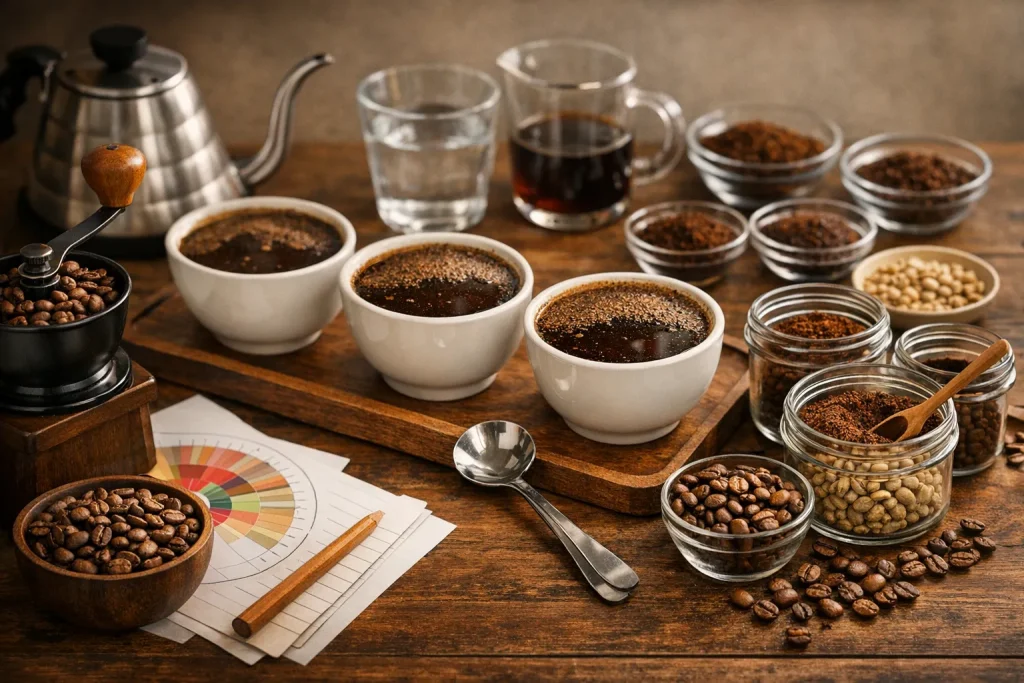
They should pick clean, single-origin beans or a small set of distinct coffees. They need fresh grinding, consistent brewing, and a quiet, odor-free space to focus on aroma and taste.
Choosing the Right Coffee Beans
They should start with fresh-roasted beans from a single origin to reveal clear flavor traits. Choose beans roasted within the past two to three weeks and stored in a sealed, opaque bag with a one-way valve. Avoid flavored or blended beans at first; single-origin light- to medium-roast coffees show acidity, fruit, and floral notes more clearly.
Buy 50–100 grams per coffee for a small tasting. Note the roast date, origin, altitude, and processing method on a label. If comparing 2–4 coffees, pick beans with distinct profiles—e.g., an Ethiopian washed, a Colombian, and a Brazilian natural—to make differences easier to spot.
Grinding and Brewing for Tasting
Grind just before brewing for peak aroma and flavor. Use a burr grinder set to a consistent particle size: medium-coarse for cupping, medium for pour-over, and fine for espresso. Weigh beans (use 10–15 g per 180 ml for pour-over; standard cupping uses 8.25 g per 150 ml) and use a scale to keep ratios exact.
Use filtered water at 93°C (200°F) for most tastings. Brew each coffee with the same method and timing to compare fairly. Rinse filters and preheat equipment to avoid cold spots. Record grind setting, weight, water temperature, brew time, and yield for each coffee.
Setting Up Your Tasting Environment
They should pick a quiet, well-lit room with no strong smells. Remove scented candles, strong foods, and cleaning products that can mask coffee aromas. Sit at a clear table with neutral-colored cups and spoons to avoid visual bias.
Arrange coffees in order from lightest to darkest or most delicate to bold. Provide water and plain crackers to cleanse the palate between sips. Use a simple score sheet with fields for aroma, acidity, sweetness, body, and aftertaste to note observations consistently.
The Coffee Tasting Process
The taster looks for smell, taste, and mouthfeel in a focused way. They note aromas, dominant flavors, and how bright or soft the coffee feels on the tongue.
Evaluating Aroma
Aroma gives the first clues about a coffee’s character. The taster smells the dry grounds, noting primary scents like floral, citrus, or chocolatey. After brewing, they inhale the wet aroma above the cup to catch volatile notes that appear only with heat.
Use short, specific descriptors: “lemon zest,” “baked apple,” or “toasted almond.” Compare intensity on a simple scale—weak, moderate, or strong—to track balance. Smelling between sips helps spot changes as the cup cools.
Professional cuppers often slurp to spray coffee across the palate, but beginners can simply sniff deeply. For more background on aroma categories, see Specialty Coffee Association.
Assessing Flavor
Flavor is the combined impression of taste and aroma in the mouth. The taster identifies the dominant note first, then secondary notes that add complexity—examples include berry, caramel, or green tea.
Pay attention to body (thin to full) and texture (silky, syrupy, coarse). Note sweetness level and any off-flavors like sour, rubbery, or soapy. Use a simple table to record impressions:
- Dominant flavor:
- Secondary notes:
- Body/texture:
- Sweetness level:
- Off-flavors present:
Tasters sample coffee at multiple temperatures to see how flavor shifts as it cools. For standard cupping methods and flavor vocabulary, refer to resources like coffee tasting on Wikipedia.
Identifying Acidity
Acidity describes brightness and liveliness, not sourness alone. The taster decides if acidity is crisp (lemon, green apple), soft (orange, tangerine), or winey (cranberry, grape). Note where acidity sits on the tongue—front for sharp, sides for crisp citrus.
Measure acidity against body and sweetness: high acidity with low sweetness can feel thin, while balanced acidity with sweetness tastes vibrant and clean. Record acidity intensity as low, medium, or high, and list descriptor words like “citrus,” “malic,” or “lactic.”
Acidity changes as the cup cools, so reassess at a cooler temperature to capture the full range.
Analyzing Body and Mouthfeel
This section explains how coffee feels in the mouth, how to tell light from heavy body, and how texture changes during and after sipping. It shows what to listen for in weight, viscosity, and lingering sensations.
Recognizing Body in Coffee
Body means how heavy the coffee feels on the tongue and in the mouth. A light-bodied coffee feels thin and tea-like, while a full-bodied coffee feels thick and syrupy. Heavier body often comes from darker roasts, finer grinds, or brewing methods like espresso and French press.
Taste actively. Take a small sip, hold it, and notice if the liquid coats the tongue or slides away quickly. Compare two brews side by side to hear the difference. For more on body definitions and examples, see the Specialty Coffee Association’s resources at Specialty Coffee Association.
Understanding Texture
Texture covers the surface feel: gritty, silky, oily, or creamy. It connects to body but focuses on tactile details rather than weight. Oils and suspended particles boost creaminess. Clean-filtered methods like pour-over deliver clarity and silk, while immersion methods add viscosity and mouth-coating oils.
Use a spoon to skim the surface and note any film or residue. Swirl a small amount in the mouth to feel edges, then breathe out through the nose to sense any retronasal texture. Record terms like “silky,” “chalky,” or “molasses-like” to track changes across beans or roast levels.
Noting Aftertaste
Aftertaste, or finish, describes flavors and sensations that remain after swallowing. A short finish ends quickly with little residue; a long finish leaves flavors and textures for many seconds. Pay attention to whether the aftertaste keeps the body (still thick) or thins out.
Identify if the finish adds new notes—bitter, sweet, fruity—or if it repeats the sip’s profile. Note mouthfeel changes: does the coffee dry the tongue, leave oiliness, or feel clean? World Coffee Research offers background on how origin and processing influence these lasting qualities at World Coffee Research.
Using the Coffee Tasting Wheel
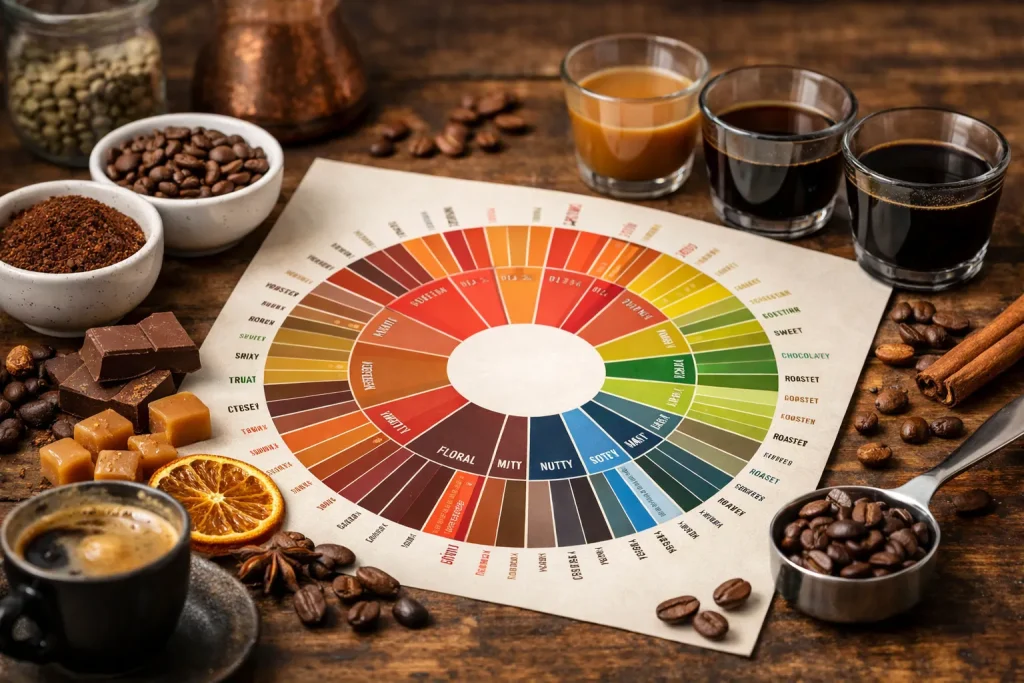
The tasting wheel helps a person move from broad categories to exact notes. It also gives a shared set of words to describe aroma, taste, and texture.
How to Use a Flavor Wheel
They start by smelling the coffee. They note if the aroma is bright, sweet, or savory before sipping.
Next, they take small slurps to coat the tongue and pay attention to acidity, sweetness, bitterness, and body. They compare sensations to the wheel and pick the closest broad category first (fruity, floral, roasted, etc.), then move outward to find specific descriptors like “lemon,” “jasmine,” or “dark chocolate.”
A short checklist helps: 1) Smell, 2) Slurp and note basic tastes, 3) Match to wheel categories, 4) Narrow to specific notes. They write one or two clear descriptors rather than long lists. Using the wheel regularly trains memory and speeds identification.
Common Coffee Flavor Categories
The wheel groups flavors into main families: fruity, floral, nutty/cocoa, roasted, caramel/sweet, spice, and vegetal/earthy. Each family breaks into more precise notes such as berry, citrus, jasmine, almond, dark chocolate, toffee, cinnamon, or green bean.
Fruity often signals bright acidity; floral links to delicate, tea-like aromatics. Roasted and cocoa notes come from darker roasts. Caramel and sweet notes often come from sugar development during roasting and can feel syrupy on the tongue. Earthy or vegetal notes can come from processing or origin. Tasters focus on one strong note plus one or two supporting notes for clear, useful tasting notes.
Developing Your Tasting Skills
This section shows practical steps to sharpen taste and record what matters: compare beans from different places and keep a clear tasting log. Small, regular practice and simple notes speed learning.
Practicing With Different Origins
They should start by tasting single-origin coffees side-by-side. Choose 3–4 beans from distinct regions (for example Ethiopia, Colombia, Sumatra, and Kenya). Brew each the same way — same grind, dose, water temp, and brew time — so differences come from the beans, not the method.
Smell each dry grind, then the brewed cup. Note top aromas, sweetness, acidity, body, and finish. Use a simple checklist: Aroma | Sweetness | Acidity | Body | Aftertaste. Repeat with beans roasted to similar levels to focus on origin flavors rather than roast.
Practice in short sessions, 10–20 minutes, twice a week. They should train with flavor families (citrus, berry, chocolate, nut) by tasting a real sample of each alongside the coffee. That builds links between a real taste and the coffee note.
Keeping a Coffee Tasting Journal
They should use a small notebook or a phone note app dedicated to tastings. Create a template with fields: Date, Bean origin, Roast level, Brew method, Dose/grind, Aroma, Sweetness, Acidity, Body, Aftertaste, and One-line impression. Fill every field after each session.
Add a quick star rating (1–5) and a line for brewing variables that worked or need change. Include photos of the bag or label for reference. Over time, review past entries to spot patterns — which origins they prefer, which brew settings bring out sugars, or which roasts mute acidity.
Keep entries short and consistent. Two sentences of focused notes beat long essays. This habit turns vague impressions into clear, repeatable knowledge.
Coffee Tasting Etiquette and Tips
Tasters should focus on clear, calm behavior and consistent notes. Respect the process, keep scents and flavors neutral, and follow simple rules to make tasting fair and useful for everyone.
Tasting With Others
When people taste together, they keep talking short and specific. Each taster should smell the coffee quietly, sip, and note three things: aroma, acidity, and finish. Sharing one clear sentence like, “Bright lemon acidity, medium body, short clean finish,” helps everyone compare notes fast.
Servers should pour equal amounts into identical cups to avoid bias. Tasters should avoid strong perfumes, minty gum, or spicy foods before the session. A neutral palate reset, like plain water and unsalted crackers, works well between samples.
Use a simple score sheet or table to record results. The table below shows common categories tasters use.
| Category | What to Note |
|---|---|
| Aroma | Smell before sipping: floral, nutty, chocolate |
| Acidity | Perceived brightness: lemon, apple, mild |
| Body | Mouthfeel: thin, medium, heavy |
| Finish | Aftertaste length and quality |
Avoiding Common Mistakes
People often judge coffee on temperature or additives, which hides real flavors. Tasters should sample when coffee is around 140–160°F (60–71°C) and drink it black for true notes. Sugar, milk, and flavors should come later if needed.
Avoid rinsing the cup with hot water only; it can change taste. Grind beans fresh and use consistent brew ratios to prevent misleading results. Also, don’t taste multiple very strong coffees back-to-back; allow at least one neutral sip and a short break after bold or very acidic samples.
Keep notes brief and specific. Vague words like “good” or “bad” don’t help. Instead, write one clear descriptor per category and compare those words across samples.
Pairing Coffee With Food
Pairing coffee with food helps people notice flavors they might miss when drinking alone. They can think about contrast and harmony: contrasting brings balance, while harmony highlights similar notes.
For contrast, pair bright, acidic coffees with rich or oily foods. For example, a citrusy pour-over cuts through buttery pastries and cleanses the palate.
For harmony, match flavor notes. Chocolatey or nutty coffees pair well with baked goods or roasted nuts. This makes flavors feel more rounded and familiar.
Use a simple table to pick pairings quickly:
| Coffee style | Good matches |
|---|---|
| Light, fruity | Fruit, yogurt, lemon pastries |
| Medium, balanced | Toast, muffins, mild cheeses |
| Dark, chocolatey | Dark chocolate, brownies, roasted nuts |
| Strong espresso | Biscotti, creme, salty cured meats |
They should also consider texture. Creamy foods with smooth coffees feel comforting. Crunchy or acidic foods bring out fruitier or floral coffee notes.
Temperature matters too. Hot coffee can amplify bitterness, so pair it with sweeter items. Cold brew is smoother and can match spicy or savory dishes without overpowering them.
Encourage small experiments. They can try the same food with different brews and note what changes. Tasting this way trains the palate and makes coffee more enjoyable.
Exploring Advanced Tasting Techniques
They focus on specific traits of coffee to deepen their understanding. One method is pressure profiling for espresso, which changes extraction speed to reveal hidden flavors. It takes practice and careful equipment control.
They use a structured cupping routine to compare coffees side by side. This routine keeps variables like grind and water constant so differences come from the beans. Tasters note aroma, acidity, body, sweetness, and aftertaste.
They apply sensory training to sharpen smell and taste. Simple exercises like smelling single spices or tasting solutions of sugar and acid help identify notes in coffee. Repeating these drills builds reliable memory for flavors.
They experiment with brew methods to highlight different aspects of a bean. A French press emphasizes body and oils while pour-over can show clarity and acidity. Changing brew ratio and temperature reveals more layers.
They record every tasting in a journal or table to track progress. A simple table can list coffee name, roast, grind, brew method, and tasting notes. Over time patterns emerge and preferences become clearer.
They also practice descriptive language without guessing origin. Saying “bright lemon acidity” or “silky mouthfeel” helps others understand the cup. Clear, specific words make comparisons easier during group tastings.
FAQS
What is the best way to start tasting coffee?
They should use fresh, coarsely ground beans and clean equipment. Start with small sips and focus on aroma first.
How many samples should they try at once?
Three to five samples work well for beginners. This keeps comparisons simple and prevents palate fatigue.
How do they describe flavors they detect?
They can use simple words like fruity, nutty, chocolate, or floral. A flavor wheel helps them match sensations to common terms.
Does brewing method change the taste?
Yes. Brewing affects body, acidity, and strength. Try the same beans in different brewers to note those shifts.
How important is water temperature and ratio?
Very important. Consistent water temperature and a steady coffee-to-water ratio give more reliable results. Small changes can shift perceived acidity and sweetness.
Can anyone train their palate?
They can. Regular tasting and comparing similar coffees improves accuracy. Tasting with plain crackers or water between samples clears the palate.
What should they avoid before tasting?
Strong flavors like garlic, mint gum, or spicy foods can mask coffee notes. Avoid smoking and heavy perfumes too.
Are there simple tools they need?
A grinder, scale, timer, and a spoon or small cup help. Clean equipment and fresh water matter most for fair comparisons.
Conclusion
Tasting coffee becomes easier with practice. They learn to notice aroma, acidity, body, and aftertaste by tasting slowly and with focus.
Small experiments help. He or she can compare two brews side-by-side to spot differences in flavor and texture.
Notes and a simple flavor wheel guide memory and progress. They build a clearer palate and choose beans with more confidence.
Make tasting part of the routine. Over time, it turns into a quiet skill that adds more enjoyment to every cup.