
Best Way to Store Coffee: Practical Tips for Freshness and Flavor
You keep better flavor when you store coffee so it tastes fresh cup after cup. Use an airtight, opaque container and keep beans cool, dry, and out of direct light to slow the loss of aroma and oils. For most people, whole beans kept in an airtight, dark container at room temperature will give the best everyday results.
If you grind coffee, grind just before brewing and store unused grounds the same way as beans to preserve flavor. Coffee writer Ethan Cole from Webrewcoffee.com recommends buying amounts you’ll use within one to two weeks and avoiding the fridge for daily storage.
Key Takeaways
- Store whole beans airtight, cool, dry, and dark for best flavor.
- Grind only when needed and protect unused grounds like beans.
- Buy smaller amounts to keep coffee tasting fresh.
Choosing the Right Coffee Storage Container
Pick a container that keeps air and moisture out, fits how much coffee is used, and is made from a non-reactive material. Prioritize a tight seal, the right capacity for one to two weeks of beans, and a build that won’t absorb odors.
Airtight vs Non-Airtight Containers
Airtight containers block oxygen and moisture, which slow flavor loss. Look for silicone gaskets, clamp lids, or vacuum valves that pass a simple seal test: press lid and listen for a hiss or try a tissue over the opening to see if air moves. Vacuum canisters can help but are not required if the seal is solid.
Non-airtight jars expose beans to air and humidity, which increases staling and loss of aroma. They may work only for short-term display when beans are used within a day or two. For most home users, airtight is the safer daily choice.
Material Comparison: Glass, Ceramic, Plastic, and Stainless Steel
Glass and ceramic are non-reactive and will not change coffee flavor. They let users see contents (glass) or offer complete light blocking (ceramic). Choose dark or opaque finishes if light exposure is a concern.
Stainless steel blocks light and is durable. Look for food-grade 18/8 or 304 stainless to avoid metallic taste. Some stainless can include internal coatings—avoid any that might chip.
Plastic is lightweight and cheap but can absorb odors and oils over time. If choosing plastic, pick BPA-free types made for food and replace them when they begin to retain smells. Avoid clear thin plastics for long-term storage.
Size and Portion Control Considerations
Match container size to consumption. A one- to two-week supply of whole beans fits most households; about 12–16 ounces for daily drinkers. Smaller containers reduce the amount of air in the jar after use.
If the user buys whole-bean and grinds daily, choose a container that holds just the beans needed until the next roast. For grounds used for single-serve machines, a small sealed jar or portion bags work better. Also consider counter space: tall narrow canisters save room while wide jars suit scooping.
Optimal Storage Conditions for Coffee Beans
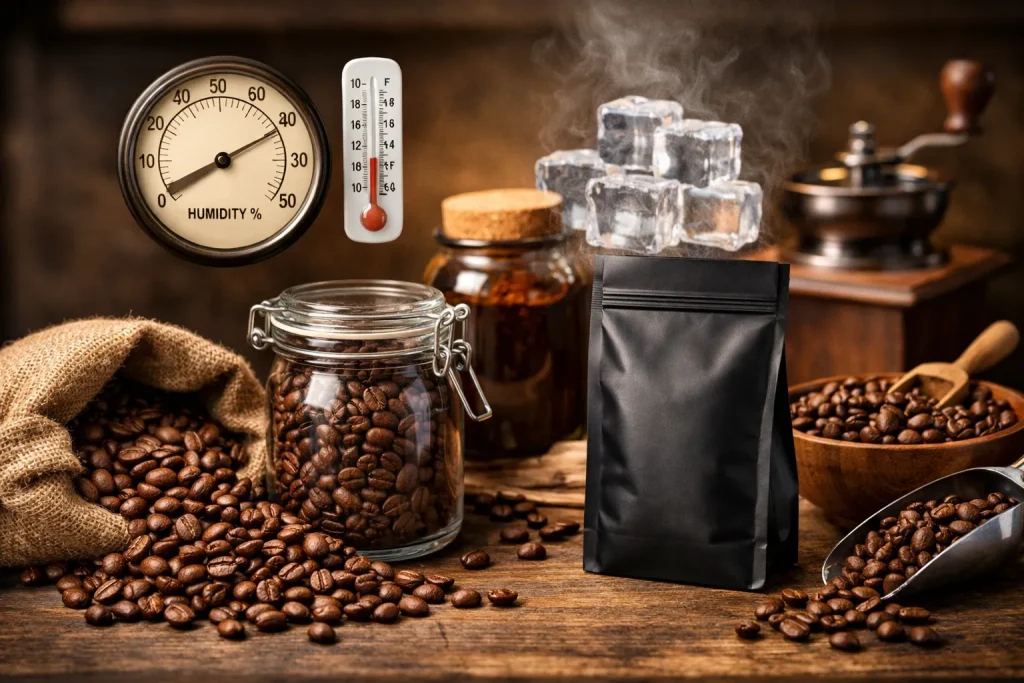
Keep beans cool, dry, dark, and airtight to slow flavor loss. A stable room temperature, low humidity, no light, and minimal oxygen contact matter most for preserving aroma and oils.
Temperature and Humidity Control
Store whole beans at stable room temperature between 60–75°F (15–24°C). Avoid places that heat up or cool down quickly, like above the oven, near windows, or in the garage. Short temperature swings speed up oil breakdown and stale flavors.
Aim for relative humidity under 50%. Moist air can cause beans to absorb odors and lose crisp acidity. Use a kitchen thermometer and hygrometer if needed to check conditions. Do not refrigerate; the fridge adds moisture and odors. For longer storage beyond two weeks, freezing in small, airtight portions helps by slowing oxidation — thaw only once before use.
Light Exposure and Its Effects
Direct sunlight and bright indoor light break down aromatic oils and cause rapid staling. Use opaque or dark-colored containers to block both UV and visible light. Clear jars look nice but let light in; keep clear containers inside a cupboard if used.
Light exposure increases temperature inside the container, which worsens oxidation. A simple rule: if a container lets you see the beans, it likely lets light do damage. This principle applies to both whole beans and ground coffee.
Managing Oxygen Contact
Oxygen reacts with coffee oils and causes flavor loss through oxidation. Use airtight containers with good seals — ceramic, stainless steel, or food-grade plastic work well when truly airtight. Avoid containers that trap air pockets when closed.
For short-term use, resealable bags with one-way valves release CO2 without letting oxygen in. For bulk beans used over weeks, divide into smaller portions and open only the portion in use. For technical background on degassing and valves, see the Specialty Coffee Association resource at Specialty Coffee Association. For storage science and humidity guidance, the World Coffee Research site offers useful data at World Coffee Research.
Best Practices for Storing Ground Coffee
Keep ground coffee in a cool, dry, dark place and limit its exposure to air, moisture, heat, and light. Use airtight containers, buy only what will be used within a week or two, and avoid the fridge for daily storage.
Short-Term Storage Solutions
For daily and weekly use, an opaque, airtight container on a pantry shelf works best. Choose a container with a tight-sealing lid and a small opening to limit air exchange. Glass jars with silicone seals or stainless-steel canisters give a good balance of protection and visibility for inventory.
Store only enough grounds for 1–2 weeks to keep flavor high. Keep the container away from the oven, microwave, and windows to avoid heat and light. If coffee arrives in a valve bag, transfer to the airtight container and discard the original once opened.
If they want more technical background, consult resources like the Specialty Coffee Association for standards and testing on freshness.
Long-Term Storage Techniques
For longer storage, reduce oxygen and temperature swings. Use vacuum-sealed bags or canisters with one-way valves and store in a cool pantry or cellar where temperature stays near 50–70°F (10–21°C). Avoid places that get warm during the day.
Freezing can work for multi-month storage if done properly. Portion grounds into small, airtight bags and remove as much air as possible before sealing. Thaw only once and avoid repeated freeze-thaw cycles, which damage flavor. Do not store coffee in the refrigerator; moisture and food odors can degrade it quickly.
Label containers with date opened so rotation is easier. Smaller portions mean less air exposure each time a package is opened.
Avoiding Common Mistakes
Do not store ground coffee in clear containers exposed to light. Light speeds chemical changes and robs aroma. Also avoid plastic containers that are not food-grade, since they can leach odors over time.
Never keep coffee near heat sources or above the stove. Heat accelerates staling. Avoid keeping coffee in the fridge where condensation and food smells can transfer. Finally, avoid buying large amounts of pre-ground coffee unless you use it within weeks; whole beans retain freshness longer if customers can grind just before brewing.
For more on storage science, readers can review findings from coffee storage studies.
Storing Whole Bean Coffee
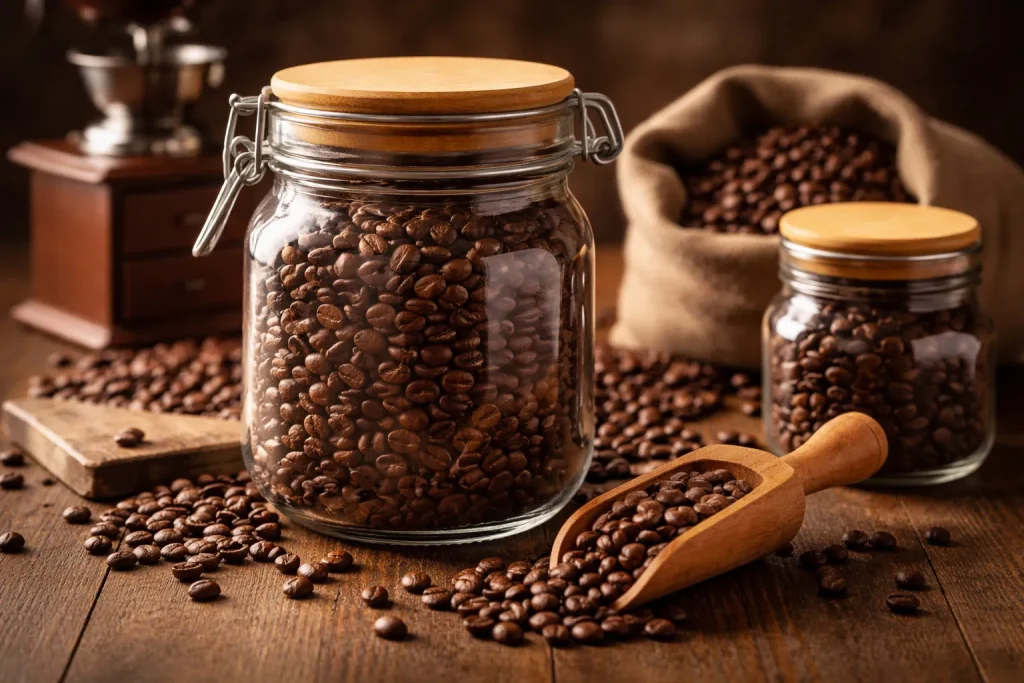
Keep beans in a cool, dark place, in an airtight container, and use small amounts at a time. Choose storage based on how fast the beans will be used.
Preserving Freshness and Flavor
Whole beans hold oils and volatile compounds that start to fade after roasting. Use an airtight container with a one-way valve if possible; this lets CO2 escape without letting air in. Glass, ceramic, or stainless steel containers work well; avoid clear jars that sit in sunlight.
Keep beans at room temperature away from heat sources like ovens or windows. Do not store beans in the refrigerator; moisture and odors can damage flavor. For daily use, buy amounts that last 1–2 weeks to ensure peak aroma.
Grind only what is needed right before brewing. A burr grinder gives more consistent particle size, which keeps extraction even and preserves taste. Label containers with roast date and discard beans after about 4 weeks for best results.
Weekly vs Monthly Storage Methods
For beans used within a week, store them in a small airtight container on the counter. Use containers that minimize headspace and open them only when needed. This method keeps flavor stable and avoids moisture changes.
For beans that will be kept a month or longer, vacuum-sealed bags or opaque, airtight canisters work better. Remove as much air as possible before sealing and keep the container in a cool, dark cupboard. Freezing whole beans can be done for long-term storage if they are sealed in truly airtight packages and thawed before opening; avoid repeated freeze-thaw cycles.
When pulling beans from long-term storage, let them reach room temperature while sealed to prevent condensation. Rotate stock so older beans are used first and note roast dates to track freshness.
Can You Freeze Coffee?
Freezing can slow freshness loss but only if packaging and portioning limit moisture, air, and temperature swings. Long-term storage works best for whole beans or sealed portions meant to be used without repeated thawing.
How to Freeze Coffee Correctly
They should use airtight, freezer-safe containers to stop moisture and odor transfer. Vacuum-sealed bags or rigid containers with tight lids work best. Remove as much air as possible before sealing.
Portion coffee into single-use bags or small containers sized for a few uses. That prevents repeated thawing and refreezing, which harms flavor. Label each package with roast and freeze dates.
Keep beans or grounds on a middle shelf away from the door to avoid temperature changes when the door opens. Do not freeze flavored or low-quality coffee expecting improvement; freezing only preserves current quality.
Defrosting and Using Frozen Coffee
They should move a sealed package from freezer to pantry and let it reach room temperature before opening. This avoids condensation on the coffee, which can cause flavor loss and clumping.
Once opened, use contents within a week for best flavor. Do not refreeze coffee after it has been thawed and opened. If frozen in single-use portions, grind (if whole beans) or brew directly after warming to room temperature for consistent extraction.
If brewing iced coffee, thawed brewed coffee can be kept frozen in ice cube trays for cold drinks without flavor dilution.
Special Considerations for Flavored and Specialty Coffees
Flavored and single-origin specialty coffees need extra care to keep their distinct tastes and smells. Store them so they avoid air, moisture, heat, light, and cross-contamination from other foods.
Preserving Unique Aromas
Flavored coffees and delicate single-origin beans lose aroma quickly when exposed to air and strong smells. Use an airtight container made of opaque ceramic or stainless steel and fill it with only what will be used in 7–14 days. Keep the container in a cool, dark place away from ovens or windows.
If the beans come in one-way valve bags, leave them sealed until use. For opened bags, transfer beans to the airtight container and remove excess headspace. Avoid grinding until just before brewing; whole beans hold volatile aromatics much better than preground coffee.
Temperature swings speed aroma loss. Store at stable room temperature (around 60–70°F / 16–21°C). Do not refrigerate daily-use coffee, as condensation and odor absorption harm aroma.
Preventing Flavor Contamination
Flavored coffees pick up nearby odors easily. Never store coffee near strong spices, herbs, or cleaning supplies. Keep flavored and specialty beans in separate containers to protect fragile notes like citrus, floral, or vanilla.
Use a labeled system to avoid mixing bags. If freezer storage is necessary for large quantities, use vacuum-sealed, freezer-safe bags and portion servings so each thaw cycle only opens one portion. Freeze for long-term storage only; once removed, do not refreeze.
The table below shows quick storage choices for avoiding contamination:
| Storage Option | Best Use | Risk of Contamination |
|---|---|---|
| Opaque airtight canister | Daily use, preserves aroma | Low |
| Sealed one-way valve bag | Short-term storage unopened | Low |
| Vacuum-sealed freezer bags | Long-term bulk storage (portioned) | Moderate (if not portioned) |
| Refrigerator | Not recommended | High |
Common Coffee Storage Mistakes to Avoid
Many people store coffee in ways that speed up staling. They leave beans in flimsy bags or open containers, which lets air and moisture in and ruins flavor quickly.
Putting coffee in the refrigerator is a common error. The fridge adds moisture and odors that coffee easily absorbs, so beans lose aroma and taste faster.
Storing coffee in clear jars on the counter exposes it to light and heat. Sunlight and warm spots near ovens or windows break down oils and make coffee taste flat.
Buying in bulk without portioning is another trap. Large containers with a lot of empty air increase oxidation. It helps to divide beans into smaller, sealed portions.
Grinding coffee too far ahead reduces freshness. Ground coffee loses volatile oils fast. Grinding right before brewing preserves aroma and flavor.
Using oversized containers also causes problems. Too much extra air around the beans speeds staling. Choose a container that fits the amount or use small inner bags to remove air.
Table of quick fixes:
- Avoid fridge — use a cool, dark cupboard instead.
- Seal well — use an airtight container or resealable bag.
- Buy sensible amounts — portion for 1–2 weeks of use.
- Grind when needed — grind just before brewing.
They should check roast dates and prefer recent roasts. Fresh-roasted beans and proper storage keep coffee tasting closer to how the roaster intended.
Tips for Maintaining Coffee Freshness Over Time
Store coffee in an airtight container away from light, heat, and moisture. Small, hard-sided containers with tight seals work best to slow oxidation.
Buy whole beans and grind just before brewing when possible. Grinding exposes more surface area and speeds flavor loss.
Portion coffee into smaller batches for daily use. Keep the rest sealed and stored in a cool, dark place to avoid repeated air exposure.
Avoid the refrigerator and freezer for daily storage. Frequent temperature shifts add moisture and can dull flavor; use the freezer only for long-term storage in a truly airtight bag.
Note roast date and use within a reasonable window. Most beans taste best within 2–4 weeks of roasting; lighter roasts may peak later than dark roasts.
Use these quick checks to judge freshness:
- Smell: fresh coffee smells bright and fragrant.
- Appearance: oily sheen on very dark roasts can mean faster staling.
- Taste: flat or dull flavor signals it’s past peak.
Keep storage simple and consistent. A cool, dark cabinet and a good airtight container preserve aroma and taste without special gadgets.
Label containers with roast date and portion size. This small habit helps rotate stock and use older coffee first.
FAQS
What is the best container for coffee?
They should use airtight containers made of ceramic, glass, or stainless steel. Clear containers are fine if stored in a dark cupboard to block light.
Should coffee be refrigerated or frozen?
They should not store daily coffee in the fridge because moisture and odors reduce flavor. Freezing unopened bags for long-term storage is acceptable, but once opened, divide into small airtight portions and thaw before use.
How long do whole beans stay fresh?
They keep peak flavor for about one to two weeks after opening. Roasted beans can remain acceptable for a few weeks, but ground coffee loses flavor faster.
How much coffee should be bought at once?
They should buy enough for one to two weeks for best flavor. Buying smaller amounts more often keeps coffee fresher.
Does grind size affect storage?
Yes. Ground coffee has more exposed surface area and stales faster than whole beans. They should grind beans just before brewing when possible.
How can they tell if coffee is stale?
Stale coffee smells flat and tastes dull or bitter. Fresh coffee has strong aroma and clear flavors.
Quick storage checklist:
- Keep beans cool, dry, and dark.
- Use airtight, opaque containers.
- Buy small amounts and grind fresh.
If they follow these steps, coffee will retain more flavor and aroma for daily use.
Conclusion
They should store coffee in an airtight, opaque container kept in a cool, dry place away from heat and light. Small batches used within one to two weeks keep flavor strongest.
If freezing is needed, they must freeze only whole beans in sealed, freezer-safe bags and thaw before opening. Avoid repeated temperature changes.
They can label containers with roast and date to track freshness. Simple steps like these preserve aroma and taste without extra effort.