
What Are the Advantages of French Press Coffee Maker You Need to Know
Looking for a coffee maker that delivers rich, full-bodied flavor with simplicity? The French press coffee maker offers numerous advantages, from preserving essential oils to easy cleanup. This guide highlights why a French press might be the perfect addition to your kitchen.
Key Takeaways
- Rich Flavor: The French press extracts more oils and flavors, giving coffee a robust taste.
- Simple to Use: Its straightforward design makes brewing coffee easy for beginners and pros alike.
- Customizable Brew Strength: Control steeping time and grind size to tailor your coffee strength.
- No Paper Filters Needed: Saves money and preserves essential oils that paper filters absorb.
- Portable and Durable: Compact with fewer parts, it’s ideal for home or travel use.
- Eco-Friendly: Minimal waste due to reusable filters and no electricity required.
- Easy to Clean: Disassembles quickly for hassle-free maintenance.
What Are the Advantages of French Press Coffee Maker You Need to Know
If you enjoy a flavorful cup of coffee and want a simple, effective brewing method, the French press coffee maker is a fantastic choice. In this guide, you’ll learn about its many benefits and how to use it to make the perfect cup every time.
Introduction to the French Press Coffee Maker
The French press, also known as a press pot or plunger pot, is a popular manual coffee brewing device. It consists of a glass or stainless-steel container with a plunger and metal mesh filter. Unlike drip coffee makers, the French press steeps coffee grounds directly in hot water, allowing maximum flavor extraction.
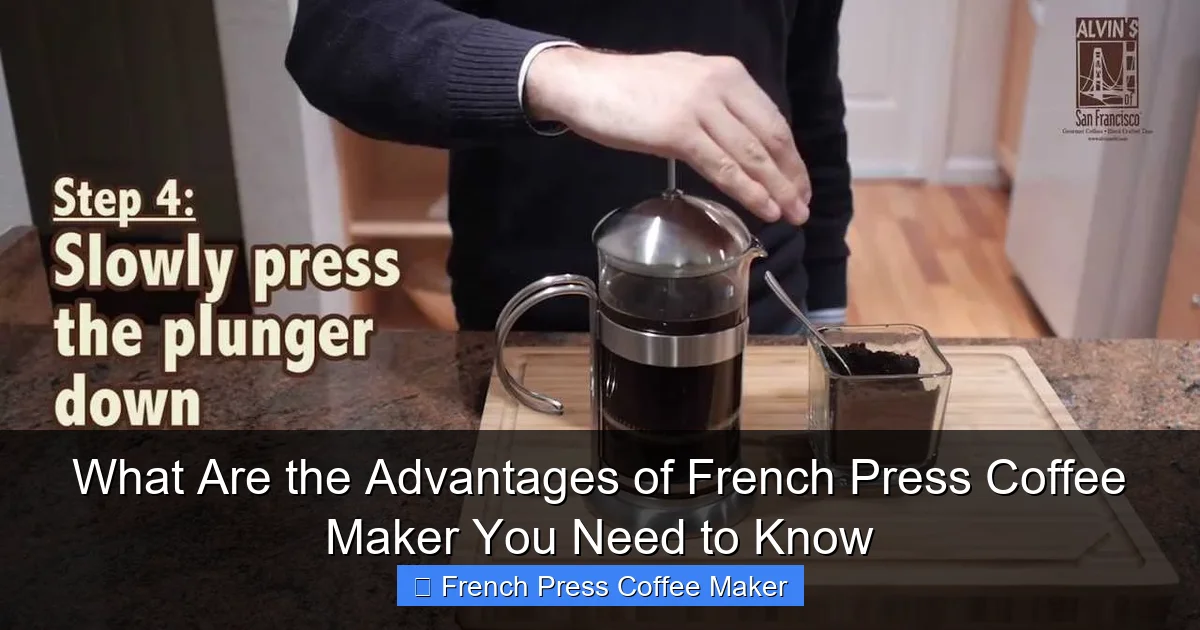
Visual guide about What Are the Advantages of French Press Coffee Maker You Need to Know
Image source: i.ytimg.com
Advantages of Using a French Press Coffee Maker
1. Richer, Fuller Flavor
The French press allows coffee grounds to steep fully, releasing natural oils and flavors that paper filters often absorb. This results in a bold, full-bodied cup with a richer aroma and taste.
2. Easy to Use and Control
With just a few simple steps—adding coffee, pouring hot water, steeping, and pressing—the French press is user-friendly. You can also adjust brew time and grind size to customize strength and flavor, giving you complete control over your coffee experience.
3. No Need for Paper Filters
The metal mesh filter means no paper filters are required. This not only saves money over time but also helps preserve the coffee’s natural oils, which contribute to better taste and mouthfeel.
4. Portable and Convenient
French presses are lightweight and have a compact design. You can take them camping, traveling, or use them in small kitchens without worrying about bulky machines or electrical outlets.
5. Eco-Friendly Brewing Option
Because it doesn’t use disposable filters or pods and requires no electricity, the French press is an environmentally friendly way to brew coffee. Just add grounds and hot water—no waste or power needed.
6. Easy to Clean and Maintain
Cleaning a French press is simple. The plunger and carafe can be taken apart and rinsed, and many parts are dishwasher safe. This convenience helps keep your coffee tasting fresh and your equipment in great condition.
How to Use a French Press Coffee Maker: Step-by-Step Guide
Step 1: Gather Your Materials
- French press coffee maker
- Freshly ground coffee (coarse grind)
- Hot water (just off boil, about 200°F or 93°C)
- Stirring spoon
- Timer
- Cup or mug
Step 2: Measure Coffee and Water
A good starting ratio is 1:15 coffee to water by weight. For example, use 30 grams of coffee with 450 ml of water. Adjust to taste as you experiment.
Step 3: Preheat the French Press
Pour hot water into the carafe and swirl it around to warm the glass. This keeps the brewing temperature steady. Discard the warming water before brewing.
Step 4: Add Coffee Grounds
Place the measured coarse coffee grounds into the French press carafe.
Step 5: Pour Hot Water
Slowly add hot water over the grounds, saturating them evenly. Pour halfway, then stir gently to ensure all grounds are wet before adding the rest of the water.
Step 6: Steep
Place the plunger assembly on top, but don’t press down yet. Let the coffee steep for about 4 minutes. You can adjust steeping time for stronger or milder coffee.
Step 7: Press the Plunger
After steeping, slowly press the plunger down with steady pressure to separate grounds from the brewed coffee.
Step 8: Serve Immediately
Pour the coffee into your cup and enjoy! Leaving coffee in the French press with grounds can lead to over-extraction and bitterness.
Practical Tips for Perfect French Press Coffee
- Use freshly ground coffee: Grind your beans just before brewing for maximum freshness and flavor.
- Coarse grind only: Fine grinds can slip through the filter and create sediment in your cup.
- Experiment with steep time: Start with 4 minutes, then adjust depending on your taste preferences.
- Use filtered water: Water quality greatly affects flavor, so use clean, fresh water.
- Preheat your cup: Warm your mug to keep coffee hot longer.
Troubleshooting Common French Press Issues
Problem: Coffee tastes bitter or overly strong
Try reducing steeping time or using slightly fewer coffee grounds. Also, check that your grind size is coarse enough.
Problem: Sediment in the cup
Ensure you’re using a coarse grind and press the plunger slowly and evenly. Avoid stirring after plunging.
Problem: Coffee cools too quickly
Preheat your French press and cup before brewing. Consider using a thermal French press to retain heat longer.
Conclusion
The French press coffee maker offers numerous advantages that make it a beloved tool for coffee lovers worldwide. Its ability to produce rich, full-flavored coffee with simple, eco-friendly brewing makes it ideal for both beginners and enthusiasts. By following the steps and tips shared in this guide, you can enjoy a perfect cup of French press coffee every day. Give it a try—you might just fall in love with your new favorite brewing method!
🎥 Related Video: How To Use A French Press 101
📺 Cock-A-Doodle Coffee
Using a French Press Coffee Maker is easy! Learn how French Press coffee produces a flavorful and …

