
You step up to the counter and see a menu full of words that sound like another language. You don’t need to guess what to order or how your coffee was made. This guide gives clear meanings for the most useful barista coffee terms so you can order, brew, and talk about coffee with confidence.
Ethan Cole from Webrewcoffee.com shares quick tips and real examples to connect terms to what you’ll actually taste and do at home. Learn short definitions for drinks, milk prep, equipment, and flavor words so the menu and the espresso machine stop feeling confusing and start feeling useful.
Key Takeaways
- Learn simple definitions that help you order and brew with confidence.
- Get practical tips on milk, equipment, and drink names you can use now.
- Understand tasting words and brewing steps to improve your coffee at home.
Essential Barista Coffee Terms
These terms describe how espresso is made and measured. They focus on the tool, the result, and the numbers a barista uses to control taste.
Espresso
Espresso is a concentrated coffee drink made by forcing hot water through finely ground, compacted coffee at high pressure. It typically uses 9–18 grams of coffee and yields 25–40 grams of liquid in about 20–30 seconds for a single or double shot, depending on recipe and machine.
Baristas pay attention to grind size, tamping pressure, water temperature (usually 90–96°C / 195–205°F), and pressure (around 9 bar). Small changes in any of these will change flavor balance, body, and crema. Espresso serves as the base for lattes, cappuccinos, and other milk drinks.
Crema
Crema is the thin, tan-colored foam that sits on top of an espresso shot. It forms from emulsified oils, dissolved solids, and tiny gas bubbles produced during high-pressure extraction.
Good crema looks even and persistent for 1–2 minutes and indicates fresh beans and correct extraction. Thin or absent crema can mean old beans, too-coarse grind, or low pressure. Very dark or bitter crema can point to over-extraction or burnt roast.
Extraction
Extraction means how much of the coffee solubles dissolve into the water. Baristas measure extraction by yield and time to hit a target percentage of dissolved solids, usually 18–22% for balanced espresso.
Key variables: grind size, dose, water temperature, pump pressure, tamp, and brew time. Short extraction (under-extracted) tastes sour or thin. Long extraction (over-extracted) tastes bitter or hollow. Baristas adjust one variable at a time and use a scale and timer to control consistency.
Dose
Dose is the weight of dry coffee put in the portafilter before brewing. Common doses range from 7–9 g for a single and 14–18 g for a double, depending on equipment and recipe.
Consistent dosing matters for repeatable shots. A small change of 0.5–1 g can alter strength and extraction. Baristas use a precision scale and sometimes a dosing funnel or distribution tools to level the puck before tamping.
Milk Preparation Vocabulary
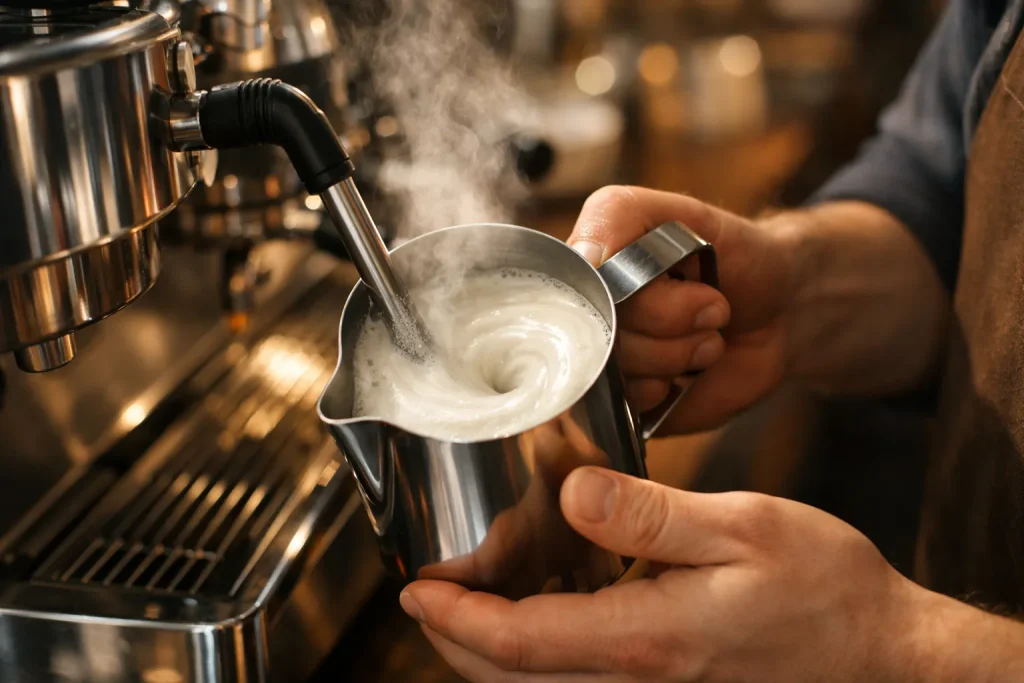
Milk texture, temperature, and technique change drink flavor and mouthfeel. Small changes in whisk, steam position, or time affect crema, sweetness, and latte art.
Microfoam
Microfoam is fine, glossy milk with tiny bubbles that give espresso drinks a creamy mouthfeel. It forms when steam introduces tiny air pockets and heat denatures milk proteins, creating a smooth, velvety texture rather than coarse foam. Microfoam should look like wet paint when poured and hold thin lines for latte art.
To make it, position the steam wand just below the surface and keep a steady, controlled whirlpool in the pitcher. Aim for milk between 55–65°C (130–150°F); above that, proteins break down and sweetness fades. Whole milk is easiest; lower-fat milks need slightly different technique to reach the same texture.
Tips:
- Use a cold metal pitcher for better temperature control.
- Tap and swirl the pitcher to remove large bubbles before pouring.
- If microfoam looks glossy and pours in ribbons, the texture is correct.
Steaming
Steaming heats and texturizes milk using pressurized steam. The barista opens the steam valve fully, positions the wand, and manages both air intake and whirlpool to reach target temperature and texture. Proper steaming gives consistent sweetness and body to cappuccinos, lattes, and flat whites.
Start with cold milk and a clean wand. Submerge the tip slightly to create a vortex; this mixes milk and foam evenly. Watch the pitcher: if it gets too hot to touch, stop—overheating scorches milk and creates flat taste. A thermometer or practice with hand-feel helps reach the desired 55–65°C range.
Common problems:
- Hissing and excessive big bubbles mean the wand is too close to the surface.
- Flat, thin milk means not enough aeration or no vortex.
- Burnt smell signals overheating.
Stretching
Stretching is the phase where the barista draws in air to expand milk volume and create foam for drinks like cappuccino. It happens first, at the surface, before the deeper whirlpool creates microfoam. Proper stretching adds body without making coarse bubbles.
To stretch, place the wand tip at the surface edge and open steam briefly to “sip” air into the milk. The pitcher should rise slightly as volume increases. Once the milk has expanded about 10–30% depending on desired drink, lower the wand to continue texturizing without adding more air.
Key checks:
- Watch the milk level and listen for a steady, quiet chirp—not loud spluttering.
- Stretch less for lattes, more for cappuccinos.
- Combine stretching and steaming smoothly to avoid layered foam with large bubbles.
For further technical references on milk science and steaming technique see the Specialty Coffee Association guidance at Specialty Coffee Association and the general milk properties overview on Wikipedia.
Popular Coffee Drinks Defined
These drinks center on three core parts: espresso, steamed milk, and milk foam. Each drink changes the ratio and texture of those parts, which alters strength, mouthfeel, and flavor.
Cappuccino
A cappuccino uses equal parts espresso, steamed milk, and milk foam. It usually starts with a single or double shot of espresso (30–60 ml for a single, 60 ml+ for a double). Baristas steam milk until it forms a dense, velvety microfoam and then pour roughly one-third milk and one-third foam over the espresso.
The foam layer is thick enough to support a dusting of cocoa or cinnamon and to create latte art. It tastes stronger than a latte because the espresso-to-milk ratio is higher. Learn more about espresso extraction basics at Wikipedia.
Latte
A latte is milk-forward: one or two shots of espresso topped with a much larger volume of steamed milk and a thin layer of microfoam. Typical ratios are 1:3 or 1:4 espresso to milk, which makes the drink smoother and milder than a cappuccino.
Baristas texture milk to be silky, not stiff. That texture helps create detailed latte art. Lattes can be flavored with syrups or served iced. The larger milk volume makes the coffee taste sweeter and masks some acidity from the espresso.
Macchiato
A macchiato is an espresso “marked” with a small amount of milk or foam. In the classic espresso macchiato, a single or double shot of espresso gets one or two teaspoons of foamed milk on top. The goal is to soften espresso’s edge while keeping its bold flavor.
A latte macchiato is the reverse: steamed milk gets “marked” with an espresso shot poured in, producing layered visuals. The term can vary by region and cafe, so customers should specify whether they want a traditional espresso macchiato or a milkier latte macchiato.
Flat White
A flat white features a double shot of espresso and a small amount of steamed milk with very fine microfoam. The milk-to-espresso ratio sits between a cappuccino and a latte, often around 1:2 or 1:3. The foam is thinner than a cappuccino’s and smoother than a latte’s, giving a velvety mouthfeel.
Originating from Australia/New Zealand, the flat white emphasizes espresso flavor while offering creamy texture. Baristas pour so the espresso and microfoam blend into a uniform surface, often with simple latte art. For more on milk texturing and drink history, see the Specialty Coffee Association resources at Specialty Coffee.
Specialty Coffee Brewing Terms
This section explains key terms that affect flavor, origin, and extraction in specialty coffee. It covers how bean source, brewing method, pre-wet steps, and puck preparation change taste and consistency.
Single Origin
Single origin means beans come from one country, region, farm, or lot. It highlights specific growing conditions — soil, altitude, and microclimate — that shape flavor. A single-origin Ethiopian coffee will often show bright citrus or floral notes, while a Guatemalan single origin might show chocolate and nuts.
Roasters and shops list single-origin details on bags or menus. Buyers should note harvest year, processing method (washed, natural, honey), and altitude for clues about taste. Single-origin coffees change seasonally, so flavor can vary between batches.
Baristas brew single origin with methods that show clarity, like pour-over or light-roast espresso. They adjust grind, dose, and water temperature to preserve delicate aromatics and acidity. Tasting notes and brewing parameters help customers and baristas repeat a preferred cup.
Pour-Over
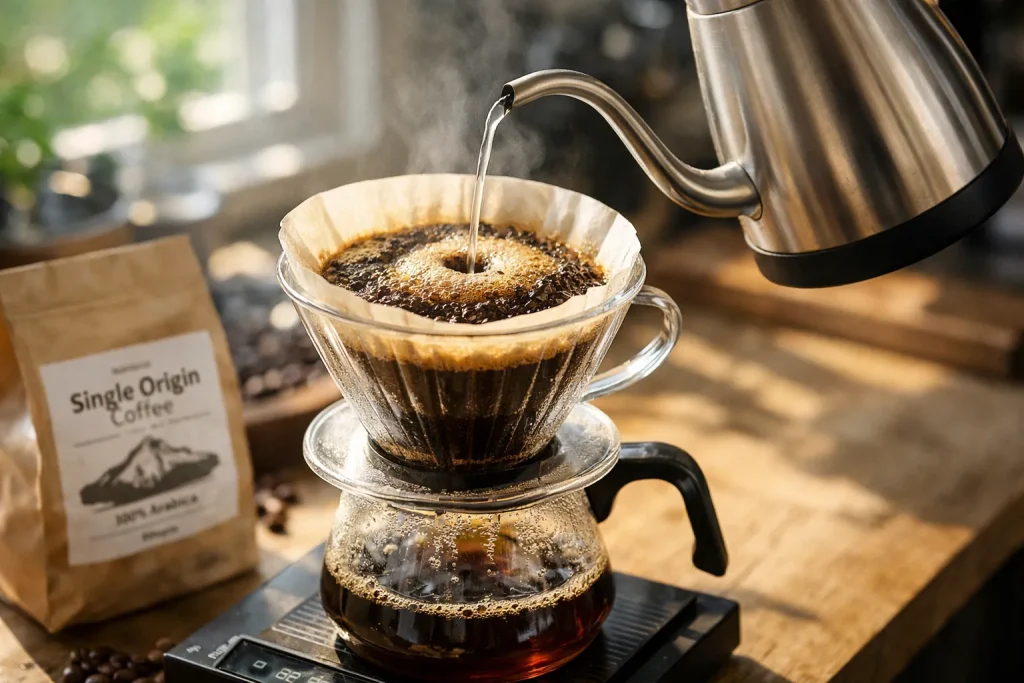
Pour-over is a manual drip method where water is poured over grounds in a paper or cloth filter. It gives control over flow rate, bloom time, and total contact time. Common devices include V60, Chemex, and Kalita Wave.
Brewing starts with a medium-fine grind and a precise water-to-coffee ratio (e.g., 16:1 to 18:1). The barista pours in stages: a short pre-wet to wet all grounds, then steady spirals to maintain an even bed and extraction. Flow speed affects body and brightness; slower yields fuller body, faster highlights acidity.
Equipment and technique matter: water at 92–96°C, fresh roasted beans, and consistent pouring produce repeatable results. Notes on grind size, pour timing, and yield allow refinement. Many use a scale and timer to track variables and replicate great cups.
Bloom
Bloom is the initial stage when hot water first contacts fresh grounds and trapped CO2 releases as bubbling. It lasts 20–45 seconds for most brews. Bloom improves extraction by letting gas escape so water can contact coffee evenly.
To bloom, pour just enough water to saturate grounds—typically twice the dose weight (e.g., 40 g water for 20 g coffee). Watch for steady bubbling and a raised coffee bed. If bloom is weak, beans may be old; strong, prolonged bubbling may need a slightly coarser grind or longer rest after grinding.
Proper bloom prevents channeling and under-extraction. Adjust bloom time for roast level: lighter roasts sometimes need a longer bloom. Recording bloom volume and time helps dial in recipes that bring out desired flavors.
Tamping
Tamping compacts espresso grounds in the portafilter to create even resistance to water. A firm, level tamp promotes uniform extraction and crema. Typical pressure is about 20–30 pounds of force applied straight down.
Technique: distribute grounds evenly, use a tamper that fits the basket, press level, then polish the rim. Avoid rocking the tamper; a tilted tamp causes uneven flow and channeling. Check the puck after brewing—dry, cracked edges signal problems with dose or tamp.
Consistency matters for repeatable shots. Many shops use calibrated tampers or lever tamping stations to reduce variance. If shots run too fast, increase dose or tamp firmer; if too slow, grind a touch coarser or tamp slightly lighter.
Flavor and Tasting Descriptions
This section explains how coffee feels in the mouth, how bright or sharp the taste is, and how long flavors linger. It focuses on the practical words baristas use to describe each trait.
Body
Body means how heavy or light coffee feels on the tongue and in the mouth. It can range from thin and watery to syrupy and full. Baristas often use terms like “light,” “medium,” and “full” to describe this, or compare it to milk textures such as skim (light) versus whole (full).
Body comes from factors like roast level, extraction, and bean oils. Darker roasts and a finer grind usually increase perceived weight. Brewing methods matter: French press and espresso often produce fuller body, while pour-over and drip tend to be cleaner and lighter.
To evaluate body, notice coating and viscosity. Ask if the coffee leaves a slick film, feels dense, or slides off the tongue quickly. Record simple notes: “medium body, slightly syrupy,” or “light body, crisp and clean.”
Acidity
Acidity describes the bright, sharp, or tangy sensations in coffee, not pH level. It gives coffee liveliness and can taste like citrus, green apple, or wine. Good acidity adds clarity; harsh acidity feels sour or astringent.
Origin and processing strongly influence acidity. High-altitude Arabica beans and washed processing usually yield clearer, higher acidity. Roast level also affects it—lighter roasts retain more origin acidity; darker roasts mute it.
Baristas use specific flavor anchors to describe acidity. Examples:
- Citrus: lemon, orange
- Stone fruit: peach, apricot
- Wine-like: red grape, berry Assess acidity by noting where it appears (front of tongue for citrus, sides for sharpness) and whether it balances sweetness or overpowers it.
Aftertaste
Aftertaste means the flavors that persist after swallowing or spitting during cupping. It can be short, fading quickly, or long and evolving. Notes might shift from chocolate to caramel, or from fruity to bitter over several seconds.
Aftertaste signals coffee quality and roast accuracy. Clean processing and balanced extraction often yield pleasant, lasting finishes. Off-flavors—burnt, medicinal, or musty—show problems in processing or storage.
Baristas score aftertaste by length and character. Use quick labels: “short, sweet caramel” or “long, clean citrus finish.” Also note any negative carries: “lingering bitterness” or “dry astringent finish.”
Espresso Equipment and Tools
This section explains the parts of an espresso setup that contact coffee and control extraction. It covers the handheld tool that holds coffee, the device that compresses grounds, and the machine part that delivers hot water and pressure.
Portafilter
A portafilter is the metal handle and basket assembly that holds the tamped coffee puck during extraction. It locks into the machine’s group head and creates a sealed chamber so pressurized water forces through the coffee, making espresso.
Portafilters come in single, double, and triple basket sizes. A double basket (18–20 g) suits most espresso recipes. Materials matter: brass or stainless steel bodies hold temperature better than lightweight alloys. Some commercial portafilters are bottomless, which helps diagnose channeling by showing spray patterns.
Users should match basket size to dose and grind. Worn or mismatched baskets can cause uneven flow. Keeping the portafilter clean, replacing worn gaskets, and checking the spouts helps maintain consistent extraction.
Tamper
A tamper compresses ground coffee into an even puck inside the portafilter basket. Consistent tamping improves water flow uniformity and reduces channeling, which leads to weak or bitter shots.
Tamper bases vary: flat, convex, and calibrated. Flat tampers give even pressure; convex can help edge sealing in some baskets. Calibrated tampers click at a set force (often 20–30 lbf) to aid consistency across baristas. Size matters — use a tamper that matches the basket diameter (e.g., 58 mm for many commercial double baskets).
Technique affects results. Apply a level tamp first, then polish with slight rotation. Clean the tamper after each use to avoid stale coffee buildup. A consistent routine helps keep shot time and flavor stable.
Group Head
The group head is the machine part where the portafilter locks in and hot water is delivered under pressure. It contains the shower screen, dispersion plate, and seals that spread water evenly over the coffee puck.
Temperature stability and pressure control at the group head shape extraction. Commercial machines use PID controllers, heat exchangers, or saturated groups to maintain stable water temperature. A clogged shower screen or worn gasket can cause uneven flow and leaks, so regular backflushing and gasket checks are essential.
Some machines have pre-infusion at the group head to wet the puck gently before full pressure. This reduces channeling and can yield smoother shots. Regular maintenance of the group head extends machine life and keeps espresso quality consistent.
Advanced Processing and Sourcing Terms
These terms show how processing and buying choices shape cup flavor, farm income, and traceability. Readers will learn how water, drying, and trade relationships change taste, quality, and farmer pay.
Washed Process
The washed process removes the cherry pulp before drying, usually with water and fermentation tanks. This method gives cleaner, brighter flavors and more consistent acidity because the mucilage is controlled during fermentation.
Producers first depulp cherries, then soak beans in fermentation tanks for 12–72 hours to loosen mucilage. After fermentation, they rinse the beans thoroughly and dry them on patios, raised beds, or mechanical dryers. Drying time and temperature affect final moisture (typically 10–12% target).
Buyers value washed lots for predictable tasting notes like lemon, floral, or green apple. Washed coffees also allow roasters to highlight origin and varietal clarity. However, washing requires reliable water and infrastructure, which raises costs and can affect farm economics and sustainability if not managed.
Natural Process
Natural process leaves the cherry skin and pulp on the bean while drying, often on raised beds or patios. This method tends to produce heavier body, fruity sweetness, and fermentation-derived flavors because sugars and yeast interact with the bean as it dries.
Producers spread whole cherries in thin layers and turn them periodically to prevent mold and uneven fermentation. Drying can take 10–30 days, depending on climate and thickness of the layer. Careful monitoring is critical; overfermentation or uneven drying causes off-flavors.
Roasters buy natural-processed lots for pronounced berry, jam, or tropical fruit notes. These coffees can be less consistent than washed lots and require different roast profiles to balance sweetness and acidity. Quality control during drying is the key risk and benefit for naturals.
Direct Trade
Direct trade describes a sourcing model where buyers purchase coffee straight from farmers or cooperatives, often with negotiated prices above commodity levels. It emphasizes traceability, long-term relationships, and paid premiums tied to quality or shared projects.
Companies practicing direct trade often visit farms, document lot data (elevation, varietal, processing), and provide feedback or technical support. Contracts may include fixed premiums, quality bonuses, or investments in farm infrastructure. This model can increase farmer income and improve lot quality when implemented transparently.
Critics note direct trade lacks formal standards and can vary widely; effectiveness depends on honest reporting and fair terms. For roasters, direct-trade lots offer storytelling and consistent high quality, but they must keep clear records and foster true partnerships to avoid exploitation.
Barista Slang and Industry Jargon
This section explains practical terms baristas use every day. It focuses on how those terms affect brew quality and service.
Dial In
Dialing in means finding the right grind size, dose, and extraction time for a given coffee and machine. A barista adjusts the grinder, checks yield (liquid weight), and times the shot to hit a target ratio—often 1:2 brew ratio for espresso—so flavor is balanced and not too bitter or sour.
Common steps:
- Weigh the dose precisely.
- Adjust grind in small steps.
- Pull test shots and record time and yield.
- Tweak until taste matches the target recipe.
| Parameter | Typical Target | Why It Matters |
|---|---|---|
| Dose | 18 g (double) | Controls strength and extraction volume |
| Yield | 36 g (1:2) | Defines concentration and balance |
| Extraction Time | 25–30 s | Indicates proper flow and flavor |
They document settings once the cup tastes correct. Dialing in takes practice and note-keeping to repeat results across shifts and machines.
Pull a Shot
To pull a shot means to extract espresso from the portafilter using pressured hot water. The barista locks a tamped puck into the group head, starts the machine, and monitors flow and crema until the target yield and time are reached.
Key checkpoints:
- Even tamp pressure and a clean puck surface.
- Proper water temperature (typically 90–96°C).
- Watch for steady, syrupy flow and a golden crema.
If a shot pours too fast, it suggests coarse grind or low dose. If it pours too slow or drips, it suggests too fine a grind or over-tamping. Baristas taste each shot and adjust immediately to keep drinks consistent.
FAQS
What does “crema” mean and why does it matter?
Crema is the tan foam on top of an espresso shot. It shows good extraction and helps trap aroma, but taste matters more than appearance.
How should someone order if they are unsure?
They can describe what they want — strong, milky, sweet, or iced. Baristas can suggest drinks using plain words like “less milk” or “more espresso.”
What is the difference between single and double shot?
A single uses about 7–9 grams of coffee; a double uses 14–18 grams. Doubles are stronger and often used by default in cafes.
Why do grinders and grind size matter?
Grind size controls extraction speed. Finer grinds make water pass slower and extract more flavor; coarser grinds do the opposite.
Are specialty terms like “cortado” or “doppio” necessary to know?
They help with clear orders, but basic descriptions work too. Knowing a few common names speeds communication in busy cafes.
How can a new barista learn the lingo quickly?
Practice on shift, ask colleagues, and use a small cheat sheet of common terms. Hands-on experience helps words stick faster than theory.
Quick tip table for ordering
| Term | What to tell the barista instead |
|---|---|
| Affogato | “Espresso over ice cream” |
| Ristretto | “Shorter, stronger espresso” |
| Macchiato | “Espresso with just a splash of milk” |
Conclusion
They can use these barista terms to order better and talk with confidence. Short definitions make it easier to learn and remember key words.
Knowing common words helps when choosing beans, asking for drinks, or fixing brewing problems. This knowledge fits both home brewers and café staff.
Practice and curiosity improve skill. Small steps, like trying new drinks and asking questions, build real understanding.