
You want to taste coffee like a pro and enjoy more of what’s in your cup. This guide shows simple steps to set up a tasting, notice aroma, acidity, body, and flavor notes, and pick beans that match your taste. You’ll learn how to taste coffee clearly, use basic tools, and spot the flavors that matter most.
Ethan Cole from Webrewcoffee.com shares practical tips and easy tricks to help you build your palate at home. Follow a few small steps and you’ll start noticing fruit, chocolate, floral, or nutty notes and understand what makes each brew unique.
Key Takeaways
- Learn a simple tasting routine to judge aroma, flavor, and finish.
- Use basic, affordable tools and clear steps to improve your tasting skills.
- Practice with different beans to spot origin and roast influences.
What Is Coffee Tasting?
Coffee tasting is the controlled act of smelling and sipping coffee to judge its aroma, flavor, acidity, body, and aftertaste. It helps people compare beans, spot defects, and choose coffees they like.
Purpose of Coffee Tasting
Coffee tasting helps people evaluate coffee quality and pick beans that match their taste. Professionals use it to grade lots, check roast consistency, and decide prices. Home drinkers use tasting to learn what flavors they enjoy and to spot stale or off flavors.
Tasting breaks coffee into parts: aroma, acidity (brightness), sweetness, bitterness, body (weight), and finish. Tasters record notes like “citrus acidity,” “chocolate sweetness,” or “earthy aftertaste.” This language lets roasters, buyers, and cafes describe coffees clearly.
Tasting also guides brewing. A coffee that tastes thin might need a finer grind or longer brew. One tasting bitter could mean over-extraction or too-dark roast. Small changes make predictable improvements.
Brief History of Coffee Tasting
Coffee tasting grew from informal judging to a formal craft over the past century. Early traders and planters described beans by origin and cup quality. As global trade expanded, buyers needed consistent methods to compare lots.
In the 20th century, structured cupping sheets and standard tools emerged. Specialty coffee movements in the 1980s–2000s formalized scoring systems and competitions. Organizations created protocols so different tasters could reach similar conclusions.
Today, coffee tasting mixes tradition and science. Labs test chemical markers while cuppers use sensory skills. The practice helps farmers, exporters, roasters, and baristas communicate about coffee value and character.
Types of Coffee Tastings
Cupping is the common professional method. It uses medium-fine ground coffee, hot water, and timed breaks to assess aroma, taste, and aftertaste. Tasters use spoons to slurp, which spreads coffee across the palate for fuller evaluation.
Home tastings are simpler. They often compare two or three brews side-by-side using the same brew method and controlled variables. This helps drinkers isolate differences caused by bean origin, roast, or grind.
Other formats include blind tastings, where labels are hidden to reduce bias, and training sessions that focus on identifying specific flavors. Competitions and public tastings teach skill and help people discover new coffees.
Essential Coffee Tasting Equipment
This section lists the gear that most affects tasting results: the vessels for smelling and sipping, the tools that control grind and dose, and the water that carries the flavors.
Tasting Cups and Glassware
Tasting cups should be neutral in shape and material so they do not add scent or flavor. Porcelain or white ceramic cups are common for cupping because they show color and keep aroma focused. Clear glass cups work well for aroma work where visual clarity matters.
Use cups that hold about 150–200 ml for hot tasting and larger glasses (250–350 ml) for cooled tastings. Rims should be thin to let the cup touch lips without masking flavor. Avoid plastic, metal with strong odors, or heavily glazed ceramics that can trap scents.
Spoons or tasting spoons should be stainless steel, deep-bowled, and clean between samples. Label cups with water-resistant markers or numbered stickers to prevent mix-ups during blind tastings. For guided aroma work, small tulip-shaped glasses boost headspace and scent concentration.
Grinders and Scales
A consistent grind sets the stage for repeatable tasting. Use a burr grinder—preferably flat or conical burrs—so particle size stays uniform across samples. Avoid blade grinders; they create uneven particles that distort extraction and flavor comparison.
A scale with at least 0.1 g resolution helps maintain precise brew ratios. Weigh beans, water, and yield for each sample to compare coffees fairly. Record dose (g), yield (g), and brew time to reproduce results later.
Adjust grind size in small increments when testing the same coffee to isolate extraction effects. Clean the grinder between lots to stop oil and old grounds from altering taste. A simple chart listing grind setting versus brew method helps teams match parameters quickly.
Water Quality Considerations
Water makes up about 98–99% of brewed coffee, so its chemistry shapes flavor strongly. Use filtered water with balanced mineral content—enough hardness to carry acidity and sweetness, but not so high that it adds metallic or salty notes.
Aim for water around 50–150 ppm total dissolved solids (TDS) and a neutral pH near 7. If local tap water varies, use bottled mineral water or a quality filtration system. The Specialty Coffee Association publishes useful water standards and recipes for reproducible results; more on that at SCA Water Standards.
Keep water at the correct brew temperature for the method being tasted. Measure temperature at the bloom and brew stages to avoid under- or over-extraction. When comparing beans, use the same water source and temperature for each sample to ensure differences come from the coffee, not the water.
How to Prepare for a Coffee Tasting
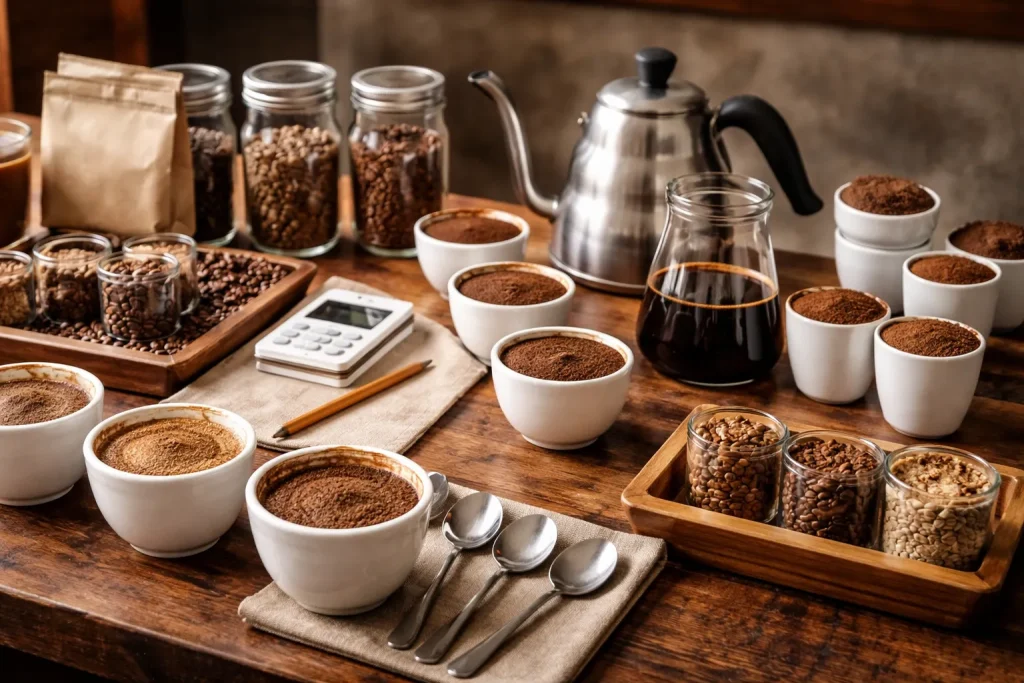
Preparation focuses on picking fresh beans, grinding them correctly, and using consistent brewing methods. Small choices — roast date, grind size, water temperature, and cup cleanliness — change what tasters will notice the most.
Choosing Coffee Beans
Pick whole beans roasted within the last two to three weeks for best flavor clarity. Choose single-origin coffees or distinct blends so tasters can compare clear differences like fruitiness or chocolate notes. Use beans from different processing methods (washed vs. natural) to highlight how processing affects sweetness and body.
Buy 100–200 g per coffee if tasting several samples. Store beans in an opaque, airtight container away from heat and light. Avoid refrigeration — moisture and odors can change the beans.
For background on origins and varieties, consult a reliable source like World Coffee Research.
Proper Grinding for Tasting
Grind beans just before brewing to preserve volatile aromas. Use a burr grinder for a consistent particle size; blade grinders create uneven extraction and muddle flavors. Match grind size to the brewing method: coarse for immersion methods, medium for pour-over, and fine for espresso.
Weigh beans and water for each sample to keep ratios identical. A common starting ratio is 1:16 (1 gram coffee to 16 grams water). Write down grind setting and weight so others can repeat the test.
Clean the grinder between samples to prevent flavor carryover. Rinse equipment and remove trapped grounds to keep each cup pure.
Brewing Standards
Use the same brewing method and timing for all samples to make fair comparisons. Control these variables: water temperature (92–96°C / 197–205°F), brew ratio, brew time, and agitation. Keep water quality consistent; filtered water with balanced mineral content prevents flat or metallic tastes.
Use identical equipment for each coffee: same kettle, scale, filter type, and cups. Preheat cups and rinse filters to avoid heat loss and paper flavors. Record each parameter on a simple sheet: coffee name, roast date, dose, water temp, brew time, and yield.
For cupping-style tasting, follow standard spooning and slurping steps to evaluate aroma, acidity, body, and aftertaste. The Specialty Coffee Association provides detailed protocols if a formal cupping procedure is desired (Specialty Coffee Association).
Understanding Coffee Flavor Profiles
This section breaks down how coffee smells, tastes, feels, and lingers. It shows what to notice in each area and how those traits shape the cup.
Aroma and Fragrance
Aroma refers to the smells from brewed coffee; fragrance often describes the dry, ground beans. They signal many flavor clues before tasting. Roasted nuts, citrus peel, chocolate, florals, and fresh herbs are common examples to listen for.
Smelling the dry grounds first helps identify fragile notes like jasmine or lemon zest. Then smelling the hot brew highlights volatile compounds such as caramelized sugar or toasted bread. Cup cupping uses controlled sniffing: quick short sniffs followed by a deep inhale.
Write quick notes on intensity (mild, moderate, strong) and character (fruity, spicy, roasty). That guide helps link scent to taste—acidic brightness often pairs with citrus aroma, while chocolatey scents often predict rounded sweetness.
Acidity and Sweetness
Acidity means the bright, tangy bite in coffee, not sourness. It shows as lemon, green apple, or wine-like tartness. Higher-grown origins like Ethiopian and Kenyan beans often show pronounced acidity.
Sweetness balances acidity and makes flavors linger pleasant. Sweet notes can be brown sugar, honey, or ripe fruit. Proper roast and fresh brewing bring out natural sugars; over-roasting will mute sweetness and increase bitter notes.
Tasters judge acidity by clarity (clean vs. muddled) and sweetness by body and finish. Use simple descriptors: citrus, berry, caramel. Note how acidity and sweetness interact—sharp acidity with low sweetness feels thin, while balanced acidity with good sweetness feels lively and complete.
Body and Mouthfeel
Body describes how heavy or light coffee feels on the tongue. Mouthfeel covers texture details: silky, syrupy, watery, or creamy. Think of body like milk levels: black coffee can feel like skim or whole milk.
Brewing method and roast influence body. Espresso and French press often yield fuller body; pour-over and drip can feel lighter. Oils retained in full-immersion brews add weight; paper filters remove oils and lighten mouthfeel.
Note tactile traits: coating (does it cling to the tongue?), viscosity (thin vs. thick), and astringency (drying sensation). These guide pairing choices—heavier body matches richer foods, lighter body fits delicate pastries.
Aftertaste and Finish
Aftertaste means the flavors that stick around after swallowing. Finish describes how long and how those flavors evolve. Common finishes include clean, lingering fruity, or trailing cocoa bitterness.
A short, clean finish leaves little residue and suits brewed coffees focused on clarity. A long, complex finish can reveal secondary notes—spice that appears after sweetness fades, or a dry almond-like bitterness that emerges later.
Tasters track finish length (short, medium, long) and character changes over time. Record whether the finish becomes sweeter, more bitter, or stays stable. That helps compare beans and select coffees for preference or menu descriptions.
The Coffee Tasting Process
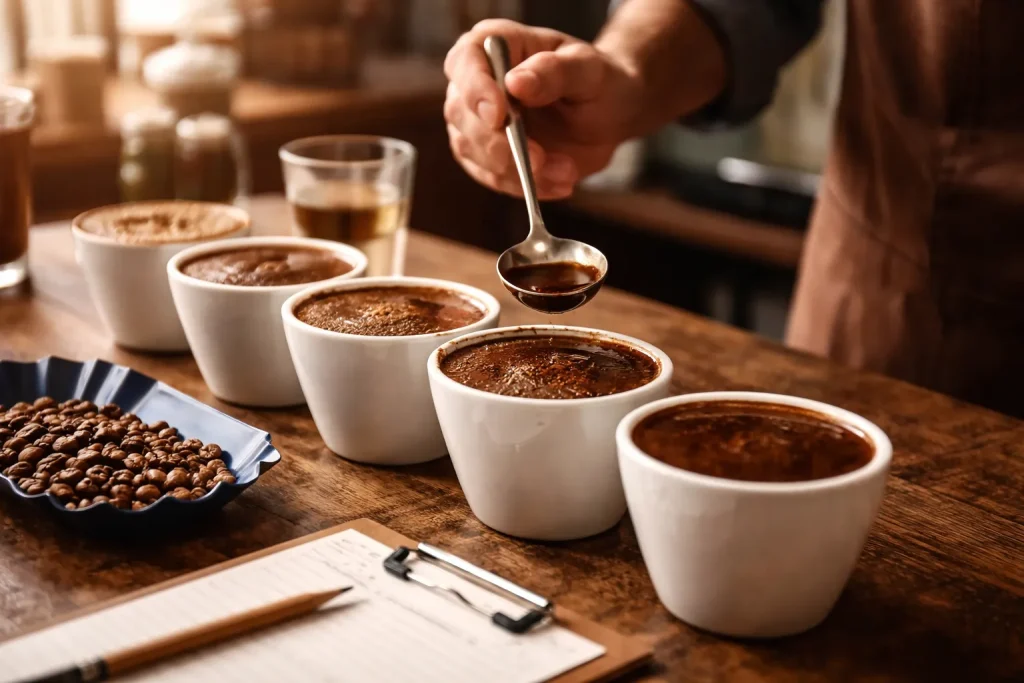
This section lays out clear steps for tasting, judging, and recording coffee. It covers how to prepare and taste, how to score sensory traits, and how to write useful tasting notes.
Step-by-Step Cupping Guide
They start by grinding 8–10 grams of coffee per 150 ml of water to a medium-coarse texture. Use fresh, filtered water heated to 93–96°C (200–205°F). Place ground coffee in a clean cup, pour water so all grounds are wet, and let brew for 3–4 minutes.
After bloom, break the crust with a spoon and inhale deeply to note the aromas. Skim and discard the grounds left on top. Cool the coffee to 60–70°C (140–158°F) before tasting; this temperature reveals clearer flavors.
Taste by slurping from a spoon. Slurping spreads coffee across the tongue and aerates it. Take several slurps, noting acidity, body, sweetness, and aftertaste. Rinse the spoon between cups to avoid cross-contamination.
Scoring and Rating Coffee
They use a simple scoring sheet with categories: fragrance/aroma, flavor, aftertaste, acidity, body, balance, and overall. Assign a 0–10 score to each category; add partial points for notable traits like cleanliness or defects.
Use consistent scales: 0–3 = poor, 4–6 = average, 7–8 = very good, 9–10 = excellent. For competitions, use the Specialty Coffee Association (SCA) style 100-point scale as a reference. Record individual category scores and a total score.
Note specific defects (sour, medicinal, fermented) separately. If a coffee has a defect, mark it and lower the score accordingly. Keep scoring quick and consistent to compare multiple cups fairly.
Recording Tasting Notes
They write notes in three quick parts: objective facts, descriptive flavors, and final impressions. Start with roast level, origin, grind, and brew parameters. These facts help others reproduce the results.
For flavors, use short phrases: “lemon brightness,” “chocolate body,” or “honey sweetness.” Mention texture terms like “silky” or “thin.” Keep statements concrete and avoid vague words like “nice.”
End with a short takeaway line: one sentence that combines score, standout trait, and recommendation. For example: “88 — Clean citrus acidity, medium body; drink as pour-over.” Use a consistent format so notes stay useful over time.
Common Coffee Tasting Terms
This section explains key words used when tasting coffee and shows how to name flavors, smells, and textures in a cup. It focuses on practical terms to help identify what a taster notices and how to describe it clearly.
Flavor Wheel Concepts
The flavor wheel groups tastes and aromas into clear categories like fruity, floral, nutty, chocolate, and spice. Tasters use the wheel to move from broad notes (fruit) to specific ones (berry, citrus).
Acidity describes brightness and liveliness. It ranges from lemon-like sharpness to soft apple brightness. Body means how heavy the coffee feels in the mouth — light, medium, or full.
Sweetness balances acidity and bitterness. Look for sugar-like notes such as honey, caramel, or brown sugar. Aroma covers what one smells before sipping; smell often predicts flavor.
Use the wheel to practice: pick one broad category, then try to name the specific note. Repeat with several brews to train the palate.
Descriptors for Different Coffees
Single-origin coffees often show clearer fruit or floral notes like jasmine, bergamot, or blueberry. Washed-process beans tend to highlight acidity and clean fruit flavors. Natural-process beans often show jammy, fermented, or berry-like sweetness.
Roast level shifts descriptors: light roasts keep origin flavors (citrus, florals); medium roasts add caramel, chocolate; dark roasts emphasize smoke, cocoa, or toasted almond.
Common defect terms help identify problems: “stale” for flat, papery flavors; “ashy” for burnt or over-roasted; “sour” for under-extracted or poorly processed beans.
Tasters often combine terms: e.g., “medium body, bright citrus acidity, with caramel sweetness.” This keeps descriptions specific and useful when comparing coffees.
Developing Your Coffee Palate
This section shows clear steps to notice aroma, acidity, body, and aftertaste. It also explains how to practice with small sample sets and compare roasts side by side.
Training Your Senses
They start by smelling coffee before brewing and again right after grinding. Smelling dry grounds, wet grounds, and the brewed cup helps them spot fruity, floral, or nutty notes.
They learn to slurp hot coffee to aerate it and spread flavors across the tongue. While sipping, they note acidity (bright or dull), body (thin to syrupy), and aftertaste length. Writing short tasting notes of 3–5 words per trait helps memory.
A simple aroma practice uses common items: orange peel, dark chocolate, roasted almonds, and black tea. Smelling each daily for a minute trains recognition. Over time they match those scents to similar coffee notes.
Practicing with Sample Sets
They begin with three small samples: a light, medium, and dark roast of the same origin. Tasting these side by side highlights roast effects on sweetness, acidity, and bitterness.
Use identical cups, water temperature (92–96°C / 197–205°F), and 10–12 g coffee per 180 ml water to keep tests fair. Label samples A, B, C and taste in order from lightest to darkest.
Take 3–4 minutes per cup. Record quick scores for aroma, acidity, body, and finish on a simple table:
- A: aroma __ / acidity __ / body __ / finish __
- B: aroma __ / acidity __ / body __ / finish __
- C: aroma __ / acidity __ / body __ / finish __
Repeat weekly, swapping origins (Ethiopia, Colombia, Sumatra) to learn regional traits. They compare notes after several sessions to track improvement.
Hosting a Coffee Tasting at Home
This section shows how to set up a clear, relaxed tasting and how to pair foods and present samples so guests notice flavor differences. It focuses on practical steps, simple supplies, and small touches that make the event feel organized and fun.
Planning the Guest Experience
They should pick 3–5 different coffees to keep the tasting focused. Choose one light, one medium, and one dark roast or try three single-origin beans from different countries. Grind each just before brewing and label cups with numbered cards, not roast names, to avoid bias.
Use the same brewing method and ratio for every coffee. A digital scale and a gooseneck kettle help keep pours even. Serve each sample in small, identical cups about 2–3 ounces each so guests can compare aromas and flavors without wasting beans.
Give a short, printed sheet with brewing details, tasting prompts (acidity, body, finish), and space for notes. Encourage smelling before sipping and slurping to spread coffee across the tongue. Keep water and plain crackers available to cleanse the palate between samples.
Pairings and Presentation Ideas
They should offer simple pairings that highlight coffee traits. Dark chocolate or a mild cheese pairs well with bold, chocolatey roasts. Citrus or a light fruit tart brightens acidic, floral coffees. Plain water and unsalted crackers sit on the table for neutral palate resets.
Arrange samples on a tray in tasting order (light to dark or mild to bold). Use small cards with bean origin, roast level, and brew time for context — but reveal origin after guests record impressions if they want to avoid bias. A small timer or phone stopwatch ensures consistent steep times.
Add a few visual touches: cloth napkins, neutral-colored cups, and small spoons for stirring. Keep extra beans in clear jars for guests to sniff between cups. These small details help guests focus on flavor without feeling overwhelmed.
Exploring Coffee Origins and Varieties
Origins shape flavor through climate, soil, and processing. Bean genetics and roasting then refine those flavors into the cup.
Single Origin vs. Blends
Single-origin coffee comes from one country, region, or farm. It highlights specific flavors—like Ethiopian floral notes or Colombian citrus—so drinkers can detect distinct fruit, floral, or chocolate tones. Single-origin is useful for tasting and comparing how terroir and processing affect flavor.
Blends combine beans from multiple places to balance taste, body, and acidity. Roasters design blends to create consistent flavor across seasons or to achieve a target profile, such as a smooth morning brew or a bold espresso. Blends often offer more body and predictable sweetness than a single-origin.
Use single origins when seeking unique tasting notes. Choose blends for balance, consistency, and to match specific brewing methods.
Popular Growing Regions
Different regions produce recognizable flavor patterns tied to altitude, climate, and processing choices.
| Region | Common Flavors | Typical Notes |
|---|---|---|
| Ethiopia | Bright, fruity | Blueberry, jasmine, tea-like |
| Colombia | Balanced, clean | Apple, caramel, nutty |
| Brazil | Nutty, chocolatey | Brazil nut, cocoa, low acidity |
| Kenya | High acidity, winey | Citrus, blackcurrant, bright finish |
| Central America | Crisp, sweet | Chocolate, citrus, honey |
Readers should note processing methods—washed, natural, or honey—also change flavors within the same region. Higher altitudes usually give denser beans with brighter acidity. Producers and roasters may list these details on packaging to help pick a coffee that matches taste preferences.
Troubleshooting Common Tasting Challenges
This section shows how to spot specific off-flavors and how to avoid common tasting mistakes. It gives clear steps to diagnose problems and simple habits to get more accurate, repeatable tasting results.
Identifying Off-Flavors
They should first focus on the five basic taste notes: sour, bitter, salty, sweet, and umami. Sour often indicates under-extraction, a coarse grind, or low water temperature. Bitter usually points to over-extraction, too fine a grind, or stale beans.
Use a quick checklist to isolate the cause:
- Aroma check: musty or papery smells suggest stale or improperly stored beans.
- Sip test: a thin, weak mouthfeel suggests under-extraction or too little coffee dose.
- Aftertaste: a lingering metallic or chemical finish can mean contamination from detergents or poor equipment cleaning.
Record brew variables (grind size, dose, time, temperature) with each tasting. Small, single changes help find the root cause. If multiple cups show the same off-flavor, test a fresh batch of beans to rule out bean quality.
Avoiding Tasting Mistakes
They should control the environment and tasting procedure to reduce bias and false readings. Use plain water between sips to clear the palate. Avoid strong scents like perfume or food nearby.
Follow consistent serving conditions:
- Cup temperature: taste at the same temperature each time, around 60–65°C for brewed coffee, cooler for espresso.
- Portion size: use the same cup and volume to compare properly.
- Timing: taste within the same time window after brewing—flavor changes as the coffee cools.
Avoid common mental errors. Don’t judge the coffee only by the first sip; taste the body and aftertaste. Blind tasting or swapping cups between tasters helps prevent expectation bias.
FAQS
What is coffee cupping and why does it matter?
Cupping is a standard way to taste coffee to compare beans fairly. It helps identify acidity, body, and flavor notes.
How often should someone taste coffee to improve?
They should practice regularly, like once a week. Small, focused sessions help build a reliable palate.
What equipment is needed for a basic tasting?
A grinder, scale, kettle, spoons, and plain cups suffice. Plain water and a notebook help record impressions.
How does roasting affect flavor?
Lighter roasts often show brighter acidity and origin notes. Darker roasts tend to emphasize roast flavors and fuller body.
Can home tastings match professional cuppings?
They can capture many differences if done consistently. Strict protocols yield closer results, but casual tastings still teach a lot.
What should someone focus on first?
Start with aroma and acidity, then note sweetness and body. Small, clear notes like “chocolate” or “citrus” work well.
How should they record findings?
Use a simple table: Date | Coffee | Roast | Acidity | Body | Flavor notes. It keeps entries quick and useful.
Are there common mistakes to avoid?
Avoid flavored beans and strong-smelling foods nearby. Also, taste when not too tired or after brushing teeth; both change perception.
Conclusion
Tasting coffee helps people notice small differences in aroma, flavor, and body. It trains the senses and makes each cup more enjoyable.
They can use simple steps—smell, sip, note—to learn what they like. Practice and patience improve skill over time.
A tasting notebook or checklist helps track preferences. It also makes it easier to compare beans and brewing methods.
By staying curious and tasting often, anyone can deepen their coffee knowledge. Small changes lead to clearer, more confident choices.