
You cup the warm mug and notice a bright hint of citrus or a soft chocolate note. Coffee tasting notes tell you what to expect and help you pick beans that match your taste. They name the flavors you can taste—fruity, floral, nutty, chocolatey, and more—so you can choose coffee you’ll enjoy.
Ethan Cole from Webrewcoffee.com shows how small changes in roast, origin, and brewing can shift those notes. Use simple tasting steps at home to spot acidity, sweetness, bitterness, and body, then match them to the flavors you like.
Key Takeaways
- Tasting notes explain the flavors you can expect in a cup.
- You can train your palate with simple home tasting steps.
- Brew method and bean origin shape the flavors you taste.
What Are Coffee Tasting Notes?
Tasting notes describe the specific flavors, aromas, and mouthfeel a coffee shows. They explain where a coffee’s taste comes from, how it was processed, and what the drinker can expect in a single sip.
Definition and Purpose
Coffee tasting notes are short phrases that name flavors like citrus, chocolate, or floral. They point to smells, tastes, and textures found in the cup. Roasters, buyers, and tasters use these notes to describe a coffee without tasting it first.
The purpose is practical. Notes help buyers compare lots, help baristas choose brewing methods, and help drinkers pick a coffee they will enjoy. Notes also create a common language so people can discuss coffees clearly.
Tasting notes do not claim a coffee tastes exactly like a raw fruit or candy. They highlight similar sensory cues—acidity like lemon, sweetness like milk chocolate, or body like cream—that guide expectations and choices.
How Tasting Notes Are Developed
Professional tasters, called cuppers, follow a step-by-step process. They grind and brew coffee in a consistent way, then smell and slurp to spread the coffee over the tongue. They record aroma, acidity, sweetness, body, and aftertaste.
Roasters also add notes from knowledge of origin, processing, and roast level. For example, Ethiopian washed coffees often show floral and citrus notes, while Indonesian naturals may show earthy or herbal tones.
Training and palate calibration matter. Tasters use flavor wheels and reference samples to stay consistent. Multiple tasters and repeated cups reduce bias and give a more reliable set of tasting notes.
Why They Matter to Coffee Lovers
Tasting notes guide purchase decisions. A drinker who likes bright, fruity flavors can choose coffees labeled with lemon, berry, or floral notes. Someone who prefers smooth, dessert-like coffee can look for chocolate, caramel, or nutty notes.
Notes also improve brewing. Knowing a coffee’s key traits helps adjust grind size, water temperature, or ratio to highlight the best flavors.
They make tasting social and repeatable. People can compare notes, learn new flavor terms, and track how a favorite coffee changes across roasts or seasons.
Common Coffee Tasting Notes
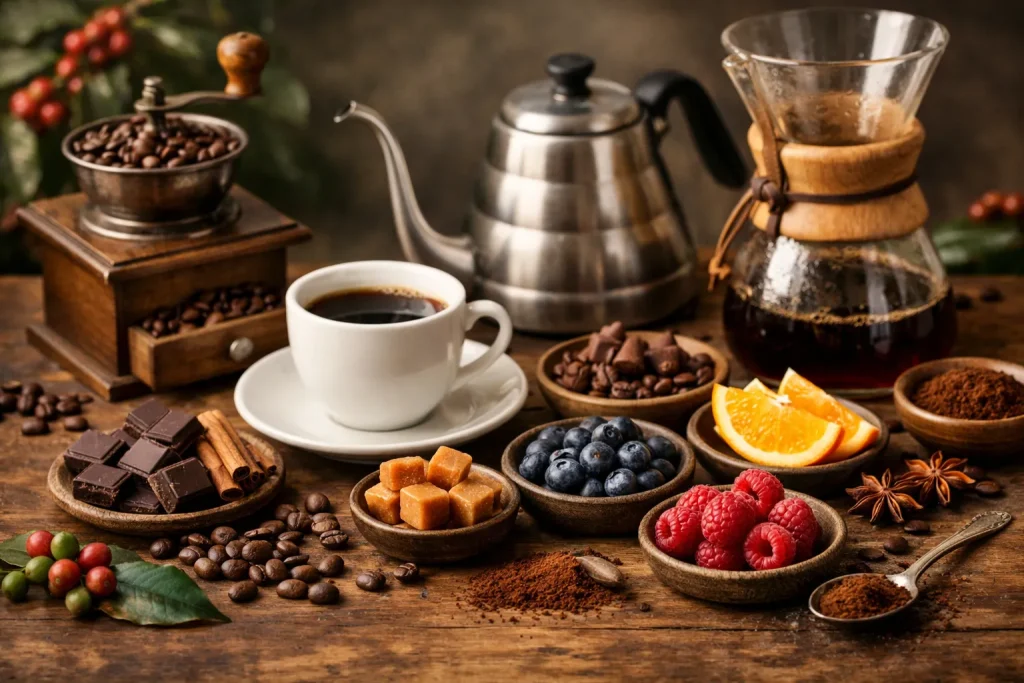
Coffee flavors range from bright fruit to deep chocolate and warm spice. Tasting notes help identify aroma, acidity, body, and aftertaste so drinkers can pick beans and brewing styles they like.
Fruity and Citrus Flavors
Fruity notes often show as berry, stone fruit, or citrus. Tasters might call a coffee “blueberry,” “lemon,” or “apple.” These flavors usually come from Arabica varieties grown at higher elevations and from lighter roasting. Bright acidity and a crisp finish often accompany citrus notes.
Citrus flavors include lemon, orange, and grapefruit. They give a sharp, lively acidity and a clean aftertaste. Fruit-driven coffees suit pour-over and filter methods that preserve delicate acids.
For more on how origin affects fruit flavors, see World Coffee Research.
Nutty and Chocolatey Tones
Nutty and chocolatey notes are common in medium and medium-dark roasts. Tasters describe them as almond, hazelnut, cocoa, or milk chocolate. These flavors bring a rounded sweetness and a smoother mouthfeel.
Nutty notes often pair with medium body and low acidity, making them good for espresso. Chocolatey tones can range from bittersweet dark chocolate to creamy milk chocolate. Roasting level and bean origin strongly influence which chocolate or nut character appears.
Floral and Herbal Aromas
Floral aromas include jasmine, lavender, and rose. These scents tend to appear in light-roasted, single-origin coffees from places like Ethiopia. Floral notes usually come with bright, delicate acidity and a tea-like body.
Herbal notes may show as rosemary, sage, or fresh-cut grass. They add complexity and can balance sweetness. Brewing gently — for example, using a V60 — helps preserve these subtle aromatics and reveals layered flavors.
Spicy and Sweet Undertones
Spicy notes cover cinnamon, clove, and black pepper. They add warmth and can create a lingering finish. Spices often show in coffees from certain regions or as a result of specific processing methods.
Sweet undertones include caramel, toffee, and brown sugar. They bring a syrupy body and low acidity. Sweet and spicy notes pair well with milk-based drinks, where sweetness balances bitterness and spices add depth.
For a guide to tasting terms and the coffee flavor wheel, consult the coffee flavor overview on Wikipedia.
How to Identify Tasting Notes
This section shows how to find flavors by smelling, sipping, and using tools. It focuses on clear steps to detect scents, taste deliberately, and match impressions to a flavor wheel.
Scent and Aroma Detection
Start by smelling the dry grounds first. He or she should take short, quick sniffs from a few inches away, then a deeper inhale over the cup. Dry aroma reveals roast level, origin hints, and added processing notes like floral or fruity.
After brewing, smell the hot coffee with nose near the cup rim. Tilt the cup and breathe in slowly. Note changes: brightness often smells citrusy, while richness leans chocolatey or nutty.
Use a two-step checklist:
- Dry aroma: coffee grounds.
- Wet aroma: freshly brewed cup. Write one-word notes (e.g., “lemon,” “berry,” “cocoa”) to avoid overthinking. For more formal descriptors, the Specialty Coffee Association offers a useful flavor wheel and terms at Specialty Coffee Association.
Tasting Steps and Techniques
He or she should sip with intent. Take a small, noisy slurp to spray coffee across the tongue. Slurping aerates the liquid and spreads flavors to all taste zones.
Focus on three parts: acidity (brightness), body (weight), and aftertaste (lingering flavor). Acidity might feel tangy or crisp. Body ranges from thin to syrupy. Aftertaste reveals subtle notes like caramel or tobacco.
Cleanse the palate between samples with water or a plain cracker. Taste samples side-by-side when comparing beans. Keep tasting notes brief and consistent to track subtle differences over time.
Using a Flavor Wheel
A flavor wheel organizes common coffee descriptors into groups like fruity, floral, nutty, and spicy. He or she should start broad and move inward: pick a category, then choose the specific note.
Use the wheel to translate impressions into words. If a coffee smells citrusy, the wheel helps decide between lemon, orange, or grapefruit. It also reduces confusion when tasting with others.
Refer to authoritative resources for a printable wheel and definitions, such as the coffee overview on Wikipedia. Keep a copy nearby during tastings to speed identification and keep language consistent.
Factors Influencing Coffee Tasting Notes
Different things change what a coffee tastes like: where the beans grew, the plant type, and how the cherries were processed. These elements shape acidity, body, sweetness, and specific flavors like berry, chocolate, or floral notes.
Coffee Origin and Terroir
Origin covers country, region, altitude, and soil. High-altitude farms often yield denser beans with brighter acidity and floral or citrus notes. Lowland coffees tend to be milder and fuller-bodied.
Soil minerals and rainfall patterns add subtle differences. Volcanic soils can give clean, complex flavors. Heavy rain during development can dilute sweetness, while steady dry periods concentrate sugars.
Microclimates matter too. A farm on a shaded slope will produce different aromas than one in full sun. Local processing traditions and nearby crops (like fruit trees) can also influence the cup through shared humidity and microbes.
Varieties and Processing Methods
Bean variety (cultivar) sets the base flavor. Arabica varieties such as Bourbon or SL28 often show fruit and floral notes. Robusta tends to be harsher, with nutty or earthy tones. Hybrids mix traits for disease resistance or flavor.
Processing turns cherry into green bean and shapes taste a lot. Washed (wet) processing emphasizes acidity and clarity. Natural (dry) processing leaves cherries to dry on fruit, producing jammy, fruity flavors. Honey (pulp-on) processing sits between those, adding sweetness and body.
Fermentation length, drying speed, and temperature change flavor balance. Longer fermentation can produce complex, funky notes. Rapid drying preserves brightness but may reduce sweetness.
Describing Coffee Tasting Notes
This section shows how to name flavors clearly and how to write them down so others can repeat the tasting. It focuses on precise words, consistent scales, and simple ways to record aroma, taste, body, acidity, and finish.
Terminology and Language
They should use specific words like “blackberry,” “brown sugar,” “lemon zest,” or “cocoa” instead of vague terms like “good” or “complex.” Mention aroma (smell before sipping), taste (primary flavors on the tongue), acidity (brightness or tang), body (light, medium, full), and finish (how long flavor lingers). Use modifiers: sweet, clean, juicy, astringent. When describing acidity, say “bright citrus acidity” or “soft malic acidity” rather than just “acidic.”
A simple flavor wheel helps. Start with general categories (fruit, floral, nutty, chocolate) then move to specifics. Keep comparisons familiar — “like green apple” or “like roasted almond.” Avoid claiming added flavors; note that these are natural sensory impressions from the bean and roast.
Recording Your Impressions
They should use a consistent form: coffee name, roast date, brew method, dose, water temp, and time at the top. Then list sensory fields: aroma, flavor, acidity, body, finish, and overall score. Use a numeric scale (1–10) or boxes to tick for quick comparison across coffees.
Write short, clear sentences for each field. Example: “Aroma: ripe peach and jasmine. Flavor: honeyed syrup, dark chocolate on mid-palate. Acidity: bright lemon; clean aftertaste. Body: medium, silky. Finish: cocoa dusting fades in 20 seconds.” Add a one-line takeaway at the end to capture the most notable trait.
Coffee Tasting at Home
This section shows how to set up a simple, repeatable tasting and how to compare three or more coffees side by side. It lists the tools, steps, and what to record so results stay clear and useful.
Setting Up a Tasting Session
They should gather a few basic items: a scale, grinder, kettle, timer, mugs or cupping bowls, spoons, and a notepad. Use whole beans and grind just before brewing to keep aromas fresh.
Measure 10–12 g of coffee per 180 ml of water for a consistent starting point, then adjust if needed. Use water heated to 92–96°C (197–205°F). Brew with the same method for every sample — pour-over, French press, or automatic drip — to isolate bean differences.
Label each sample with a number, roast level, and origin. Smell the dry grounds, then the wet grounds after pouring. Taste the coffee at three points: just after cooling, at warm temperature, and near room temperature. Note aroma, acidity, body, sweetness, bitterness, and any distinct flavors.
Comparing Different Coffees
They should taste coffees in a clean order: light to dark roast or mild to strong acidity. This reduces palate fatigue and prevents stronger cups from masking subtle ones.
Use a simple scoring sheet with rows for aroma, acidity, body, sweetness, aftertaste, and overall impression. Rate each attribute on a 1–5 scale and add short notes like “citrus bright,” “chocolatey,” or “thin body.”
Between samples, rinse the mouth with water and eat a small piece of plain bread or apple to reset the palate. Repeat tastings on different days to confirm favorites and spot consistent traits across brews.
Using Tasting Notes to Enhance Coffee Selection
Tasting notes help buyers match beans to personal taste and brewing method. They highlight key flavors, roast level, origin, and processing so people can pick coffee that fits their routine and preferences.
Reading Coffee Bag Labels
Labels list origin, roast, and flavor words. Look for single-origin or blend, and note the country and region — these influence acidity and body. Processing method (washed, natural, honey) signals fruitiness or sweetness.
Check roast level: Light roasts often show floral, citrus, or berry notes. Medium roasts bring chocolate, caramel, and nutty tones. Dark roasts emphasize roast character and bittersweet notes.
Use the flavor words as guides, not guarantees. If a bag lists “blueberry” or “milk chocolate,” expect dominant fruit or cocoa impressions. Pay attention to score or cupping notes from roasters; higher scores usually mean more clarity and balance.
| Label Item | What It Means | What to Expect |
|---|---|---|
| Origin / Region | Where the beans grew | Acidity, body, typical flavors |
| Processing | How cherries were handled | Fruit-forward vs. clean, bright flavors |
| Roast Level | Light / Medium / Dark | Delicate fruit notes to rich roast notes |
| Tasting Notes | Descriptors used by roaster | Flavors to look for when brewing |
Choosing Coffees by Flavor Profile
Decide desired flavor intensity and balance first. For bright and fruity cups, choose light roasts from Ethiopia or Kenya with notes like citrus, berries, or floral. For smooth, chocolatey profiles, pick medium roasts from Central America or Brazil.
Match coffee to brew method. Pour-over and Chemex highlight acidity and delicate flavors. Espresso and moka pot favor oils and body, so medium to dark roasts work better.
Use a tasting journal to compare purchases. Record roast, origin, brew method, and noticed flavors. Over time, patterns emerge and make choosing new beans faster and more reliable.
Developing Your Palate
They start by tasting often and paying attention. Small, regular practice helps them notice subtle differences between coffees.
He or she should smell the coffee first. Aroma gives a quick clue about fruit, floral, or roasted notes before the first sip.
They taste with intention: a small sip, spread across the tongue, then a gentle slurp to aerate the cup. This reveals sweetness, acidity, body, and finish.
Practice with food helps. Tasting citrus, berries, chocolate, and nuts side-by-side builds a mental catalog. They can label flavors they recognize and match them to coffee notes.
Keeping a simple tasting log speeds learning. Note: coffee name, roast, acidity level, body, and one or two flavor words. Short entries make the habit easy to keep.
They should compare coffees side-by-side when possible. Direct comparison highlights differences in acidity, sweetness, and aftertaste.
Brewing consistency matters. Use the same ratio and water temperature for practice. That way, changes come from the coffee, not the method.
A flavor wheel can guide them when words seem hard to find. It points to common descriptors and helps the taster choose precise language.
Mistakes are normal. Palates change with time and food, so patience and steady practice make the biggest difference.
Coffee Tasting Notes in Specialty Coffee Culture
Specialty coffee culture uses tasting notes to share what a coffee tastes like. They help roasters, baristas, and drinkers speak the same language about flavor.
Tasting notes often come from formal cupping or from everyday brewing. Professionals may use the SCA Flavor Wheel to pick words like cherry, caramel, or jasmine. This makes descriptions consistent and easier to compare.
Shops and bags use tasting notes as both guide and story. Notes can describe aroma, acidity, body, and finish. They also set expectations so customers choose coffees they will enjoy.
People learn tasting by practice and by tasting with others. Group cuppings and training help people notice small differences. Over time, tasters map flavors to regions, processing methods, and roast levels.
Below are common categories used in tasting notes:
- Aroma: smell before drinking; floral, nutty, fruity.
- Acidity: bright or mellow; like lemon or apple.
- Body: how heavy the coffee feels; thin to syrupy.
- Finish: aftertaste length and character.
Tasting notes also support quality control. Roasters compare notes to catch defects or highlight strengths. This keeps specialty coffee consistent and helps beans find the right audience.
FAQS
What are tasting notes?
Tasting notes are short words used to describe what someone senses in coffee. They help people talk about aroma, flavor, and mouthfeel in a common way.
Do tasting notes mean the coffee contains those ingredients?
No. Tasting notes describe perceived flavors, not added ingredients. For example, “chocolate” may mean the coffee reminds someone of cocoa, not that cocoa was added.
How can someone learn to detect notes?
Practice helps. Smelling single fruits, spices, and chocolate can train the nose. Cupping different coffees and using a flavor wheel also speeds learning.
Why do different people describe the same coffee differently?
Past experiences shape perception. One person’s “berry” might be another’s “citrus.” Brewing method and roast level also change which notes come forward.
Which notes are most common?
Common groups include fruity, floral, nutty, chocolatey, and spicy. Origin, processing, and roast influence which group is strongest.
How should tasting notes be used when buying coffee?
Use them as a guide, not a rule. Notes show what to expect, but personal taste decides whether someone will like the coffee. Comparing a few bags helps find a favorite.
Quick tips for tasting:
- Smell first, then sip slowly.
- Note aroma, acidity, body, and finish.
- Write short, clear words that match personal impressions.
Conclusion
Tasting notes help people describe and remember coffee more clearly. They guide choices at the shop and make brewing more rewarding.
Practicing with a flavor wheel and simple cupping steps builds confidence. It also helps people notice small differences between beans and roasts.
Notes can be personal; two tasters may use different words for the same cup. That variety makes tasting more fun and keeps learning interesting.
Keeping a short journal of impressions makes progress visible. Over time, those notes become a useful map of preferences and discoveries.