
You want to taste coffee with more confidence and know the words that explain what’s in your cup. Ethan Cole at Webrewcoffee.com shows you simple, useful terms baristas and tasters use so you can describe acidity, body, aroma, and flavor without guessing. Learn a small set of clear tasting words and you’ll notice flavors and faults you missed before.
This guide breaks down core categories and common descriptors so practicing at home feels easy. Try a few short exercises Ethan suggests and you’ll move from vague impressions to specific notes like citrus, chocolate, or florals.
Key Takeaways
- Learn a few core tasting words to describe coffee more clearly.
- Practice with simple exercises to identify aroma, acidity, and body.
- Use tasting terms to choose beans and improve your home brewing.
Understanding Coffee Tasting Terms
Coffee tasting terms describe taste, smell, texture, and defects using short, specific words. They help identify acidity, body, sweetness, aroma, and common faults in a cup.
What Are Coffee Tasting Terms?
Coffee tasting terms are precise words used to describe what someone senses in a cup. Examples include acidity (bright, lemony), body (thin, full), sweetness (caramel, honey), and aroma (floral, nutty).
They also cover faults like stale, sour, or fermented, which point to problems in processing or roasting.
These terms aim for consistency so different people can compare notes. Tasting notes often use single-word descriptors plus short modifiers (e.g., “medium body, citrus acidity, brown sugar sweetness”).
Common categories:
- Acidity: brightness and type (citric, malic).
- Body: mouthfeel (watery to syrupy).
- Flavor: specific tastes (chocolate, berry).
- Aftertaste: lingering flavors and length.
- Defects: negative markers to spot problems.
Why Coffee Tasting Vocabulary Matters
A common vocabulary helps buyers and roasters match coffee to preferences and correct problems. When a roaster lists “toffee sweetness, green apple acidity,” a buyer knows what to expect.
Cafés use the vocabulary to train staff to prepare drinks that highlight desired traits.
Tasting terms also guide quality control. Producers track recurring descriptors—like “fermented” or “moldy”—to fix processing issues.
For hobbyists, the terms improve brewing choices: they choose grind, dose, and method to emphasize acidity or body based on language like “bright” or “full.”
How Coffee Professionals Use These Terms
Baristas, cuppers, and roasters use the terms in specific tasks: cupping, quality control, and product descriptions. During cupping, professionals note aroma, flavor, acidity, body, and aftertaste on score sheets.
Roasters adjust roast profiles when notes show too much bitterness or flatness.
Professionals also use standardized forms and sensory wheels to keep language consistent. Training sessions, blind tastings, and comparisons reinforce shared meanings.
Finally, marketing teams translate technical notes into consumer-friendly descriptions, balancing accuracy with readability (for example: “milk chocolate, red fruit, medium body”).
Core Categories of Coffee Tasting
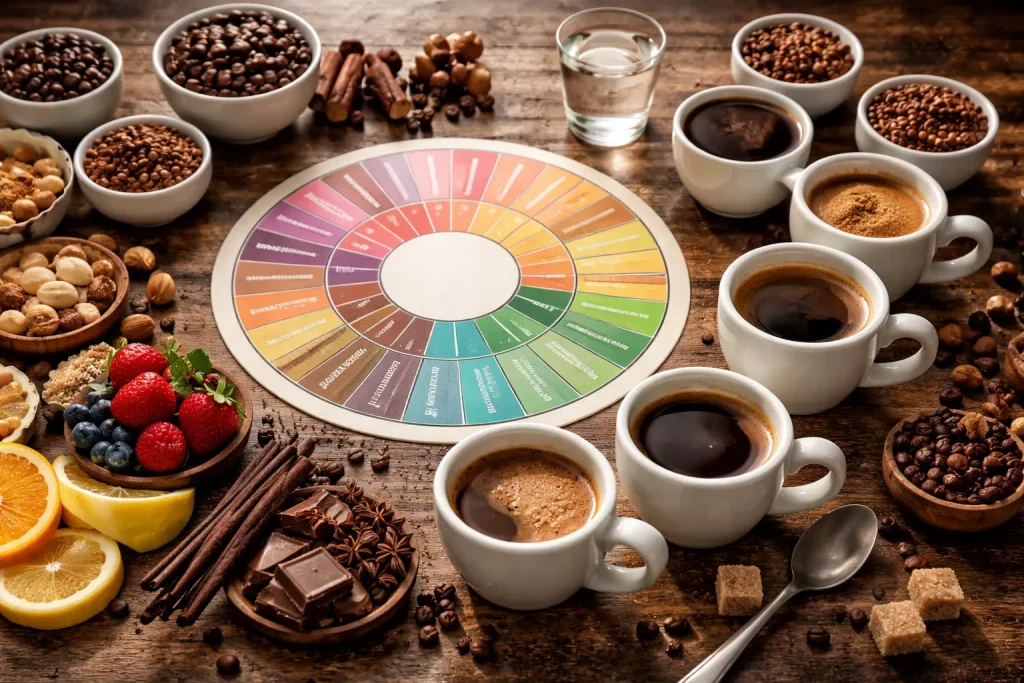
This section breaks tasting into clear, usable parts: smell, taste, and texture. Each part uses concrete words and simple checks to help identify what’s in the cup.
Aroma Descriptors
Aroma is the first cue. It includes the smell before and after brewing, and it often signals bean origin and roast level. Common aroma groups are floral (jasmine, orange blossom), fruity (berry, citrus peel), nutty (almond, hazelnut), and spicy (clove, cinnamon). Roasted notes such as caramel, chocolate, and toasted bread show more when beans are darker.
Smelling grounds and hot brewed coffee separately helps. Smell the dry grounds, then the wet aroma right after pouring. Try to name one strong scent first, then look for subtler layers behind it.
For more technical background on aroma compounds and how they form, see coffee chemistry on Wikipedia.
Flavor Notes
Flavor combines taste and retronasal aroma — what one perceives when coffee moves from mouth to nose. Key taste categories are acidity, sweetness, bitterness, and balance. Acidity can be described as bright or sharp and by fruit references like lemon, green apple, or red grape. Sweetness ranges from brown sugar to honey. Bitterness is often cocoa or dark chocolate.
Specific flavor notes help identify origin and processing: Ethiopian coffees often show blueberry or florals; Central American beans may display caramel and red apple. Tasters should name the dominant flavor first, then add two supporting notes. Using consistent descriptors makes comparison easier across cups and sessions.
Mouthfeel Characteristics
Mouthfeel refers to the coffee’s weight and texture in the mouth. Terms include thin, medium, full, syrupy, and creamy. Body is the perceived heaviness; a full-bodied coffee will feel heavier and coat the tongue. Texture details—oily, velvety, or watery—affect perceived sweetness and balance.
Tasters check mouthfeel by slurping and moving coffee around the mouth to sense coating and friction. Also note finish: short (quick fade) or lingering (flavors remain). The Specialty Coffee Association offers standards and scoring guidance that explain these attributes in detail: Specialty Coffee Association.
Key Coffee Tasting Terms and Their Meanings
These terms describe how coffee feels, tastes, and lingers. They help a taster pick beans, adjust brew methods, and describe a cup in clear, repeatable ways.
Acidity
Acidity means the bright, lively taste that appears near the front of the tongue. It is not sourness; rather, it ranges from crisp lemon-like sharpness to gentle apple or grape notes. Higher-altitude Arabicas often show more pronounced acidity, while darker roasts reduce it.
Tasters use words like “bright,” “sharp,” “winey,” or “citric” to describe acidity. Acidity helps clarify flavors and can balance sweetness and body. To learn technical measures and varieties, readers can consult resources like the Specialty Coffee Association.
Brewing affects acidity: shorter contact time or finer grind can increase perceived acidity. Water temperature also matters; cooler brews often emphasize juicy, fruity acids while hot extractions highlight sharper citrus notes.
Body
Body describes the weight and texture of coffee in the mouth. It ranges from thin and tea-like to full and syrupy. Words such as “silky,” “chewy,” “watery,” or “heavy” capture these differences.
Body links to brewing methods and roast level. French press and espresso usually produce fuller body because more oils and fines remain in the cup. Lighter roasts can feel lighter-bodied even if they have vibrant flavors.
Grind size, brew ratio, and filtration change body quickly. Paper filters remove oils and reduce body, while metal filters let them through. Experienced tasters mention body when comparing stability and mouth-coating qualities across coffees.
Sweetness
Sweetness in coffee is the pleasant sugar-like taste that rounds flavors and reduces sharpness. It appears as caramel, honey, brown sugar, or fruit syrup notes. Good sweetness makes acidity feel balanced and makes tasting more enjoyable.
Sweetness comes from bean variety, ripeness at harvest, and roasting. Proper roasting brings out natural sugars without creating bitter notes. Over-roasting or under-extracting will mute or hide sweetness.
Tasters judge sweetness by clarity and finish: clear, consistent sweetness across sips scores higher. To explore common tasting words and training exercises, readers can reference a coffee flavor vocabulary such as the coffee flavor wheel at Wikipedia’s coffee tasting page.
Aftertaste
Aftertaste is the set of flavors that remain after swallowing. It can be short and clean or long and complex. Tasters note whether aftertaste is pleasant (chocolatey, floral, nutty) or unpleasant (burnt, chemical, astringent).
Length and quality of aftertaste matter in competitions and buying decisions. A long, pleasant aftertaste often signals a well-processed bean and good roast control. Astringency or bitterness that lingers points to over-extraction or defects.
To assess aftertaste, tasters pay attention to changes over 10–30 seconds. They describe whether flavors evolve, fade cleanly, or leave residue. This helps decide which coffees suit espresso, drip, or cold-brew methods.
Flavor Descriptors in Coffee
This section explains common flavor types found in coffee and how to identify them by taste and aroma. It highlights specific fruit, spice, herb, nut, and chocolate notes that appear in beans from different regions and processing methods.
Fruity Notes
Fruity notes describe bright, sweet, or tart flavors that come from the coffee cherry and processing. Citrus notes like lemon, orange, or bergamot give a sharp, lively acidity. Berry notes — strawberry, blueberry, blackberry — often appear in washed or natural-processed African coffees and give a juicy, rounded sweetness.
Stone fruit flavors such as peach, apricot, or cherry offer a softer, syrupy sweetness and appear in beans with medium acidity. Tropical fruits like pineapple or mango bring intense sweetness and a floral aroma, common in some Central and South American lots. When tasting, look for balance between acidity and sweetness; too much acidity can taste sour, while balanced fruit notes feel bright and clean.
Spice and Herb Notes
Spice and herb notes come from bean variety, terroir, and roast level. Black pepper, clove, and cinnamon give a warm, dry spice that often shows in darker roasts or certain Indonesian beans. These spices add complexity without overwhelming sweetness.
Herbal notes like mint, basil, or sage add a green, savory edge. Floral herbs — jasmine or chamomile — create a delicate, fragrant cup. Spicy-sweet combinations, such as cardamom with honeyed elements, can appear in lightly roasted coffees with concentrated sugars. Tasters should note where spice sits in the cup: on the front of the palate it feels sharp; on the finish it lingers and shapes aftertaste.
Nutty and Chocolatey Flavors
Nutty and chocolatey flavors give body and comfort to a coffee’s profile. Nut notes include almond, hazelnut, and walnut; they usually signal a medium body and mild sweetness. Almond tastes dry and delicate, while hazelnut brings richer, toasted depth.
Chocolate notes range from milk chocolate to dark cocoa. Milk chocolate flavors pair with creamy mouthfeel and low acidity. Dark chocolate or cocoa nib notes add bitterness and structure, often in Central American coffees or darker roasts. These flavors help balance fruit or acidity and make the cup feel fuller. When evaluating, note texture: nutty and chocolatey coffees often feel smooth and rounded on the palate.
Specialty Coffee Terminology
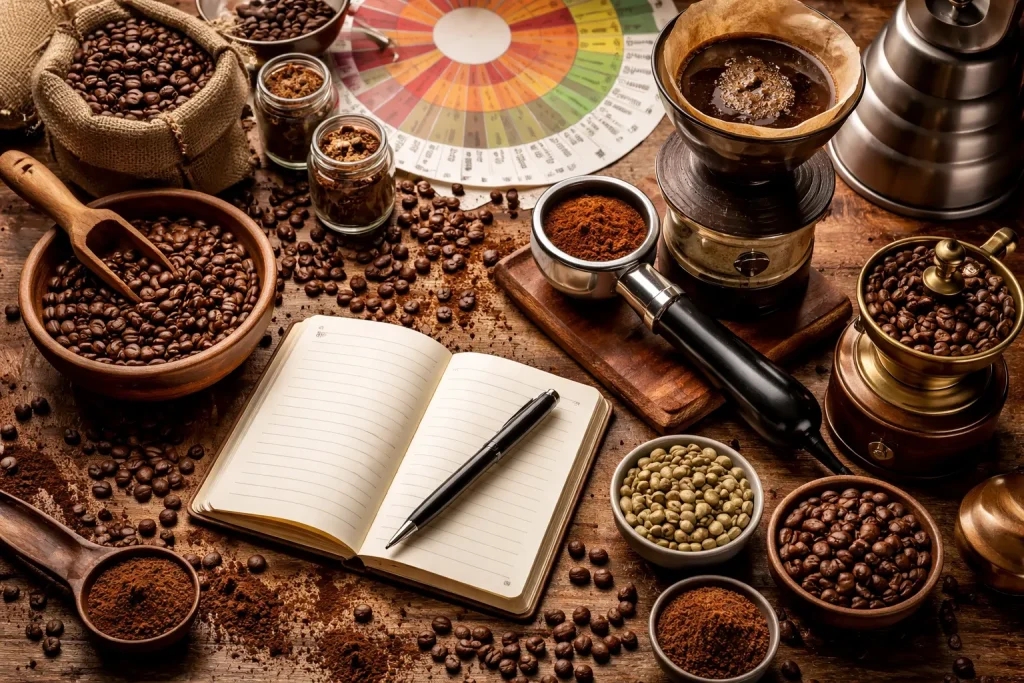
This section explains key tasting words that help describe a coffee’s flavor balance, purity, and layered notes. Each term guides how to judge quality and to communicate specific sensory details.
Balance
Balance means no single trait overwhelms the cup. It refers to the relationship between acidity, sweetness, bitterness, and body. A balanced coffee shows clear acidity without sharpness, steady sweetness that matches acidity, and bitterness that supports rather than hides flavor.
Tasters check balance by sipping across the full flavor range. If acidity is bright but sugar rounds it out, the coffee stays lively without tasting thin. If body feels heavy but sweetness is low, the cup can seem clumsy.
Practical cues: a balanced coffee will let fruit, floral, or chocolate notes emerge without being masked. Brewing adjustments—grind, dose, water temperature—often restore balance when a brew leans too sour or too flat.
Clean Cup
Clean cup describes how free a coffee is from off-flavors and defects. It means the flavors are pure, with no chemical, fermented, or stale notes. Cleanliness helps the true origin and processing characteristics show through clearly.
Producers and roasters aim for clean cups by controlling processing, storage, and roast profile. During cupping, tasters expect crisp clarity: individual notes should be identifiable, like jasmine, lime, or caramel, rather than muddled together.
Signs of a clean cup include consistent aroma and taste across several sips and no lingering unpleasant aftertastes. If a cup tastes moldy, boxy, or overly yeasty, it fails the clean cup standard.
Complexity
Complexity describes how many distinct flavors a coffee reveals and how they change from sip to sip. A complex coffee offers multiple identifiable notes—fruit, floral, herbal, or spice—that evolve through the sip and aftertaste.
Complexity depends on variety, terroir, processing, and roast. For example, a washed Ethiopian might show bright citrus and florals that shift to tea-like sweetness, while a natural-processed coffee may layer ripe berry, winey esters, and chocolate.
Tasters assess complexity by noting initial aroma, mid-palate flavors, and finish. A highly complex coffee will reward repeated tastings, as new subtleties surface with attention and proper brewing.
How to Practice Coffee Cupping Vocabulary
Practicing coffee cupping vocabulary means using clear tools, writing detailed notes, and building a consistent word list for flavors, aromas, and textures. The steps below show how to use a flavor wheel, record useful tasting notes, and grow a personal lexicon for reliable descriptions.
Using Coffee Tasting Wheels
A flavor wheel organizes taste and aroma terms by category: fruits, florals, spices, dairy, defects, and processing notes. Start with the center terms (sweet, sour, bitter, salty) and move outward to specific descriptors like “blackberry,” “bergamot,” or “molasses.”
Print or keep a digital wheel next to the cupping setup. During tasting, circle the closest category, then pick one or two precise words further out. This reduces guessing and forces specific language.
Practice with one coffee and one wheel category at a time. For example, focus on citrus vs. stone fruit in one session. Repeat with different origins and roast levels to build quick recognition.
Recording Coffee Tasting Notes
Use a structured form with fields for aroma, acidity, body, sweetness, finish, and defects. Note time of sniff, time of slurp, and how flavors change over 60–90 seconds. Short time stamps help track evolving notes.
Write single-line descriptors followed by intensity (low, medium, high). For example: “Acidity: bright lime (high); Body: silky (medium).” Add a short sentence about memories or comparisons only when it clarifies the term.
Keep notes consistent across cups. Use the same abbreviations and scale each time. This makes it easier to compare coffees and spot true differences rather than random impressions.
Building Your Coffee Lexicon
Start with a core list of 20–30 common terms covering acidity, body, sweetness, and common aroma families. Examples: citrus, floral, chocolate, nutty, ferment, astringent. Study one family per week.
Create a personal glossary with definitions and sensory anchors. Write a simple physical cue for each term, like “bergamot = Earl Grey tea scent.” Revisit the glossary during cupping sessions and update it when a term becomes clearer.
Practice naming flavors out loud with peers or a mentor. Consistent use in conversation helps cement terms. Over months, expand the list with rare descriptors only after they appear repeatedly in different coffees.
Advanced Coffee Tasting Concepts
These ideas explain why two cups from the same farm can taste different and how specific steps in processing shape sweetness, acidity, and mouthfeel. Focus stays on measurable, sensory changes and practical cues tasters can use.
Terroir Influence
Terroir shapes coffee flavor through climate, altitude, and soil chemistry. Higher altitude often yields firmer beans with brighter acidity and floral or citrus notes. Lower altitudes tend to produce fuller body and earthier or chocolate-like flavors.
Rainfall timing and temperature swings affect fruit ripeness. Slow, cool maturation concentrates sugars and acids, which tasters detect as pronounced sweetness and clean acidity. Sun exposure and shade cover influence sugar development and aroma complexity.
Soil minerals imprint subtle tasting differences. Soils rich in iron or volcanic minerals can add mineral or smoky notes. Producers can test soil and map lot flavors; cuppers can track patterns by sample origin.
| Terroir Factor | Typical Sensory Effect |
| Altitude | Higher: brighter acidity, floral; Lower: heavier body, cocoa notes |
| Rainfall/Seasonality | Even rain: consistent sweetness; Erratic rain: uneven ripeness, mixed flavors |
| Soil Type | Volcanic/mineral soils: mineral/complex notes; Sandy: cleaner, lighter cup |
Processing Method Impact
Processing converts cherry sugars and acids into final cup characteristics. Washed (wet) processing removes fruit pulp quickly; tasters note clearer acidity, tea-like clarity, and pronounced origin character. Natural (dry) processing dries whole cherries; it often increases perceived sweetness, fruity esters, and heavier body.
Honey or pulped-natural methods leave some mucilage on the seed during drying. They sit between washed and natural in flavor, often showing candied sweetness with moderate acidity. Fermentation time and control greatly affect off-flavors and desirable complexity.
Key sensory markers to watch:
- Increased fruity esters → likely natural or long fermentation.
- Clean, bright acidity → likely washed.
- Syrupy body and jammy fruit → likely natural or prolonged drying.
| Processing Method | Common Cup Traits |
| Washed | Clean acidity, clear origin notes, lighter body |
| Natural | Fruity esters, sweeter perception, fuller body |
| Honey/Pulped-natural | Balanced sweetness, moderate acidity, syrupy texture |
Common Misconceptions About Coffee Tasting
Many people think tasting coffee requires a trained palate, but anyone can learn basic skills with practice. Simple exercises—like comparing two brews side by side—help build recognition of acidity, sweetness, and body.
Some assume darker roasts always taste stronger. Roast level changes flavor and bitterness, not just strength. A light roast can have more perceived acidity and complex flavors, while dark roasts often taste bolder because of roast-derived notes.
Others believe bitterness means bad coffee. Bitterness can be a normal part of balance when paired with sweetness and acidity. Excessive bitterness often points to over-extraction or poor brewing, not an inherent flaw in coffee beans.
People often think espresso always has more caffeine than drip coffee. Volume matters: a shot of espresso is concentrated, but a typical cup of drip coffee usually contains more caffeine overall. Caffeine content varies by bean, roast, and brew method.
Some say aroma and flavor are the same. Aroma refers to smells perceived through the nose, while flavor combines aroma with taste on the tongue. Smelling before sipping reveals many nuances that tasting alone can miss.
Beginners may avoid descriptors like “floral” or “berry” as pretentious. These words simply link sensory notes to familiar smells and tastes to help communicate what the coffee presents. Using clear, concrete examples makes tasting notes useful and practical.
FAQS
What does “acidity” mean in coffee tasting?
Acidity describes the bright, tangy sensations in coffee. It refers to liveliness on the tongue, not sourness, and can range from citrusy to wine-like.
How does “body” differ from “mouthfeel”?
Body is the weight or thickness of the coffee in the mouth. Mouthfeel includes texture details like smoothness or oiliness.
What is “crema” and why does it matter?
Crema is the thin, golden foam on espresso. It signals freshness and proper extraction, but taste and aroma matter more than crema alone.
How should someone use a flavor wheel or glossary?
They should use it as a reference to compare notes during tasting. It helps name flavors and track changes across roasts and brewing methods.
Are “defects” the same as bad flavor?
Not always. Defects are specific off-flavors from poor processing or storage. A coffee can taste unusual without being defective.
What is “cupping”?
Cupping is a standard method to evaluate coffee. It involves steeping grounds, breaking the crust, and slurping to assess aroma and taste.
Quick tip list for beginners:
- Start with a small set of terms: acidity, sweetness, body, aroma.
- Taste slowly and take notes.
- Compare the same coffee brewed different ways to learn differences.
A short glossary table
| Term | Meaning |
|---|---|
| Acidity | Bright, lively taste |
| Body | Weight in mouth |
| Crema | Espresso foam |
| Cupping | Professional tasting method |
Conclusion
Tasting terms give them clear words to describe what they drink. They make conversations with baristas and roasters simpler and more precise.
Learning a few key terms boosts confidence when trying new beans. It also helps them notice subtle changes from origin, roast, or brewing.
Practice by tasting with intent and using the same terms each time. Over time, their tasting notes become useful records for choosing beans they like.