
You hold a cup that began as a tiny seed on a faraway tree, and knowing how that seed turns into your morning brew makes each sip richer. Ethan Cole from Webrewcoffee.com often says the journey moves through clear steps—growing, harvesting, processing, roasting, grinding, and brewing—that shape taste and aroma at every stage.
Coffee starts as a cherry on a plant and becomes your drink through careful processing, roasting, and brewing that bring out its flavor.
If you want better coffee at home, a few simple changes in grind, roast, or brew method make a big difference. This guide walks through the key stages and gives practical tips so you can taste the difference right away.
Key Takeways
- Beans come from coffee cherries and go through drying and processing before roasting.
- Roasting and grinding control flavor and extraction for your brew.
- Small changes in technique improve everyday coffee.
From Coffee Plant to Bean
Coffee starts as fruit on a tree, grows in specific climates, and becomes the roasted seed people brew. The variety, farm care, and processing all shape the bean’s flavor, size, and aroma.
Coffee Plant Varieties
Coffee mainly comes from two species: Coffea arabica and Coffea canephora (Robusta). Arabica tastes brighter and has more acidity; it usually grows at higher elevations between 600–2,000 meters. Robusta is heartier, has more caffeine, and tolerates hotter, lower-altitude sites.
Within those species are many cultivars like Bourbon, Typica, Caturra, and SL28. Each cultivar affects cup notes, disease resistance, and yield. Farmers choose varieties based on climate, soil type, and market demand.
Beans from peaberry cherries are single seeds and can roast differently. Farmers and buyers note variety and cultivar on green-bean bags because they predict flavor and roasting behavior.
Cultivation and Harvesting
Coffee needs steady rainfall, stable temperatures, and well-drained soil. Shade trees help regulate temperature and protect plants from wind and sun. Farmers prune, fertilize, and watch for pests like coffee borer beetles and leaf rust.
Cherry ripening occurs roughly eight months after flowering for many varieties. Harvest methods vary: selective picking takes only ripe cherries by hand and raises quality. Strip harvesting removes all cherries at once and suits large farms or mechanical harvesters.
After harvest, farmers sort cherries to remove underripe or damaged fruit. This step prevents off-flavors and helps processors manage fermentation and drying evenly.
Processing Methods
Processing removes the pulp and mucilage that surround the seeds. The three main methods are washed (wet), natural (dry), and honey (semi-washed). Each changes fermentation, sugar exposure, and final flavor.
Washed processing ferments and rinses the fruit away, producing cleaner, brighter flavors. Natural processing dries whole cherries, which often yields heavier body and fruit-forward notes. Honey processing leaves some mucilage on the bean during drying, creating flavors between washed and natural.
After drying, workers parch the beans to about 10–12% moisture, then remove the parchment layer in hulling. The resulting green beans are graded for size and defects before export or roasting.
Roasting Coffee Beans
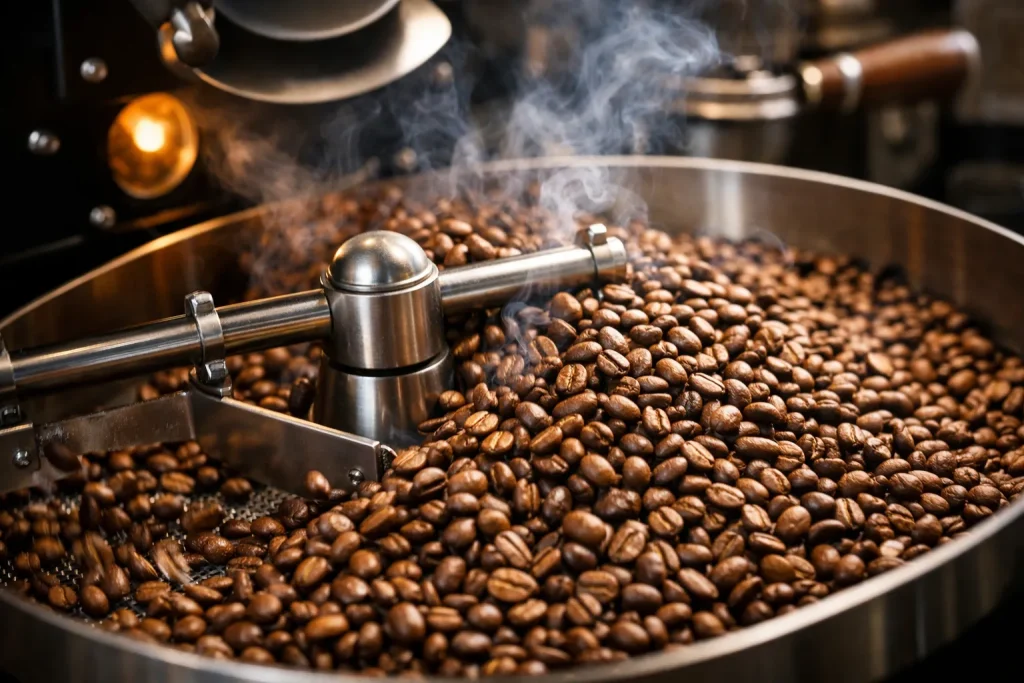
Roasting turns green coffee into the brown beans used for brewing. Heat drives chemical changes, opens the bean’s structure, and shapes the final taste, aroma, and body.
Roasting Levels and Flavors
Roasters measure how long and hot beans roast to make distinct levels: light, medium, and dark.
Light roasts heat until the first crack; they keep more origin flavors like bright fruit and floral notes. Light beans are denser and often show higher acidity.
Medium roasts go slightly past first crack. They balance acidity and sweetness, with caramel and chocolate tones. Many cafes use medium roasts for consistent flavor across brewing methods.
Dark roasts reach or pass the second crack. Oils come to the surface, and bitter, smoky, or toasted flavors grow. Dark beans have lower perceived acidity and a heavier body.
Flavor changes follow predictable chemical steps, like sugar caramelization and Maillard reactions, which can be explored further at the Smithsonian or Britannica for technical details.
Roasting Techniques
Roasters choose methods based on batch size and control. Drum roasting tumbles beans inside a heated drum for even heat and consistent profiles. It suits specialty and commercial roasters who need repeatable results.
Hot-air (fluid-bed) roasters use fast-moving air to roast quickly and produce cleaner, brighter flavors. This method works well for small, even batches and lighter roasts.
Home roasters may use small electric machines or modified popcorn poppers for practice. They must monitor temperature and time closely to avoid uneven development or tipping into burnt flavors.
Key controls include roast temperature, airflow, and roast time. Roasters track roast curves—temperature versus time—to repeat a profile. Recording these details helps match taste across batches.
Cooling and Storing Roasted Beans
Beans stop roasting only when cooled quickly. Roasters use cooling trays with strong airflow or metal cooling drums to pull heat out in minutes. Rapid cooling preserves the intended roast level and stops unwanted chemical changes.
Freshly roasted beans release gases (degassing) for several days. Many packers wait 12–48 hours before sealing to avoid bag swelling. Use one-way valve bags to let gas escape while keeping air out.
Store roasted beans in a cool, dark place in an airtight container. Avoid the fridge or freezer for daily use; repeated temperature changes harm flavor. For best taste, grind just before brewing and use beans within two to four weeks of roast for peak freshness.
Grinding Coffee
Grinding turns roasted beans into particles sized for brewing. It affects how quickly water pulls flavor from the grounds and helps match the coffee to the brewing method.
Types of Coffee Grinders
Blade grinders chop beans with a spinning blade. They are cheap and simple. They make uneven particle sizes, which can cause both over-extraction and under-extraction in one brew.
Burr grinders crush beans between two surfaces. They give consistent particle sizes. Conical and flat burrs are common; conical burrs stay cooler and are quieter, while flat burrs often produce very uniform grinds for espresso.
Hand grinders use burrs and a manual crank. They suit travel or small batches and keep beans fresh until grinding. Electric burr grinders handle larger volumes quickly and offer settings for different brew methods.
Maintenance matters: clean burrs and empty grounds often. Dull burrs reduce consistency. Replacing parts keeps flavor steady.
Grind Size and Its Impact
Grind size controls extraction speed. Coarse grinds (like sea salt) slow extraction and work well for French press and cold brew. They require longer contact time with water.
Medium grinds (like sand) suit drip machines and pour-over brewers. They balance surface area and flow rate for clearer cups without sludge.
Fine grinds (like table salt to powdered sugar) speed extraction and fit espresso and Moka pots. Too fine a grind can clog filters and cause bitter flavors.
Adjust grind size in small steps when a cup tastes sour (under-extracted) or bitter (over-extracted). Use a scale and consistent dose, then change grind before altering brew time or water temperature.
Brewing Coffee

This section explains how different brewing methods change taste, how water quality and temperature affect extraction, and how to measure coffee and water for consistent results.
Popular Brewing Methods
Pour-over, French press, and drip machines are the most common home methods. Pour-over (V60, Kalita) uses a medium-fine grind and a steady pour to highlight clarity and acidity. French press uses a coarse grind and full immersion for heavier body and oils. Drip machines use a medium grind and set brewing time; they are convenient and consistent.
Espresso and moka pot use fine grinds and pressure to extract strong, concentrated coffee. AeroPress combines immersion and pressure with quick brew times and allows recipe tweaks. Cold brew uses very coarse grounds steeped in cold water for 12–24 hours, yielding low-acidity, smooth coffee.
Choose a method by desired strength, body, and convenience. Grind size, brew time, and agitation matter most for consistency.
Water Quality and Temperature
Water makes up about 98% of brewed coffee, so its taste and mineral content matter. Use clean, fresh water free of strong chlorine or off-odors. Many baristas recommend filtered water with balanced minerals; see guidelines from the Specialty Coffee Association for details.
Temperature affects how compounds extract from the grounds. Typical brewing temperatures range 195–205°F (90–96°C). Lower temps under-extract, causing sour or weak taste. Higher temps over-extract, bringing bitterness and harshness. Let boiling water sit 30 seconds before pouring if no thermometer is available. For cold brew, use room-temp or chilled water and long steep times.
Adjust temperature slightly when brewing darker or lighter roasts. Dark roasts often do well at slightly lower temps; light roasts may need the higher end of the range.
Coffee-to-Water Ratios
A consistent coffee-to-water ratio gives repeatable results. A common starting point is 1:15 to 1:17 by weight (1 gram coffee to 15–17 grams water). For a 12-ounce (340 ml) cup, use about 20–22 grams of coffee at 1:16 ratio.
Use a scale for accuracy rather than measuring spoons. For stronger coffee, lower the ratio to 1:14; for milder, raise it to 1:18 or 1:20. Adjust in small steps and taste each change.
Brewing time and grind size interact with ratio. Finer grinds extract faster and may need less coffee or shorter brew time. Coarser grinds need more time or slightly more coffee to reach similar strength.
For more precise guidance on ratio and extraction, the Specialty Coffee Association offers testing standards and resources.
Serving and Enjoying Coffee
Serve coffee at the right temperature, in clean cups, and with simple options for milk and sweeteners. Small choices—cup size, water temperature, and timing—shape the taste more than fancy gadgets.
Best Practices for Serving
They should preheat cups with hot water for 30–60 seconds. This keeps brewed coffee from cooling too fast and preserves aroma. Serve brewed coffee between 60–70°C (140–158°F) for black coffee and 55–65°C (131–149°F) when milk is added.
Use a scale or measured scoop to pour consistent servings: 10–12 g of coffee per 180 ml water for a standard drip cup. Keep brew-to-water ratios and grind size the same for repeatable results. Offer fresh milk and a small pitcher for pouring, plus a spoon and a napkin.
Keep serviceware clean and dry. Replace coffee within 30 minutes of brewing for best flavor; brewed coffee left longer tastes stale or bitter.
Flavor Enhancements
They can adjust flavor without masking the bean by using these simple options:
- Milk types: whole milk adds creaminess; oat milk adds sweetness and holds foam well.
- Sweeteners: white sugar dissolves fastest; simple syrup mixes evenly in hot or iced coffee.
- Spices and syrups: a light dusting of cinnamon or a drop of vanilla syrup enhances aroma. Use subtly—start with 1/8 to 1/4 tsp cinnamon or 5–10 ml syrup.
For tasting, suggest a small sample cup first. Encourage trying coffee black to notice origin notes, then add one change at a time to find the preferred balance.
Sustainable Coffee Production
Sustainable coffee production reduces harm to forests and water, and improves farmer pay and job safety. It focuses on specific farming methods, processing steps, and trade rules that protect ecosystems and help farm families earn stable incomes.
Environmental Practices
Many farms use shade trees, cover crops, and mixed planting to protect soil and wildlife. Shade trees lower sun stress on coffee plants and cut irrigation needs. Cover crops prevent erosion and add organic matter back into the soil.
Farmers often switch to organic fertilizers and reduce synthetic pesticides. This lowers water pollution and keeps beneficial insects alive. Some cooperatives monitor water use and treat processing wastewater to prevent river contamination.
Certifications and monitoring guide changes on the farm. They track metrics like fertilizer use, tree cover, and water discharge. Buyers sometimes pay premiums for beans that meet these standards, creating a market reward for eco-friendly practices.
Key environmental practices at a glance:
| Practice | Benefit |
|---|---|
| Shade-grown coffee | More biodiversity, less water use |
| Cover crops | Soil protection, improved fertility |
| Organic inputs | Less chemical runoff, healthier soil |
| Wastewater treatment | Protects local water bodies |
Fair Trade Initiatives
Fair trade programs set minimum prices and extra payments for community projects. This helps farmers cover production costs when market prices fall. It also funds schools, clinics, and farm equipment through cooperative projects.
Cooperatives play a big role in managing funds and training. They negotiate sales, arrange quality control, and invest in processing equipment that raises bean value. Training covers better harvesting, drying, and record-keeping to increase yields and quality.
Buyers sign long-term contracts to offer income stability. Those contracts often include technical support and access to finance. This combination of stable prices, training, and shared investment helps smallholders stay in business and improve living conditions.
Global Coffee Traditions
Different places shape how people brew, serve, and drink coffee. Some regions focus on strong, small servings while others value slow, communal rituals. Ingredients, equipment, and social roles also change how coffee fits into daily life.
Regional Differences in Preparation
In Ethiopia, coffee often starts with green beans roasted over a pan, then ground by hand. They use a small pot called a jebena to boil grounds and water together. Servings are small and poured into tiny cups, sometimes three times for each guest.
Turkey and parts of the Middle East use very fine grounds boiled in a cezve (ibrik). The grounds settle in the cup and may be flavored with cardamom. Espresso-based drinks dominate Italy, where baristas pull short, strong shots and serve them quickly at the counter.
Vietnam brews coffee through a small metal drip filter called a phin, often over condensed milk for a sweet, creamy drink. Scandinavian countries prefer light-roasted beans and large filter pots for long, mild coffee sessions.
Cultural Significance
Coffee acts as a social glue in many cultures. In Ethiopia, the full coffee ceremony can take an hour and marks hospitality and respect. Guests sit together while beans are roasted and brewed, making the act a shared event.
In Italy, stopping for an espresso is a quick social ritual that marks a pause in the day. It is common to drink standing at the bar and chat briefly with friends or the barista.
In Turkey, coffee holds symbolic roles, such as being used in matchmaking traditions and fortune-telling from leftover grounds. In Vietnam, coffee shops serve as common meeting places for conversation, work, and relaxation, blending Western and local habits.
The Science Behind Coffee Extraction
Extraction is the process that pulls flavor, aroma, and body from ground coffee using water. Small changes in grind, time, temperature, and coffee-to-water ratio change which compounds dissolve and how the cup tastes.
Extraction Variables
Grind size controls contact area. Finer grounds extract faster and give stronger flavor but can cause over-extraction and bitterness. Coarser grounds extract slower and can taste weak or sour if under-extracted.
Water temperature affects which compounds dissolve. Temperatures between 195–205°F (90–96°C) extract acids, sugars, and oils well. Lower temps favor acids and can taste sharp; higher temps pull more bitter oils.
Brew time and agitation set how long water touches the grounds. Longer contact pulls more solids; stirring or pouring in pulses speeds extraction. The coffee-to-water ratio sets concentration. A common starting ratio is 1:15–1:17 (coffee grams : water grams).
Water quality matters too. Dissolved minerals help extraction and flavor. Very soft or very hard water can mute or exaggerate certain notes. Roast level and grind uniformity also change how those variables behave.
Common Brewing Issues
Bitterness usually means over-extraction, too fine a grind, too hot water, or too long a brew time. Coarse the grind, lower temperature slightly, or shorten contact time to reduce bitterness.
Sourness or thin taste points to under-extraction. Try a finer grind, hotter water, or longer brew time. Also check dose; too little coffee for the water will taste weak.
Muddy or uneven flavors come from inconsistent grind size or poor technique. Use a burr grinder for uniform particles and ensure even wetting during brewing. Adjust ratio and brew method if certain flavors dominate.
Flat or dull cups can stem from stale beans, improper water, or low extraction. Use fresh-roasted beans, clean equipment, and target the proper ratio and temperature for clearer flavor.
FAQS
What is the full journey of coffee?
It starts as a cherry on a tree, then moves through harvesting, processing, drying, roasting, and brewing. Each step changes the flavor.
How long does it take from planting to a cup?
Trees take about 3–4 years to produce cherries. Processing, shipping, and roasting add weeks to months before brewing.
Does roast level change caffeine?
Roast affects taste more than caffeine. Darker roasts taste bolder, but caffeine differences are small.
What are the main processing methods?
Two common methods are washed (fruit removed before drying) and natural (cherries dried whole). Each gives different flavors.
How should beans be stored?
Keep beans in an airtight container, away from light and heat. Use within a few weeks for best flavor.
Can brewing method change strength?
Yes. Methods like espresso use pressure and short time for concentrated coffee. Pour-over and French press use different extraction and taste.
Quick tip table
| Question | Short answer |
|---|---|
| Whole beans or ground? | Whole beans stay fresher longer. Grind before brewing. |
| Water temperature? | About 195–205°F (90–96°C) for most brews. |
| How much coffee per cup? | A common ratio is 1:15–1:17 (coffee). |
They can experiment with roast, grind, and brew to find a preferred cup.
Conclusion
Coffee goes from seed to cup through many hands and steps. Each stage—growing, processing, roasting, and brewing—shapes the flavor.
People everywhere work to bring coffee to the table. Small choices by farmers and roasters change what the drink tastes like.
Knowing the process helps people pick beans and brewing methods they like. It also shows how care and skill matter in every cup.