
What Is Coffee: Origins, Composition, and How It’s Made
You drink coffee to wake up, to focus, or simply because you enjoy the taste. Coffee comes from the roasted seeds of the Coffea plant and can be brewed many ways to suit your mood or schedule. It’s a simple drink with endless variety — from the bean type to how you brew it — that anyone can learn to make better at home.
Ethan Cole explains that small changes in grind, water, and method make big differences in flavor, and he shares practical tips for home baristas who want clearer, tastier cups. For step-by-step brewing methods and gear advice, see this brewing guide.
Key Takeaways
- Coffee starts as roasted seeds and changes a lot with different beans and processing.
- Small technique tweaks improve flavor more than expensive gear.
- Easy brewing tips help anyone make better coffee at home.
Definition of Coffee
Coffee is a drink made from the roasted seeds of Coffea plants. It has a bitter flavor, contains caffeine, and appears in many forms from plain brewed coffee to milk-based espresso drinks.
What Constitutes Coffee
Coffee starts as the seed inside a coffee cherry grown on Coffea trees, mainly Coffea arabica and Coffea canephora (robusta). Producers remove the outer fruit, dry or wash the seeds, then roast them. Roasting transforms green seeds into brown beans and creates the flavors and aromas people expect.
Grinding and hot water extract soluble compounds from roasted beans. This produces the dark, aromatic liquid called coffee. The most important components are caffeine (a stimulant), oils that carry flavor, and acids that add brightness. Decaffeinated beans follow the same process but lose most caffeine through chemical or water-based methods.
Common Types of Coffee Beverages
- Drip/Filter Coffee: Hot water passes through ground coffee in a paper or metal filter. It yields a clean, straightforward cup served black or with milk and sugar.
- Espresso: Pressurized hot water extracts a small, concentrated shot of coffee with a layer of crema on top. It serves as the base for many drinks.
- Americano/Long Black: Espresso diluted with hot water to approximate a brewed cup’s strength.
- Cappuccino/Latte/Flat White: Espresso mixed with steamed milk and varying foam amounts. Cappuccino has the most foam; latte has more milk; flat white is velvety with thin foam.
- Cold Brew/Iced Coffee: Coarse grounds steep in cold water for many hours, producing a smooth, low-acid drink served chilled.
Each style differs by grind size, water temperature, extraction time, and milk or water ratio. These variables shape taste, strength, and mouthfeel.
History of Coffee
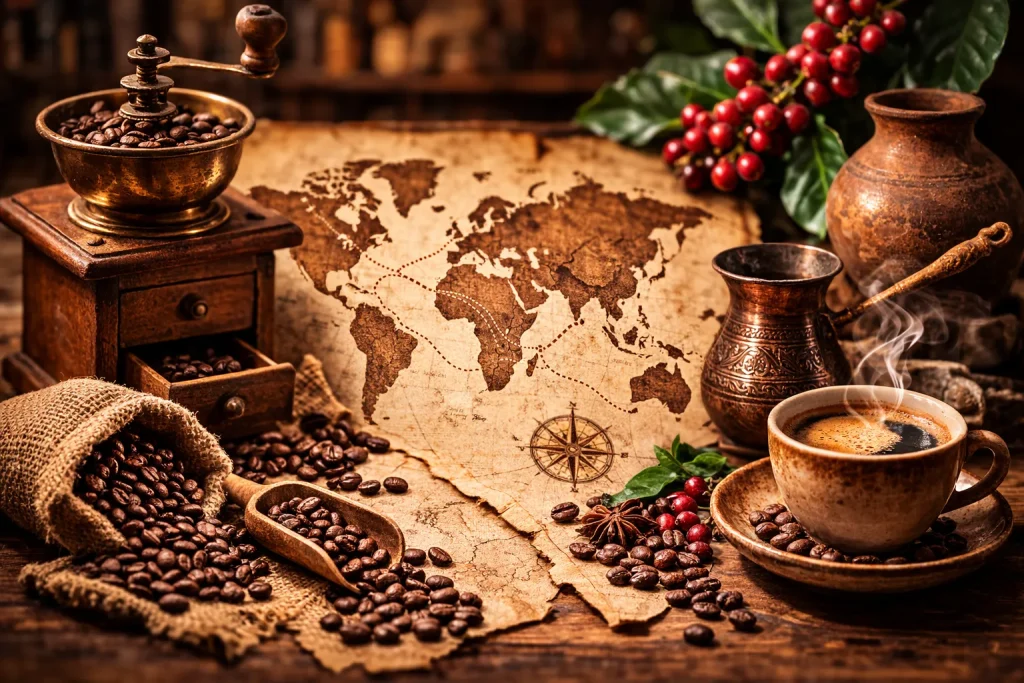
Coffee began in Ethiopia and moved through Yemen to the wider world. It shaped social life, trade routes, and colonial economies as it spread from local use to a global commodity.
Origins and Discovery
Wild coffee plants grew on the Ethiopian plateau called Kefa (Kaffa). Local people ate the red coffee cherries and noticed a mild energy boost.
A popular legend credits a goat herder named Kaldi who saw lively goats after they ate the cherries. Stories like this illustrate how people first linked the plant to stimulation.
By the 15th century, Yemeni Sufi Muslims cultivated and brewed coffee to stay alert during night prayers. Yemen developed early roasting and brewing methods and began trading coffee across the Red Sea.
The move from wild harvest to farming and trade marks coffee’s first major shift from local use to a cultivated crop.
Coffee’s Global Spread
Trade from the Arabian Peninsula carried coffee to Persia, Egypt, Syria, and Turkey by the 16th century. Coffeehouses, called qahveh khaneh, became public meeting places in Ottoman cities.
European travelers brought reports and beans home in the 17th century. Coffeehouses opened across Europe and spurred conversation, business, and new tastes.
Colonial powers then established plantations in Asia, Africa, and the Americas. This expanded production but also relied on forced labor and large-scale land changes.
By the 18th and 19th centuries, coffee had become a major global commodity, traded widely and consumed by many social classes.
Cultural Significance of Coffee
Coffeehouses acted as centers for news, debate, and business in many societies. They influenced art, politics, and intellectual life, especially in cities like Cairo, Istanbul, London, and Paris.
Coffee also shaped daily rituals: morning cups, café culture, and specific brewing methods carried social meaning across regions.
Economically, coffee tied producing regions to world markets and affected land use and labor systems.
Culturally, it inspired new customs, from Turkish coffee fortune-telling to Italian espresso routines, showing how a single plant altered daily life and social habits worldwide.
Coffee Plant and Varieties
Coffee grows as evergreen shrubs or small trees with glossy leaves and fragrant white flowers. Plants produce cherries that contain two seeds called beans, and genetic variety shapes flavor, yield, and disease resistance.
Botanical Overview
The coffee plant belongs to the genus Coffea in the Rubiaceae family. Most cultivated plants are shrubs that reach 3–10 meters, though growers prune them lower for harvest. Flowers appear in clusters and develop into red or yellow cherries that each hold one or two seeds.
Leaves are opposite and leathery, while roots stay shallow, which makes soil depth and moisture important. Coffee plants prefer stable, mild temperatures and consistent rainfall. Farmers select varieties for traits like cup quality, yield, and resistance to pests and diseases.
Notable Coffee Species
Two species dominate commercial production: Coffea arabica and Coffea canephora (commonly called Robusta). Arabica offers more complex flavors and lower caffeine, but it is more fragile and prefers higher elevations. Robusta yields more, resists diseases and pests, and has higher caffeine and a harsher taste.
Within Arabica, important varieties include Typica, Bourbon, and Geisha, each with distinct cup profiles and growing needs. Hybrids and cultivars such as Catimor and Caturra combine traits like disease resistance or increased yield. Wild and less common Coffea species exist, but they play a minor role in global supply.
Growing Regions
Coffee thrives in the “coffee belt” between the Tropics of Cancer and Capricorn. Key Arabica-growing regions include highland areas of Ethiopia, Colombia, Guatemala, and Kenya, where elevation and cooler nights enhance flavor development. Geisha, for example, is prized when grown in Panama and Costa Rica at high altitudes.
Robusta dominates lower-elevation, warmer regions such as Vietnam, parts of West Africa, and Indonesia. Soil type, rainfall patterns, and microclimate drive flavor differences between farms. Farmers match variety to local conditions to balance cup quality, yield, and farm resilience.
Coffee Production Process
Coffee starts as fruit on tropical trees and becomes green beans ready for roasting. Key steps include picking ripe cherries, removing the fruit, drying or washing the beans, and then roasting to develop flavor.
Harvesting and Processing
Harvesting usually happens when cherries turn bright red. Workers pick by hand for quality, or machines strip the branches in large farms. Hand-picking lets pickers select only ripe cherries. Mechanical harvesting speeds the job but can mix unripe fruit with ripe.
After picking, processors choose a method: natural (dry), washed (wet), or honey (semi‑washed). Natural drying spreads whole cherries on patios or raised beds until the skin and pulp dry and are removed. Washed processing removes the pulp, ferments the beans to loosen the mucilage, then rinses and dries. Honey processing removes the outer skin but leaves some mucilage, giving a sweeter cup. Drying aims for about 10–12% moisture to prevent mold. Proper drying and storage protect aroma and prevent defects.
Roasting Methods
Roasting transforms green beans into brown coffee by applying heat between 370–540°F (188–282°C). Roasters monitor color, smell, and “crack” sounds to reach stages: first crack signals light roast; second crack marks medium‑dark. Roast time and temperature shape acidity, body, and bitterness.
Common roast profiles:
- Light roast: higher acidity, more origin flavor, shorter roast time.
- Medium roast: balanced acidity and body, slightly sweeter.
- Dark roast: lower acidity, heavier body, more roast-derived flavors.
Roasters use drum or hot‑air machines. Drum roasters tumble beans for even heat transfer. Hot‑air roasters roast faster and highlight brightness. Cooling quickly after roast stops further chemical change and locks in flavor.
Preparation and Brewing Methods
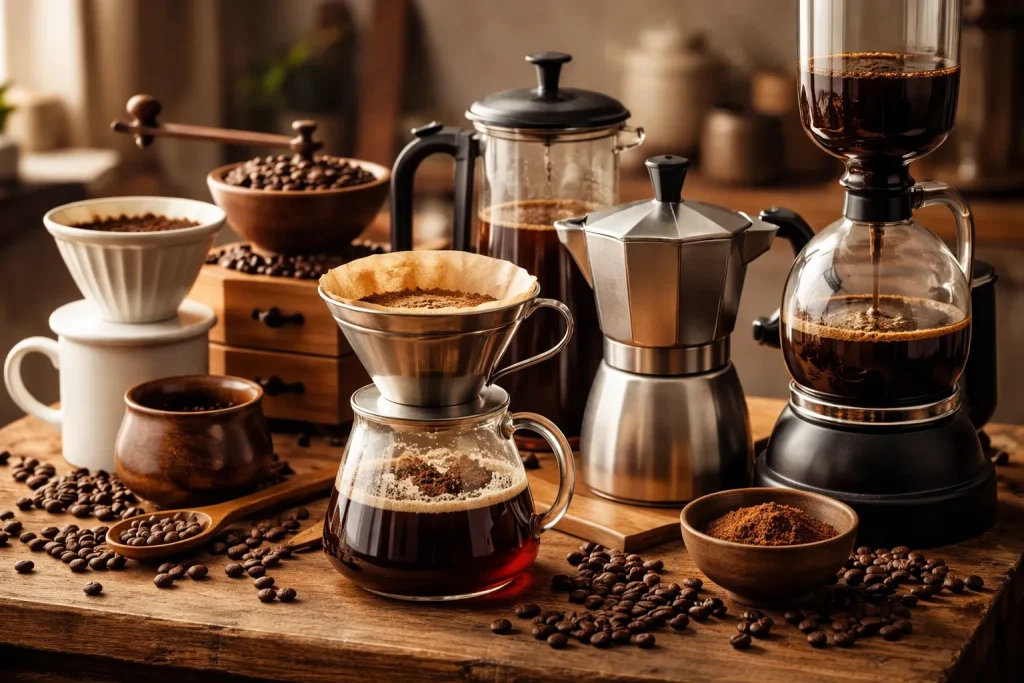
Brewing changes coffee’s flavor, strength, and texture. Small choices—grind size, water temperature, and brew time—have big effects on the cup.
Popular Brewing Techniques
They list common methods by how they extract flavor and oils.
- Drip / Pour-over: Hot water pours over medium-fine grounds in a paper or metal filter. It yields a clean, bright cup. Typical ratio: 1:15–1:17 (coffee). Brew time: 2.5–4 minutes.
- French press: Coarse grounds steep in hot water for 4 minutes, then a metal plunger separates grounds. It gives fuller body and more oils.
- Espresso: Very fine grounds, high pressure (9 bar), short contact time (20–30 seconds). Produces a concentrated shot used for drinks like lattes and cappuccinos.
- Cold brew: Coarse grounds steep in cold water for 12–24 hours. Results in low-acid, smooth coffee concentrate.
- AeroPress / Single-cup devices: Flexible methods that use pressure or immersion for 1–2 minutes. They suit quick, single servings and allow recipe control.
Each method needs specific grind and timing to avoid under- or over-extraction.
Influence of Grind and Water Quality
Grind size controls extraction speed and balance.
- Coarse: Slower surface area, used for French press and cold brew. Prevents over-extraction.
- Medium: Best for drip and pour-over. Balances acidity and body.
- Fine: Required for espresso and Aeropress recipes that use pressure. Increases extraction quickly.
Water matters as much as grind.
- Temperature: 195–205°F (90–96°C) for hot brews. Lower temps under-extract; higher temps taste bitter.
- Mineral content: Slightly mineral water (moderate hardness) improves flavor extraction. Distilled or very hard water can make coffee taste flat or off.
- Ratio and consistency: Use a scale and aim for consistent recipes (e.g., 1:15). Consistent water and grind produce repeatable results.
Adjust one variable at a time—grind, temperature, or brew time—to dial in the desired flavor.
Flavor Profile and Characteristics
Coffee shows a mix of tastes, aromas, and mouthfeel that come from the bean and how it was handled. Key elements include acidity, sweetness, bitterness, body, and aroma; these combine in many ways to create distinct cups.
Key Taste Elements
Acidity gives coffee brightness and a lively feel. It can be described as lemony, apple-like, or winey, and is more noticeable in light roasts and high-altitude beans.
Sweetness balances acidity and bitterness. Natural sugars in the bean produce caramel, honey, or brown-sugar notes when properly roasted.
Bitterness comes from roast development and extraction. Darker roasts and over-extracted brews show stronger bitter notes like dark chocolate or burnt caramel.
Body means the weight and texture on the tongue. Coffees range from tea-like and thin to syrupy and heavy; espresso typically has fuller body.
Aroma and aftertaste add complexity. Fragrant notes—floral, nutty, fruity, or spicy—shape first impressions and the flavor that lingers after swallowing.
Factors Affecting Flavor
Origin shapes baseline flavors. Region, altitude, and soil chemistry influence sugar levels, acidity, and common tasting notes (for example, Ethiopian coffees often show fruity floral notes; Brazilian beans often show nutty chocolate tones).
Varietal and genetics set inherent traits. Different Arabica and Robusta varieties carry distinct acidity, sweetness, and disease resistance that affect cup profile.
Processing method changes the fruit-to-bean chemistry. Washed, natural, and honey processes alter sweetness and fruitiness—naturals often boost fruit and body; washed coffees tend to show cleaner acidity.
Roast level and roast profile transform flavors. Light roasts keep origin character and acidity; medium roasts add caramel and nutty notes; dark roasts emphasize roast flavors and reduce origin distinction.
Brew method and grind control extraction. Finer grinds and longer contact bring out bitterness and body; coarser grinds and shorter contact highlight acidity and clarity. Water quality and temperature also affect balance.
Health and Nutritional Aspects
This section covers what coffee delivers nutritionally, how much caffeine it contains and what that means, and the main benefits and risks people report when they drink it.
Caffeine Content
A standard 8-ounce (240 ml) cup of brewed coffee contains about 95 mg of caffeine, though values range from 70–140 mg depending on bean type and brew method. Espresso shots are more concentrated: a single 1-ounce (30 ml) shot has roughly 63 mg of caffeine. Instant coffee and decaf contain much less—decaf usually has 2–5 mg per cup.
Caffeine raises alertness by blocking adenosine receptors in the brain. Effects start within 15–45 minutes and last 3–5 hours for most people, but genetics and tolerance change that. People who metabolize caffeine slowly can feel stronger, longer effects and may need lower amounts.
Practical limits: many health agencies advise keeping daily caffeine under 400 mg for most adults, roughly four standard cups. Pregnant people, those with certain heart conditions, and children should aim for much lower intakes.
Potential Benefits
Coffee provides low calories when served black and supplies small amounts of potassium and magnesium. It is a major source of dietary antioxidants, mainly chlorogenic acids, which help reduce oxidative stress at the cellular level.
Regular moderate coffee drinking links to lower risks of type 2 diabetes, Parkinson’s disease, and some liver conditions in large population studies. It can improve short-term attention, reaction time, and physical endurance before exercise. Both regular and decaf show some protective associations, suggesting compounds beyond caffeine also play a role.
Benefits depend on dose and individual factors. Adding sugar and cream raises calories and can offset health gains. People should weigh personal health goals when choosing brew strength and add-ins.
Possible Risks
High intake of unfiltered coffee (French press, Turkish) can raise LDL cholesterol slightly due to cafestol and kahweol compounds. Very high consumption—more than five cups daily—associates in some studies with lower bone density in certain women, though calcium intake can reduce that risk.
Caffeine can cause jitteriness, increased heart rate, stomach upset, and sleep disruption, especially when consumed late in the day. People with anxiety disorders, certain heart arrhythmias, or who are pregnant should limit or avoid caffeine per medical advice.
Dependence and withdrawal (headache, fatigue, irritability) can occur after regular heavy use. Individual tolerance varies widely, so monitoring symptoms and adjusting intake remains the safest approach.
Economic and Environmental Impact
Coffee supports millions of jobs worldwide, from smallholder farmers to baristas in cities. The industry generates large revenue — in some countries it accounts for a major share of export earnings and rural income.
Economic pressures drive many decisions on farms. Low world prices and rising production costs push some producers into poverty and limit investment in sustainable practices. Programs and certifications aim to improve farmer incomes but reach varies by region.
Coffee production uses significant water, land, and energy. Irrigation, processing, and transport add to its environmental footprint. In some areas, expanding coffee cultivation has contributed to deforestation and soil erosion.
Producers and companies are testing solutions to reduce harm. Shade-grown methods, better water management, and agroforestry can protect biodiversity and soil. Many buyers promote climate-resilient varieties and pay premiums for sustainability practices.
Key facts at a glance:
- Jobs: Millions employed across the supply chain.
- Economic value: Hundreds of billions in global market activity.
- Environmental risks: Water use, deforestation, soil loss, and greenhouse gas emissions.
- Mitigation: Shade-growing, agroforestry, water-saving processing, and sustainability programs.
They face tradeoffs between short-term income and long-term land health. Policies and market incentives shape how widely sustainable practices spread.
Modern Trends in Coffee Consumption
Coffee buyers now seek sharper flavor, clearer sourcing, and lower environmental harm. New brewing styles, origin labels, and ingredient choices shape daily habits and buying decisions.
Specialty Coffee Movement
The specialty coffee movement pushes quality from farm to cup. Roasters grade beans by cupping scores and list origin details like farm, altitude, and processing method. This makes flavor more predictable and traceable for consumers.
Third-wave shops focus on manual brewing methods such as pour-over and AeroPress. Baristas adjust grind, dose, and water temperature to highlight single-origin notes like citrus, chocolate, or florals. Many cafes offer tasting flights and brewing guides to teach customers what to expect.
Direct trade and micro-lot releases link roasters with specific producers. These deals often pay higher premiums and fund better farm practices. Consumers pay more, but they get distinct flavors and a clearer paper trail for where the coffee came from.
Sustainability Practices
Sustainability now affects purchasing and production choices across the industry. Companies report sustainability measures such as shade-grown practices, reforestation projects, and water-use reduction at wet mills. These practices aim to protect biodiversity and improve long-term yields.
Certifications like Fair Trade, Rainforest Alliance, and organic remain common, though buyers also look for transparency beyond labels. Traceability systems, digital farm profiles, and third-party audits help verify claims and show price splits between growers and buyers.
Brands and cafes also reduce waste with reusable cup incentives, composting coffee grounds, and recyclable packaging. Some producers explore coffee varieties that resist disease or need less fertilizer, which can lower environmental impact and stabilize farmer incomes.
FAQs
What is coffee made from?
Coffee comes from the roasted seeds of the Coffea plant. Beans are seeds inside coffee cherries that farmers harvest and process.
How many types of coffee beans exist?
The two main species are Arabica and Robusta. Arabica often has milder flavor; Robusta has more caffeine and a stronger taste.
How much caffeine is in a cup?
Caffeine varies by bean, roast, and brew method. A typical 8-ounce (240 ml) cup has about 80–120 mg of caffeine, though espresso and specialty drinks differ.
Does roasting change the flavor?
Yes. Lighter roasts keep more of the bean’s origin flavors. Darker roasts develop bolder, roasted notes and reduce some acidity.
What brewing methods are common?
Popular methods include drip, French press, pour-over, espresso, and cold brew. Each affects strength, body, and flavor balance.
Is decaf caffeine-free?
Decaffeinated coffee still contains small amounts of caffeine. It is not completely caffeine-free but usually has much less.
How should coffee be stored?
Store beans in an airtight container in a cool, dark place. Whole beans keep flavor longer than pre-ground coffee.
Quick tips:
- Grind just before brewing for fresher taste.
- Use a 1:15–1:18 coffee-to-water ratio for balanced flavor.
- Adjust grind size for the brewing method.
Conclusion
Coffee is a simple drink with a complex story. It starts as a seed, goes through many choices in growing and roasting, and ends as a drink people enjoy around the world.
It offers caffeine that can sharpen focus and lift energy for many people. It also contains other compounds that affect taste and aroma, which explains why different beans and methods produce such varied cups.
People choose coffee for many reasons: routine, flavor, social ritual, or a small daily boost. Small changes in brewing, grind, or bean origin can change the final cup significantly.
Care and quality matter at every step. Farmers, roasters, and baristas each shape the cup’s character, and consumers can learn basic brewing steps to get more consistent results at home.
Coffee remains both a global commodity and a personal habit. It connects agriculture, culture, and daily life in a way few other drinks do.