
Beginner Guide to Coffee: Friendly Steps for Brewing, Tasting, and Choosing Beans
You stand at the start of a simple, tasty journey into coffee. Ethan Cole at Webrewcoffee.com has helped many people move from instant cups to fresh-brewed coffee you actually enjoy, and this guide gives clear steps so you can do the same. You will learn how to pick beans, use basic gear, and brew a cup that tastes good without fancy equipment.
This post keeps things practical and short so you can try methods right away. Expect easy tips on grind size, water, and common brewing methods that make a real difference, plus simple ways to fix common mistakes.
Key Takeways
- Learn the basics of beans, grind, and water to make better coffee at home.
- Use a few essential tools and simple brew steps to get consistent results.
- Small adjustments in technique and choice of beans will improve flavor quickly.
What Is Coffee?
Coffee is a drink made from roasted seeds of the Coffea plant. It provides flavor, aroma, and varying levels of caffeine depending on bean type and preparation.
Brief History of Coffee
Coffee likely began as a wild plant in Ethiopia. People first chewed the berries, then brewed a drink after centuries of trade through the Arabian Peninsula. By the 15th century, coffee houses appeared in Yemen and Mecca as places for conversation and work.
European traders brought coffee to the Mediterranean in the 17th century. It spread to Asia, the Americas, and eventually became a global crop. Colonists and merchants established large coffee farms, shaping economies in Brazil, Vietnam, and Colombia.
Key historical points:
- Origin: Ethiopia, then Yemen.
- Spread: Middle East → Europe → Asia and the Americas.
- Modern impact: Major export crop for several tropical countries.
Understanding Coffee Varieties
Two main species dominate the market: Arabica and Robusta. Arabica has a smoother, sweeter taste with more acidity and complex flavors. Robusta contains more caffeine, tastes stronger and more bitter, and grows at lower cost.
Other factors change flavor too:
- Altitude: Higher farms usually yield brighter, more nuanced beans.
- Processing: Washed, natural, and honey processing create different notes.
- Roast level: Light roasts preserve origin flavors; dark roasts add smokiness.
A quick comparison table:
| Feature | Arabica | Robusta |
|---|---|---|
| Flavor | Fruity, floral, complex | Strong, bitter, earthy |
| Caffeine | Lower | Higher |
| Growing altitude | High | Low–mid |
| Price | Higher | Lower |
Buyers should taste both kinds to decide what they prefer.
Coffee Beans 101
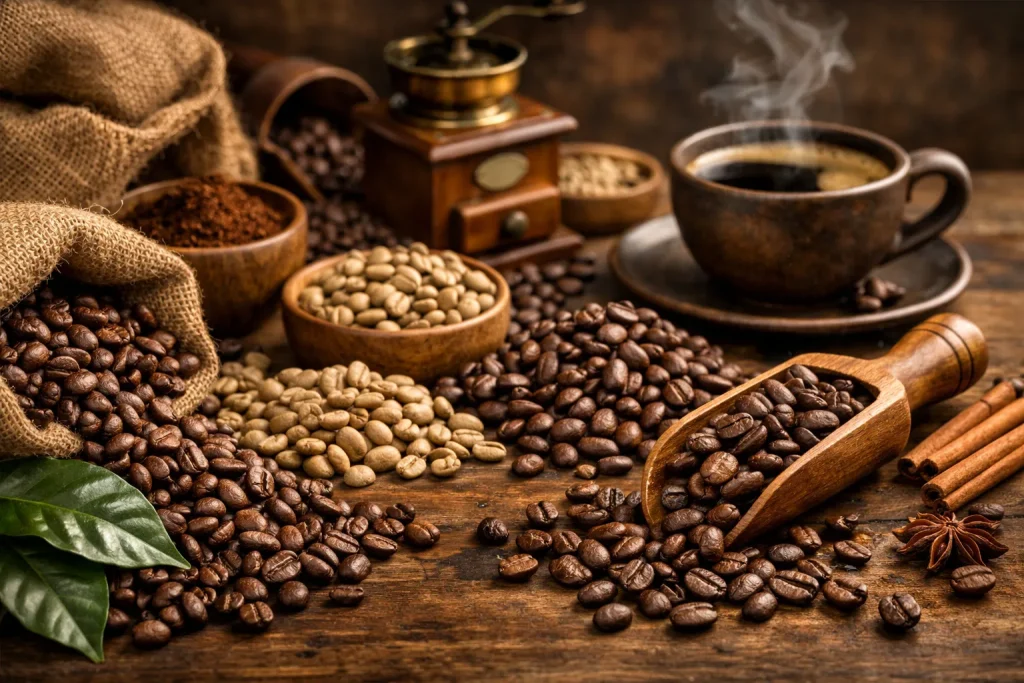
Coffee beans differ by species, origin, and roast. The right bean affects flavor, caffeine, and how the coffee brews. Freshness, roast date, and grind size matter most for a good cup.
Arabica vs Robusta
Arabica beans come from Coffea arabica and make up most specialty coffee. They usually taste sweeter, with notes like fruit, chocolate, or floral. Arabica has lower caffeine and more acidity, which gives bright, complex flavors.
Robusta comes from Coffea canephora and grows at lower cost. It tastes stronger, more bitter, and has higher caffeine. Robusta often adds crema and body to espresso blends. It also resists disease better and yields more per plant.
Buy Arabica for flavor complexity and Robusta when you want more punch or an affordable espresso base. Many mixes use both to balance taste, crema, and price.
Single Origin vs Blends
Single-origin beans come from one country, region, or farm. They show specific flavors tied to soil, altitude, and climate. For example, Ethiopian single-origins can be fruity and floral, while Colombian beans often taste nutty and caramel-like.
Blends mix beans from different places or varieties. Roasters blend to create balanced flavor, consistent taste, or a specific profile for espresso. A typical espresso blend might combine Brazilian beans for body and Ethiopian beans for brightness.
Choose single-origin to explore unique flavors. Pick blends for reliable taste and a well-rounded cup. Both have value depending on whether someone values variety or consistency.
How to Choose Fresh Beans
Look for a roast date on the bag. Fresh-roasted coffee is best within 2–4 weeks after roast for most brewing styles. Avoid bags that only list a “best by” date without a roast date.
Buy whole beans and grind them just before brewing. Whole beans keep flavor longer. If grinding at home, adjust grind size to the brew method: coarse for French press, medium for drip, fine for espresso.
Check packaging: one-way valve bags keep gases out and preserve aroma. Store beans in an airtight container away from heat, light, and moisture. For larger amounts, freeze in small portions if not using within two weeks.
Useful resources: the Specialty Coffee Association offers standards and guides on freshness, and the USDA provides coffee crop and quality info.
Essential Coffee Gear for Beginners
A few key pieces of gear make the biggest difference: a good grinder, a reliable coffee maker, and the right filters and small accessories. Investing in these items helps the user get consistent flavor, save money, and learn how brewing variables change the cup.
Grinders
A burr grinder matters most for consistent grind size. It crushes beans between two surfaces and produces uniform particles. This consistency helps extraction and prevents under- or over-extracted coffee.
Recommend a conical or flat burr grinder in the $50–$200 range for most beginners. Manual hand grinders work well for travel or low budgets; electric burr grinders save time and are easier for daily use. Avoid blade grinders because they create uneven particle sizes.
Look for grind settings that cover coarse to fine. Stepped adjustments are fine for drip coffee; stepless or many precise steps help if he or she wants espresso later. Easy cleaning and a doser or catch cup are useful features.
Coffee Makers
Choose a coffee maker by the brewing style the person prefers. For automatic drip, pick a machine with a showerhead that wets grounds evenly and a flat-bottom basket for consistent flow. A 10–12 cup machine works for households; a 4–6 cup model suits one or two people.
For single-cup brewing, a pour-over cone (plastic, glass, or ceramic) plus a gooseneck kettle gives control over pour speed. A simple French press yields rich body and needs only coarse grounds and a 4-minute steep.
If exploring espresso, a beginner semi-automatic machine paired with a tamper and pressure gauge helps build skills. Capsule machines are easiest but limit bean choice. Consider size, ease of cleaning, and whether the machine has a built-in grinder.
Filters and Accessories
Paper filters, metal filters, and cloth filters each change the cup. Paper filters remove oils and give a cleaner cup. Metal or cloth filters allow more body and oils through, creating fuller flavor. Match filter type to the brew method and taste preference.
Essential accessories include a kitchen scale for accurate coffee-to-water ratio, a thermometer or variable-temperature kettle (or a thermometer probe), and a sturdy spoon or small scoop. A timer helps reproduce recipes. A simple brush for grinder and machine cleaning keeps equipment working well.
Other helpful items: an airtight container for beans, a small knock box for spent grounds, and a basic tamper for espresso. These accessories improve consistency and make daily brewing easier.
How to Brew Coffee at Home
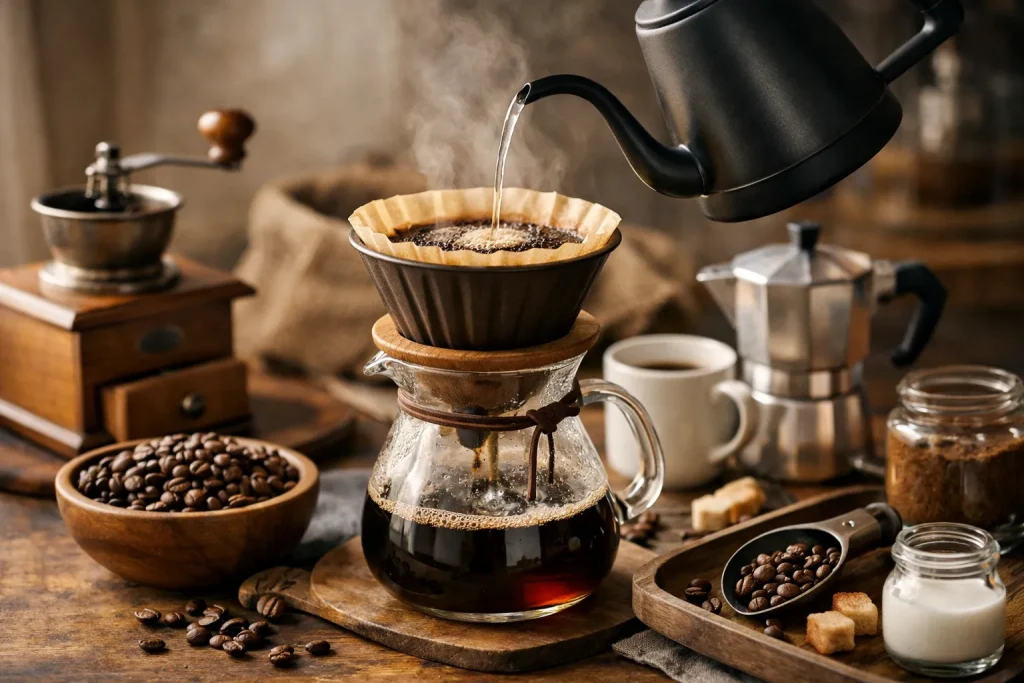
This section covers the core practical steps: how much coffee and water to use, the main brewing methods, and a clear step-by-step routine to make a consistent cup. It focuses on simple, repeatable actions that improve taste.
Measuring Coffee and Water
They should weigh coffee and water whenever possible. A digital scale gives repeatable results. Use a 1:15–1:17 coffee-to-water ratio by weight for most methods. For example, 20 g coffee to 300 g water (1:15) makes a full-strength cup.
If a scale is not available, use a standard tablespoon: 1 level tablespoon ≈ 5–7 g ground coffee. For one 8-oz (240 ml) cup, aim for 2 level tablespoons. Measure water in milliliters or fluid ounces for accuracy.
Grind size matters. Use coarse for French press, medium for drip, and fine for espresso. Grind just before brewing for best flavor. Store beans in an airtight container away from heat and sunlight.
Brewing Methods Overview
They can pick a method that matches equipment and time. Common home methods include:
- Pour-over (V60, Chemex): clean flavor, needs steady pouring.
- Drip coffee maker: hands-off, consistent for day-to-day use.
- French press: fuller body, uses coarse grounds and 4 minutes brewing.
- AeroPress: fast, versatile, and easy to clean.
- Espresso machine: concentrated shots, needs pressure and fine grind.
Each method needs the right grind, water temperature (195–205°F / 90–96°C), and contact time. For pour-over, aim for 2.5–3.5 minutes total brew time. French press generally brews 3.5–4.5 minutes. AeroPress times vary from 1–2 minutes depending on recipe. Learn one method first, then adjust variables.
Step-by-Step Brewing Guide
They should heat fresh water to about 200°F (93°C). A kettle with temperature control helps; otherwise bring water to a boil then wait 30 seconds. Rinse paper filters to remove paper taste and preheat the brewer.
Measure and grind beans immediately before brewing. Add grounds to the filter or vessel. Start the pour with a small amount of water (bloom) equal to twice the coffee weight and wait 30–45 seconds to let gases escape.
Continue pouring in slow concentric circles until reaching the target water weight. Aim for even saturation and avoid pouring directly on the filter sides. Let the brew finish dripping or steep for the time suited to the method. Stir gently if the recipe calls for it.
Serve immediately and taste. If coffee is sour, try a finer grind or hotter water. If it’s bitter, use a coarser grind or slightly cooler water. For detailed brewing tips and equipment guidance, see resources from the Specialty Coffee Association and the USDA on coffee safety and brewing techniques.
Popular Brewing Methods
This section gives clear, practical steps and gear tips for four common ways to brew coffee. Each method lists grind size, water temperature, typical brew time, and what makes the cup taste different.
Drip Coffee
Drip machines use a paper or metal filter and pour hot water over medium-ground coffee. They work well for hands-off brewing and make 1–12 cups depending on the machine.
- Grind: medium (similar to granulated sugar).
- Water temp: 195–205°F (90–96°C).
- Brew time: 4–6 minutes for full-line drip baskets; single-serve times vary.
- Gear: electric drip brewer, paper filters or permanent filter, coffee scale helps consistency.
Paper filters remove oils and give a cleaner cup; metal filters let more oils through for a fuller body. Measure coffee by weight (about 15–18 g per 250 ml) to keep strength consistent. Clean the machine and decalcify regularly to avoid off-flavors.
French Press
French press uses immersion brewing and a metal mesh plunger to separate grounds from water. It produces a full-bodied cup because oils and fine particles stay in the brew.
- Grind: coarse, like sea salt.
- Water temp: 195–205°F (90–96°C).
- Brew time: 4 minutes for most recipes; stir once after adding water.
- Gear: French press, kettle, coarse grinder, scale and timer for best results.
Scooping by volume works, but weighing coffee gives repeatable flavor. Press slowly and evenly to avoid extra bitterness. Pour immediately after plunging to reduce sediment in the cup.
Pour Over
Pour over uses a cone and filter to control flow and extraction. It suits those who want a brighter, cleaner cup and hands-on control over bloom and pour speed.
- Grind: medium-fine (slightly finer than drip).
- Water temp: 195–205°F (90–96°C).
- Brew time: 2.5–3.5 minutes total, including a 30–45 second bloom.
- Gear: pour-over cone (V60, Kalita, etc.), paper filters, gooseneck kettle, scale, timer.
Start with a 1:16 coffee-to-water ratio (e.g., 20 g coffee to 320 g water) and adjust for strength. Pour in a slow, circular motion to keep grounds evenly wet. Paper filters give clarity; metal or cloth filters change texture and mouthfeel.
Cold Brew Basics
Cold brew steeps coarse coffee in cold water for many hours to create a smooth, low-acid concentrate. It’s ideal for iced coffee and makes a concentrate that can be stored for days.
- Grind: very coarse, like peppercorns.
- Water temp: room temperature or cold.
- Brew time: 12–24 hours steeping, then filter.
- Gear: large jar or dedicated cold-brew maker, coarse grinder, fine mesh or paper filter.
Use a ratio like 1:4 to 1:8 for concentrate (by weight), then dilute to taste with water or milk. Filter twice if needed to remove sediment. Keep refrigerated and use within 7 days for best flavor.
Making Coffee Taste Great
Small changes make the biggest difference: store beans away from air and heat, use clean water with balanced minerals, and match grind size to the brew method. These three habits shape flavor far more than expensive gear.
Proper Coffee Storage
They should keep beans whole until use. Whole beans lose flavor slower than pre-ground. Store them in an opaque, airtight container with a tight seal to block oxygen and light.
Place the container in a cool, dry spot away from ovens, windows, and direct sunlight. A cupboard at room temperature works well. Avoid the fridge and freezer for daily-use beans because moisture and odors can change taste.
Buy only what they will use in 1–3 weeks. For longer storage, freeze beans in small, sealed bags and thaw only the portion needed. Label bags with roast date so they can track freshness.
Water Quality
They must use clean water with some mineral content. Distilled water often tastes flat; very hard water can make coffee bitter. Aim for water with total dissolved solids around 75–150 ppm if possible.
Filtered tap water usually works. Run a glass of water and smell it first; any chlorine or odd odors will affect the cup. If municipal water tastes off, use a simple carbon filter or bottled spring water labeled for drinking.
Keep the kettle and brewer clean. Mineral buildup and old oils change flavor fast. Descale equipment per manufacturer instructions and rinse filters to remove paper taste before brewing.
Grinding Tips for Flavor
They should grind beans just before brewing. Ground coffee loses aroma and develops stale flavors within minutes. A burr grinder gives consistent particle size, which helps extract flavor evenly.
Match grind size to the method: coarse for cold brew and French press, medium for pour-over, and fine for espresso. If coffee tastes sour, try a finer grind or higher water temperature. If it tastes bitter or muddy, use a coarser grind or shorter brew time.
Dose precisely. Use a kitchen scale and start around a 1:16 coffee-to-water ratio (e.g., 15 g coffee to 240 g water) then adjust. Small, measured changes in grind and dose make clear differences in taste.
Experimenting With Coffee Flavors
Readers learn how roast level, dairy and sweeteners, and small add-ins change taste and texture. They can try clear steps to find what they like, such as sampling light vs. dark roasts, testing milk types, and adding spices or syrups in small amounts.
Trying Different Roasts
Light, medium, and dark roasts highlight different flavor traits. Light roasts keep more origin flavors like fruity or floral notes and higher perceived acidity. Medium roasts balance origin character with sweetness and body, often showing caramel or chocolate hints. Dark roasts mute origin notes and add toasted, smoky, or bitter flavors.
Have a tasting plan. Brew the same coffee bean at each roast level using the same method, such as pour-over or drip. Use a scale for dose and a timer for brew time. Cup side by side and note aroma, acidity, sweetness, and finish.
Make small changes between trials. Try a coarser grind or slightly longer brew to see how roast reacts. Record what each roast tastes like and which moments (first sip, mid-sip, aftertaste) stand out. This helps pick a roast for daily drinking or special occasions.
Adding Milk and Sweeteners
Milk changes texture and mutes acidity. Whole milk adds creaminess and brings out sweetness, while skim milk thins the cup and highlights acidity. Plant milks—oat, almond, soy—vary: oat adds roundness, almond can bring a nutty lift, and soy keeps body with less sweetness.
Start with a small ratio change. For example, try 1 part milk to 3 parts coffee, then 1:1 for lattes. Heat milk gently; scorched milk creates off-flavors. For sweeteners, test teaspoon amounts of cane sugar, honey, or syrup. Liquid sweeteners dissolve faster than granulated sugar.
Note how milk and sweetener alter balance. If coffee tastes flat, try less milk or a brighter roast. If it feels too bitter, add a little sweetener or switch to a creamier milk. Keep a quick log of combinations that work.
Exploring Coffee Add-Ins
Add-ins let readers customize flavor without changing the brew. Common choices include a pinch of cinnamon, a drop of vanilla extract, cocoa powder, or citrus peel. Spices add aroma; citrus brightens acidity; salt can reduce bitterness in small amounts.
Use measured amounts and add gradually. Start with a pinch of spice or 1/8 teaspoon of extract for a cup, then increase only if needed. For cold drinks, try flavored syrups or a splash of cream liqueur; for hot drinks, steep whole spices briefly in the coffee grounds before brewing.
Keep safety and freshness in mind. Store spices and syrups properly and avoid artificial ingredients if they cause sensitivity. Tasting in small steps helps find the right balance without wasting beans or milk.
Sustainable and Ethical Coffee Choices
This section explains how buying choices affect farmers, wages, and forests. It points to clear labels and farming practices that buyers can look for.
Fair Trade and Direct Trade
Fair Trade guarantees a minimum price and a social premium paid to farmer cooperatives. This helps cover costs when market prices fall. Buyers should check for the Fair Trade logo on the bag or the roaster’s product page.
Direct Trade means roasters buy straight from farms or cooperatives, often paying higher-than-market prices. It usually focuses on quality and traceable relationships. Look for roasters that publish farm names, payment levels, and harvest details.
Quick comparison table:
| Feature | Fair Trade | Direct Trade |
|---|---|---|
| Minimum price | Yes | No (market-based) |
| Traceability | Moderate | Often high |
| Farmer reports | Cooperative-level | Farm-level details common |
| Certification cost | Paid by farmers/coops | No formal cert cost (varies) |
Shoppers should prefer bags with clear info on price paid, farm origin, or cooperative names. That helps ensure money reaches growers.
Environmental Impact of Coffee
Coffee farming affects soil, water, and forests. Shade-grown methods protect biodiversity, while sun-grown monocultures can cause erosion and loss of wildlife habitat.
Look for these labels and practices:
- Organic: no synthetic pesticides or fertilizers.
- Shade-grown: better habitat for birds and insects.
- Agroforestry: mixes coffee with trees, improving soil and carbon capture.
Simple checklist for buyers:
- Choose organic or shade-grown when possible.
- Check if the roaster mentions reforestation projects or water use reductions.
- Prefer beans from farms that rotate crops or use composting.
Small changes in buying add up. Choosing beans with clear environmental claims supports healthier land and more stable yields for farmers.
Common Mistakes and How to Avoid Them
These are practical errors that change taste: extraction, measurements, and bean freshness. Fixing them uses tools most beginners already have — a scale, timer, grinder, and fresh beans.
Overextraction and Underextraction
Overextraction makes coffee bitter and hollow; underextraction tastes sour and weak. They both come from how long water contacts grounds, grind size, and water temperature.
Check grind size first. Too fine causes slow flow and overextraction; too coarse causes fast flow and underextraction. Adjust in small steps: move one notch coarser or finer, then brew again.
Watch brew time and bloom. For pour-over, aim for 2:30–3:30 minutes total; for French press, 4 minutes is common. If pouring, give a 30–45 second bloom with 2x water weight to let CO2 escape.
Control water temperature. 195–205°F (90–96°C) fits most beans. Cooler water leans sour; hotter water pulls more bitter compounds.
Use a simple checklist before brewing:
- grind size set for method
- scale and timer ready
- water at 195–205°F
- consistent pouring or immersion time
They should tweak one variable at a time. Changing several things at once makes it hard to learn what fixed the cup.
Incorrect Measurements
Wrong ratios make coffee too weak or too strong. The easiest fix is a scale and a clear recipe.
Use a coffee-to-water ratio of 1:15–1:17 by weight to start. For example, 20 g coffee to 300 g water (1:15) gives a stronger cup; 18 g to 324 g (1:18) makes it milder.
Measure coffee and water, not scoops. Scoops vary by grind and roast. Weighing ensures repeatable results and faster learning.
Record each brew. Note grams of coffee, grams of water, grind setting, brew time, and temperature. Small changes — 1–2 g of coffee or 10–15 g of water — show clear taste differences.
If a cup tastes off, compare notes. If it’s weak, add 1–2 g of coffee next time. If it’s too strong, increase water by 10–20 g.
Old or Stale Beans
Stale beans lose aroma and taste flat. Freshness matters more than fancy brewing gear.
Store beans in an airtight container in a cool, dark place. Avoid the fridge; moisture harms flavor. Use beans within 2–3 weeks of roast for peak taste, and within 7–10 days after opening for best results.
Buy whole beans and grind just before brewing. Pre-ground coffee degrades faster because more surface area is exposed to air.
Check roast dates, not best-by dates. Choose bags with a roast date and aim to buy small amounts that will be used within two weeks. If coffee smells flat or cardboard-like, replace the bag.
FAQS
What beans should a beginner try?
They should start with medium-roast beans. Medium roasts show clear coffee flavor without too much bitterness. It makes learning taste differences easier.
How important is grind size?
Grind size matters a lot. A coarse grind is good for French press, medium for drip, and fine for espresso. Changing grind size is a quick way to fix weak or bitter coffee.
How much coffee and water should they use?
A common rule is 1:15 to 1:17 coffee to water by weight. That means about 1 gram of coffee for every 15–17 grams of water. A kitchen scale helps make this simple and consistent.
Which brew method is best to start with?
Drip or pour-over works well for beginners. They are simple and teach control over grind, dose, and water. French press is also easy and forgiving.
How should they store coffee?
Keep beans in an airtight container, away from light, heat, and moisture. Buy small amounts and use them within a few weeks for the best flavor.
What if the coffee tastes bad?
They can adjust one thing at a time: grind, dose, water temperature, or brew time. Small changes reveal what improves the cup.
Quick tips:
- Use fresh, filtered water.
- Clean equipment often.
- Taste and tweak; learning takes a few tries.
Conclusion
The beginner finds coffee both simple and rich with choices. They can start with a medium roast and one easy brew method.
Trying different beans, grind sizes, and water ratios helps them learn what they like. Small changes lead to better cups.
Enjoyment matters more than rules. They should taste, adjust, and make coffee a pleasant daily ritual.