
How Turkish Coffee Is Served: Traditional Rituals, Cups, and Etiquette
You want to serve Turkish coffee that feels both authentic and welcoming. Learn the simple items you need, the polite steps to follow, and small touches that make the moment special. Turkish coffee is served in small porcelain cups with a glass of water and often a sweet like lokum, presented with calm, deliberate care to show hospitality.
Ahmet Demir notes that the ritual matters as much as the brew: warm the cup, pour slowly so grounds settle, and offer water first so guests cleanse their palate. Follow a few easy rules and your kitchen can host a true Turkish coffee moment that honors tradition without fuss.
Key Takeaways
- Use small porcelain cups, a glass of water, and a sweet for authentic serving.
- Pour slowly and present coffee with calm, respectful gestures.
- Simple steps let home hosts recreate traditional Turkish coffee rituals.
Traditional Serving Rituals
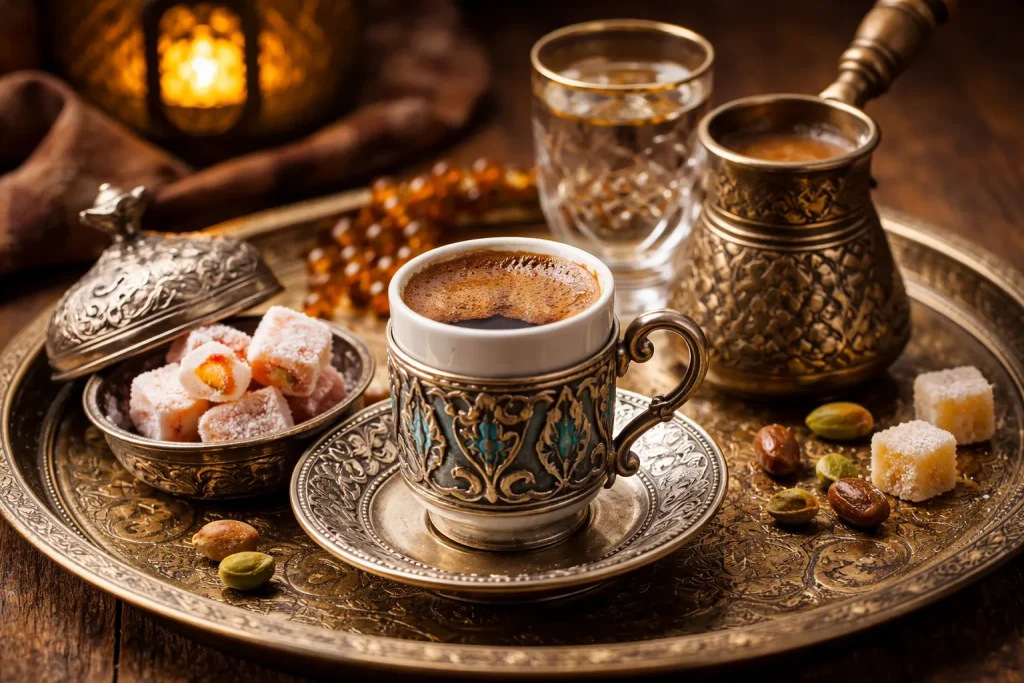
Turkish coffee is presented with care: a small cup, a glass of water, and often a sweet treat. The order of steps, how guests are addressed, and how the cup is handled shape the experience.
Serving Etiquette
Hosts place the coffee cup (fincan) on a small saucer and often set a glass of cold water beside it. Guests sip the water first to cleanse the palate, then take small, slow sips of the coffee. They stop before reaching the sediment at the bottom to avoid grounds.
A sweet item like Turkish delight or a piece of baklava frequently accompanies the cup. The sweet balances the strong, unfiltered coffee and signals hospitality. Serving on a decorative tray is common in homes and cafés.
When pouring, the host fills each cup evenly from the cezve or pot to preserve foam (kaimak) on the surface. Refilling a cup is rare; instead, the host will prepare a fresh cup for another round.
Historical Influences
The Ottoman court shaped many serving customs seen today. Palace etiquette emphasized presentation: ornate cups, silver trays, and a ritualized order of service that showcased status.
Coffee houses from the 16th century spread these habits to cities across the empire. They standardized practices like serving water and sweets and sitting for conversation. These places made coffee a social ritual, not just a drink.
UNESCO recognition of Turkish coffee as cultural heritage helped preserve these historic elements. Local families and cafés continue to follow details like foam care and cup placement rooted in that history.
Regional Variations
Istanbul cafés often use slightly sparkling water and ornate trays, reflecting urban showmanship. In smaller towns, hosts may present coffee more simply: a plain saucer and a small homemade sweet.
In southeastern Turkey, coffee might be served stronger and with extra grounds, suiting local taste. Cyprus and the Balkans, once under Ottoman influence, keep similar rituals but may use different cup shapes or sweeter accompaniments.
Some regions follow a custom of fortune-telling from the cup grounds after the drink is finished. The practice varies: some treat it as playful entertainment, while others take it more seriously.
Essential Serving Components

These items create the full Turkish coffee experience: a small cup for the brew, a glass of water to cleanse the palate, and a sweet bite to balance the strong, finely ground coffee.
Fincan and Serving Tray
A fincan is a small, often porcelain cup that holds about 60–90 ml of Turkish coffee. It should be thick enough to retain heat and sized so the foam (kaimak) sits visible at the top. Cups with a saucer help catch spills and make handling easier.
The serving tray is usually metal or wood and keeps multiple cups steady when serving guests. Arrange cups, a cezve (if showing preparation), and a small spoon on the tray. Decorative trays and ornate fincan add to tradition, but plain white porcelain emphasizes color and crema.
Water and Turkish Delight
Serve a small glass of cold water with each cup to cleanse the palate before tasting. The water should be plain and chilled; place it on the tray beside the fincan so guests can sip first and between sips.
Turkish delight (lokum) is the classic sweet paired with Turkish coffee. Offer one small piece per person, placed on the saucer or a separate dish. Choose plain rose, pistachio, or lemon varieties to complement rather than overpower the coffee’s bitterness.
Accompanying Sweets
Small sweets balance the intense flavor of the coffee. Common choices include Turkish delight, a cube of sugar (if the guest likes it sweet), or a small piece of chocolate. Present sweets in small plates or a divided dish for easy sharing.
Match the sweetness to the coffee strength. For very strong brews, pick a sweeter confection like lokum with nuts. For milder cups, dark chocolate or a lightly sweetened cookie works well. For more background on traditional pairings, the Wikipedia article on Turkish coffee provides useful context.
Presentation and Aesthetics
The cup, foam, and settled grounds show care in brewing and serving. Small, decorative cups and a glass of water set the scene. Foam texture and clear layer separation signal a well-made Turkish coffee.
Foam and Surface Appearance
Foam, called köpük, should be thick, even, and light brown across the cup. The server aims to keep the foam intact when pouring from the cezve to the fincan. Good foam forms when coffee is gently heated until it rises, then briefly removed from heat before it rises again.
Foam quality affects taste and mouthfeel. Thin or patchy foam may mean the coffee boiled too fast or the grind was uneven. Servers often spoon a little foam onto each cup to ensure every guest gets the best texture.
Visual cues for foam:
| Desired Feature | What it Indicates |
|---|---|
| Thick, uniform foam | Proper slow heating and fine grind |
| Small, tight bubbles | Freshly brewed, well-controlled heat |
| Large, collapsing bubbles | Overheated or rushed brewing |
Coffee Layer Separation
After drinking, grounds settle into a distinct bottom layer. The drink itself stays clear above the layer, with no filter used. Proper separation requires a fine grind and gentle pouring to avoid disturbing the sediment.
Layering shows the coffee was brewed slowly and allowed to rest briefly before serving. If the cup is swirled or poured too quickly, grounds mix into the liquid and cloud the cup. The settled layer also enables traditional fortune-telling with the leftover grounds.
Signs of good separation:
- Clear liquid above a compact sediment bed.
- Minimal floating particles on the surface.
- Easy reading of cup patterns when grounds are used for fortune-telling.
Order of Serving and Manners

Hosts serve coffee in a clear sequence and show respect through small gestures. Elders and honored guests receive the first cups, and the way a cup is offered or accepted matters more than the cup itself.
Serving Elders and Guests
The host pours for elders and the most senior guest first. Cups are filled from a single cezve or pot into small demitasse cups until each cup has foam on top. If foam is low, the host may spoon foam onto the next cup to keep presentation consistent.
Guests are often seated while being served. The host presents the cup with both hands or with the right hand only, depending on local custom. If someone declines the first cup, the host may offer it to another guest before pouring a replacement. Traditional practice leaves the grounds in the cup; drinking stops before the grounds are reached.
Gestures of Hospitality
Small extras signal care and welcome: a glass of water with each cup, a small sweet or lokum on the saucer, and a tidy tray for serving. Water cleanses the palate before coffee; sweets balance the strong flavor of the brew.
Conversation often pauses during the first sips as a sign of respect. Hosts should watch guests’ cues for refill requests. For more on brewing and cultural context, see Turkish coffee and resources from the World Coffee Research.
Modern Adaptations
Many cafés now offer flavored Turkish coffee to match today’s tastes. Cardamom and cinnamon are common additives, giving the brew a mild spice without changing the traditional method.
Some shops serve Turkish coffee cold or as a cold-brewed drink. This keeps the dense texture but makes the drink more refreshing for warm weather.
Electric cezves and small stovetop gadgets automate the brewing step. They help keep the right temperature and reduce the risk of boiling over, while still producing the foam known as kaymak.
Presentation has also changed in some places. Baristas pair Turkish coffee with small sweets like lokum (Turkish delight) or chocolate, and they use modern cups that keep the heat longer.
People sometimes blend Turkish coffee with other styles. For example, they might add milk or layer it in specialty drinks to create hybrid flavors. These variations respect the core brewing style while appealing to wider palates.
Many modern spots keep the ritual of serving grounds in the cup. They may add small printed cards explaining how to read coffee grounds for fortune telling, keeping a link to tradition even in a modern setting.
Festive and Special Occasions
Turkish coffee marks key life events and religious days with specific practices, choice of cup, and small rituals that show respect and community. Serving style, who prepares the coffee, and small additions like sweets or salt carry clear meanings.
Engagement Ceremonies
During engagement visits, the bride’s family often prepares Turkish coffee for the groom and his family. The bride may serve the groom a cup that can include a pinch of salt instead of sugar to test his patience and temperament. Guests watch his reaction; a calm response is seen as a sign of good character.
Coffee is served in small porcelain cups called fincan, usually with a saucer and a glass of water. Turkish delight or a small sweet accompanies the cup. The foam is kept intact and the host ensures each cup has a good layer of foam, which shows care and skill.
Fortune reading from the leftover grounds may follow in some families. The groom’s family sometimes brings gifts or promises; the coffee moment becomes both social and symbolic. Timing and seating follow household customs and respect for elders.
Religious Celebrations
On religious holidays like Eid, families often prepare Turkish coffee to welcome visitors and to show hospitality. The coffee appears after meals or during visits, served in fine cups with water and a sweet treat such as Turkish delight or baklava. Hosts arrange seating to honor elders first.
Preparation can be more formal: coffee is brewed slowly in a cezve until a thick foam forms, then served immediately to preserve texture. Families may use special serving trays or sets reserved for holidays. Serving coffee signals generosity and reinforces family ties.
In mosque-side gatherings or charity events, coffee may be offered to guests and volunteers. Portioning and presentation stay modest but respectful, reflecting the tone of the celebration rather than luxury.
FAQS
Who should serve Turkish coffee and why is it important?
It is often the host who serves Turkish coffee as a sign of hospitality. Serving shows respect and helps create a social moment.
Why is water served with Turkish coffee?
Water cleanses the palate before drinking. Guests sip water first to better taste the coffee’s strong flavor.
How much coffee is in a typical serving?
A fincan holds about 60–70 mL, similar to a small espresso. People sip slowly because the drink is concentrated and hot.
Should the grounds be swallowed or avoided?
The fine grounds settle at the cup’s bottom and are not meant to be drunk. They can be left in the cup after the final sip.
Is sugar added during brewing or after?
Sugar is usually added while brewing, not after. The cook asks for no sugar, little sugar, or medium sugar before preparing the coffee.
Can Turkish coffee be served at events or ceremonies?
Yes. It suits gatherings, family visits, and celebrations. It also appears in engagement traditions and fortune-telling customs.
What is the proper cup handling?
Hold the fincan by its handle and sip slowly. It is polite to accept the cup with both hands when offered by an elder or host.
Are there common accompaniments?
Turkish coffee often comes with a glass of water and sometimes Turkish delight or a small sweet. These balance the coffee’s intensity.
Conclusion
Turkish coffee blends taste, ritual, and hospitality into a simple serving moment. It emphasizes slow, attentive steps: small cups, a glass of water, and sometimes a sweet bite.
The foam, the grounds left in the cup, and the small pour all show care. These details shape how people experience the coffee and each other.
Serving often happens in social settings like visits or celebrations. It acts as a brief pause for talk, respect, and shared time.
A few quick tips help preserve the tradition:
- Use tiny demitasse cups to keep temperature and flavor balanced.
- Serve water first to cleanse the palate.
- Offer a sweet treat to soften the brew’s intensity.
Practicing the serving method keeps the ritual alive. It also lets newcomers taste both the coffee and the culture behind it.