
Espresso Terminology: A Clear Guide to Essential Terms and Techniques
You want to make better espresso and talk about it like a pro. Ethan Cole from Webrewcoffee.com shows you the key words baristas use, so you can order confidently, fix common problems, and fine-tune your shots at home. Learn the core espresso terms that explain how shots are made, how they taste, and how machines and grinders affect your cup.
This short guide breaks down essential jargon into simple, usable ideas. You will spot terms for grind size, extraction times, shot types, and equipment so you can improve brewing fast and avoid common mistakes.
Key Takeaways
- Learn the most useful espresso words to improve brewing and ordering.
- Understand how grind, water, and time change shot taste.
- Use clear machine and drink terms to troubleshoot and refine your espresso.
Essential Espresso Terminology
This section explains key terms used every day at the grinder and machine. It covers what espresso is, how extraction works, what crema tells you, and how dose affects the shot.
Espresso
Espresso is a concentrated coffee brewed by forcing hot water through finely ground beans under pressure. It usually uses 8–20 grams of coffee for a single or double basket and yields 20–40 grams of liquid in about 20–30 seconds, depending on the recipe.
Espresso has three visible parts: crema (top, foamy layer), body (middle, syrupy part), and heart (bottom, darker liquid). These layers form from emulsified oils, dissolved solids, and suspended gases from the beans.
Espresso differs from other coffee by grind size, pressure (commonly 9 bars), and short brew time. Machines, grinders, and tamping all influence the result, so consistent technique and equipment matter.
Extraction
Extraction describes how much of the coffee’s soluble material dissolves into the water. It’s measured as percent of coffee weight extracted; typical espresso sits between 18–22% extraction for balanced flavor.
Under-extraction tastes sour and thin; over-extraction tastes bitter and hollow. Baristas adjust grind, dose, tamp, temperature, and time to reach a target extraction. Dialing in means changing these variables to hit the desired yield and taste.
Useful quick checks:
- Short shots, pale crema → likely under-extracted.
- Long, bitter shots → likely over-extracted.
- Even flow and steady stream → extraction is more controlled.
Crema
Crema is the tan to dark-brown foam that sits atop a fresh espresso. It forms from emulsified oils, dissolved gases (mainly CO2), and tiny coffee particles pushed out under pressure. Good crema indicates fresh beans and proper pressure, but it’s not the only sign of quality.
Crema color and thickness vary by roast and bean freshness. Very thin or spotty crema may mean stale beans or poor pressure; very dark, oily crema can signal over-extraction or dark roast. Crema dissolves within a minute or two, so visual checks must be quick.
Baristas use crema to judge initial shot quality, but they rely on taste and extraction metrics for final decisions.
Dose
Dose means the amount of dry coffee placed in the portafilter, usually measured in grams. Typical doses: single 8–12 g, double 16–20 g; specialty brewers often use 18–20 g for doubles. Changing dose alters strength, extraction rate, and puck resistance.
Higher dose increases puck thickness and resistance, often slowing flow and increasing extraction if other settings stay the same. Lower dose reduces resistance, fastens flow, and can under-extract. Baristas adjust dose with grind and yield targets to maintain consistent taste across beans.
Use a digital scale for precise dosing and record dose + yield + time to reproduce or refine recipes.
Brewing Process Terms
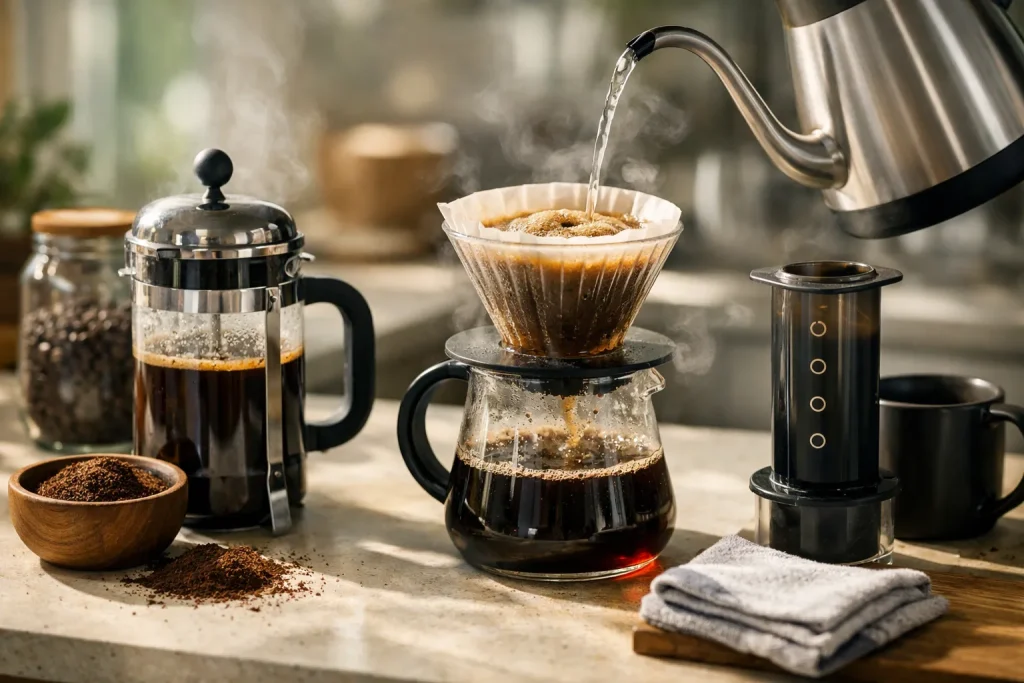
These terms describe actions that shape extraction: how the coffee bed is prepared, how water meets the grounds, and how much liquid ends up in the cup. Each item affects taste, strength, and consistency.
Tamping
Tamping compresses ground coffee in the portafilter so water flows evenly through the puck. The barista presses the grounds with a tamper, aiming for a flat, level surface and firm pressure—commonly about 20–30 pounds of force. Uneven tamping causes channeling, where water finds weak spots and over-extracts some areas while under-extracting others.
A consistent technique improves repeatability: distribute grounds, apply a light pre-tamp to settle them, then finish with a steady, vertical press. Worn or uneven tampers and a sloppy workflow can undo good grind and dose choices, so many pros use calibrated tampers or tamping stations to reduce variation.
Pre-infusion
Pre-infusion wets the coffee puck at low pressure for a short time before full extraction. It allows coffee to degas and bloom, reducing sudden pressure spikes that cause channeling. Typical pre-infusion times range from 2–8 seconds at low pressure, though espresso machines vary in how they control this stage.
Baristas adjust pre-infusion to suit roast level and grind. Lighter roasts often benefit from slightly longer pre-infusion to improve extraction uniformity. Many modern machines offer programmable pre-infusion; technicians and operators should test settings and taste results rather than rely on fixed numbers. For more on extraction stages, see Espresso on Wikipedia.
Yield
Yield means the weight of liquid espresso pulled from a given dose of dry grounds, expressed in grams. For example, a 18 g dose producing 36 g of beverage yields a 1:2 ratio. Yield directly affects concentration and perceived strength: higher yield dilutes intensity and can shift balance toward bitterness if over-extracted.
Baristas track yield with a scale and adjust grind, dose, and shot time to reach target ratios. Common guidelines: ristretto (≈1:1–1:1.5), standard espresso (≈1:1.5–1:2.5), lungo (>1:2.5). Recording dose, yield, and extraction time helps reproduce preferred results and troubleshoot problems. For extraction science and standards, consult resources like the Specialty Coffee Association.
Espresso Shot Descriptions
These shots show how water volume and extraction time change flavor, strength, and body. Each variation uses the same finely ground coffee but alters water amount, pressure, and timing to produce a distinct result.
Ristretto
A ristretto uses the same dose of ground coffee as a standard shot but pulls with less water. Extraction time is usually shorter, around 15–20 seconds, producing about 15–20 ml of liquid. This concentrates oils and sugars and reduces bitter compounds.
The result is a sweeter, denser espresso with a thick mouthfeel and a syrupy texture. It often highlights caramel, chocolate, and fruit notes while muting sharp acidity.
Baristas must adjust grind size finer and watch tamping and dose to avoid overpressure. Many drinkers order ristretto when they want intense flavor in a small serving. For technical context, see the Specialty Coffee Association on extraction principles: Specialty Coffee Association.
Lungo
A lungo means “long” and uses more water than a standard shot, typically 40–60 ml. Extraction time stretches to 30–45 seconds, drawing out more soluble compounds from the grounds.
This produces a milder, more dilute espresso with higher yield of bitter and tannic compounds than a short shot. The crema is lighter and the body thinner. It often reveals more roasted or herbal notes and less sweetness.
Baristas grind slightly coarser or use a longer pull to prevent over-extraction from tasting harsh. Drinkers choose lungo when they prefer a larger cup or a less concentrated espresso without adding hot water.
Doppio
Doppio means “double.” It is two standard espresso shots pulled together using about 14–20 grams of coffee for 60 ml of liquid yield. It follows the same extraction time as a single but doubles dose and output.
A doppio gives the full strength and balance of espresso with richer crema and fuller body. It works as the base for most milk drinks like lattes and cappuccinos because it supplies enough espresso volume to balance milk.
Machines and portafilters designed for double shots make the doppio the practical default in many cafes. For technical definitions and history, consult general espresso references such as Wikipedia’s espresso page.
Coffee Grinding Vocabulary
This section explains the exact grind settings, the grinder parts that matter most, and why grind consistency changes extraction. It gives practical points to dial in espresso and avoid common mistakes.
Grind Size
Grind size controls how fast water flows through the puck and how much soluble coffee extracts. Finer grinds increase resistance and extraction; coarser grinds lower resistance and shorten brew time. For espresso, aim for a fine, sand-like texture that still allows a 25–35 second extraction for a 18–20 g double dose, but adjust by taste and yield.
Changes should be small. Move the grinder one notch or 1–2 clicks, then pull another shot and measure time, weight, and taste. Track dose, yield (output weight), and time to find the right balance. Note that humidity and roast level affect how a given setting behaves.
Burr Grinder
Burrs are the two metal or ceramic surfaces that crush beans to a set size. Conical and flat burrs both work for espresso; flat burrs often give more uniform particle size but can cost more. Burr material and sharpness affect heat, grind retention, and how long the burrs stay precise.
Regular calibration keeps settings stable. Clean the grinder weekly to remove fines and oils that change flow and taste. Replace burrs when they wear down—expect dulling after hundreds of pounds of coffee, depending on material and use.
Consistency
Consistency means particle size distribution and evenness across a dose. Even particles extract at similar rates, reducing sour or bitter pockets. Inconsistent grind creates channeling and uneven extraction, producing thin crema and off flavors.
Use techniques that improve consistency: dose by weight, distribute grounds evenly in the portafilter, and level or tamp with steady pressure. If shots vary wildly, check for static, clogged burrs, or worn parts. A consistent routine and a well-maintained grinder give repeatable shots.
Flavor and Sensory Terms
This section explains how espresso feels, tastes, and balances on the palate. It breaks down the main sensory ideas that affect quality and enjoyment of a shot.
Body
Body describes how heavy or light espresso feels in the mouth. It ranges from thin and watery to thick and syrupy. Baristas judge body by texture and weight, not just flavor.
Factors that change body include roast level, extraction time, and grind size. Darker roasts and longer extractions often increase perceived thickness. Finer grind and higher dose also add weight to the cup.
Common descriptors: light, clean, silky, syrupy, oily. A syrupy body can carry more sweetness and flavor; a thin body may make acidity more obvious. They should check mouthfeel alongside crema and aftertaste when evaluating a shot.
Acidity
Acidity refers to the bright, tangy, or crisp sensation in espresso. It is not the same as sourness; acidity can be pleasant and lively when balanced. Different acids (citric, malic, tartaric) create distinct fruit-like notes.
Origin and processing shape acidity strongly. High-altitude, washed coffees often show citrus or apple-like acids. Natural-process coffees may show sweeter, winey acidity. Extraction affects acidity too: under-extraction raises sharp, sour notes; over-extraction dulls acidity.
Descriptors to watch: bright, juicy, lemony, green apple, winey, flat. Tasting tools include focusing on the front of the tongue and roof of the mouth to isolate acidic sensations.
Balance
Balance means how body, acidity, bitterness, sweetness, and aroma work together. A balanced espresso lets no single element dominate. It feels complete and satisfying from first sip to aftertaste.
Assess balance by tasting sequentially. Note how sweetness offsets acidity and how body supports flavors. Bitterness becomes a fault if it overwhelms sweetness or masks origin character.
Practical cues: adjust grind, dose, and brew time to improve balance. If acidity is too strong, increase extraction or temperature slightly. If bitterness dominates, reduce extraction or coarsen the grind.
Machine and Equipment Terminology
This section explains key parts of an espresso machine that directly affect extraction, temperature, and consistency. It covers how each part works, what to check for, and why it matters for shot quality.
Portafilter
The portafilter is the metal handle that holds the coffee basket and locks into the group head. It comes in two main styles: single-piece commercial 58mm portafilters and smaller consumer sizes (49–57mm). The basket size and shape affect puck depth and flow rate.
A quality portafilter should fit tightly in the group head to ensure even water distribution. Look for a spout design that suits dosing habits: single, double, or bottomless (naked). A bottomless portafilter exposes the basket bottom, revealing channeling and puck issues.
Materials matter. Heavy brass or stainless steel portafilters retain heat better than thin aluminum. Heat stability helps keep brew temperature steady during extraction. Regularly clean the basket, spout, and gasket to avoid oils and buildup that alter flow and taste.
Group Head
The group head channels hot water through the coffee puck and is the interface between machine and portafilter. Common types include E61 (mechanical, with lever and thermal mass) and modern saturated or thermoblock group heads that prioritize temperature control.
Key features to watch: shower screen condition, dispersion plate design, and gasket integrity. A clogged shower screen or worn gasket causes uneven water spray and leaks, which lead to poor extraction and channeling. Group head surface temperature should be stable; fluctuations cause under- or over-extraction.
Serviceability matters. Removable shower screens and easy-access gaskets speed cleaning and maintenance. On higher-end machines, group heads pair with PID controllers and group-specific thermistors to maintain +/-1°C stability, improving shot consistency.
Boiler
The boiler stores and heats water for brewing and steam. Machines use single boilers, heat-exchange (HX), or dual boilers. Single boilers require time between brewing and steaming. HX boilers let you brew and steam almost back-to-back but need flushing to stabilize brew temp. Dual boilers have separate, dedicated boilers for brew water and steam, offering the best simultaneous control.
Boiler size and material affect recovery and temperature stability. Larger brass or stainless boilers hold heat longer and resist temperature swings. Pressure, controlled by a thermostat, pressurestat, or PID, must stay within target ranges: brew pressure around 9 bar and steam pressure higher for milk frothing.
Regular descaling and checking safety valves prevent scale build-up and pressure issues. Boiler fittings, pressure relief valves, and sight glasses should be inspected periodically to ensure safe and consistent operation.
Water and Temperature Language
Water quality and temperature affect extraction, equipment life, and taste. Hardness, minerals, and exact brew temperature drive how an espresso machine performs and how the shot tastes.
Water Hardness
Water hardness measures calcium and magnesium levels in ppm (parts per million) or °dH. High hardness (over ~150 ppm) causes scale buildup in boilers and heat exchangers. Scale reduces heat transfer and can clog pipes, leading to uneven pressure and costly repairs.
Low hardness or totally demineralized water (near 0 ppm) can corrode metal parts and produce flat-tasting espresso. Many cafes aim for a target range around 50–150 ppm or 70–120 ppm depending on equipment. Water filters, ion exchangers, or mixed-bed cartridges let users reach a stable mineral level.
Baristas and technicians should test water regularly with strips or TDS meters. Log results and change filters on a schedule to avoid sudden shifts in hardness.
Brew Temperature
Brew temperature refers to the water temperature delivered to the coffee puck, usually measured at the group head. The common range for extraction sits between 91–96 °C (195–205 °F). Small shifts of 1–2 °C change acidity, sweetness, and body noticeably.
Temperature stability matters. Machines with good thermostats or PID controllers keep temperature within ±1 °C between shots. Heat exchangers, single boilers, and dual boilers handle temperature differently; operators must adjust setpoints or shot timing to match their machine type.
Baristas should measure actual group-head temperature or brew-ready water and record it during dial-ins. When adjusting, change one variable at a time: temperature, grind, or dose, to isolate effects on flavor.
Espresso-Based Beverage Names
These drinks pair concentrated espresso with specific amounts of milk or foam to create distinct textures and flavors. Exact ratios and serving sizes determine sweetness, strength, and mouthfeel.
Macchiato
A macchiato is an espresso “marked” with a small amount of milk or milk foam. Traditionally a single or double shot of espresso receives a spoonful of steamed milk or a dollop of foam, just enough to soften the crema without diluting the coffee.
Baristas often serve it in a small demitasse cup (60–90 ml). Key points:
- Espresso-forward taste with a hint of cream.
- Minimal milk keeps the espresso’s intensity and aroma.
- Variations: “latte macchiato” (milk marked with espresso) or larger, sweeter café-style versions.
Ordering tip: specify single or double shot and whether you want steamed milk or foam. That ensures the drink stays true to the espresso-first intent.
Cappuccino
A cappuccino balances equal parts espresso, steamed milk, and milk foam to create a velvety, layered drink. Standard composition is roughly 1/3 espresso, 1/3 steamed milk, and 1/3 dense microfoam, usually served in a 150–180 ml cup.
This structure gives:
- A strong coffee base softened by creamy milk.
- A thick foam cap that holds latte art and cools the drink.
- A texture contrast between liquid milk and airy foam.
Baristas control texture by steaming milk to small, velvety bubbles (microfoam). Customers can request a “dry” cappuccino (more foam, less milk) or a “wet” one (more milk, less foam) to adjust mouthfeel.
Advanced and Niche Terms
These entries explain precise faults and extraction stages that affect taste and crema. They focus on how small changes in grind, tamp, and timing create big differences in the shot.
Channeling
Channeling occurs when water takes an uneven path through the coffee puck, creating fast spots that under-extract and slow spots that over-extract. It often begins with uneven tamping, large grind inconsistency, or a poorly distributed puck. Baristas watch for thin, pale streams or sudden spurts during the pour as signs.
Prevent channeling by:
- Distribution: Use distribution tools or the Stockfleth’s move to level grounds.
- Tamp consistency: Apply even pressure and keep the puck flat.
- Grind uniformity: Use a quality burr grinder and adjust if clumping appears.
Quick diagnostics:
| Symptom | Likely Cause | Fix |
| Thin, fast stream | Low resistance; channel opened | Finer grind, redistribute, tamp firmer |
| Sudden spurts or sprays | Uneven puck or cracks | Even distribution, check basket condition |
| Creamy shot but sour finish | Partial channeling | Dial in grind, improve dosing accuracy |
Blonding
Blonding describes the late stage of espresso extraction when the flow lightens and the coffee becomes brighter and more dilute. It signals that most soluble compounds have been extracted and the remaining liquid carries bitter, thin flavors. Baristas often stop the shot at or just before blonding to avoid unpleasant notes.
Key indicators and actions:
- Visual cue: Espresso color shifts from chestnut to blonde and thin.
- Taste cue: Sudden sharpness or harshness on the tongue.
- Timing: Adjust shot time to finish just before strong blonding for balanced sweetness.
Practical tips:
- Monitor flow and color rather than time alone.
- If blonding happens too early, try a finer grind or higher dose.
- If it never appears, check if the shot is over-restricted; coarsen grind slightly.
FAQS
What is “dialing in” and why does it matter?
Dialing in means adjusting grind size, dose, and extraction time to get the best flavor from a coffee. It helps prevent sour or bitter shots and makes the cup more consistent.
How long should a shot of espresso take?
A typical single or double shot extracts in about 20–30 seconds after the pump starts. Times vary with dose and grind, so use taste and visual cues too.
What is crema and is it important?
Crema is the thin, tan foam on top of an espresso shot. It signals proper extraction but does not guarantee good flavor by itself.
What does “flow rate” mean?
Flow rate is how fast water passes through the coffee puck. Baristas adjust it with grind and pressure to control extraction.
Why do baristas talk about “temperature stability”?
Stable temperature keeps extraction consistent across shots. Machines with poor stability can produce uneven flavors.
Quick reference table
| Term | Short meaning |
|---|---|
| Dose | Amount of ground coffee used |
| TDS | Total dissolved solids — strength of the brewed espresso |
| Pre-infusion | Brief, low-pressure wetting before full extraction |
Can beginners learn these terms quickly?
Yes. Learning a few core terms helps with ordering, brewing, and talking to baristas. Practice with tasting and simple experiments to build confidence.
Conclusion
They can use key espresso terms to talk clearly with baristas and improve home brewing. Learning words like extraction, crema, and dosing makes troubleshooting faster and results more consistent.
Practice and patience help the terms stick. As they try recipes and adjust grind or dose, the vocabulary will become natural and useful.
Keep a short glossary nearby while learning. It speeds progress and makes coffee conversations easier and more precise.