
Coffee Storage Best Practices for Maximum Freshness and Flavor
You keep buying great coffee but notice the flavor dulls after a few days. Ethan Cole from Webrewcoffee.com has tested storage methods and finds small choices—like container type and where you keep the canister—make the biggest difference in taste. Store coffee in a cool, dark, airtight container and you will preserve flavor far longer than leaving it in its original bag or on the counter.
This post will show simple, proven steps to help your beans stay fresher and taste better. You will learn which containers work best, where to place them in your kitchen, and common mistakes to avoid so every cup starts strong.
Key Takeaways
- Store coffee in airtight, opaque containers to slow freshness loss.
- Keep coffee away from heat, light, air, and moisture for longer flavor.
- Use the right container size and simple habits to preserve specialty beans.
Why Proper Coffee Storage Matters
Proper storage keeps beans tasting the way the roaster intended. It slows loss of flavor, guards scent, and reduces risks like staleness or off‑odors.
Impact on Freshness and Flavor
Coffee begins losing desirable flavors right after roasting. Oils and volatile compounds that create fruity, floral, or chocolate notes evaporate or break down when beans sit exposed to air. Freshly roasted coffee also releases carbon dioxide; if stored correctly, this degassing happens without letting oxygen speed up flavor loss.
Grinding speeds deterioration because it increases surface area. Whole beans stay fresher longer than ground coffee for this reason. Storing small daily portions and grinding just before brewing preserves the bright, complex flavors roasters aim for.
Temperature and light affect flavor too. Warm, sunny spots accelerate chemical changes in the beans. A cool, dark place slows those changes and keeps taste closer to the original roast for more drinks.
Risks of Incorrect Storage
Exposure to oxygen causes staling; coffee will taste flat, dull, and less lively. Moisture leads to mold growth or a sour, fermented flavor. Both happen quickly if beans sit in a damp environment or an open container.
Strong odors transfer easily into coffee because the beans absorb smells. Keeping coffee near spices, onions, or cleaning products can make the brew taste off. Heat speeds up all these negative effects, so storing beans above the stove or near an oven shortens their usable life.
Freezing can help long-term storage, but repeated thawing and refreezing causes condensation and flavor loss. Poor storage choices waste money because beans lose their specialty characteristics within days to a few weeks.
Preserving Aroma and Oil Content
Aromatic oils carry most of coffee’s scent and mouthfeel. These oils oxidize when exposed to air, turning rancid or losing nuance. Airtight containers with minimal air space slow oxidation and protect both aroma and body.
Opaque containers block light, which breaks down aromatic compounds. Valved bags allow degassing without letting oxygen in, which helps fresh roasted beans stabilize. For daily use, a small airtight jar that holds one week’s worth of beans keeps oils intact and aroma strong.
Control humidity and temperature: low humidity and stable, cool temperatures maintain oil integrity. If freezing, portion beans into single-use bags and avoid opening them until needed to prevent condensation and smell contamination.
Factors Affecting Coffee Shelf Life
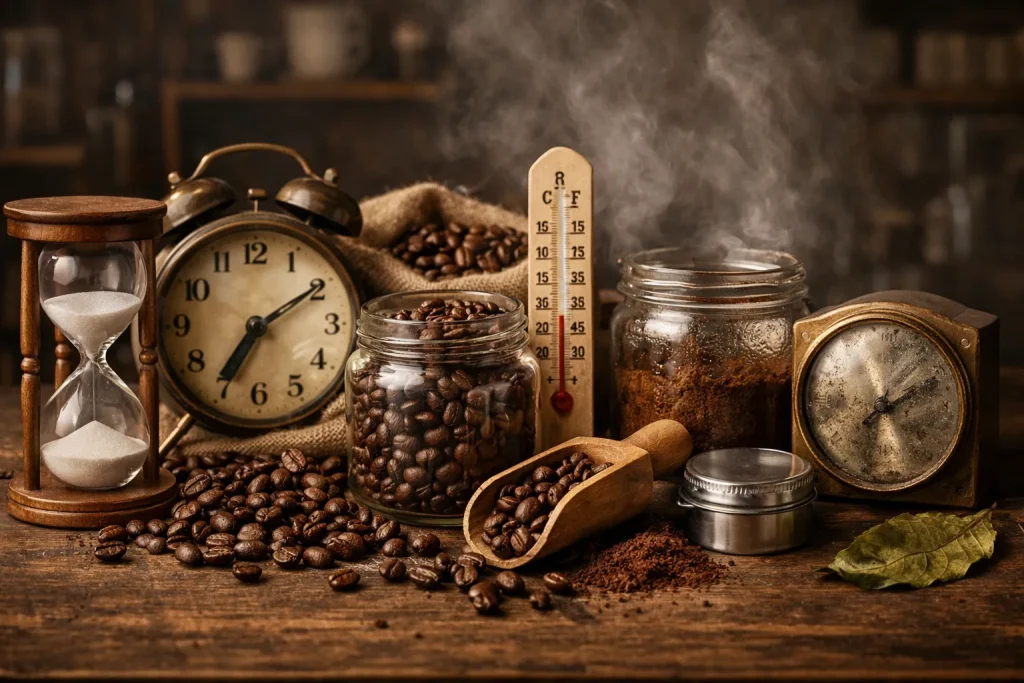
Storage choices, roast level, and grind size change how fast coffee loses flavor. Proper sealing, low moisture, and steady cool temperatures slow staling and protect aroma.
Exposure to Air
Oxygen causes most flavor loss in roasted coffee. After roasting, oils and aromatic compounds react with air; this oxidation dulls brightness and causes flat or cardboard-like flavors over weeks. Whole beans resist oxidation longer than grounds because they have less surface area exposed.
Buy or transfer coffee into an airtight container with a tight lid. If the bag has a one-way valve, keep it closed until use. For daily access, store a small amount in a countertop canister and keep the bulk supply sealed elsewhere.
Humidity and Moisture
Water breaks down coffee quickly and encourages mold growth if high enough. Beans absorb smells and moisture from the air, which weakens aroma and can create off-flavors in a few days in very humid conditions.
Keep coffee in a dry place away from sinks or dishwashers. Use containers made of glass, ceramic, or stainless steel with good seals. Avoid the fridge for opened coffee; condensation during temperature changes raises moisture risk.
Light and Temperature
Light, especially direct sunlight, speeds chemical changes that reduce flavor. Heat accelerates staling—higher temperatures make oils go rancid and volatile aromatics evaporate faster.
Store coffee in a cool, dark spot between 50–70°F (10–21°C). Avoid clear jars in bright kitchens. For long-term storage of unopened bags, a cool pantry or cupboard works best. For more on how roasting and storage interact, World Coffee Research and the Coffee Wikipedia page offer useful background reading.
Best Storage Methods for Coffee
Keep beans away from heat, light, moisture, and air. Use the right form (whole or ground), pick an airtight container, and consider vacuum sealing for long-term storage.
Storing Whole Beans vs. Ground Coffee
Whole beans keep flavor longer because they expose less surface area to oxygen. For daily use, buy small amounts and store whole beans; grind just before brewing to preserve aroma and acids.
Ground coffee loses volatile oils quickly. It should be used within a week of opening for best taste. If grinding ahead is necessary, store grounds in an airtight container and use them within a few days.
Store both beans and grounds in a cool, dark place away from the stove, sunlight, and humidity. A pantry or cabinet at room temperature works well. Avoid the refrigerator if beans will be opened often, as moisture and odors can degrade flavor.
Choosing Airtight Containers
Use containers with true one-way lids or seals that prevent air exchange. Materials matter: opaque ceramic, stainless steel, or dark glass avoid light damage. Clear glass jars are fine if stored in a dark cabinet.
Look for airtight features like silicone gaskets and clamp lids. Avoid cheap plastic that can leach odors or let in air. For daily access, a wide-mouth container with a tight lid works best for scooping.
Label containers with roast date and type to track freshness. Keep only enough beans for one to two weeks in the kitchen; store extras in a cool, dark spot in their sealed container to reduce repeated air exposure.
Vacuum Sealing Techniques
Vacuum sealing removes air to slow oxidation and extend shelf life. Use a chamber sealer for best results with whole bags, or a handheld pump for jars and resealable bags when removing most of the air matters.
For beans meant to last months, seal them in small portions so only the opened portion is exposed. Freeze-sealed vacuum pouches work for long-term storage, but thaw completely before opening to avoid condensation.
Avoid crushing delicate roasts with heavy sealing pressure. If using a vacuum sealer on bags, leave a small coffee-bed cushion to prevent fine grounds from being sucked into the seal. For technical background on coffee freshness, see World Coffee Research.
Ideal Storage Locations
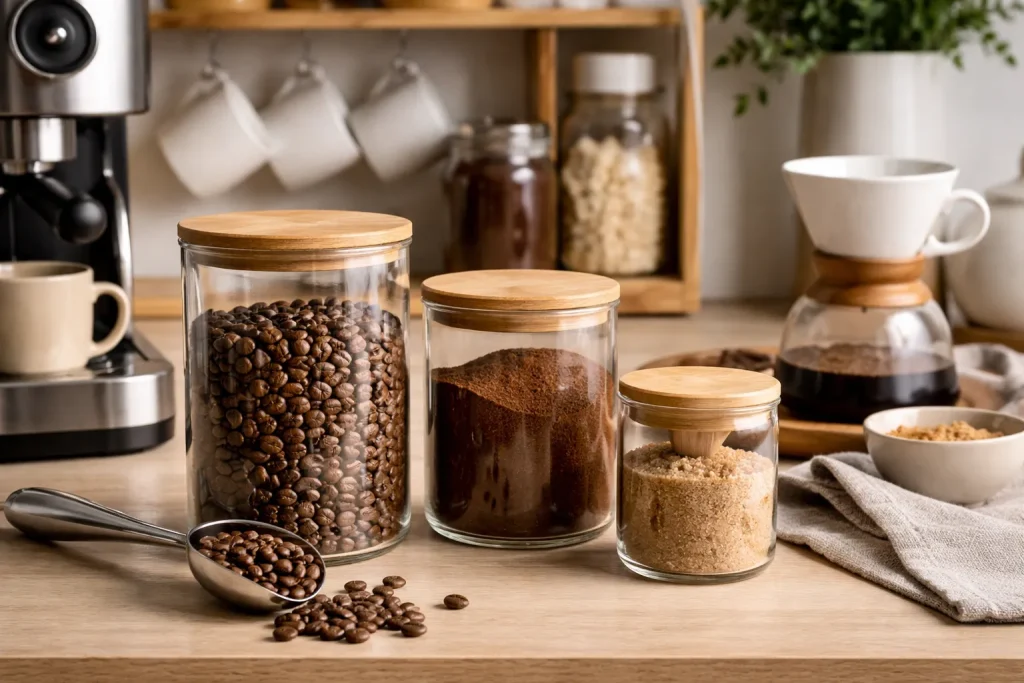
Store coffee where temperature and humidity stay steady, light is minimal, and the container seals well. Small shifts in heat, moisture, or air cause the fastest loss of flavor, so choose a spot that avoids these hazards.
Pantry vs. Refrigerator
A cool, dark pantry or cabinet near the middle of the kitchen works best. It keeps coffee away from light and heat from ovens or windows. Pantries usually hold a stable temperature and low humidity, which slows staling.
Refrigerators add moisture and odors that coffee will absorb. Beans and grounds pick up nearby food smells and can clump from condensation when taken out. That makes the fridge a poor daily storage choice.
Use an airtight container in the pantry. Opaque, airtight containers with a one-way valve or tight lid preserve aroma and keep oxygen out. Label with roast date for best use within two to four weeks of roasting.
Avoiding Freezers
Freezers can preserve coffee longer, but only if stored correctly and not opened often. Frequent temperature swings cause condensation on beans when removed, which damages flavor and speeds up decay.
Only freeze coffee in small, fully sealed portions you will use once thawed. Use vacuum-sealed bags or heavy-duty freezer containers. Thaw whole bags completely before opening and avoid refreezing.
For daily use, avoid the freezer. Freezing is best for long-term storage of extra coffee that will sit unused for months, not for the beans someone uses every day.
Recommended Storage Areas
Ideal spots include a middle or upper kitchen cabinet away from the stove, oven, dishwasher, and sunlight. These places keep heat and steam away and stay dark most of the day.
A pantry shelf away from the door is also good; it limits air flow and temperature swings. If the home is humid, place coffee in a tightly sealed container inside the cabinet to reduce moisture exposure.
For travel or temporary storage, use small airtight tins or bags with resealable zippers and press out excess air. Always label with the roast date and avoid keeping more coffee than one or two weeks’ worth for peak flavor.
Types of Coffee Storage Containers
Good storage keeps beans away from air, light, heat, and moisture. Choosing the right container depends on how long someone stores coffee, whether they store whole beans or grounds, and how often they use the container.
Glass Jars
Glass jars let someone see the coffee level and check for clumps or moisture at a glance. Clear glass exposes beans to light, which speeds flavor loss, so glass jars work best inside a dark cabinet or with an opaque sleeve. Look for jars with tight rubber gaskets and clamp or screw lids; that keeps oxygen out better than loose tops.
Glass doesn’t react with oils, so it won’t change taste. It’s easy to clean by hand or dishwasher. However, glass breaks if dropped and does not block light unless tinted. For daily use, a small glass jar stored away from the counter light works well.
Ceramic Canisters
Ceramic canisters block light and add weight, which helps keep the seal stable. Many ceramic models come with silicone or rubber seals and a lifted lid lip to improve the airtight fit. They work well for both beans and grounds and suit kitchens where counter display matters.
Ceramic does not absorb coffee oils or odors, so it keeps flavor neutral. It can chip or crack with rough handling, so choose thicker-walled pieces for durability. If someone buys a ceramic canister with a loose-fitting lid, they should use it for short-term storage only.
Stainless Steel Containers
Stainless steel containers provide the best protection from light and are highly durable. Look for double-walled or vacuum models and a proven sealing mechanism like a silicone gasket plus a locking lid. Many stainless options include one-way valves or vacuum pumps that remove air to extend freshness.
Steel is nonreactive and resists stains and odors. It’s ideal for longer storage or for travelers who need a rugged option. The downside: steel is opaque, so users can’t see the contents without opening the lid. For long-term freshness, a small vacuum-sealed stainless canister is often the best choice.
Common Mistakes in Coffee Storage
Storing coffee wrong speeds up flavor loss. Small habits—like leaving beans in flimsy bags or mixing beans—cause most problems.
Using Original Packaging
Many coffee bags are meant for short-term use, not long storage. Foil-lined bags with one-way valves help during the first week, but zippers and thin plastic tear and let air in. Oxygen, light, and moisture move through damaged or thin packages and make beans taste flat within days.
If beans must stay in the original bag, fold the top tightly and clip it, then store the bag inside an opaque, airtight container. Better options are rigid canisters with rubber seals or vacuum-stopper jars. Those containers block light and keep oxygen out, which preserves aroma and oils longer.
Frequent Opening
Every time someone opens a container, fresh oxygen and moisture get inside. This speeds oxidation and reduces aroma compounds. Opening a jar multiple times a day for scooping will make beans stale faster than keeping them sealed.
Keep coffee in a container sized to the amount used in a week or two. For home brewers, store the bulk supply in a sealed, cool place and transfer a smaller portion to a daily canister. Use a scoop or spoon dedicated to coffee so hands and humidity don’t get into the container.
Mixing Old and New Batches
Combining fresh beans with older ones dilutes flavor immediately. The older beans have already lost oils and volatile aromatics, so they downgrade the whole batch. This makes it harder to taste the notes the roaster intended.
Label bags with roast date and use older beans first. If someone buys a fresh 12 oz bag and has half a previous bag, they should either finish the old bag or use the fresh beans separately. Storing small, dated portions prevents mixing and keeps cup quality consistent.
Long-Term Coffee Storage Solutions
Choose methods that block air, moisture, heat, and light. Measure portions to avoid repeated exposure, and label containers with roast and pack dates.
Freezing Coffee Beans
Freezing works best for whole beans in small portions. They must go into airtight containers or vacuum-sealed bags with minimal headspace. Single-use vacuum bags or rigid airtight containers with a gasket work well.
Thaw only the portion needed and let it reach room temperature while sealed to avoid condensation. Do not refreeze once thawed. Use frozen-stored beans within 1–3 months for best flavor; longer storage slows staling but can still reduce brightness over many months.
Avoid freezing roasted coffee that will be accessed daily. Frequent temperature changes speed moisture loss and flavor decline. For best results, portion by weekly or biweekly needs before freezing.
Bulk Storage Tips
For large quantities, keep green (unroasted) beans separate from roasted beans. Green beans store far longer—often 6–12 months—if kept dry, cool (50–68°F / 10–20°C), and in breathable sacks or sealed containers with low humidity.
Roasted coffee in bulk should be portioned into smaller airtight containers and stored in a cool, dark place away from heat sources. Use oxygen absorbers for long-term sealed Mylar or metal cans to slow oxidation.
| Storage Type | Best Temp | Container | Typical Shelf |
|---|---|---|---|
| Frozen, portioned roasted | 0°F (-18°C) | Vacuum-sealed bag or airtight container | 1–3 months (optimal) |
| Bulk roasted | 50–70°F (10–21°C) | Airtight jar, metal canister | 2–4 weeks (best) |
| Bulk green | 50–68°F (10–20°C) | Jute sack or sealed bin | 6–12 months |
Extending the Life of Specialty Coffee
Specialty coffee loses aroma and flavor when exposed to air, light, heat, and moisture. They should store beans whole and grind just before brewing to keep oils and aromatics intact.
Use an airtight, opaque container stored in a cool, dark place. A container with a one-way valve or a vacuum-seal option helps keep oxygen out, which slows staling.
Buy only what will be used within 2–4 weeks of roast for peak flavor. If buying larger amounts, divide beans into smaller portions and open one at a time to reduce air exposure.
Freezing can work for long-term storage, but do it right. Portion beans into airtight bags, remove excess air, and thaw fully before opening to avoid condensation on the beans.
Avoid storing coffee in the fridge, near heat sources, or in clear jars on the counter. Moisture and temperature swings damage specialty coffee more than common blends.
Quick reference:
- Best: Whole beans, airtight opaque container, cool/dark spot.
- If freezing: portion, airtight, thaw sealed.
- Avoid: open bags, sunlight, fridge, moisture.
They should treat specialty coffee as a fresh product and adjust buying and storage habits to match consumption speed.
Sustainable Practices in Coffee Storage
Smart storage keeps beans fresh while cutting waste and energy use. Choose containers and routines that block air, light, heat, and moisture, and favor reusable materials that last.
Eco-Friendly Containers
They should be airtight, opaque, and made from recyclable or long-lived materials. Examples include stainless steel canisters with silicone seals and dark glass jars with airtight lids. These block oxygen and light, which slow staling and preserve aroma.
Avoid single-use plastics and thin foil bags when possible. If using bagged coffee, transfer it to a reusable container soon after opening. For whole-bean coffee, store in small batches to limit the time the main supply is exposed.
Label containers with roast date and quantity using a reusable tag or erasable marker. This helps rotate stock and reduce spoilage. For small shops, choose food-grade, corrosion-resistant containers that can be sanitized between batches.
Reducing Waste
Buy whole beans in quantities matched to consumption to avoid stale inventory. For home use, 1–2 weeks’ supply keeps coffee fresh; shops should plan daily or weekly ordering based on sales patterns.
Use reusable scoops and measuring tools to stop contamination from hands or paper filters. Recycle original packaging when it’s clean, or compost uncoated paper bags. For foil or mixed-material bags, check local recycling rules or return them to brand take-back programs when available.
Repurpose spent coffee grounds as compost, garden mulch, or cleaning scrub. Staff training on portion control and storage rotation cuts losses and saves money.
FAQS
What is the best container for coffee?
They recommend an airtight container made of opaque glass, ceramic, or stainless steel. Clear jars let light in, which speeds up flavor loss.
Should coffee be stored in the fridge or freezer?
Short-term storage at room temperature is fine for most people. Freezing can work for long-term storage, but only if the coffee stays sealed and is not repeatedly thawed.
Whole beans or ground coffee — which lasts longer?
Whole beans stay fresher longer because they have less surface area exposed to air. Once coffee is ground, it loses aroma and flavor faster.
How much coffee should someone buy at once?
Buy enough to use within two to four weeks for best flavor. Buying smaller amounts more often keeps coffee tasting fresher.
How should opened bags be kept?
They should be transferred to an airtight container and kept in a cool, dark place. Leaving coffee in the original bag with a one-way valve is acceptable if it seals tightly.
Does roast date matter?
Yes. Roast date tells how recently the coffee was roasted, and fresher roasts usually taste better. Aim to drink coffee within a few weeks of the roast date when possible.
Are vacuum or one-way valve containers worth it?
They help remove or prevent excess air and can extend freshness slightly. They are useful but not a cure-all for old beans.
Conclusion
They should store coffee in small, airtight containers kept in a cool, dark place. This limits air, heat, and light — the main causes of flavor loss.
They can portion beans for one to two weeks of use and grind just before brewing. Freezing works for long-term storage if portions stay sealed and thawed only once.
They should avoid the fridge and clear jars on the counter. Simple habits—right container, small batches, and stable temperature—preserve aroma and taste.