
How to Store Coffee Beans: Expert Tips for Freshness and Flavor Retention
You want your coffee to taste its best every morning. Keep beans away from light, air, heat, and moisture, and store whole beans in an airtight, opaque container at room temperature for the best flavor. Airtight, opaque storage of whole beans at stable room temperature preserves freshness far better than the fridge or open bags.
Ethan Cole from Webrewcoffee.com often says that freshness starts at the roast date and that handling matters more than pricey containers. Small habits—buying smaller amounts, keeping beans whole, and using an opaque, airtight jar—give you a noticeable boost in aroma and taste without extra cost or effort.
Key Takeaways
- Store whole beans in an airtight, opaque container at stable room temperature.
- Buy smaller amounts and use within weeks of the roast date for best flavor.
- Avoid light, heat, air, and moisture to prevent rapid flavor loss.
Understanding Coffee Bean Freshness
Freshness depends on roast date, exposure to air, light, heat, and moisture. Proper storage slows the loss of flavor and aroma, and the window for best taste is shorter for whole beans than many expect.
Why Freshness Matters
Fresh beans hold volatile oils and aromatic compounds that create coffee’s flavor and body. Once roasted, those compounds start to break down; oxygen and heat speed the process. A coffee drinker will notice changes in brightness, aroma, and crema first.
Freshness affects brewing results. For espresso, oils and crema decline quickly and can ruin shot balance. For pour-over, floral and fruity notes fade, leaving a duller cup. Buying beans with a clear roast date and using them within the right timeframe keeps intended flavors intact.
Optimal Timeframe for Storing Beans
Roasted whole beans taste best within about 1–3 weeks after roast for most specialty coffees. Light and bright single-origin beans peak earlier, often within 4–10 days for the most delicate notes. Darker roasts hold stable flavors slightly longer but still lose peak freshness after 2–3 weeks.
Store only enough beans for 1–2 weeks of use if possible. Keep beans in an airtight container, away from direct light and heat, at room temperature. Freezing sealed portions can extend life beyond weeks, but thaw only once and avoid frequent temperature changes.
Signs of Coffee Going Stale
Aroma loss is the easiest sign: beans smell weak, flat, or like cardboard. Taste changes follow: acidity and floral or fruity notes drop, while bitterness or flatness rises. Crema becomes thin and dissipates faster in espresso.
Visual and tactile cues help too. Oily beans can indicate older dark roasts or improper storage. Dry, brittle beans often mean oxidation. If brewed coffee smells musty or tastes off in a way that doesn’t improve with adjustments, the beans are likely past their useful freshness.
Best Practices for Storing Coffee Beans
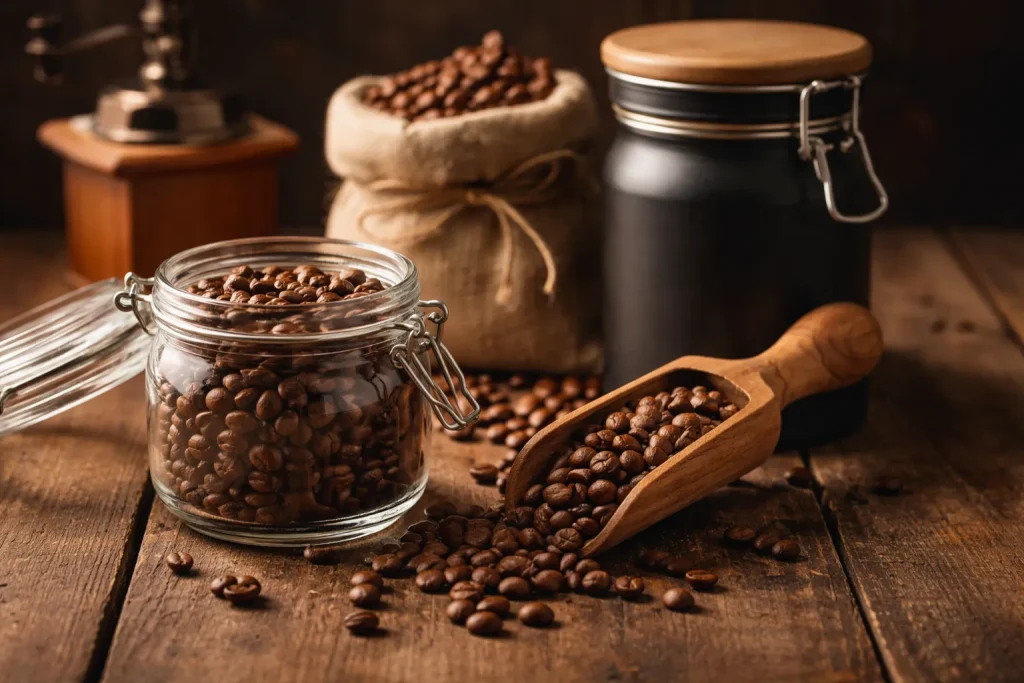
Keep beans away from light, heat, moisture, and strong odors. Use an airtight, opaque container and buy only what will be used in one to two weeks.
Ideal Storage Conditions
Store beans in a cool, dark, dry place with stable temperature. A pantry or cabinet away from the oven, windows, and direct sunlight works best. Aim for room temperature between 50–70°F (10–21°C); avoid hot spots near appliances.
Protect beans from moisture. Humidity accelerates stale flavors and mold risks. Do not store beans in the refrigerator; daily temperature changes and food odors harm flavor. For long-term storage over a month, freeze in single-use portions and thaw fully before grinding.
Keep beans in an odor-free area. Coffee absorbs smells from spices, citrus, and cleaning products. Store beans away from strong-smelling foods and open trash.
Recommended Containers
Choose airtight, opaque containers with a tight seal. Stainless steel or ceramic jars with silicone gaskets block light and air better than clear glass or flimsy plastic. Use containers sized for the amount of coffee you buy to minimize headspace.
If buying from a roaster, leave beans in their one-way valve bag for short-term use, then transfer to an airtight container for daily access. For freezing, use vacuum-sealed bags or heavy freezer bags in one-week portions and label with roast date. Avoid storing beans in the original paper bag without a seal; it lets air in and speeds staling.
For details on coffee chemistry and storage science, see Wikipedia on coffee and resources from the World Coffee Research.
Protecting Coffee Beans from Key Elements
Keep beans away from air and light. Store them in cool, dry places and use containers that limit oxygen and block sunlight to preserve flavor and aroma.
Air Exposure and Oxidation
Oxygen causes beans to lose oils and aroma quickly. Use airtight containers with a good seal; metal or thick glass jars with gasket lids work well. If the bag has a one-way valve, leave beans in that bag and place the bag inside an airtight canister for extra protection.
Only open the storage container when preparing to brew. For home use, buy amounts that last one to two weeks to avoid long-term exposure. If freezing is necessary, divide beans into small, airtight portions and thaw only what will be used in a day to reduce repeated oxygen exposure.
Light and UV Protection
Light, especially UV, breaks down aromatic compounds and speeds staling. Store beans in opaque containers or opaque sections of a cupboard, not in clear jars on a sunny counter.
If using glass, wrap the jar in a dark cloth or store it inside another opaque container. Keep beans away from direct kitchen lights and windows. For more on coffee storage science, see World Coffee Research.
Managing Temperature and Humidity
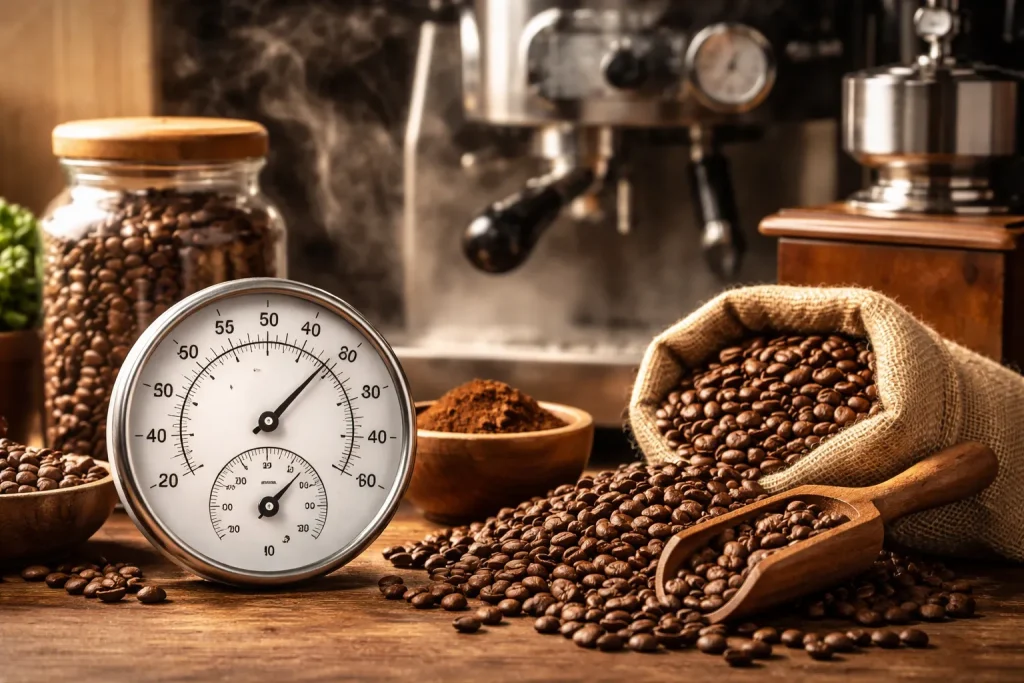
Keep beans away from big temperature swings and from damp air. Store them at steady room temperature and in a dry spot to preserve oils and aroma.
Impact of Heat and Cold
Heat speeds up staling by breaking down volatile oils and acids that make coffee taste fresh. Store beans between about 50–70°F (10–21°C) when possible. Avoid places that get hot like above the stove, near ovens, or in direct sunlight.
Cold also causes problems. Refrigerators add moisture and odors that coffee absorbs. Freezing whole beans can work for long-term storage if they stay sealed and are thawed only once, but repeated freezing and thawing damages flavor.
Use an interior pantry or cabinet away from heat sources. Keep roasted beans in small, airtight batches so they reach the cup without long exposure to room temperature air.
Controlling Moisture Levels
Moisture makes beans go stale faster and can cause mold. Aim for a dry spot with relative humidity around 50–60% if possible. Avoid storing beans above the dishwasher, sink, or next to kettles and dishwashers.
Choose airtight containers with a good seal to block humidity. Materials like ceramic, metal, or dark glass work well. Avoid paper bags for long-term storage; they let moisture in.
If freezing, use vacuum-sealed or heavy-duty freezer bags and remove as much air as possible. Thaw sealed portions at room temperature before opening to prevent condensation on the beans.
Locations for Storing Coffee Beans
Choose a cool, dark, dry spot and keep beans sealed from air and moisture. Small, airtight containers and steady temperatures matter more than fancy storage gadgets.
Pantry Storage Tips
They should store beans in an opaque, airtight container near the back of a pantry. Light and temperature swings speed flavor loss, so keep the container away from windows, ovens, and appliance heat sources.
Use containers with one-way valves if buying whole bags often. The valve lets CO2 escape without letting air in. Label containers with the roast date and only fill them with a few weeks’ worth of beans to keep them fresh.
Keep humidity below 60%. If the kitchen gets humid, place the container on a high shelf or inside a closed cabinet rather than near the sink or dishwasher.
Avoiding the Refrigerator
The refrigerator exposes beans to moisture and food odors that they absorb quickly. Opening the fridge lets warm air and condensation form on the beans; that accelerates staling and can change the taste.
If someone stores beans in the fridge, they should first seal them in a truly airtight jar and avoid frequent temperature changes. Even then, refrigeration is not recommended for daily-use beans.
Short-term, sealed storage for less than a week might be tolerable, but for most users, a cool pantry beats the fridge for maintaining flavor and aroma.
Using the Freezer
Freezing can work for long-term storage when done right. Portion beans into small, airtight bags or containers and remove excess air before sealing to prevent freezer burn.
Only take out one portion at a time. Thaw it completely at room temperature before opening to avoid condensation on the beans.
Do not repeatedly freeze and refreeze beans. That causes moisture damage and faster flavor loss. For best results, freeze for months only when keeping a large surplus; otherwise, buy smaller amounts and store them in a cool pantry.
Handling Whole Beans vs. Ground Coffee
Whole beans keep volatile oils and aromas longer. Ground coffee releases flavors quickly but is more convenient for brewing. Storage choice changes how long coffee stays fresh and what containers work best.
Differences in Shelf Life
Whole beans stay fresher than ground coffee because they expose less surface area to air. A sealed bag of whole beans can retain good flavor for 2–4 weeks after roast if stored correctly. Ground coffee can lose noticeable aroma within minutes to hours after grinding and usually tastes stale within a few days to a week.
Oxygen, light, heat, and moisture speed staling for both forms. Grinding increases oxidation and volatile loss, so ground coffee requires faster use. Roast date matters more than “best by” labels; beans used within weeks of roast give the most accurate sense of freshness.
Best Storage for Each Form
Whole beans: store in an opaque, airtight container at room temperature away from heat and light. Use a one-way valve bag or jars with tight lids. Buy in small amounts and keep the original bag folded inside the container to reduce air space.
Ground coffee: store in the same kind of airtight, opaque container but plan to use it within days. Avoid the refrigerator because moisture and odors can degrade flavor. For long-term keeping, freeze unopened ground coffee in a sealed, labeled bag and transfer small daily portions to a countertop container; do not refreeze after thawing.
Practical tips:
- Label containers with roast date.
- Keep beans in a cool, dark pantry, not above the oven.
- Grind just before brewing when possible to maximize flavor.
Mistakes to Avoid When Storing Coffee Beans
Storing beans poorly shortens flavor and wastes money. Avoid light, heat, air, and moisture to keep roast character and aroma.
Common Storage Errors
They leave beans in clear or loose bags that let light and air reach the beans. Sunlight or kitchen light fades oils and flavors within days. Storing beans near the stove or oven exposes them to heat that speeds stale flavor.
They put beans in the refrigerator expecting longer life. Fridge humidity causes condensation and pulls odors into the beans. Frequent temperature swings from taking the container in and out make moisture build on beans.
They grind too far ahead of brewing. Ground coffee loses volatile oils faster than whole beans, so flavor drops after minutes to hours. They also buy large amounts without checking roast date, then keep coffee past its peak.
Impact of Improper Storage
Flavor loss happens quickly when beans contact oxygen. Oxidation dulls acidity and aroma; within two to four weeks most retail roasts show noticeable decline if exposed to air. This makes espresso thin and drip coffee flat.
Moisture and odor absorption change taste and can cause clumping. Damp beans may develop off-flavors or, rarely, mold if stored in humid conditions for long periods. Odors from spices, garlic, or cleaning products transfer into porous beans and ruin a cup.
Heat and light accelerate chemical breakdown of oils and aromatics. The result is a stale, cardboard-like taste rather than fresh, bright notes the roast intended.
Long-Term Coffee Bean Storage
Long-term storage focuses on stopping air, moisture, heat, and odors from reaching the beans. Proper packaging and choosing the right storage location keep oils and aroma closer to the roast date for weeks or months.
Vacuum Sealing Techniques
Vacuum sealing removes air and slows oxidation, which helps preserve flavor and aroma. Use a vacuum sealer with bags designed for food storage; heavy-duty, multi-layer bags work best. Place beans in portion-sized packs (one to two weeks’ worth) so you only open what you need.
Leave beans at room temperature or in a cool, dark cupboard before sealing; avoid sealing damp or warm beans. If using a chamber vacuum sealer, include a one-way degassing valve in the bag or wait 24–48 hours after roast before sealing to prevent bag bloating. Label each bag with roast date and portion size.
For extra protection, double-bag or place sealed bags in a rigid, airtight container. Freeze sealed portions for storage beyond one month, then thaw at room temperature before opening to prevent condensation on beans.
Bulk Storage Considerations
Bulk buyers should split large amounts into smaller, sealed portions right away. Storing 1–2 pounds in a single container invites repeated air exposure and faster staling. Use opaque, airtight containers made of stainless steel or glass with silicone seals to block light and air.
Temperature matters: keep bulk beans away from heat sources and sunlight. A consistent cool pantry works; avoid the refrigerator because moisture and odors shorten freshness. If freezing bulk beans, use a dedicated protocol: divide into weekly portions, remove as much air as possible, and freeze immediately.
Use this table to compare common bulk storage options:
| Storage Method | Best For | Pros | Cons |
|---|---|---|---|
| Airtight opaque container (pantry) | Short-term bulk (2–4 weeks) | Blocks light; reusable; easy access | Repeated opening exposes beans to air |
| Vacuum-sealed portions | Medium-term (1–3 months) | Reduces oxidation; preserves aroma | Requires equipment; need portioning |
| Frozen in sealed bags | Long-term (3+ months) | Great for large buys; slows staling | Risk of condensation; must thaw before use |
Sustainable Storage Choices
Choosing sustainable storage helps reduce waste and keep beans fresh. They should pick reusable, durable containers over single-use bags. This cuts landfill waste and often protects beans better.
Glass jars with airtight lids work well and do not react with oils. They should choose dark or opaque glass when possible to block light. If glass is heavy or fragile, stainless steel can be a good long-lasting alternative.
Airtight ceramic canisters offer a neutral, non-reactive option. They should look for locally made pieces to lower transport impact. Ceramic also hides light and can fit well on a pantry shelf.
Avoid frequent single-use plastic and flimsy zip bags. Instead, use silicone bags or high-quality vacuum-seal systems that are reusable. These options reduce plastic waste and still limit air exposure.
Freezing beans can extend life, but it should be done in small, sealed portions to avoid repeated thawing. They should only freeze for long-term storage and use a durable container to prevent freezer burn.
Simple habits matter: buy just enough coffee to use within two to four weeks, and support brands that use recyclable or compostable packaging. Small choices add up and help both flavor and the planet.
FAQS
What is the best container for coffee beans?
They should use an airtight container with an opaque body. Glass or ceramic with a tight seal works well. Avoid clear jars that let light in.
Can coffee beans go in the fridge or freezer?
They should avoid the fridge because moisture and odors affect the beans. Freezing can work for long-term storage if beans stay sealed and are only thawed once. Small daily portions should stay at room temperature.
How long do beans stay fresh?
Freshness peaks in the first 1–2 weeks after roasting. Whole beans keep usable flavor for about 3–4 weeks if stored properly. Ground coffee loses aroma faster, so grind just before brewing when possible.
Should beans be stored near the coffee machine?
They can keep beans near the machine if the area stays cool, dry, and dark. Avoid placing beans near ovens, windows, or heat sources that raise temperature.
How much coffee should someone buy?
They should buy only what they will use within 1–3 weeks to ensure peak flavor. Buying smaller amounts more often keeps coffee tasting fresher.
How can someone tell if beans went bad?
Stale beans lose aroma and taste flat or dull. Rancid beans smell sour or oily and should be tossed. Visual mold is rare if stored dry, but any odd smell means discard.
Conclusion
They should store beans in an airtight, opaque container away from heat and moisture. Small batches keep flavor fresher, and whole beans last longer than pre-ground coffee.
Freezing can work for long-term storage if beans stay sealed and are thawed before opening. Avoid the fridge and direct sunlight, which speed flavor loss.
Clean containers regularly and buy from roasters that list roast dates. These simple habits help preserve aroma and make each cup more consistent and enjoyable.