
Coffee Glossary: Essential Terms and Brewing Techniques Explained
You want to talk about coffee like someone who knows their beans. This glossary gives clear definitions for common terms, explains brewing steps, and points out which words matter most when you shop, grind, or pull a shot. You will learn the key words that make coffee easier to brew and enjoy at home.
Ethan Cole from Webrewcoffee.com draws on hands-on experience to keep explanations short and useful, so you can stop guessing and start making better coffee. Whether you want to pick the right beans, tweak grind size, or understand drink names, the guide shows what matters and why.
Key Takeaways
- Learn the most important coffee terms that affect taste and brewing.
- Find practical tips for choosing beans, grind, and brewing methods.
- Use clear, everyday language to make better coffee at home.
Essential Coffee Terminology
This section explains clear, practical terms that affect flavor, price, and brewing. Readers will learn which beans taste bright or bitter, why origin matters, how blends work, and how roast level changes aroma and strength.
Arabica vs Robusta
Arabica and Robusta are the two main species of coffee beans sold worldwide. Arabica (Coffea arabica) grows at higher altitudes, has thinner beans, and often shows brighter acidity with floral or fruity notes. It usually costs more because it is more delicate to grow and harvest.
Robusta (Coffea canephora) grows at lower altitudes, yields more crop, and resists pests better. It has higher caffeine and more bitter, earthy flavors. Roasters often use Robusta in espresso blends to add crema and body or where cost and yield matter.
Buyers choose Arabica for clarity and nuance in single-origin brews. They choose Robusta when they need stronger crema, a punchier flavor in espresso, or a lower-cost blend component.
Single Origin
Single origin means the beans come from one country, region, farm, or lot. This label helps trace flavor to a specific location and farming practice. It highlights terroir—the soil, altitude, and climate that shape taste.
Single origin beans showcase distinct notes like citrus from Ethiopia, chocolate from Colombia, or floral qualities from Kenya. They often command higher prices because producers can market unique characteristics and buyers seek variety.
Buy single origin when looking to taste a clear, identifiable profile. Expect more variation between harvests and seasons than with blends.
Blend
A blend mixes beans from multiple origins, farms, or species for a desired, consistent profile. Roasters design blends to balance flavor, acidity, body, and price. For example, a breakfast blend might combine bright Central American Arabicas with a small amount of Robusta for body.
Blends offer steadier taste across seasons because weaknesses in one lot can be offset by another. Cafés often use blends for house espresso and drip coffee to maintain customer expectations.
Look for blend labels that describe purpose—espresso, breakfast, dark roast—so the buyer knows expected taste and strength.
Roast Profile
Roast profile describes how long and hot beans are roasted and how that affects flavor. Common levels are light, medium, and dark, but roasters also use more precise terms like City, Full City, or French. Light roasts keep more origin character: higher acidity, brighter fruit, and lighter body.
Medium roasts reduce acidity and bring balanced sweetness and caramel notes. Dark roasts show more roast-derived flavors: bittersweet chocolate, smoke, and heavier body. Darker roasting lowers perceived acidity and can mask some origin-specific notes.
Roast time, temperature curve, and development phase shape oils, sugars, and aromatic compounds. Home brewers pick roast level based on brewing method: pour-over often pairs with light to medium roasts; espresso and French press commonly use medium to dark roasts.
Coffee Bean Varieties
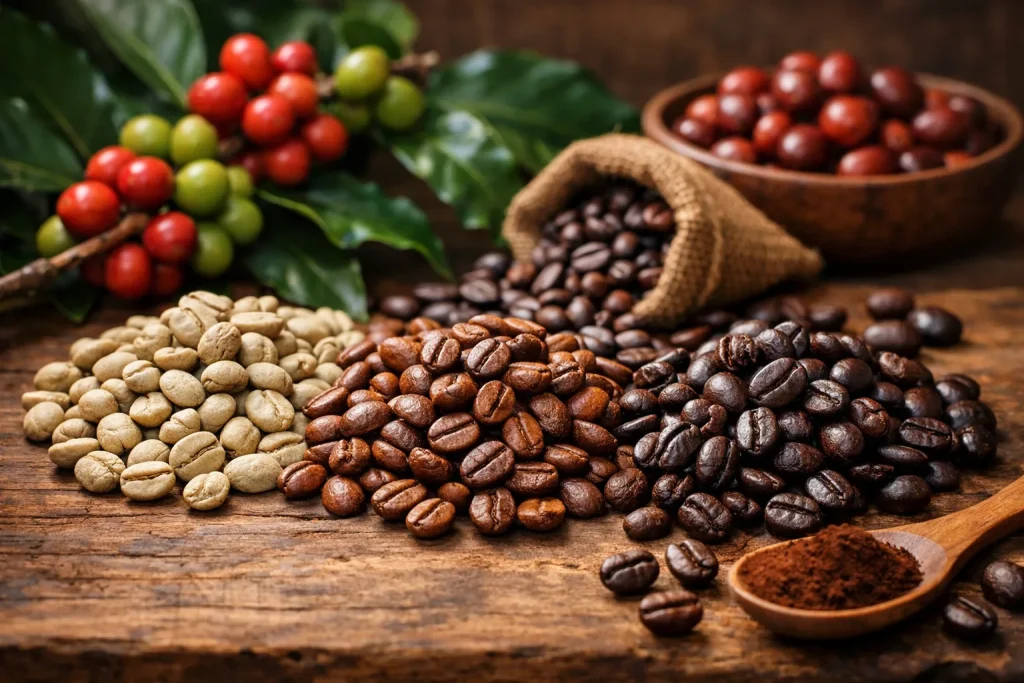
This section explains key coffee plant types, their flavor traits, and where they thrive. It focuses on distinct cup qualities, growth needs, and why producers choose each variety.
Typica
Typica is one of the oldest cultivated coffee varieties and the genetic base for many others. It produces a clean, balanced cup with mild acidity and sweet, classic coffee notes like caramel and chocolate.
It grows best at higher altitudes with steady rainfall and moderate temperatures. Typica trees yield moderately but are vulnerable to diseases such as coffee leaf rust and pests, which makes them less favored where disease pressure is high.
Farmers value Typica for its predictable flavor and suitability for specialty lots. It often appears in single-origin offerings and is used as a benchmark when tasting other beans.
Bourbon
Bourbon developed from Typica but usually offers sweeter, more complex flavors. Expect bright acidity, buttery body, and notes of red fruit, chocolate, or brown sugar in many Bourbon coffees.
The plant yields more than Typica but still needs careful management. It prefers rich soils and high altitudes; good agronomy and pruning boost both yield and cup quality.
Bourbon has many natural mutations and hybrids, which growers use to balance disease resistance and taste. Smallholder farmers often cultivate Bourbon for premium markets because it can fetch higher prices when processed and roasted to highlight its sweetness.
Geisha
Geisha (also spelled Gesha) is known for its floral and tea-like character and high scores in competition cuppings. Typical tasting notes include jasmine, bergamot, and stone fruit, with bright acidity and silky body.
It performs well at very high elevations with cool nights and careful processing. Yields are generally low, and the plants can be sensitive to growing conditions, which raises production costs.
Producers often market Geisha as a specialty or lot-limited coffee. Its distinct profile and rarity drive higher prices, making it a choice for estates and microlots that aim for standout flavor and awards.
Liberica
Liberica differs in plant and cup from Arabica varieties; the cherries and beans are larger and irregular in shape. Its flavor can be bold, with woody, smoky, or floral notes, and a full body that stands up in certain blends and brewing methods.
It grows well in hot, humid climates and shows strong resistance to some diseases and harsh conditions. This hardiness makes it a practical option in regions where Arabica struggles.
Producers use Liberica for local markets and specialty experiments. While less common globally, it offers unique flavors that appeal to drinkers seeking something different from standard Arabica profiles.
Coffee Brewing Methods
This section explains key ways to brew coffee, how each method extracts flavor, and what gear and grind sizes matter for consistent results.
Espresso
Espresso forces hot water through very finely ground coffee at high pressure, usually 9 bars, producing a concentrated shot with crema on top. Machines range from manual lever models to fully automatic espresso machines; each type affects control over temperature, pressure, and shot timing.
Key variables: dose (grams), grind fineness, tamp pressure, water temperature (88–96°C), and extraction time (about 25–35 seconds for a standard double shot). Small changes in any variable change crema, body, and clarity.
Espresso is the base for milk drinks like latte and cappuccino, so milk texture matters when brewing for those drinks. For technical background on pressure and extraction, see the Specialty Coffee Association’s resources: Specialty Coffee Association.
Pour Over
Pour over uses a cone-shaped dripper and filter to let hot water pass through a medium-fine grind. The brewer controls pour speed, water distribution, and bloom time to highlight clarity and delicate flavors.
Typical steps: rinse the paper filter, add 15–18 g of coffee per 250 ml of water (adjust to taste), bloom with twice the coffee weight in water for 30–45 seconds, then pour in slow concentric circles. Total brew time usually runs 2.5–4 minutes. Grind size and pour rhythm shape acidity, sweetness, and body.
Popular devices include the V60, Kalita Wave, and Chemex. For method comparisons and device details, readers can consult general brewing guides such as the coffee glossary entries on brewing methods at Wikipedia.
French Press
The French press steeps coarse-ground coffee directly in hot water, then separates grounds with a metal plunger. This immersion method produces full-bodied coffee because oils and fines pass through the metal filter.
A common ratio is 1:15 to 1:17 (coffee to water). Steps: add coarse grounds, pour water at 92–96°C, stir once, steep for 3–4 minutes, then press slowly and serve immediately to avoid over-extraction. Coarse grind reduces sediment but some fine particles still reach the cup, adding texture.
French press suits darker roasts and those who prefer rich mouthfeel. Use a scale and timer for repeatable results, and rinse the carafe and plunger parts to keep flavors clean.
Grinding and Extraction
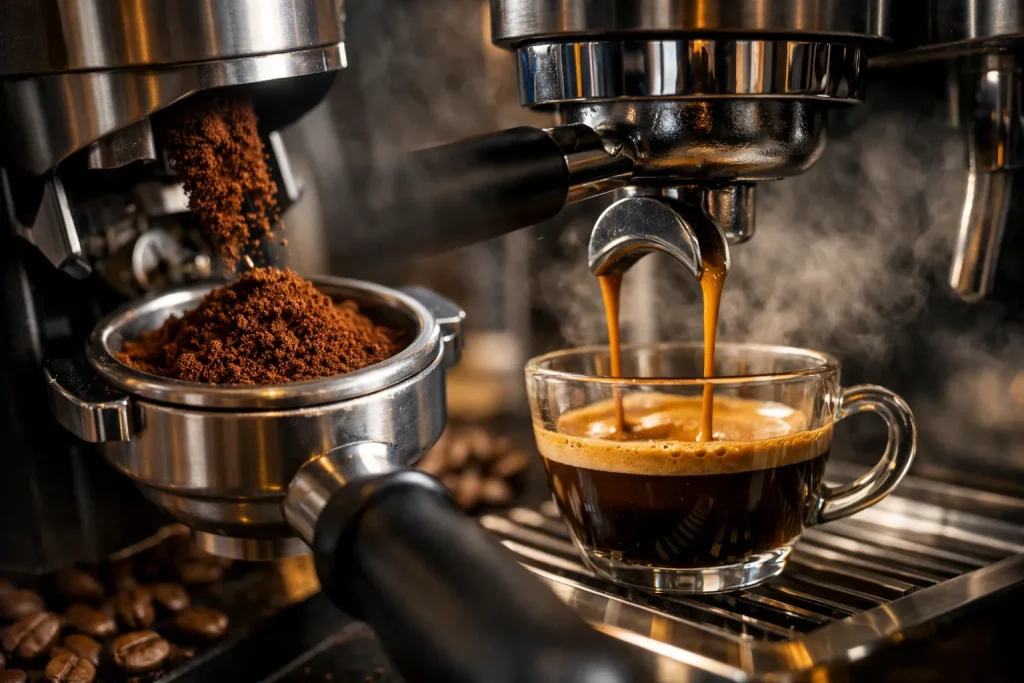
Grinding controls particle size and extraction controls how much flavor dissolves. Small changes to either can make coffee taste weak, sour, or bitter. Consistent grind, correct brew time, and proper tamping work together to hit the desired taste.
Grind Size
Grind size means the average diameter of coffee particles after grinding. Espresso uses fine grounds (about the thickness of table salt), pour-over uses medium-fine to medium, and French press needs coarse grounds (grains like kosher salt). A stepless grinder lets users make tiny adjustments for precise results; small changes can shift extraction a lot.
Match grind to the brew method and machine. For espresso, adjust until a 25–30 second shot yields balanced flavors. For pour-over, aim for a 2.5–4 minute total brew time depending on dose and pour rate. Use a burr grinder for uniform particles; blade grinders make uneven sizes and unpredictable extraction. Learn more about grind adjustment from reliable sources like the Specialty Coffee Association via SCA.
Extraction Time
Extraction time is how long water contacts coffee grounds and dissolves solubles. Under-extraction (short time) leaves acids and fruity notes dominant; over-extraction (long time) pulls bitter, dry flavors. Target extraction varies: espresso shots typically 25–30 seconds, pour-over 2.5–4 minutes, and cold brew 12–24 hours.
Control time alongside grind and water temperature. Raising temperature or using a finer grind speeds extraction. Lowering temperature or coarsening the grind slows it. Measure time from first contact of water and grounds. For consistent results, use a scale and timer. World Coffee Research offers resources on how extraction affects taste: World Coffee Research.
Tamping
Tamping compresses espresso grounds into a compact puck that resists water flow evenly. An even puck prevents channeling, where water finds weak paths and extracts unevenly. Apply firm, level pressure—typically about 20–30 pounds (9–14 kg)—and finish with a slight twist to polish the surface.
Use a flat, clean tamper sized to the portafilter. Check the puck for cracks or loose spots before brewing. If shots run too fast, tamp slightly harder or use a finer grind. If shots are too slow or blocked, lighten tamp or coarsen grind. Consistent technique is more important than exact pressure; they should aim for repeatable tamping and pair it with correct grind and dose.
Coffee Flavor Profiles
Coffee flavor depends on three main traits that shape what a cup tastes like: how bright it feels on the tongue, how heavy it feels in the mouth, and how long and what kind of taste lingers after swallowing. These traits help tasters compare beans, brewing methods, and roast levels.
Acidity
Acidity in coffee means the bright, lively sensations perceived toward the front of the mouth. It ranges from sharp and citrus-like (think lemon or grapefruit) to mild and wine-like (such as red apple or cranberry). Higher-grown Arabica beans often show clearer, fruit-driven acidity, while lower-grown Robusta tends to be flatter.
Acidity helps a brew feel fresh and clean. Light to medium roasts usually preserve more of the bean’s natural acids. Over-extraction or stale beans can create harsh, sour notes rather than pleasant brightness.
When evaluating acidity, consider descriptors (citrus, malic, acetic), intensity (low, medium, high), and balance with sweetness. Good acidity complements sweetness and doesn’t dominate the cup.
Body
Body describes how heavy or full coffee feels in the mouth. It spans from thin and tea-like to thick and syrupy. Factors that influence body include bean variety, roast level, and brewing method. French press and espresso produce fuller body because of oils and fine particles in the cup. Pour-over and drip usually yield lighter body.
Roast level alters body: darker roasts can feel heavier and rounder, while lighter roasts often feel lighter and cleaner. Water temperature and grind size also affect extraction of soluble compounds that add weight.
Use simple terms when noting body: light, medium, full. Heavier body often pairs with chocolate or caramel notes; lighter body often pairs with floral or fruity flavors.
Aftertaste
Aftertaste is the set of flavors and sensations that remain after swallowing. It can be short and clean or long and evolving. Common aftertaste descriptors include chocolate, nuttiness, fruity acidity, floral notes, and bitterness.
A positive aftertaste feels pleasant and balanced, often revealing new notes as it fades. Negative aftertaste may be harsh, astringent, or metallic, typically caused by over-roasting, poor extraction, or low-quality beans.
Assess aftertaste by noting duration (short, medium, long), quality (clean, pleasant, harsh), and changing notes over time. Good aftertaste reinforces the cup’s main flavors and leaves a lasting, agreeable impression.
Processing Techniques
Processing changes how coffee beans taste by changing sugars, acids, and fermentation. It affects body, clarity, and fruit character, and it guides drying time, labor, and quality control.
Washed Process
The washed process removes fruit pulp before drying, using water and mechanical pulpers. Producers typically depulp ripe cherries within hours of harvest, then ferment the parchment to loosen the remaining mucilage for 12–48 hours. Fermentation time depends on temperature and desired flavor; producers monitor it closely to avoid over-fermentation.
After fermentation, mills rinse the beans and dry them on raised beds or patios until moisture reaches about 10–12%. This method produces clean, bright cups with clearer acidity and defined origin flavors. It requires reliable water, careful fermentation control, and faster processing steps, which raises labor and infrastructure needs.
Natural Process
The natural process dries whole cherries with skin, pulp, and seed intact. Farmers spread cherries on patios or raised beds and turn them frequently to keep airflow even. Drying can take 2–4 weeks depending on climate, and slow, even drying helps prevent mold and off-flavors.
This method often yields heavier body, pronounced fruitiness, and more ferment-derived flavors like jammy or winey notes. Control is critical: uneven drying or delayed sorting can cause unwanted fermentation and defects. Natural processing suits dry regions and small farms that lack water-intensive equipment.
Honey Process
The honey process removes the cherry skin but leaves varying amounts of mucilage on the parchment. Producers classify honey as white, yellow, red, or black based on how much mucilage remains and the drying length. Less mucilage and quicker drying give cleaner flavors; more mucilage and longer drying create richer, sweeter, and more complex cups.
Drying occurs on raised beds with frequent turning and close monitoring for moisture and temperature. Honey processing balances the bright clarity of washed coffee and the fruity depth of naturals. It demands careful handling to avoid sticky fermentation and uneven drying, but it offers producers a flexible way to shape sweetness and body.
Popular Coffee Drinks
This section breaks down three common espresso-based drinks. It shows how they differ by water, milk, and foam, and explains the typical ratios and serving styles.
Americano
An Americano mixes espresso with hot water to create a drink similar in strength to brewed coffee but with espresso flavor. A standard method uses one or two espresso shots (30–60 ml) poured into a cup, then 120–180 ml of hot water added to reach the desired strength.
The drink keeps espresso’s crema and concentrated taste, but is less intense than straight espresso. It suits people who want espresso flavor without the high intensity or small volume of a shot.
Serve Americano in a ceramic cup or mug. Variations include “long black” where water goes in first and espresso is poured on top, preserving more crema. Ice can be added for an iced Americano.
Cappuccino
A cappuccino balances equal parts espresso, steamed milk, and milk foam. The typical ratio is 1/3 espresso (single or double shot), 1/3 steamed milk, and 1/3 dense foam, usually served in a 150–180 ml cup.
Texture matters: foam should be velvety and stable, not airy, which gives the drink a rich mouthfeel. Baristas often use microfoam and gentle pouring to create simple latte art on top.
Cappuccinos are commonly flavored with cocoa or cinnamon on the foam. They differ from lattes by having more foam and a smaller volume, so the espresso taste remains more noticeable.
Latte
A latte contains more steamed milk and a thin layer of foam over one or two espresso shots. Typical ratios are about 1 part espresso to 3–5 parts steamed milk, served in a 240–350 ml cup or glass.
The high milk content makes the drink mild and creamy, which suits milk-based flavors like vanilla or caramel. Latte art is common because the microfoam surface is smooth and pourable.
Lattes can be hot or iced. Café variations include flavored syrups and alternative milks; these change texture and sweetness but keep the same basic espresso-to-milk structure.
Espresso Machine Parts
A few key components control extraction and steam power. Proper fit, cleanliness, and temperature stability matter most for consistent shots and milk texture.
Portafilter
The portafilter holds the coffee puck and seals against the grouphead to force hot water through the grounds. Typical designs include a single or double spout and a removable metal basket. A heavy, well-machined portafilter improves heat retention and reduces temperature loss during extraction.
Cleanliness and basket choice affect flow and crema. Burr fines can clog baskets, so regular backflushing and knocking out spent pucks keep shots consistent. Professionals often use precision baskets (with finer holes) or bottomless portafilters to inspect the extraction pattern and diagnose channeling.
Handle length and angle influence leverage when locking into the grouphead. A tight, square fit prevents leaks and pressure loss. Some commercial machines use 58 mm portafilters; many home machines use smaller diameters—matching basket size to machine specifications is critical.
Grouphead
The grouphead is the metal block that delivers hot water to the portafilter. It contains the shower screen, gasket, and dispersion plate. A stable grouphead temperature and even water distribution are vital for uniform extraction.
There are two common grouphead types: E61-style and thermoblock-fed groups. E61 groupheads rely on a large metal mass and internal circuits to stabilize temperature. Thermoblock or thermojet designs heat water on demand and respond faster but can show more temperature variability.
Maintenance focuses on the shower screen and gasket. Scale and coffee oil buildup change flow patterns and cause leaks. Regular descaling, replacing worn gaskets, and cleaning the screen preserve water flow and seal integrity.
Coffee Industry Terms
This section explains important industry ideas used by roasters, traders, and cafés. It focuses on how coffee quality, sourcing, and market practices affect price, taste, and farmer income.
Third Wave Coffee
Third wave coffee treats coffee like a craft product rather than a commodity. Roasters and cafés emphasize single-origin beans, transparent sourcing, and roast profiles that highlight origin flavors. They use precise brewing methods—such as pour-over, V60, and calibrated espresso—to extract clean, distinct tasting notes like citrus, chocolate, or florals.
The movement pushed specialty tasting standards and consumer education. Tasting notes, cupping scores, and origin information appear on bags and menus. Third wave businesses often invest in barista training, quality control, and equipment that keeps temperatures and flow rates consistent.
Direct Trade
Direct trade describes buying coffee straight from farmers or producer groups, cutting out some middlemen. Buyers negotiate prices directly with farms and often pay premiums for quality, traceability, or sustainable practices. Contracts may include support such as agronomy advice, processing equipment, or pre-harvest financing.
Direct trade varies by buyer: some companies publish farm names and prices, while others keep terms private. The model aims to improve farmer income and bean quality, but results depend on transparency, fair pricing, and long-term relationships. Certifications are optional in direct trade; proof of impact usually comes from documented payments and farm visits.
Specialty Coffee
Specialty coffee denotes beans graded and scored for high quality. Evaluators use a 100-point scale; coffees scoring 80 or above qualify as specialty. Judges assess aroma, flavor clarity, acidity, body, and defects during cupping. Higher scores correlate with more desirable sensory traits and higher market prices.
Specialty coffee supply chains emphasize processing care—washed, natural, or honey processes—and strict defect sorting. Roasters roast lighter to preserve origin character and share detailed information like farm, variety, altitude, and processing date. The specialty sector also supports competitions, quality labs, and training that raise standards across the industry.
Sustainability and Sourcing
Sustainable coffee sourcing links farm practices, worker welfare, and buyers’ commitments to long-term supply. It focuses on fair pay, reduced environmental harm, and traceability so buyers know where beans come from and how they were produced.
Fair Trade
Fair Trade sets minimum prices and premiums that protect farmers from market crashes. It requires democratic cooperatives, meaning producers vote on how to spend the Fair Trade Premium to fund community projects like schools or processing equipment.
Fair Trade also requires basic labor standards. It bans forced and child labor and promotes safe working conditions. Buyers often commit to long-term contracts, which give farmers more stable income and planning ability.
A simple comparison helps:
| Feature | Fair Trade |
|---|---|
| Price | Minimum price + premium |
| Organization | Producer cooperatives |
| Labor rules | Prohibits child/forced labor |
| Community funds | Premium for local projects |
Rainforest Alliance Certified
Rainforest Alliance focuses on farm-level environmental practices and biodiversity. It sets standards for shade cover, soil health, water use, and integrated pest management to lower chemical inputs and protect habitats.
Certification involves farm assessment and a score-based system. Farms that meet core criteria and reach required scores gain certification. The program also includes training for farmers on yield improvement, record keeping, and market access.
Key points in list form:
- Environmental rules: shade, forest protection, water management.
- Social safeguards: worker rights and safety training.
- Market impact: improved access and potential price premiums for certified lots.
Storage and Freshness
Coffee loses flavor when exposed to oxygen, heat, light, or moisture. They should keep beans in an airtight container to slow oxidation.
Store coffee in a cool, dark place away from the stove or direct sunlight. A cupboard or pantry works better than the fridge for daily use.
Whole beans stay fresh longer than pre-ground coffee because they have less surface area. They should grind just before brewing when possible.
Freezing can help for long-term storage if done right. Seal coffee in small, airtight bags and only thaw what they will use within a day.
Bold tips for quick reference:
- Use airtight containers: metal or opaque containers work best.
- Avoid heat and light: choose a cool, dark spot.
- Buy whole beans: grind fresh for best flavor.
- Freeze only if needed: portion into small bags and avoid repeated thawing.
They should watch for stale signs: dull aroma, flat taste, or rancid smells. Those are clear signs the coffee lost its fresh flavors.
For daily use, buy smaller amounts more often to keep coffee fresher. This reduces the need for freezing and preserves the intended flavors.
FAQS
What is a coffee glossary?
A coffee glossary lists common terms used in coffee buying, brewing, and tasting. It helps readers learn words like roast levels, brew methods, and bean varieties.
Who should use this glossary?
Beginners find it useful to learn basics. Baristas and home brewers use it to compare techniques and equipment.
How are terms chosen?
Entries focus on words that affect flavor, preparation, and industry roles. The glossary includes brewing methods, bean types, roast descriptors, and key tools.
How should someone use the glossary?
They can look up unknown words while reading recipes or tasting notes. It also serves as a quick reference during shopping or when talking with a barista.
Are flavor words subjective?
Yes. Descriptors like “bright” or “chocolatey” reflect perception. Tasting notes aim to guide, not provide exact labels.
Is technical detail included?
The glossary balances simple definitions with enough technical detail for clarity. It avoids heavy jargon but links basic concepts to practical tips when helpful.
Can the glossary help improve brewing?
Yes. Understanding extraction, grind, and water temperature helps control taste. Small changes informed by terms often lead to better coffee.
Is the glossary updated?
Good glossaries add new terms as methods and tools evolve. Readers should check for updates to stay current.
Quick reference table
| Term | Quick meaning |
|---|---|
| Arabica | A common high-quality bean |
| Espresso | Concentrated coffee from pressure |
| Pour-over | Manual drip method |
| Roast level | Degree beans were roasted |
Conclusion
The glossary gives readers a clear map of coffee terms they will meet in shops and at home. It helps them pick beans, understand brewing methods, and talk with baristas confidently.
They can use the list to learn one term at a time and build practical skills. The terms link to real choices like grind size, roast level, and brew time.
A quick reference saves time and reduces confusion when trying new drinks. It supports steady learning and better coffee decisions.
Bold or italic highlights point to key ideas readers should remember.