
How Cold Brew Coffee Maker Works and Why It Brews Better Coffee
Cold brew coffee makers use a simple, slow steeping process with cold water to extract smooth and flavorful coffee. This guide explains how cold brew coffee makers work step-by-step and why they produce less acidic, rich coffee compared to traditional methods.
Key Takeaways
- Cold brewing involves steeping coffee grounds in cold water for several hours, which results in a smoother, less acidic coffee.
- Cold brew coffee makers are designed to control water flow and steeping time, ensuring consistent extraction.
- The slow extraction process preserves coffee’s natural sweetness and reduces bitterness.
- Different cold brew makers offer varied features, like filtration systems and ease of use.
- Using the right grind size and coffee-to-water ratio is key for achieving the perfect cold brew.
- Cold brew coffee can be stored for days without losing flavor, making it convenient for busy lifestyles.
- Troubleshooting common issues like weak or bitter coffee can improve your brew quality.
Introduction: What You Will Learn
Have you ever wondered how a cold brew coffee maker works and why it makes coffee taste so different from your regular hot brew? In this guide, you’ll learn the science behind cold brew coffee makers, the step-by-step process to make cold brew at home, and tips to get the best flavor every time. Whether you’re a coffee newbie or a caffeine connoisseur, understanding how cold brew coffee makers work will help you enjoy smoother, less acidic coffee with minimal effort.
Step 1: Understanding the Basics of Cold Brew Coffee
What Is Cold Brew Coffee?
Cold brew coffee is made by steeping coarsely ground coffee beans in cold or room temperature water for an extended period, usually 12-24 hours. Instead of using heat to extract flavors quickly, cold brew relies on time, leading to a unique flavor profile that is less bitter and acidic.
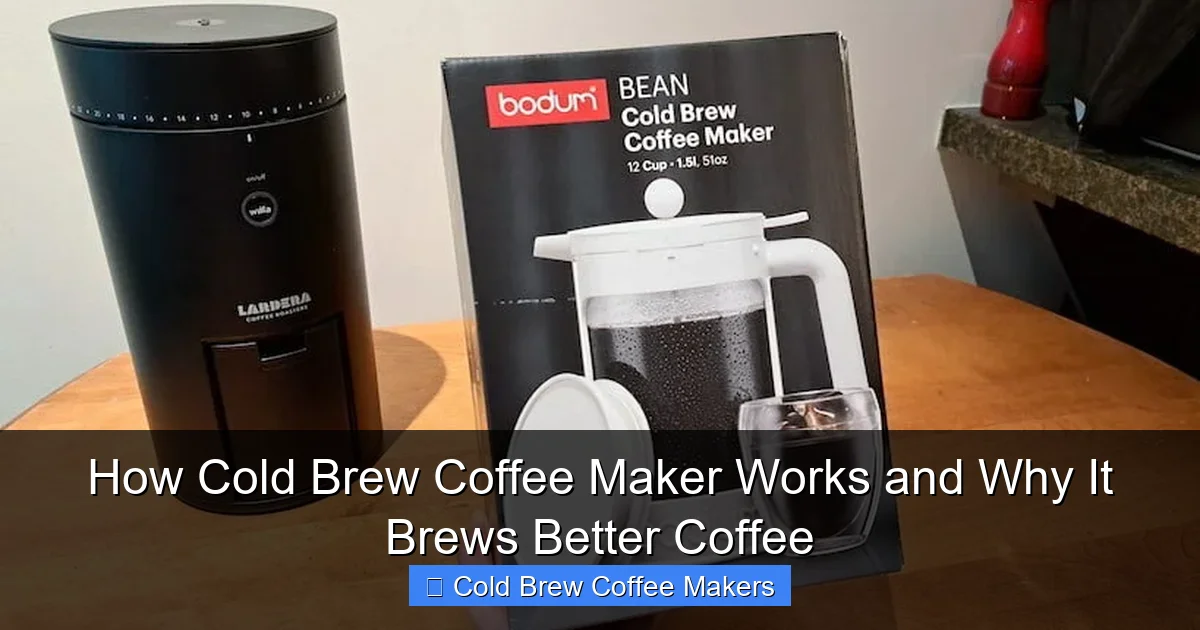
Visual guide about How Cold Brew Coffee Maker Works and Why It Brews Better Coffee
Image source: homegrounds.co
Why Cold Brew Coffee Makers?
Cold brew coffee makers simplify this slow extraction process. They provide the right environment to control steeping time and filtration, ensuring consistent and clean cold brew coffee at home without messy filters or guesswork.
Step 2: How Cold Brew Coffee Makers Work
The Core Components
- Container: Holds coffee grounds and water during steeping.
- Filter: Separates coffee grounds from the liquid after brewing.
- Drip or Pour Mechanism: Controls how water interacts with coffee grounds (in some models).
- Lid or Seal: Keeps the brew fresh and prevents contamination.
The Brewing Process Explained
Cold brew coffee makers allow you to combine coarsely ground coffee with cold water. The coffee grounds slowly release their oils and flavors into the water over many hours. During this gentle extraction, fewer acidic compounds dissolve, resulting in a smoother taste. Once steeping is complete, the filter separates the coffee grounds from the brewed coffee, leaving you with a clean concentrate or ready-to-drink cold brew.
Step 3: Making Cold Brew Coffee with Your Cold Brew Coffee Maker
Gather Your Ingredients and Tools
- Coarse ground coffee (medium to coarse grind)
- Cold, filtered water
- Your cold brew coffee maker
- A storage container or glass for serving
Step-by-Step Instructions
1. Measure Coffee and Water
Start with a coffee-to-water ratio of about 1:4 for concentrate or 1:8 for ready-to-drink cold brew. For example, use 1 cup of coffee grounds to 4 cups of water for concentrate.
2. Add Coffee Grounds to the Brewer
Place the coarsely ground coffee into the filter or directly into the container, depending on your coffee maker design.
3. Pour Cold Water Over Grounds
Slowly pour cold or room temperature water over the grounds, making sure all grounds are wet. Avoid stirring too vigorously to prevent fine particles from getting into the brew.
4. Seal and Steep
Close the lid and place the coffee maker in the refrigerator or at room temperature. Steep for 12 to 24 hours depending on how strong you want your coffee.
5. Filter and Serve
If your coffee maker has a built-in filter, simply remove it. If not, pour the brew through a fine mesh filter or cheesecloth to separate the grounds. Serve your cold brew over ice or dilute the concentrate with water or milk.
Step 4: Tips for Perfect Cold Brew Coffee
- Use Fresh, High-Quality Coffee Beans: The flavor depends heavily on bean quality.
- Grind Size Matters: Use a coarse grind to avoid over-extraction and bitterness.
- Water Quality: Use filtered water for the best taste.
- Experiment with Steeping Time: Longer steeping yields stronger coffee but can sometimes become bitter.
- Store Cold Brew Properly: Keep in a sealed container in the fridge for up to two weeks.
- Adjust Ratios to Your Taste: Start with standard ratios and tweak based on your preference.
Step 5: Troubleshooting Common Issues
Weak or Watery Coffee
Try increasing the coffee-to-water ratio or steeping time. Using finer grounds slightly can also help but avoid too fine to prevent sediment.
Bitter or Overly Strong Coffee
Reduce steeping time or use a coarser grind. Ensure you are not using too much coffee relative to water.
Grains in the Brew
Check your filter for damage or use an additional fine mesh filter or cheesecloth to catch fine particles.
Off or Sour Taste
Make sure your coffee beans are fresh. Keep your cold brew maker clean to avoid contamination.
Conclusion: Why Cold Brew Coffee Makers Brew Better Coffee
Cold brew coffee makers use a gentle, slow extraction process with cold water to unlock flavors traditional hot brewing can’t. This results in coffee that is smoother, less acidic, and naturally sweeter. By controlling steeping time, grind size, and filtration, cold brew coffee makers make it easy for anyone to create delicious, refreshing coffee at home. With some practice and the right equipment, you can enjoy café-quality cold brew every day.
🎥 Related Video: Yama Cold Brew Tower
📺 Pull & Pour Coffee
