
You open a bag of ground coffee expecting the same fresh taste as your favorite cafe. Ground coffee usually holds its best flavor for about one to two weeks after opening, though it can remain usable for months if stored well. Store it airtight, cool, and away from light to keep flavor longer.
Ethan Cole at Webrewcoffee.com finds that grinding just before brewing and choosing proper packaging make the biggest difference in taste over time. If you want a reliably good cup, focus on storage, small batches, and checking for musty or flat smells before brewing.
Key Takeaways
- Use airtight, cool, and dark storage for longer flavor.
- Fresh flavor peaks in the first one to two weeks after opening.
- Grind fresh or buy small amounts to avoid waste.
How Long Ground Coffee Lasts
Ground coffee keeps flavor for a limited time. Storage method and whether the package is opened make the biggest difference in how it tastes.
Typical Shelf Life Unopened
Unopened ground coffee in a sealed, vacuum-packed bag usually stays good for about 3 to 5 months past the roast date when stored cool and dry. Some manufacturers label a “best by” date up to 12 months; that date refers to peak flavor rather than safety.
Factors that shorten life before opening include exposure to heat, light, and moisture during shipping or storage. A dented or compromised package can let air in and speed staling.
Quick reference:
- Sealed, cool, dry: 3–5 months past roast date (often still okay to 12 months)
- Exposed to heat/light/moisture: significant flavor loss sooner
Shelf Life After Opening
Once opened, ground coffee loses its best flavor fast. It stays at peak quality for about 1 to 2 weeks, with the very best taste usually in the first 7–10 days after opening. After that, oils oxidize and aroma fades, producing a noticeably stale taste.
To delay staling after opening, keep the coffee in an airtight container and store it away from heat and direct light. Avoid leaving the original bag open on the counter or storing it in a frequently opened cupboard that lets in air and humidity.
Optimal Storage Duration
For the best daily brewing, use opened ground coffee within 7–14 days. If someone buys coffee in bulk or needs longer storage, vacuum sealing and refrigeration can extend perceived freshness but may introduce moisture risks if not done correctly.
Practical storage tips:
- Use an airtight, opaque container.
- Store in a cool, dark place (pantry or cupboard).
- Freeze only if keeping ground coffee longer than a month; divide into small portions and thaw once to avoid repeated moisture exposure.
Factors Affecting Ground Coffee Freshness

Several factors control how long ground coffee keeps its flavor and aroma. Oxygen, heat, moisture, and light each speed up chemical changes that make coffee taste flat. Proper storage aims to limit those specific forces.
Exposure to Air
Oxygen causes ground coffee to oxidize quickly. Once a bag is opened, volatile aroma compounds escape and oils react with air. This process cuts bright flavors within days and makes coffee taste dull.
To slow oxidation, store coffee in an airtight container with a tight seal. Choose containers made of non-reactive materials like stainless steel or dark glass. If the original bag has a one-way valve, keep coffee in that bag inside a sealed container to limit air exchange.
Buy amounts you will use within one to two weeks for best flavor. For longer storage, vacuum-sealed packaging or nitrogen-flushed bags reduce oxygen contact and extend peak freshness.
Temperature and Humidity
Heat speeds chemical reactions that break down coffee’s flavor compounds. Warm kitchens, near ovens or sunlight, will make ground coffee go stale faster. Aim to keep coffee at a cool, steady temperature between 50–70°F (10–21°C).
Humidity introduces moisture, which can make grounds clump and promote mold if conditions are extreme. Store coffee in a dry place away from steam sources like dishwashers and kettles. Avoid refrigeration for daily-use coffee, because repeated temperature changes create condensation.
For long-term storage, freezing unopened or well-sealed ground coffee can slow degradation. Thaw only what will be used in a single session to prevent moisture cycles that harm flavor. The Specialty Coffee Association offers guidelines on temperature effects and best practices for storage.
Light Sensitivity
Light, especially direct sunlight or strong indoor light, breaks down aromatic compounds and accelerates staling. Clear bags or glass jars left in sun will degrade flavor faster than opaque containers.
Use opaque or dark containers to block light. Store the container in a cupboard or pantry, not on a windowsill or near bright lights. Even short exposure during everyday use matters; limit how long the container sits open.
For retail packaging, look for bags that are both light-proof and have a one-way valve. For more on how light affects coffee chemistry, see resources like Wikipedia’s coffee overview.
Signs Ground Coffee Has Gone Bad
Look for changes in smell, taste, color, and feel. These signs show whether grounds are simply stale or actually compromised by moisture, mold, or contamination.
Changes in Aroma and Flavor
Fresh ground coffee gives a bright, complex aroma with notes that match the roast and origin. If the grounds smell flat, cardboard-like, or musty, the oils that carry aroma have oxidized or absorbed odors from the storage area. Brewed coffee that tastes dull, overly bitter, or lacking fruit and acidity also signals age-related degradation.
If the cup smells sour, fermented, or off in a way that does not match the roast profile, it may indicate moisture damage or contamination. Small differences matter: a slight loss of aroma means stale; sour or rotten notes mean the coffee should not be used. For more on how coffee develops flavor, see Coffee flavor basics.
Visual Changes
Fresh grounds look uniform for the roast type—medium grounds are even, dark roasts may show an oily sheen on beans but not on properly stored grounds. Check for visible mold, white or green specks, or any fuzzy growth. These indicate moisture and spoilage and require discarding the pack.
Clumping or dark wet-looking spots can mean the grounds absorbed humidity or liquid. Stains inside the bag or jar wall also point to leaks or condensation. Discoloration toward a pale, gray-brown color suggests oxidation and staling rather than microbial growth, but it still reduces quality.
Texture Alterations
Ground coffee should feel dry and free-flowing. If the grounds clump into lumps or feel damp, they have absorbed moisture and may harbor mold or bacteria. Damp grounds will not grind or extract consistently and can clog filters or machines.
An oily or sticky texture sometimes appears with dark roasts, but unexpected stickiness or a slimy film is a bad sign. Oily sheen on beans is normal for some roasts, but in grounds it can accelerate rancidity. For guidance on storage and preventing texture problems, the Specialty Coffee Association provides useful storage recommendations at Specialty Coffee Association.
Best Methods for Storing Ground Coffee
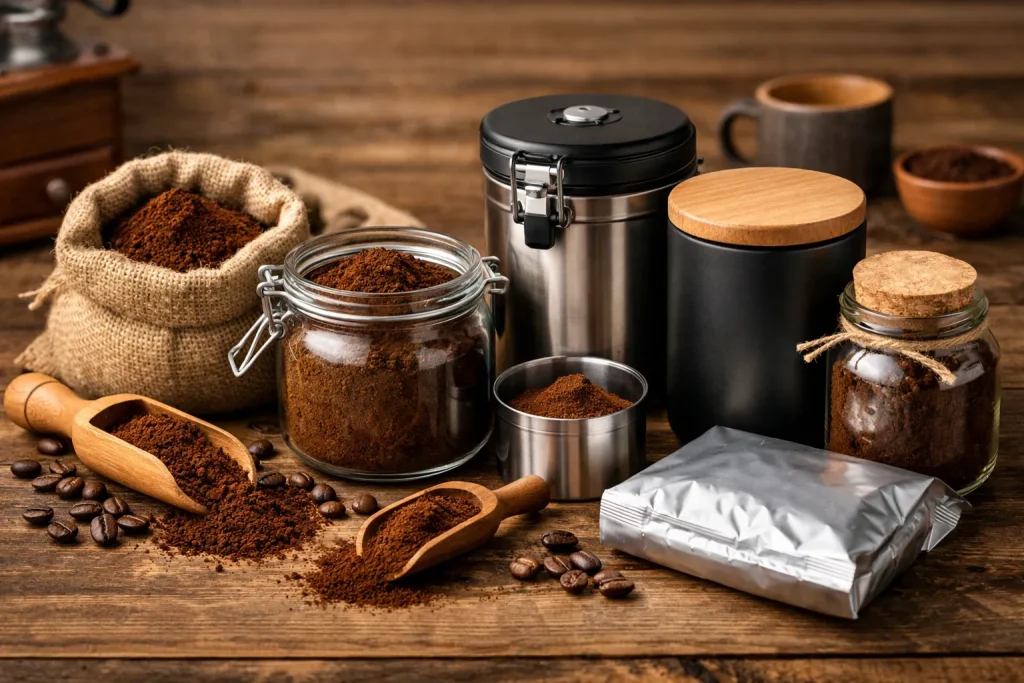
Store ground coffee in a dry, cool place away from air, light, heat, and moisture. Use containers and locations that limit oxygen and temperature swings to keep flavor longer.
Airtight Containers
They should be opaque, airtight, and made from nonreactive materials like glass, ceramic, or stainless steel. A container with a silicone or rubber gasket and a clamp or screw lid gives the best seal against air.
Use small containers that hold only the amount of coffee used within one to two weeks to avoid repeated air exposure. Transfer coffee from its original bag into the container right after opening to cut down on oxygen contact.
If the original bag has a one-way valve, leave the coffee in that bag and place the bag inside an airtight canister for extra protection. Avoid clear jars on the counter where light can fade oils and flavor.
Choosing the Right Storage Location
Pick a spot that stays cool and dry, like a pantry shelf away from the oven, stove, or sunlight. Heat speeds up flavor loss, so do not store coffee above appliances or near windows.
Keep the container away from strong-smelling foods. Coffee absorbs odors quickly, which will change its taste.
Room temperature (about 60–75°F or 15–24°C) is fine; refrigeration is not recommended because moisture and frequent temperature change harm flavor. If freezing for long-term storage, divide coffee into small, airtight bags and only remove what will be used immediately to avoid thaw/refreeze cycles.
Impact of Packaging Types on Shelf Life
Packaging controls oxygen, moisture, light, and scent loss. Some containers block air and light well but differ in resealability and convenience.
Vacuum-Sealed Bags
Vacuum-sealed bags remove most air and limit oxidation, so ground coffee stays closer to its roasted flavor for longer. These bags often include a one-way valve that lets CO2 escape without letting oxygen in, which reduces stale taste during the first weeks after roasting.
Materials matter. Multilayer aluminum or metallized film blocks light and moisture better than plain plastic, which helps preserve oils and aroma compounds. Once opened, the vacuum seal is broken and protection drops; coffee should be used within 1–2 weeks for best flavor unless it’s re-sealed tightly.
Vacuum bags are lightweight and compact. They suit single-use or short-term storage but require careful resealing or transfer to another container if the coffee won’t be finished quickly.
Metal Tins and Canisters
Metal tins and canisters block light and physical damage very well. A sealed metal container keeps oxygen and moisture out if it has a tight lid. This helps ground coffee keep its aroma longer than loose storage in a bag.
Not all metal containers are airtight. Canisters with silicone gaskets or clamp lids provide the best oxygen barrier. If the container is not fully filled, trapped air will still let oxidation occur; smaller containers or using a bag inside the tin reduces that air space.
Metal is durable and reusable. It works best when coffee is stored in a cool, dark place and when the container is opened only briefly during use.
Original Retail Packaging
Original retail packaging varies widely in protection. High-quality retail bags use multilayer films with aluminum or metallized layers plus a one-way valve and resealable zippers, offering good short-term freshness for ground coffee.
Lower-cost bags may let in more oxygen and moisture, which speeds staling. If the bag is resealable and has a valve, the coffee will stay usable for about 1–2 weeks after opening for optimal flavor; non-resealable bags require transferring to an airtight container after opening.
Buy sizes that match consumption. Smaller retail packages help finish coffee before quality drops, while large bags are best if the consumer will transfer grounds to an airtight container for storage.
Freezing and Refrigerating Ground Coffee
Freezing can slow flavor loss for long-term storage, while refrigeration risks moisture and odors. Proper packaging and portioning matter more than the appliance used.
Effectiveness of Freezing
Freezing slows oxidation and staling by lowering temperature and slowing chemical reactions. If coffee is placed in airtight, moisture-proof bags or containers and divided into portion-sized packs, it can keep usable flavor for 6–12 months, with best flavor often within 3 months.
They should remove only the amount needed and return the rest to the freezer immediately. Thawing and refreezing raises moisture risk and speeds quality loss. Whole beans hold up better than preground coffee because less surface area means slower flavor loss.
Practical tips:
- Use vacuum-sealed or heavy-duty freezer bags.
- Press out as much air as possible before sealing.
- Label with date and use within a year for acceptable quality.
Potential Risks of Refrigeration
Refrigerators are not recommended for ground coffee because they expose grounds to changing humidity and food odors. Frequent door openings change temperature and cause condensation to form on the grounds, which harms aroma and can promote mold if moisture is high.
Odor pickup is a real issue; coffee absorbs nearby smells like onions or cheese. Even airtight containers can let small amounts of odor through over time. For short-term use (a week or two), a cool, dark pantry in an opaque, airtight container is safer than the fridge.
How Coffee Quality Changes Over Time
Ground coffee loses specific flavor notes and aromatic compounds as oils oxidize and volatile chemicals evaporate. Storage conditions and grind size speed up these changes, so timing and packaging matter for preserving taste and smell.
Loss of Flavor
Ground coffee loses bright, acidic, and sweet flavor notes first. After grinding, oxygen attacks the oils and acids that create citrus, berry, or chocolate tones. In the first week after opening, most of the delicate flavors fade; by two to four weeks the cup tastes flatter and more one-dimensional.
Dark roasts show different change patterns: their roasted, bitter, and smoky flavors remain longer but become more muted and stale-tasting over time. Larger surface area from fine grinds accelerates flavor loss. Storing grounds in an airtight container away from heat and light slows this decline but does not stop it.
Decreased Aroma
Aroma compounds in ground coffee are volatile and escape quickly. Within hours of grinding, many fragrant molecules dissipate, so freshly ground beans smell far more complex than older grounds.
As oxidation continues, aromatic oils break down into less pleasant scents or disappear entirely. Freezing unopened or well-sealed bags can preserve some aroma for months, but everyday countertop storage leads to a noticeable drop in scent in about one to two weeks.
Health Considerations of Expired Coffee
Expired ground coffee is usually safe to drink if it was stored dry and sealed. It has low moisture and high acidity, which limit bacterial growth. However, safety depends on storage and visible signs.
Stale coffee mainly loses flavor and aroma. It will taste flat, weak, or bitter, but these changes are not a health hazard. People with sensitive digestion may notice more stomach upset from stale, oxidized oils.
Mold can grow if coffee gets wet or stored in humid conditions. If coffee shows clumps, a musty smell, or visible mold, discard it. Brewing moldy coffee can cause allergic reactions or digestive issues in some people.
| Risk | Signs | Action |
|---|---|---|
| Staleness | Flat aroma, weak taste | OK to drink; replace for better flavor |
| Mold | Musty smell, visible spots, clumping | Discard immediately |
| Off-odors or rancidity | Sharp chemical or sour smell | Do not drink; discard |
People with compromised immune systems should be cautious and avoid any questionable product. Pregnant people and young children should also avoid coffee that smells or looks off.
Storing ground coffee in an airtight container in a cool, dry place greatly reduces health risks. Freezing can extend quality, but prevent moisture exposure when thawing.
Environmental Impact of Coffee Waste
Used coffee grounds make up a large part of coffee-related waste. When sent to landfill, they break down and produce methane, a gas that adds to climate change. Landfill disposal also wastes the organic material that could be reused.
Many coffee products add to the problem: single-use pods, paper cups, and packaging increase volume and contamination. These items often end up mixed with grounds, making recycling and composting harder.
Communities can reduce harm by diverting grounds to useful options. Composting turns grounds into soil amendment that helps gardens retain water and nutrients. Some places reuse spent grounds for energy, animal feed, or building materials.
Simple actions help lower impact: compost at home, choose reusable cups, and avoid pods when possible. Businesses can collect spent grounds for industrial reuse and design packaging to be recyclable. Small changes across many people cut waste and save resources.
Key facts:
- Approximately 650 kg of grounds are generated per ton of brewed coffee.
- Large-scale reuse supports a circular economy and reduces landfill methane.
- Awareness and infrastructure are needed to scale reuse programs effectively.
FAQS
What is the difference between “best by” and “expired”?
They indicate quality, not safety. Best by shows when flavor is at its peak. Coffee past that date may taste stale but is usually safe to brew if stored properly.
How long does unopened ground coffee last?
Unopened, vacuum-sealed ground coffee can keep good flavor for several months past the roast date. Many manufacturers list a best-by up to a year, but quality drops over time.
How long after opening will ground coffee still taste fresh?
Once opened, flavor falls fastest in the first week or two. Storing grounds in an airtight container away from heat, light, and moisture helps retain taste longer.
Can ground coffee go bad or make someone sick?
Coffee rarely becomes unsafe unless contaminated with moisture, mold, or pests. Signs of spoilage include off smells, visible mold, or odd taste.
Should ground coffee be refrigerated or frozen?
Freezing unopened or long-term storage can slow quality loss. Daily-use grounds should stay in a cool, dark pantry—refrigeration can introduce moisture and odors.
How can someone tell if coffee is stale?
Stale coffee smells flat and lacks aroma. Brewed coffee tastes dull and weak. Fresh grounds release a strong, bright aroma when opened.
Tips for keeping coffee fresh:
- Use an airtight, opaque container.
- Buy smaller amounts and grind just before brewing when possible.
- Keep it away from heat, light, and humidity.
Conclusion
Ground coffee keeps its best flavor for a short time, usually a few weeks after opening. Stored cool and dry in an airtight container, it stays drinkable longer but loses aroma.
They should grind just before brewing when possible to preserve taste. Freezing unopened bags can help, but frequent temperature changes harm quality.
Signs of staleness include flat smell and weak taste. If coffee smells off or has mold, discard it immediately.
Simple storage habits give the most benefit: airtight, dark, and stable temperature. Small amounts bought more often will yield the freshest cups.