
Turkish Coffee With Cardamom: Traditional Brewing, Flavor Tips, and Serving Rituals
You can make rich, aromatic Turkish coffee with cardamom at home using simple ingredients and a small copper or brass cezve. This brew pairs finely ground coffee, a pinch of ground cardamom, and careful low-heat brewing to create a thick, foamy cup with floral spice and deep roast notes.
He or she who learns the slow pour and foam patience will enjoy a more authentic cup that honors Turkish coffee rituals and centuries of taste. Ahmet Demir’s notes on ceremony and technique remind you to measure by feel, watch the foam, and serve in small cups to savor aroma and tradition.
Key Takeaways
- Use finely ground coffee, a little cardamom, and low heat for best flavor.
- Watch for rising foam and pour gently to preserve texture.
- Serve in small cups and enjoy the aromatic, traditional experience.
What Is Turkish Coffee With Cardamom?
Turkish coffee with cardamom is a strong, finely ground coffee brewed with whole or ground cardamom for a warm, slightly sweet spice note. It uses a small pot, very low heat, and no filter to create a dense brew with foam on top.
Origins and History
Turkish coffee grew during the Ottoman Empire as coffee spread from Yemen and the Arabian Peninsula into Istanbul in the 16th century. Traders and coffeehouses made it a daily ritual, and spices like cardamom joined the blend through trade routes connecting the Ottoman world with Arabia and South Asia.
Adding cardamom became common in homes and coffeehouses across Turkey and nearby regions. It served both to flavor the bitter brew and to show hospitality. The practice adapted over centuries; some families use whole pods, others use ground cardamom mixed with sugar before brewing.
Key Characteristics
Turkish coffee uses coffee ground to a powder-like fineness and is brewed in a small metal pot called a cezve (or ibrik). Water, coffee, sugar (optional), and cardamom are combined and heated slowly until foam forms.
Cardamom gives a floral, slightly minty sweetness that cuts bitterness without hiding the coffee. The brew is served unfiltered in small cups, so grounds settle in the bottom. Foam on top is a quality marker; a well-made cup has thick, golden foam.
Cultural Significance
Turkish coffee with cardamom plays a role in social rituals like hospitality, family gatherings, and fortune-telling with coffee grounds (tasseography). Hosts often serve it after meals or during visits to show respect and welcome guests.
It also symbolizes tradition and regional identity. Many families keep specific recipes—amount of cardamom, sugar level, and brewing method—that they pass down through generations. Coffeehouses continue to offer this blend as a link to history and shared cultural practice.
Ingredients for Turkish Coffee With Cardamom
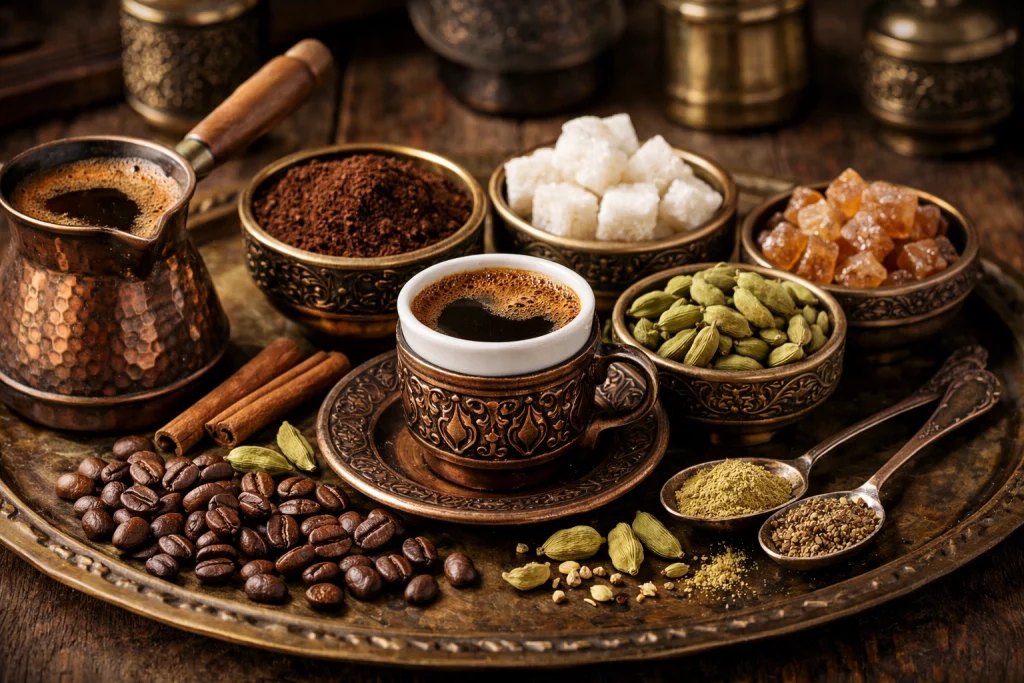
This recipe calls for finely ground coffee, whole green cardamom or ground cardamom, and simple extras like sugar or orange peel. Choosing fresh beans and whole pods makes the biggest difference in aroma and flavor.
Selecting the Right Coffee Beans
They should use finely ground Turkish coffee labeled “Turkish” or “kahve.” This coffee is ground to a powder-like texture so it suspends in the cup and creates the classic thick body.
Aim for freshly roasted Arabica beans. Arabica gives a cleaner, brighter flavor than robusta, which can taste harsher. Buy whole beans and grind them extremely fine just before brewing when possible.
Measure about 1 heaping tablespoon (7–8 g) of ground coffee per 60–75 ml cup of water. Adjust by taste, but keep the ratio close for authentic strength and foam. Store beans in an airtight container away from heat and light.
Types of Cardamom to Use
Green cardamom pods are the traditional choice for Turkish coffee. They offer a floral, citrusy aroma that blends well with coffee’s bitterness.
Use whole pods when possible. Lightly crush 2–3 pods per cup to release the seeds and oils. Crushing just before brewing keeps the flavor bright.
Ground cardamom works if whole pods aren’t available. Start with 1/8 to 1/4 teaspoon per cup and adjust. Pre-mixed coffee with cardamom can save time but watch for stale spice.
Additional Flavor Additions
Sugar is optional and commonly added during brewing. Use white sugar or unrefined sugar, and add it to the cezve with coffee and water so it dissolves fully. Typical amounts: no sugar (sade), a little (az şekerli), medium (orta), or sweet (şekerli).
Small amounts of orange or lemon peel add a citrus lift. Add a thin strip of peel to the cezve, then remove before serving if desired. A pinch of cinnamon or a clove can be used, but keep spices minimal so cardamom remains the star.
Equipment matters: use a cezve (ibrik) and small demitasse cups for best results.
Traditional Preparation Methods
Turkish coffee with cardamom uses very fine grounds, a small copper or brass pot, and precise heat control. Measuring, mixing, and watching the brew closely give the thick texture and foam that define the drink.
Grinding and Mixing
He or she should use coffee ground to a powder finer than espresso—almost like flour. Arabica beans roasted to medium or medium-dark work well. A burr grinder set very fine or pre-ground Turkish coffee ensures the right texture.
Cardamom is added as whole pods crushed or as ground cardamom. Typical ratio: 1/8 to 1/4 teaspoon ground cardamom per cup, adjusted to taste. If using pods, split and crush them, then add to the coffee before brewing so the oils infuse. Sugar, if used, goes in at this stage; common amounts are no sugar, 1 teaspoon (little), or 2 teaspoons (medium) per cup. Stir the dry mix into cold water so the grounds suspend evenly before heating.
Brewing Equipment and Tools
The cezve (also called ibrik) is the classic pot—narrow neck, wide base, long handle—usually copper or brass, sometimes stainless steel. A small scale or measuring spoon helps keep coffee-to-water ratios consistent. Use a heat source that allows steady, gentle heating: low burner, sand stove, or electric hot plate with fine control.
Small demitasse cups (about 60–90 ml) are traditional for serving. A teaspoon for each cup and a small heat-safe tray for warming cups improve presentation. A fine-mesh spoon or special skimmer helps remove excess foam if desired, but do not filter the brew; the grounds settle in the cup.
Step-by-Step Brewing Instructions
- Measure: 1 heaped teaspoon (about 6–7 g) coffee per 60–70 ml water. Add cardamom (1/8–1/4 tsp) and sugar to taste.
- Combine: Put cold water, coffee, cardamom, and sugar into the cezve. Stir gently until mixed.
- Heat slowly: Place cezve over low heat. Do not stir after heating begins. Watch for foam forming at the rim.
- Foaming: Just before it boils and spills, remove from heat. Let foam settle briefly, then return to heat once to rise again. Repeat once more for thicker foam if desired.
- Serve: Pour slowly so foam distributes into cups. Leave the grounds in the bottom of the cezve; do not filter. Wait a minute for grounds to settle in the cup before sipping.
Flavor Profile and Aroma

This coffee blends strong, slightly bitter coffee with warm, citrusy spice. It balances bold roasted notes with a sweet, floral lift from the cardamom.
Taste Nuances of Cardamom
Cardamom adds a bright, lemony top note that cuts the coffee’s bitterness. It often brings gentle sweetness and a hint of menthol-like freshness without tasting like mint.
Roasted Arabica beans give the base a dark chocolate and toasted grain flavor. When cardamom is added, the cup gains a layered taste: initial citrus brightness, a mid-palate floral sweetness, and a lingering spice finish.
Brewing method and grind size affect intensity. Finer grounds and longer foam development make the cardamom feel more integrated. Using whole pods yields subtler, fresher citrus and floral tones than pre-ground cardamom.
Aromatics and Texture
The aroma opens with bold roasted coffee and sharp cardamom perfume. Notes of bergamot, eucalyptus, and dried rose can appear, depending on the cardamom quality.
Texture is heavy and velvety because Turkish coffee keeps the fine grounds in the cup. This gives a creamy, syrupy mouthfeel that carries the spice through each sip.
Aroma strength varies with dose and freshness. Freshly roasted beans and cracked green cardamom pods produce a brighter, more complex scent than older or pre-mixed ingredients.
Serving and Presentation
Serve Turkish coffee with cardamom in small portions, paying attention to cup size, foam, and small accompaniments. Present the drink on a tray, keep the foam intact, and offer a small glass of water and a sweet bite to balance the strong, spiced flavor.
Traditional Turkish Coffee Cups
They use small, thick-walled cups called fincan that hold about 60–90 ml (2–3 oz). The thick walls help keep the coffee hot and protect the foam. Choose porcelain or ceramic to keep temperature steady and to show the foam clearly.
Place the cezve-poured coffee gently so the foam stays on top. Fill cups to just below the rim to prevent spills and to leave room for the foam to rise. Use matching saucers and a small spoon for stirring or skimming any grounds.
Decorative patterns or a simple white cup both work; the key is size and heat retention. Present cups on a tray for easy serving and a neat appearance.
Serving with Sweets or Water
Always offer a small glass of still water with Turkish coffee to cleanse the palate before sipping. Serve the water chilled in a narrow glass; it refreshes the mouth and lets the drinker taste cardamom and coffee more clearly.
Pair coffee with a small sweet like Turkish delight, a nut biscuit, or a piece of baklava. A single bite or two balances the bold, slightly bitter coffee and the warm spice of cardamom. Place the sweet on the saucer or beside the cup for easy access.
For formal service, present coffee, water, and sweet together on a decorated tray. This keeps everything organized and maintains the ritual feel of the drink.
Health Benefits and Nutritional Value
Turkish coffee with cardamom combines concentrated coffee solids and a small dose of a flavorful spice. It supplies caffeine, small amounts of vitamins and minerals, and antioxidant compounds from both the coffee and the cardamom.
Potential Health Effects of Cardamom
Cardamom adds antioxidants and compounds that may reduce inflammation and support digestion. Studies show cardamom contains terpenes and polyphenols that can help neutralize free radicals. This may support immune function when consumed as part of a balanced diet.
Cardamom may also ease mild digestive discomfort. People traditionally use a pinch of ground cardamom or a cracked pod to reduce bloating and to aid stomach comfort after meals. Those with known spice allergies should avoid it.
Table: key cardamom compounds and possible effects
| Compound type | Common effect |
|---|---|
| Polyphenols | Antioxidant activity |
| Terpenes (e.g., cineole) | Anti-inflammatory potential |
| Volatile oils | Digestive soothing, aroma |
Caffeine Content and Considerations
Turkish coffee is unfiltered and uses very finely ground beans, so a single small cup (about 60–80 ml) usually contains roughly 40–80 mg of caffeine. Actual caffeine varies with bean type, grind, and brewing time. A typical serving can deliver as much caffeine as a small espresso.
People sensitive to caffeine should limit intake. High caffeine can cause sleep disruption, jitteriness, or increased heart rate. Pregnant people and those with certain heart conditions should follow medical guidance on safe caffeine limits. Also note added sugar raises calories; a cardamom-flavored cup without sugar keeps the drink low in calories.
Popular Variations and Regional Styles
Cardamom appears in many versions of Turkish coffee, from traditional blends used across the Levant to modern takes that add milk or sweet syrups. Some regions keep the spice simple and strong, while others pair it with extra flavors or different brewing steps to change texture and aroma.
Middle Eastern Interpretations
In Lebanon, Syria, and parts of Palestine, cooks often add whole or ground cardamom to the cezve along with very finely ground coffee and a little sugar. They use a low flame and watch for a rising foam; the foam is prized and served on top of each cup. Cardamom intensity varies by household, with some preferring a single pod per serving and others adding a pinch of powdered cardamom for a stronger floral note.
In Gulf countries, cardamom sometimes mingles with saffron or rose water. Hosts may serve the brew in small porcelain cups and sweeten pastries or dates alongside it. The grind remains ultra-fine, and the coffee is never filtered, so grounds settle in the cup and contribute to the drink’s full body.
Modern Twists
Contemporary cafés and home baristas experiment by combining cardamom coffee with cold-brew techniques, espresso, or steamed milk. One common variation uses Turkish-style finely ground coffee and cardamom, then emulsifies the mix with milk to make a cardamom latte. This softens bitterness and broadens appeal to people who prefer creamier drinks.
Another trend adds flavored syrups—vanilla, orange blossom, or honey—while maintaining the signature cardamom aroma. Some recipes toast whole cardamom pods briefly to deepen the spice’s nutty notes before grinding. These twists keep the classic base but adapt texture and sweetness for modern tastes.
Common Mistakes and Troubleshooting
Mistakes usually fall into two areas: brewing time and cardamom amount. Both affect foam, flavor balance, and mouthfeel.
Preventing Over-Brewing
Over-brewing burns the coffee and ruins the foam. Use a low heat and watch the cezve closely. Heat the water slowly until foam rises, then remove it from the heat before it boils over. Allow the foam to settle, then repeat the gentle rise one more time if desired.
Measure coffee precisely. A standard ratio is about 1 heaping teaspoon (5–7 g) of finely ground Turkish coffee per 60–70 ml of water. Stir only at the start to dissolve grounds and sugar; stirring while heating can break the foam and push grounds into the cup.
If bitterness appears, stop heating earlier next time and try slightly cooler water to begin. A small metal skimmer or spoon can lift excess grounds from the foam before serving.
Managing Cardamom Intensity
Cardamom can be subtle or overpowering. Use crushed green cardamom seeds rather than whole pods if a clear, even flavor is wanted. Start with 1 crushed pod (or 1/8 to 1/4 teaspoon ground) per 2 cups-worth of Turkish coffee and adjust by 1/8 teaspoon increments in future brews.
Use this quick table to pick the right amount:
| Desired intensity | Cardamom form | Amount per 2 cups (approx.) |
|---|---|---|
| Mild | Crushed seeds | 1 pod (≈1/8 tsp) |
| Moderate | Ground | 1/4 tsp |
| Strong | Ground | 1/2 tsp |
Add cardamom with coffee and sugar before heating so flavor infuses. If the drink is too strong, dilute with a small extra splash of hot water or brew the next batch with less cardamom and slightly more coffee to rebalance.
Storing and Reusing Ingredients
They should store ground Turkish coffee in an airtight container away from light, heat, and moisture. This keeps oil and aroma from degrading, so the coffee stays flavorful for longer.
Cardamom pods last longer than pre-ground cardamom and keep more aroma. Store whole pods in a sealed jar in a cool, dark place. If using ground cardamom, label the jar with the date and use it within a few months.
Freeze only sealed coffee or cardamom if he needs long-term storage. Freeze small amounts in airtight bags to avoid moisture. Thaw at room temperature before opening to prevent condensation.
Leftover brewed Turkish coffee should be refrigerated in a sealed container and used within 24 hours for iced recipes or cooking. It will lose foam and some aroma, so it works best in sauces or desserts rather than as a fresh cup.
They can reuse spent coffee grounds for gardening or as a deodorizer. Sprinkle grounds around acid-loving plants or dry them and place in a small bowl to absorb odors. Used cardamom husks can flavor syrups or stews once more before discarding.
Quick reference:
- Coffee: airtight, cool, use within 2–4 weeks (ground); freeze for months.
- Cardamom pods: airtight jar, cool/dark, keep for 6–12 months.
- Leftover brew: sealed, refrigerated, use within 24 hours.
- Reuse ideas: grounds for soil/deodorizer; husks for simmered flavor.
FAQS
Is cardamom required for Turkish coffee?
No. Traditional Turkish coffee does not require cardamom. Many people add it for extra aroma and a slightly sweet, floral note.
How much cardamom should be used?
A small pinch per cup works well. Too much can overpower the coffee, so start light and adjust to taste.
Should whole pods or ground cardamom be used?
Ground cardamom mixes evenly and brews quickly. Whole pods can be cracked and added, then removed after brewing for a milder flavor.
When is cardamom added during brewing?
It is usually added to the cezve with coffee and sugar before heating. This helps the spice release its oils into the brew.
Can cardamom be mixed with other spices?
Yes. Some blends include cinnamon or clove, but cardamom alone keeps the classic profile. Mixing changes the taste and may make the drink spicier.
Does cardamom change caffeine or foam?
Cardamom does not affect caffeine levels. It may slightly change foam texture, but foam mainly depends on grind, coffee-to-water ratio, and gentle heating.
Are there ready-made Turkish coffees with cardamom?
Yes. Packaged blends with cardamom are available for convenience. They offer consistent flavor but may limit control over spice level.
Any pairing or serving tips?
Serve with a small sweet, like Turkish delight, to balance the spice. They often pour the coffee slowly to keep the foam intact.
Conclusion
Turkish coffee with cardamom blends strong, finely ground coffee with a warm, floral spice. It offers a simple way to change flavor without altering the brewing method.
Many people add cardamom for a brighter aroma and a gentler aftertaste. The spice also pairs well with sugar, and can be used in different amounts to control sweetness and spice intensity.
This drink fits both daily routines and special moments. It can serve as a quick morning boost or a calm after-dinner ritual shared with friends.
When making it at home, small adjustments matter. Grinding the coffee finely, measuring water precisely, and adding cardamom to taste will yield a consistent cup.
Healthwise, it provides the usual effects of caffeine and the mild digestive and anti-inflammatory properties of cardamom. Those sensitive to caffeine should limit intake and adjust the recipe accordingly.
Try a few versions to find what they like best. They can vary the coffee-to-cardamom ratio, try whole pods or ground spice, and experiment with sugar levels for a personalized cup.