
What Does a French Press Coffee Maker Do to Your Brew Experience
Using a French press coffee maker transforms your daily brew into a rich, full-bodied experience. This guide explains how a French press works and shows you step-by-step how to get the most flavor from your coffee grounds for a satisfying cup every time.
Key Takeaways
- Full Flavor Extraction: The French press allows coffee oils and fine particles to stay in the brew, resulting in a richer taste.
- Simple Brewing Process: No electricity or complicated machines needed—just hot water, coffee grounds, and the press.
- Control Over Brew Strength: You decide the coffee-to-water ratio and steeping time for a customized cup.
- Environmentally Friendly: No paper filters means less waste and a more sustainable brewing method.
- Easy to Clean: The French press has few parts and is simple to rinse and maintain.
- Affordable Option: Compared to espresso machines or drip coffee makers, French presses are budget-friendly.
- Versatility: Besides coffee, you can use a French press for brewing loose leaf tea or cold brew coffee.
What Does a French Press Coffee Maker Do to Your Brew Experience?
If you’re looking to upgrade your coffee routine, a French press coffee maker is a fantastic choice. This guide will help you understand what a French press does to your coffee and how to use it to make a delicious, full-bodied cup every time. We’ll cover the basics of how it works, step-by-step brewing instructions, tips for the best results, and troubleshooting common issues.
Step 1: Understanding How a French Press Works
A French press is a manual coffee brewing device that uses immersion to extract flavor from coffee grounds. Unlike drip coffee makers that filter coffee quickly through paper filters, the French press lets coffee steep fully in hot water. Then, a metal mesh plunger presses the grounds to the bottom, separating them from your coffee while leaving essential oils and fine particles in the brew. This process produces a bold, rich flavor with a heavier body compared to other methods.
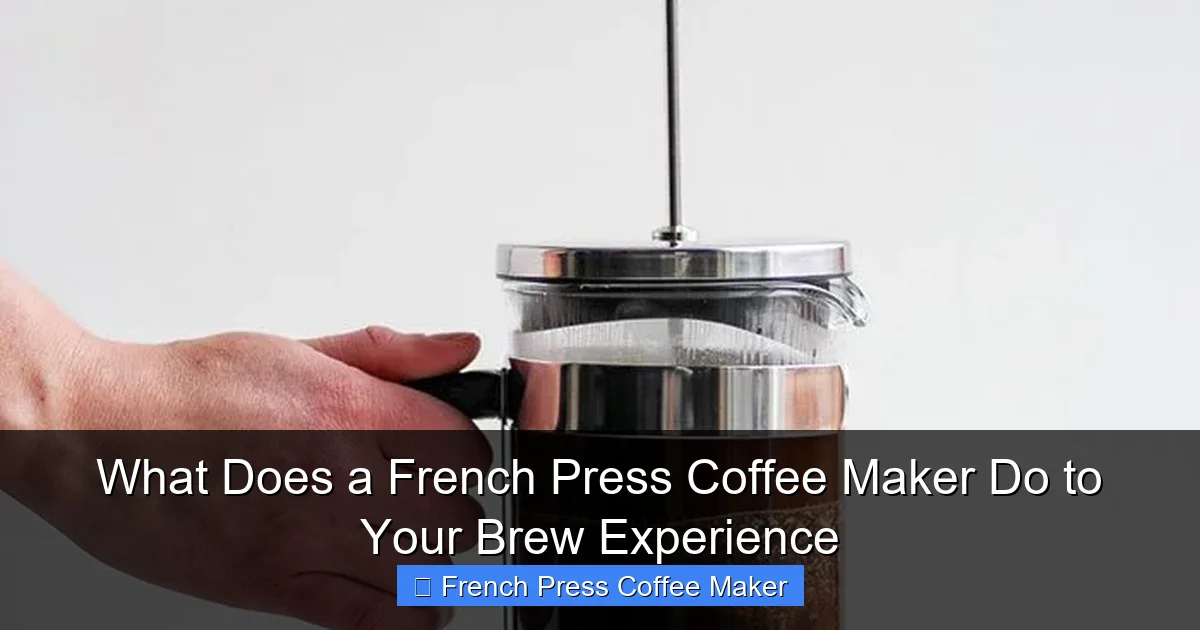
Visual guide about What Does a French Press Coffee Maker Do to Your Brew Experience
Image source: fitfoodiefinds.com
The Components of a French Press
- Beaker: Usually glass or stainless steel, holds the water and coffee grounds.
- Plunger and Filter: The plunger has a fine mesh filter to push grounds down while letting liquid through.
- Lid: Helps keep heat in during brewing.
Step 2: Choosing the Right Coffee and Grind Size
The French press works best with coarsely ground coffee. Too fine a grind clogs the filter and results in gritty coffee; too coarse and the coffee may be weak. Use freshly ground beans for maximum flavor.
Tips for Grinding Coffee
- Use a burr grinder for consistent coarse grounds.
- Aim for a texture similar to breadcrumbs or sea salt.
- Grind just before brewing to preserve freshness.
Step 3: Preparing Your French Press
Before brewing, preheat your French press to keep the coffee hot longer. Pour hot water into the empty beaker, swirl it around, then discard the water.
Why Preheat?
Preheating prevents the glass from cooling your water too much, ensuring an even extraction.
Step 4: Brewing Your Coffee
Now for the fun part—brewing your coffee!
Instructions:
- Add coarsely ground coffee to the French press. A good starting ratio is 1:15 coffee to water (e.g., 30 grams coffee to 450 ml water).
- Heat water to just below boiling (about 200°F or 93°C).
- Pour half the water over the grounds, making sure all grounds are wet. Stir gently to mix.
- Add the remaining water and place the lid with the plunger pulled all the way up.
- Let the coffee steep for 4 minutes. For stronger coffee, you can steep up to 5 minutes.
- Slowly press the plunger down, separating grounds from the liquid.
- Pour and enjoy your brew immediately to avoid over-extraction.
Step 5: Cleaning Your French Press
Cleaning is quick and easy:
Cleaning Steps:
- Discard the used coffee grounds (they’re great for composting!).
- Rinse the beaker and plunger under warm water.
- Use mild dish soap and a soft sponge if needed.
- Dry completely before reassembling.
Practical Tips for the Best French Press Coffee
- Use filtered water: Water quality affects taste—filtered water results in cleaner flavor.
- Experiment with steeping time: Adjust steep time to find your perfect strength.
- Don’t leave coffee in the press: Over time, coffee continues extracting and can taste bitter.
- Try different beans: Single-origin beans highlight the French press’s ability to showcase complex flavors.
Troubleshooting Common Issues
Problem: Coffee tastes muddy or has sediment
Cause: Grounds are too fine or plunger filter is damaged. Use coarser grounds and check your filter screen for tears.
Problem: Coffee is weak or bland
Cause: Coffee-to-water ratio too low or steeping time too short. Try adding more coffee or steeping longer.
Problem: Plunger is hard to press down
Cause: Grounds are too fine or packed too tightly. Use a coarser grind and don’t tamp down the grounds before brewing.
Conclusion
A French press coffee maker brings a unique and enjoyable dimension to your coffee experience. By fully immersing coffee grounds in hot water and using a metal filter, it extracts deep flavors and essential oils that drip brewers often miss. With simple steps, you can brew rich, aromatic coffee at home without complicated machines. Whether you’re a coffee novice or a seasoned enthusiast, the French press offers a straightforward path to a satisfying cup every time.
🎥 Related Video: How To Use A French Press 101
📺 Cock-A-Doodle Coffee
Using a French Press Coffee Maker is easy! Learn how French Press coffee produces a flavorful and …
