
What Grind For French Press Coffee Maker To Brew Perfect Coffee
Brewing the perfect cup with a French press starts with choosing the right grind size. In this guide, you’ll learn what grind for French press coffee maker works best and how to grind your beans correctly for a full-bodied, smooth cup. Follow easy steps and practical advice to master your French press brewing skill.
Key Takeaways
- Coarse Grind is Best: A coarse grind prevents over-extraction and makes pressing easier.
- Consistent Grind Size Matters: Uniform grind ensures balanced flavor and avoids sediment in your cup.
- Use a Burr Grinder: Burr grinders produce even coarse grounds ideal for French press brewing.
- Grinding Just Before Brewing: Freshly ground coffee preserves aroma and taste.
- Adjust Grind Based on Brew Time: Longer brew times may need slightly coarser grinds.
- Experiment and Taste: Personal preferences matter; tweak grind size to find your perfect cup.
- Clean Your Grinder Regularly: Prevents old coffee oils from affecting flavor.
What Grind For French Press Coffee Maker To Brew Perfect Coffee
If you’re passionate about coffee, you know that brewing with a French press offers a rich, full-bodied cup. But did you know that the grind size of your coffee beans can make or break your brew? In this guide, you will learn exactly what grind for French press coffee maker is ideal, why it matters, and how to get the perfect grind every time. Whether you’re a beginner or looking to improve your technique, this step-by-step guide will help you enjoy better coffee.
Why Grind Size Matters for French Press Coffee
The French press brewing method involves steeping coffee grounds in hot water and then pressing a metal filter through the coffee to separate grounds from the liquid. Unlike drip or espresso makers, the French press uses a mesh filter that lets some fine particles through. This means your grind size affects extraction, sediment levels, and flavor clarity.
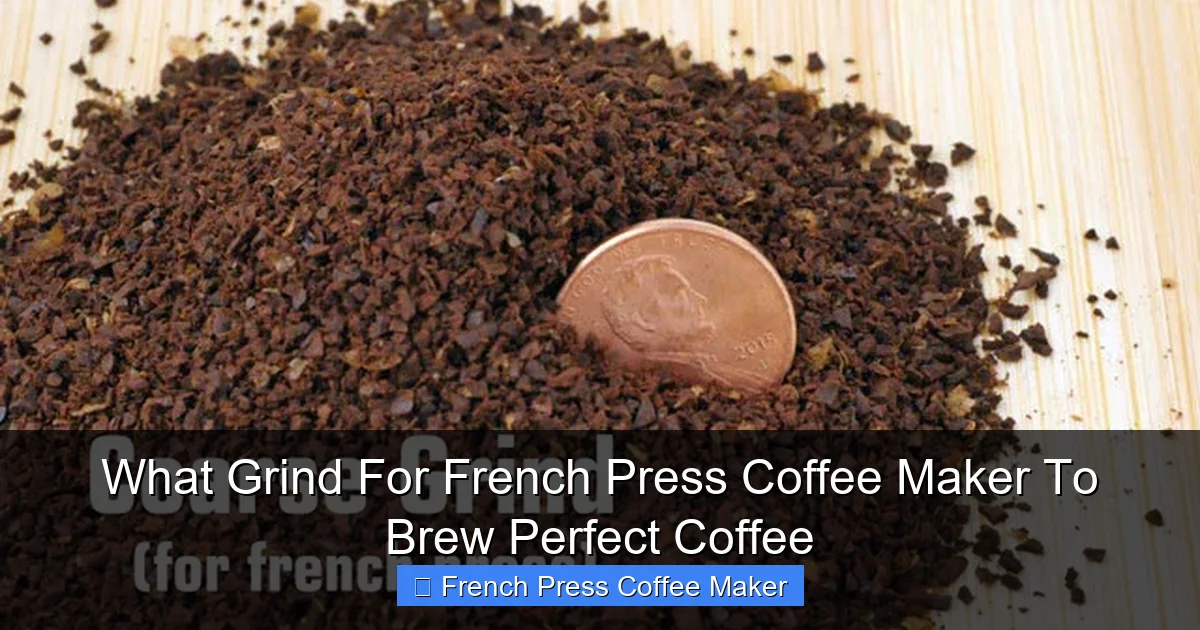
Visual guide about What Grind For French Press Coffee Maker To Brew Perfect Coffee
Image source: cdn.shopify.com
Too fine a grind can lead to over-extraction, bitterness, and a muddy cup with lots of sediment. Too coarse a grind risks under-extraction, resulting in weak, sour coffee. The sweet spot is a consistent coarse grind that allows proper extraction and easy pressing.
Step 1: Understanding the Ideal Grind Size
What Does Coarse Grind Mean?
Coarse grind means coffee grounds that are roughly the size of sea salt or breadcrumbs. These grounds are large enough to be easily separated by the French press mesh filter, reducing sediment. They allow water to flow around the grounds evenly during steeping for balanced extraction.
Visual and Tactile Guide
- Size similar to kosher salt crystals
- Rough and chunky, not powdery
- Grains should feel gritty between your fingers
When you press the plunger, you should feel gentle resistance, not excessive force from compacted fine grounds.
Step 2: Choosing the Right Grinder
Burr Grinder vs Blade Grinder
To get a consistent coarse grind, a burr grinder is your best choice. Burr grinders crush beans between two abrasive surfaces to create uniform pieces. Blade grinders chop beans unevenly, producing a mix of coarse and fine particles which can ruin your brew.
Manual vs Electric Burr Grinders
- Manual burr grinders are affordable and produce excellent coarse grinds, though they require some effort.
- Electric burr grinders offer fast, consistent grinding with adjustable settings.
Set your burr grinder to the coarsest setting or just below for French press brewing. If your grinder has numbered settings, aim for the highest number or one notch down if the grind seems too coarse.
Step 3: How to Grind Coffee for French Press
Step 3.1: Measure Your Coffee Beans
For best results, use a digital scale to measure coffee beans. A good starting ratio is 1:15 coffee to water by weight. For example, 30 grams of coffee for 450 ml of water.
Step 3.2: Adjust Grinder Setting
Set your grinder to coarse. Grind a small batch first and check the grind size visually. If grounds are too fine or powdery, increase the coarseness. If too chunky and uneven, decrease coarseness slightly.
Step 3.3: Grind Just Before Brewing
Grind your beans immediately before brewing to preserve freshness and aroma. Oxygen and time degrade coffee flavor in pre-ground coffee.
Step 4: Brewing with Your Coarse Grind
Step 4.1: Preheat Your French Press
Pour hot water into the French press to warm it up, then discard the water. This keeps your brew temperature stable.
Step 4.2: Add Coffee Grounds
Add your freshly ground coarse coffee to the French press.
Step 4.3: Add Hot Water
Pour water heated to 195–205°F (90–96°C) over the grounds. Pour evenly to saturate all grounds.
Step 4.4: Stir Gently
Use a wooden or plastic spoon to gently stir the coffee to ensure even extraction.
Step 4.5: Place the Lid and Steep
Place the lid with the plunger pulled up and let the coffee steep for 4 minutes.
Step 4.6: Press the Plunger
Slowly press the plunger down with steady pressure. If pressing is too hard, your grind may be too fine.
Step 4.7: Serve Immediately
Pour your coffee right away to avoid over-extraction from sitting grounds.
Practical Tips and Examples
- If your coffee tastes bitter or overly strong, try a coarser grind or reduce steep time.
- If your coffee tastes weak or sour, try a slightly finer grind or increase steep time.
- Some coffee beans may require minor adjustments due to roast level or origin.
- Use filtered water for best flavor.
- Experiment with grind size in small increments to dial in your perfect cup.
Troubleshooting Common Problems
Issue 1: Sediment in the Cup
French press naturally allows some sediment. To reduce it, ensure your grind is coarse and consistent. Avoid too fine grinds that pass through the mesh filter.
Issue 2: Difficult to Press Plunger
If it’s hard to press, your grind is probably too fine. Adjust to a coarser grind to allow easier plunging.
Issue 3: Coffee Tastes Bitter or Over-Extracted
Try coarser grind or shorten steep time. Also, ensure water temperature isn’t too hot.
Issue 4: Coffee Tastes Weak or Under-Extracted
Try a slightly finer grind or extend steep time. Check your coffee-to-water ratio is correct.
Conclusion
Mastering what grind for French press coffee maker to use is a key step toward brewing rich, flavorful coffee at home. A coarse, consistent grind is crucial to avoid bitterness, excessive sediment, or weak taste. By choosing a burr grinder, grinding fresh, and fine-tuning your grind size and brewing time, you can enjoy a perfect French press cup every time. Remember, coffee brewing is as much art as science—don’t hesitate to experiment and find what suits your taste best. Happy brewing!
🎥 Related Video: The Ultimate French Press Technique
📺 James Hoffmann
This is a guide to getting the best tasting, cleanest, most delicious, sludge-free cup of coffee from a french press. Music: Chris …

