
What to Look for in a French Press Coffee Maker for Perfect Brew
Looking for the perfect French press coffee maker? This guide highlights the essential features to consider, from materials to size and filter quality. With these tips, you’ll enjoy a rich, smooth brew every morning.
Key Takeaways
- Material Matters: Stainless steel and glass are popular for durability and heat retention.
- Filter Quality: A fine mesh filter ensures smooth coffee without grounds in your cup.
- Size and Capacity: Choose a French press size that fits your daily coffee needs.
- Ease of Use and Cleaning: Removable parts and dishwasher-safe options make maintenance simple.
- Heat Retention: Double-wall insulation keeps your coffee hot longer.
- Design and Aesthetics: Pick a style that fits your kitchen and personal taste.
- Price vs. Quality: Invest wisely for durability and better brewing experience.
What to Look for in a French Press Coffee Maker for Perfect Brew
If you love coffee, a French press coffee maker is a fantastic tool to create a rich, full-bodied cup right at home. But with so many options available, how do you choose the right one? This guide will walk you through everything you need to know about what to look for in a French press coffee maker. From materials and size to filter quality and design, you’ll learn how to pick the perfect French press for your brewing style.
Step 1: Understand the Basics of a French Press
Before diving into the features, it’s important to understand how a French press works. Simply put, you steep coarsely ground coffee in hot water, then press the plunger down to separate the grounds from the liquid. This method extracts robust flavors and natural oils for a delicious cup. Knowing this helps you appreciate why certain features impact the taste and ease of use.
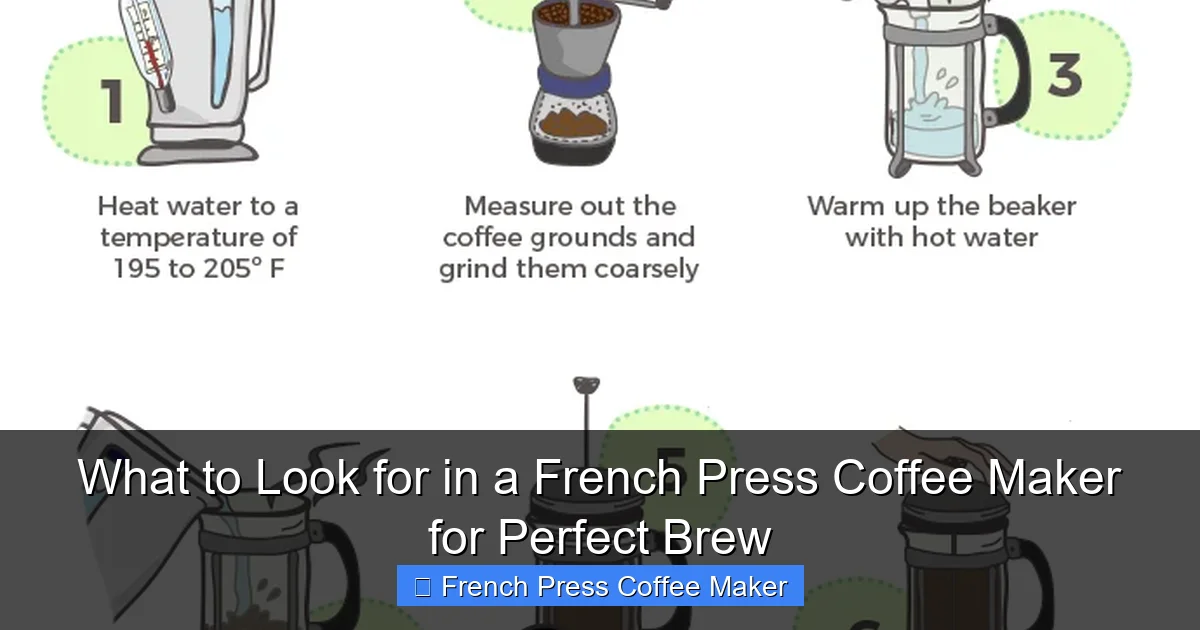
Visual guide about What to Look for in a French Press Coffee Maker for Perfect Brew
Image source: homegrounds.co
Step 2: Choose the Right Material
The material of your French press affects durability, heat retention, and aesthetics.
Glass French Press
- Pros: You can see your coffee brewing, which looks great and lets you monitor strength.
- Cons: Glass can break easily and doesn’t retain heat as well as metal.
Stainless Steel French Press
- Pros: Highly durable, excellent at retaining heat, often comes with double-wall insulation.
- Cons: Typically more expensive and you can’t see the brewing process.
Plastic or Ceramic Options
Plastic presses are lightweight and budget-friendly but may affect flavor and durability. Ceramic presses provide good heat retention and unique designs but can be fragile.
Tip: If you want a long-lasting press with great heat retention, stainless steel is your best bet. For a classic look and visual brewing, choose glass with a protective frame.
Step 3: Focus on Filter Quality
The filter is the heart of a French press. It separates the grounds from your coffee but must be fine enough to block sediment without restricting flow.
Mesh Filter Screens
- Look for filters made of fine stainless steel mesh that won’t rust or bend easily.
- Some presses come with double filters or additional screens for smoother coffee.
Plunger and Seal
The plunger should fit snugly to press grounds effectively without allowing them to slip through gaps.
Tip: Avoid cheap filters that clog or break. A high-quality mesh ensures a clean cup without gritty residue.
Step 4: Decide on Size and Capacity
French presses come in a variety of sizes, typically measured in cups (4 to 12 cups). Choosing the right size depends on your coffee drinking habits.
- Small (12 oz or 1-2 cups): Perfect for solo drinkers or occasional use.
- Medium (17 oz or 3-4 cups): Great for couples or light entertaining.
- Large (34 oz or 8 cups and above): Best for families or group gatherings.
Tip: Consider how many cups you drink daily and whether you want to make coffee for guests. It’s better to have a slightly larger press than one that’s too small.
Step 5: Assess Heat Retention Features
Heat retention keeps your coffee warm longer, especially if you don’t drink it immediately.
- Double-wall insulated presses trap heat inside, preserving temperature for 1-2 hours.
- Glass presses without insulation cool down quickly, so you may want to preheat the carafe before brewing.
- Some stainless steel models come with lids designed to minimize heat loss.
Tip: If you enjoy sipping coffee over time, prioritize a press with good heat retention features.
Step 6: Check for Ease of Use and Cleaning
A French press should be simple to use and easy to clean for daily convenience.
Removable Parts
- Look for presses with removable filters and plungers so you can clean every part thoroughly.
- Some models are dishwasher safe, saving time and effort.
Design Considerations
- A comfortable handle and sturdy base make pouring easier and safer.
- Wide openings allow easy access for scooping grounds and cleaning brushes.
Tip: Prioritize models with simple, intuitive designs for a hassle-free coffee-making experience.
Step 7: Consider Design and Style
Your French press should look great on your kitchen counter and match your personal style.
- Classic glass presses often have sleek metal frames or colorful accents.
- Modern stainless steel models offer minimalist, polished finishes.
- Ceramic presses come in various colors and artistic patterns.
Tip: Choose a design you’ll enjoy using daily—it adds to the pleasure of brewing coffee.
Step 8: Evaluate Price vs. Quality
French press coffee makers come at various price points. Expensive doesn’t always mean better, but investing in quality pays off.
- Budget-friendly models work well for beginners but may lack durability.
- Mid-range presses often balance good materials and filter quality.
- High-end models offer premium materials, insulation, and craftsmanship.
Tip: Look for trusted brands with good warranties and customer reviews to ensure you get value for your money.
Troubleshooting Common French Press Issues
Even with the right French press, you might face some common problems. Here’s how to fix them:
Grinds in Coffee
- Use a coarser grind suitable for French press to prevent sediment.
- Check the filter for damage or improper fitting.
Bitter or Weak Coffee
- Adjust steeping time—typically 4 minutes is ideal.
- Use fresh, quality coffee beans and proper water temperature (around 200°F).
Plunger Difficult to Press
- Ensure grounds are coarse and not too fine or packed.
- Clean the mesh filter and plunger regularly to avoid buildup.
Conclusion
Choosing the right French press coffee maker is key to enjoying the perfect brew. By focusing on materials, filter quality, size, heat retention, ease of use, and design, you can find a press that fits your lifestyle and brewing preferences. Remember, the best French press is one that feels comfortable, brews delicious coffee, and lasts for years. With these tips in hand, you’re ready to make rich, flavorful coffee every day!
🎥 Related Video: The Ultimate French Press Technique
📺 James Hoffmann
This is a guide to getting the best tasting, cleanest, most delicious, sludge-free cup of coffee from a french press. Music: Chris …

