
You want coffee that tastes fresh, not flat or stale. Most roasted beans stay at peak flavor for about 1–2 weeks after roast and remain usable for several months if stored well. If you aim for the best cup, use roasted beans within two weeks of roast date; after that, flavor drops steadily even if the beans are still safe to brew.
Ethan Cole at Webrewcoffee.com notes that storage, roast level, and grind size all change how long beans stay lively. Keep beans in a cool, dark, airtight place and grind just before brewing to lock in aroma and flavor, and you’ll notice a big difference in every cup.
Key Takeaways
- Use roasted beans within two weeks for peak flavor.
- Store beans airtight, cool, and dark to slow staling.
- Grind just before brewing to preserve aroma and taste.
How Long Coffee Beans Last
Whole beans and ground coffee lose flavor at different rates. Storage, roast level, and packaging have the biggest effect on how long coffee tastes good.
Shelf Life of Whole Beans
Whole beans keep their best flavor for about 7–21 days after roast when stored in typical home conditions. Many specialty roasters say flavor peaks between day 7 and day 14 because gases from roasting settle and volatile aromatics are still present. If unopened and sealed by the roaster, beans can remain usable for up to 6–12 months, but flavor steadily declines.
Store whole beans in an airtight container away from light, heat, and moisture. Use a container with a one-way valve or a well-sealed jar in a cool, dark cabinet. Buy amounts that match weekly to monthly use to avoid long-term staleness.
Shelf Life of Ground Coffee
Ground coffee loses aroma and taste faster than whole beans because more surface area contacts air. For best flavor, use ground coffee within 1–2 weeks of grinding if stored in an airtight container. Pre-ground coffee from a bag typically begins to taste noticeably stale after 2–4 weeks, even if unopened.
If convenience requires pre-ground coffee, buy smaller bags and transfer them to an airtight container immediately after opening. Avoid grinding far ahead of brewing; grinding just before brewing preserves the most oils and volatile compounds that create flavor.
Factors Influencing Freshness
Air, light, heat, and moisture each speed up staling by breaking down oils and aromatics. Oxygen causes oxidation, which dulls flavor; light degrades aromatic compounds; heat accelerates chemical reactions; moisture can cause mold or uneven extraction.
Roast level matters: darker roasts show staleness sooner because oils sit on the surface, while lighter roasts can keep brighter flavors longer. Packaging helps: vacuum-sealed bags with one-way valves and foil lining slow oxygen and light exposure. Finally, grind size and brewing method affect perceived freshness—finer grinds release flavors faster but also stale faster.
Signs Coffee Beans Have Gone Bad
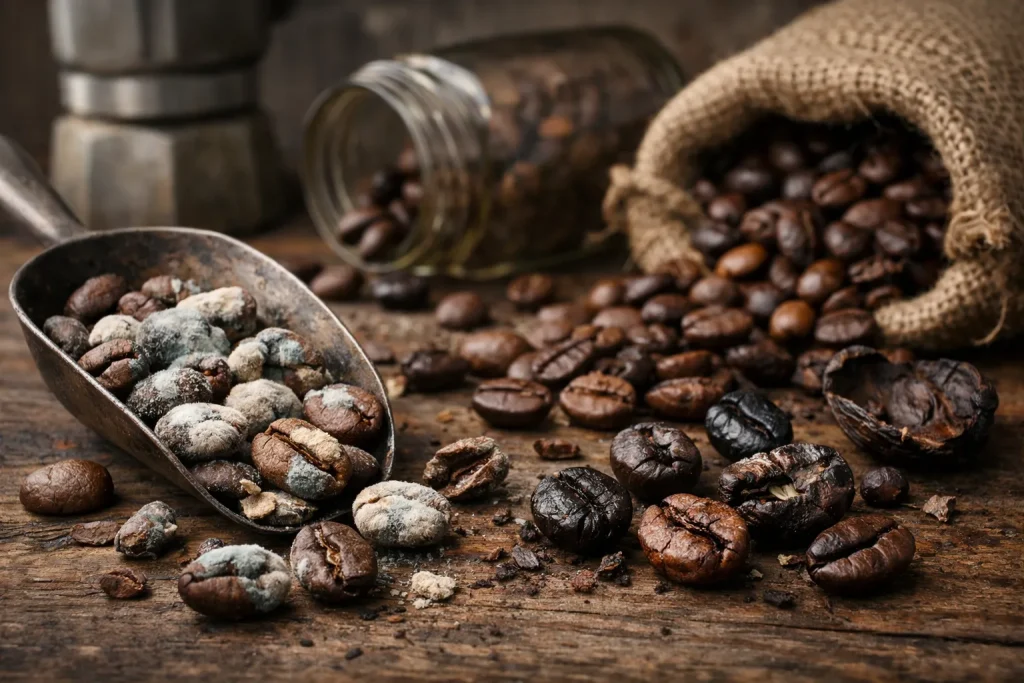
Beans that have passed their prime show clear changes in smell, look, and taste. Watch for a weak or off aroma, dull or oily surfaces, and flat, bitter flavors when brewed.
Changes in Aroma
Fresh beans smell bright and complex, with floral, fruity, or chocolate notes depending on the roast and origin. If the beans smell faint, stale, or simply like cardboard, that indicates most volatile aroma compounds have evaporated. A sour, fermented, or musty odor can mean the beans were exposed to moisture or stored near strong-smelling foods.
Grinding increases aroma loss, so whole beans hold their scent longer. Smell beans from the bag and then from a fresh grind to compare; a large drop in fragrance after grinding signals age. For more on how aroma compounds work, the Specialty Coffee Association explains how freshness affects flavor chemistry: Specialty Coffee Association.
Appearance and Color
Freshly roasted beans show a range of colors from light brown to dark brown depending on roast level. Over time, oils migrate to the surface of darker roasts, creating a glossy sheen. That shine alone doesn’t mean spoilage, but a heavy, sticky oil layer suggests long storage and oxidation.
Look for uneven color, white specks, or visible mold—any of these are signs of contamination or moisture. Mold is rare in properly stored dry beans but can appear after exposure to humidity. If beans clump together or feel damp, discard them.
Loss of Flavor
Flavor fades before beans become unsafe. A good cup from fresh beans will have distinct acidity, sweetness, and body. When beans age, acidity dulls, sweetness disappears, and bitterness or a flat, hollow taste takes over.
Brew a small batch to test old beans. If the cup lacks clarity, has muted aromatic notes, or tastes stale even after adjusting grind and brew variables, the beans are past prime. For guidance on storing beans to slow flavor loss, World Coffee Research offers practical storage and freshness tips: World Coffee Research.
Proper Storage Techniques
Protect beans from light, heat, air, and moisture to keep oils and aromas intact. Use an opaque, airtight container, store it in a cool, stable spot, and avoid repeated temperature changes that loosen flavor quickly.
Best Containers for Storage
Choose an airtight container with an opaque finish to block light and limit oxygen exposure. Containers with one-way degassing valves are best for freshly roasted whole beans; the valve lets CO2 escape without letting air back in. Glass jars can work if kept in a dark cabinet, but stainless steel or ceramic with tight seals holds up better over time.
Avoid clear plastic bags or loosely sealed containers. When measuring beans, scoop directly from the storage jar instead of pouring into a separate container to reduce air contact. For long-term storage beyond a few weeks, consider vacuum-sealed bags designed for coffee.
Location and Environment
Store beans in a cool, dry place away from heat sources like ovens, direct sunlight, and stovetops. A pantry or dedicated kitchen cabinet that stays between 50–70°F (10–21°C) and has low humidity is ideal. Avoid the refrigerator; frequent temperature changes and moisture can cause staling and odor absorption.
If someone needs more background on roast and storage science, the Specialty Coffee Association explains roast date and degassing processes well Specialty Coffee Association. For large amounts intended for months-long storage, freezing in airtight, portioned bags can work, but only if beans stay frozen until use and are thawed once.
Avoiding Common Storage Mistakes
Never store coffee in the fridge or near spices, because beans absorb odors and moisture quickly. Do not leave beans in the original retail bag unless it has a reliable seal and a one-way valve; many retail bags are meant for short-term sales, not long-term keeping. Buying in smaller quantities matched to consumption rate prevents extended storage and keeps flavor fresher.
Avoid grinding more than a few days’ worth at a time; ground coffee loses aroma faster than whole beans. Finally, do not expose stored beans to frequent temperature swings—opening and closing a container repeatedly speeds up oxidation and flavor loss.
Impact of Roast Level on Longevity
Roast level changes oil content, surface area, and aroma compounds. These factors affect how fast beans lose flavor and how they react to air and light.
Light vs. Dark Roast
Light roasts keep more of the bean’s original oils and acids. Those oils sit inside the bean structure but are more prone to oxidation once the bean is cracked or ground. Light-roasted beans often taste brighter but can lose that brightness within 2–3 weeks if not stored well.
Dark roasts push oils to the surface and increase bean brittleness. The surface oils can go rancid faster, but the bold, roasty flavors hide subtle changes for a bit longer. Whole dark beans typically stay acceptable for 3–4 weeks with good storage, though ground dark roast will stale sooner.
Key storage tips:
- Use airtight, opaque containers.
- Keep beans cool and dry.
- Grind just before brewing.
Roast Date Importance
The roast date gives a clear starting point for freshness tracking. A roast date lets someone plan use: lighter roasts are best within 2–3 weeks, darker roasts within 3–4 weeks for most brewing methods.
Roast date also helps compare bags. Two bags with the same roast date but different roast levels will age differently. A bag roasted one week ago will taste fresher than a bag roasted a month ago, even if both are sealed.
Practical rules to follow:
- Note the roast date when buying.
- Buy amounts that match consumption within the freshness window.
- Prefer whole beans and small batch purchases for best flavor retention.
Effects of Freezing and Refrigeration
Freezing can pause the chemical changes that make beans go stale, while refrigeration usually speeds up moisture and odor problems. Both methods change how long beans keep their peak flavor and how to store them.
When to Freeze Coffee Beans
Freezing benefits buyers who buy beans in large amounts or rarely use them. If they plan to keep beans longer than four weeks, freezing slows oxidation and preserves aroma for months. Freeze only beans that have cooled to room temperature after roasting or after opening the original roasting-date package.
Avoid repeated thaw-refreeze cycles. Each cycle lets condensation form on beans and extracts volatile oils, reducing flavor. Only take out the exact portion needed for one week of use, then return the rest to the freezer.
Do not freeze beans that will be used within two to three weeks from purchase. Short-term storage at room temperature in an airtight container works better for daily drinkers.
Proper Freezing Methods
Use small, airtight containers or vacuum-sealed bags to limit air exposure. Remove as much air as possible before sealing. Label each package with the roast date and freeze date.
Package in single-use portions to avoid opening frozen packs repeatedly. Thaw in the sealed bag at room temperature for 30–60 minutes to avoid moisture on the beans. Do not refreeze beans once they fully thaw.
Keep the freezer temperature steady at or below 0°F (−18°C). Avoid the freezer door; store beans toward the back where temperature stays constant.
How Grind Size Affects Freshness
Grind size changes how fast coffee loses its freshness. Smaller particles expose more surface area to air, which speeds up oxidation. That makes flavor fade sooner than with larger grinds.
Fine grinds (espresso) go stale fastest because they release aromas and oils quickly. They are best ground right before brewing. If pre-ground, expect noticeable loss of flavor within hours to a day.
Medium grinds (drip, pour-over) strike a balance between extraction and shelf life. They keep usable flavor for a day or two if stored correctly in an airtight container. Grinding shortly before use still gives the best results.
Coarse grinds (French press) preserve freshness longer since fewer particles touch the air. They can stay acceptable for several days when sealed and kept cool and dark. They are still not as fresh as whole beans over time.
Practical tips:
- Grind just before brewing when possible to keep peak flavor.
- Use airtight, opaque containers to slow oxidation and light damage.
- Match grind to brew method to avoid over- or under-extraction that hides freshness.
Simple table of relative freshness (typical, assuming proper storage):
- Fine: hours → 1 day
- Medium: 1 → 2 days
- Coarse: 2 → 7 days
They should treat whole beans as the longest-lasting option and grind only what is needed for the next brew.
Specialty and Flavored Coffee Shelf Life
Specialty beans often lose peak flavor faster than standard roasts. Their higher oil content and delicate aromas mean the best taste window can be shorter, especially for espresso-style roasts.
Flavored coffees add another factor: the added oils and flavoring agents can fade or change over time. Flavors may become muted after a few weeks, and some coatings can make beans feel oily sooner.
| Type | Typical Peak Freshness | Notes |
|---|---|---|
| Specialty whole beans | 7–21 days after roast | Peak aroma soon after degassing; store airtight, cool, dark. |
| Flavored whole beans | 2–6 weeks after roast or flavoring | Flavorings decline faster; taste-check regularly. |
| Pre-ground flavored coffee | 1–3 weeks | Ground coffee loses volatile notes quickly; buy small amounts. |
They should store specialty and flavored beans in opaque, airtight containers. Keeping beans away from heat, light, air, and moisture slows quality loss.
Freezing can help for long-term storage, but it must be done in small, sealed portions to avoid moisture and odor transfer. Thaw once and use quickly to keep flavors accurate.
How Expired Beans Affect Brewing
Expired beans lose aroma and flavor more than they become unsafe. Over weeks and months, the volatile oils that give coffee its taste evaporate, so brewed coffee tastes flat, dull, or muted.
Grinding expired beans speeds up flavor loss. Freshly ground coffee releases oils and aromatics; if those are gone, extraction produces a weak cup even with correct brew time and dose.
Staleness can change how extraction behaves. Old beans may extract faster or unevenly, causing over‑extraction of bitter compounds or under‑extraction of desirable ones. That makes balancing grind size, dose, and brew time harder.
Expired beans can still brew, but the result often lacks brightness and body. Specialty notes like fruit, floral, or chocolate diminish first, leaving neutral or cardboard-like flavors.
Signs to watch for:
- Smell: Weak or musty aroma.
- Taste: Flat, bitter, or papery flavors.
- Crema (for espresso): Thin or quickly dissipating crema.
If flavor matters, replace beans past their prime. For casual use, expired beans are safe to drink, but they will not showcase the coffee’s intended profile.
Environment-Based Considerations
Storage conditions like moisture, temperature swings, and how much air reaches the beans change how long they stay good. Paying attention to those factors helps keep oils and aroma from breaking down too fast.
Humidity and Temperature
High humidity makes beans absorb moisture and can cause mold or stale flavors. Beans stored in a damp pantry or near a sink will deteriorate faster than those kept dry. Aim for a relative humidity below 60% when possible.
Temperature matters too. Warm places speed up chemical changes in the oils that give coffee its aroma. A cool, dark spot away from ovens, windows, and direct sunlight helps slow flavor loss. Avoid refrigerators because moisture and odors can transfer to the beans. If freezing is used, seal beans tightly and only remove small portions to avoid repeated thawing.
Air Exposure Risks
Oxygen reacts with coffee oils and causes rancidity and loss of aroma. An open bag on the counter will go stale within days to weeks, depending on roast level and bean type. Light roasts show changes faster; dark roasts may mask some loss but still degrade.
Use airtight containers with a one-way valve or reseal the original bag tightly after squeezing out excess air. Store whole beans rather than ground coffee when possible; grinding increases surface area and speeds oxidation. Rotate stock by date so older beans get used first.
Extending the Life of Coffee Beans
Store beans in an airtight container to limit oxygen exposure. Oxygen speeds flavor loss; keeping it low preserves aroma and taste.
Keep the container in a cool, dark, and dry place. Heat, light, and humidity all speed degradation and can make beans stale or moldy.
Avoid the fridge for daily use. Frequent temperature changes add moisture and odors. For long-term storage, the freezer can work if done right.
To freeze beans, divide into small, sealed portions and use a true airtight bag or container. Only take out what’s needed and avoid refreezing.
Buy smaller amounts and use beans within a few weeks of roast for best flavor. Freshness starts at the roast date; smaller quantities reduce time on the shelf.
Use a simple checklist to store beans:
- Airtight container (low oxygen)
- Cool, dark, dry spot
- Freeze only for long-term storage
- Portion before freezing
- Buy amounts you will use quickly
They should grind beans just before brewing when possible. Ground coffee loses volatile oils faster than whole beans, so grinding on demand retains more flavor.
FAQS
What is the difference between green and roasted beans?
Green beans are raw and last much longer. Roasted beans peak in flavor within weeks to a few months and then slowly lose aroma.
How long do roasted whole beans stay fresh?
They taste best within 1–4 weeks after roast for peak flavor. Stored well, they remain usable for several months but flavor fades.
Do ground beans go bad faster?
Yes. Grinding increases surface area and speeds oxidation. Ground coffee loses flavor in days to weeks compared with whole beans.
How should beans be stored?
Keep beans in an airtight, opaque container in a cool, dry place. Avoid the fridge or freezer for day-to-day use because moisture and odors can affect taste.
Can coffee become unsafe to drink?
Coffee rarely becomes harmful. It can taste stale, flat, or rancid when oils oxidize. Throw away beans with mold or a noticeably off smell.
How can someone tell beans are stale?
Stale beans smell flat, lack aroma, and brew weak or sour. Rancid beans give a sharp, unpleasant smell from oxidized oils.
Is there a best-before date to trust?
Roasters provide roast and best-by dates as guides. Use those plus smell and taste to judge freshness.
Quick tips:
- Buy smaller amounts to use within weeks.
- Grind just before brewing for better flavor.
- Rotate stock so older beans get used first.
Conclusion
They should use beans within weeks of roasting for best flavor. Proper storage — airtight, cool, and dark — slows flavor loss and keeps beans usable longer.
If beans sit unopened, they stay fine for months but taste fades. Once opened, aim to use them in 2–4 weeks for peak aroma and taste.
Freezing can extend life for long-term storage. Thaw sealed portions before opening to avoid moisture, and only refreeze if still sealed.