
Coffee Culture: Global Trends, Rituals, and Sustainable Practices
You step into coffee culture like you step into a room full of stories—each cup shows a place, a person, and a skill. Ethan Cole from Webrewcoffee.com points out that understanding coffee means learning simple brewing moves, tasting with intention, and knowing why a bean from one place tastes different from another. Coffee culture helps you make better coffee at home and enjoy it more whether you like espresso, pour-over, or a simple filter brew.
Explore why coffee matters: its history, the craft of baristas, and how local habits shape what ends up in your cup. Along the way, you’ll pick up practical tips on beans, grind size, and brewing times that make a real difference to taste and consistency.
Key Takeaways
- Coffee culture links history, craft, and daily habits into the cup you drink.
- Small brewing changes—grind, dose, time—improve taste quickly.
- Local traditions and skilled baristas shape what good coffee looks like.
What Is Coffee Culture?
Coffee culture covers how people make, drink, and talk about coffee. It includes rituals, social habits, business practices, and local traditions that shape daily life.
Origins and Evolution
Coffee culture began with coffee’s origins in East Africa, where people first chewed and brewed wild coffee cherries. It moved to the Arabian Peninsula by the 15th century, where coffeehouses in cities like Mecca and Cairo became centers for conversation, music, and learning.
By the 17th century, coffee reached Europe and sparked new social spaces: coffeehouses in London and Paris hosted writers, merchants, and scientists. Industrialization and colonial trade spread coffee plantations and global markets. In the 20th century, instant coffee, espresso machines, and specialty coffee movements changed how people brewed and valued beans.
Today’s practices mix old rituals and new technology. People still hold ceremonies, but many also prefer quick espresso shots or single-serve machines. The evolution shows shifts in economy, technology, and social life.
Defining Characteristics
Coffee culture shows itself in repeated choices and shared meanings around coffee. This includes preferred brewing methods—espresso, filter, French press—and settings like cafes, homes, or workplace coffee corners. It also covers language, such as terms for roast levels, and values like quality, sustainability, or convenience.
Social rituals form a core part: meeting friends at a café, hosting a coffee ceremony, or using coffee breaks to signal work rhythm. Economic traits matter too: specialty coffee emphasizes single-origin beans and barista skill, while mass-market culture favors affordability and speed.
Visual and sensory standards appear as well: latte art, cup design, and aroma expectations. Together, these traits shape how communities judge and share coffee.
Global Spread of Coffee Culture
Coffee spread globally through trade, colonization, and migration. European colonial powers established plantations in the Americas, Asia, and Africa, which created global supply chains and local consumption habits. Immigrant communities carried brewing styles—Turkish cezve, Italian espresso, or Ethiopian coffee ceremonies—into new countries.
Modern globalization accelerated spread through multinational coffee chains, specialty roasters, and online coffee education. Cities now mix traditions: one neighborhood may host a third-wave specialty café next to an aged espresso bar. Local tastes adapt imported forms; for example, regional sweeteners, spices, or milk preferences shape drinks.
Policy and economics influence spread too. Fair-trade and organic labels affect sourcing, while urban coffee shop zoning shapes where people meet. These forces keep coffee culture dynamic and locally varied.
Historical Significance of Coffee
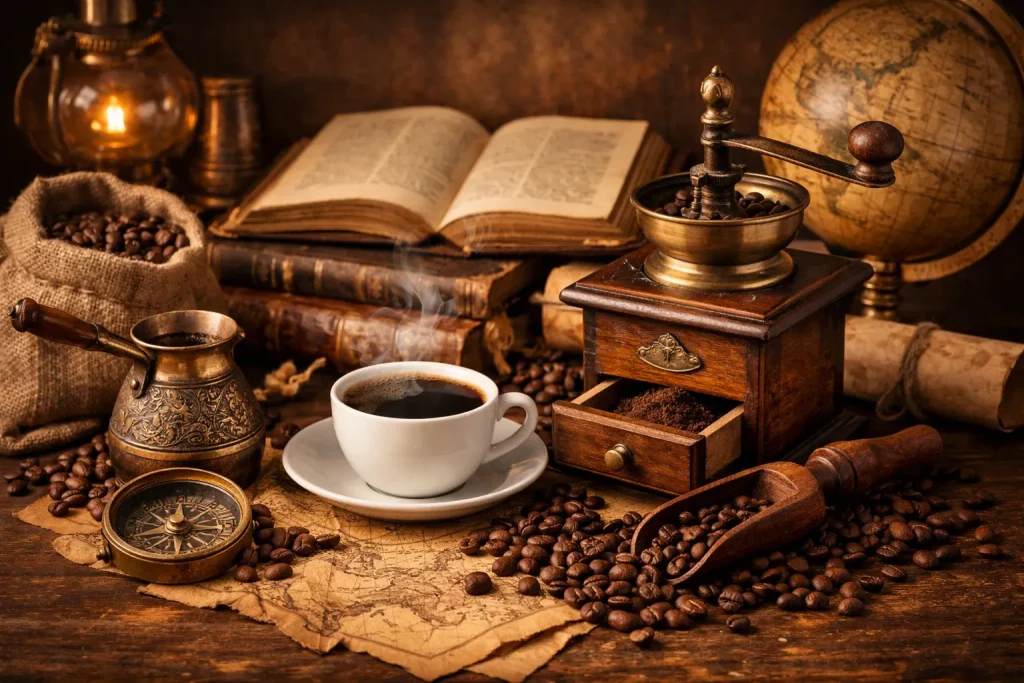
Coffee shaped public life, politics, and daily rituals across regions. It moved from Ethiopian forests to Yemeni ports, then into cities where people met, debated, and formed traditions centered on the beverage.
Coffeehouses Through the Ages
Coffeehouses first rose to prominence in the Arabian Peninsula, especially in Yemeni port cities where merchants and Sufi scholars brewed beans for long nights of prayer and study. By the 16th and 17th centuries, similar venues appeared in Istanbul, Cairo, and Mecca, offering a space for news, poetry, and music.
European coffeehouses spread rapidly after the 1600s. London, Paris, and Vienna each developed distinct styles: London’s coffeehouses became hubs for merchants and financiers, Parisian salons attracted writers and thinkers, and Vienna popularized coffeehouse culture as a place for music and conversation.
Coffeehouses served practical roles: they circulated news, hosted trade deals, and supported the rise of print culture. Their open, social format made them a new kind of public square where people from different backgrounds could meet.
Political and Social Influence
Rulers and reformers often responded to coffee’s role as a meeting point. Authorities sometimes banned or taxed coffeehouses when they feared dissent or the spread of political ideas. In 17th-century England, coffeehouses influenced the formation of stock exchanges and newspapers by gathering traders and writers in one place.
Revolutionary movements used coffeehouse networks to coordinate and discuss change. In France and the Ottoman Empire, patrons debated reform and policy over cups of coffee. Coffee also aided social mobility: entrepreneurs, journalists, and professionals found patrons and partners in these spaces.
At the same time, coffee trade reshaped global economics. European demand drove plantation systems in the Americas and Asia, linking coffee production to colonial trade, labor migration, and changing land use.
Cultural Rituals and Traditions
Every region adapted coffee into local rituals. In Ethiopia, the traditional coffee ceremony involves roasting green beans, grinding them with a mortar and pestle, and brewing in a clay pot called a jebena. The ceremony centers on hospitality and family gatherings.
In the Middle East, coffee often appears in small cups, served with dates or sweets, and used to welcome guests. In Italy, espresso became a quick social ritual at the bar, while in Scandinavia, fika in Sweden turned coffee breaks into a cultural practice emphasizing pause and social connection.
These rituals preserve local identity and transmit social norms. Whether formal or casual, the acts of preparing, serving, and sharing coffee carry meaning about respect, community, and daily rhythm.
Modern Coffee Culture Trends
Coffee drinkers now expect higher quality, clearer origins, and more control over how they brew and enjoy coffee. Trends include a focus on bean sourcing, refined cafe experiences, and new home equipment that narrows the gap between specialty shops and kitchens.
Specialty Coffee Movement
The specialty coffee movement centers on traceable beans, careful roasting, and tasting notes that highlight origin characteristics. Roasters buy single-origin lots or microlots, work directly with producers, and publish details like farm, elevation, and processing method. This helps consumers pick beans for floral, citrus, or chocolate profiles.
Shops and roasters often offer tasting flights and brewed-to-order methods like pour-over or siphon. Baristas train in extraction standards, using scales and timers to hit target brew ratios. For more on bean grading and standards, the Specialty Coffee Association provides resources and guidelines.
Third Wave Coffee
Third Wave coffee treats coffee as an artisanal product rather than a commodity. Cafés focus on transparency, sustainability, and design. They invest in equipment such as precision espresso machines and quality grinders to control temperature and pressure, improving flavor clarity.
This wave also brings menu clarity: single-origin espresso shots, tasting notes on boards, and limited-run seasonal releases. Many cafés host cuppings and brewing classes to teach customers about processing and roast curves. For industry context and sustainability practices, readers can consult reports from industry groups like the International Coffee Organization.
Home Brewing Innovations
Home brewing now mirrors café standards with affordable, precise tools. Automatic pour-over devices, PID-controlled espresso machines, and variable-speed grinders let home brewers reproduce café extraction. Cold brew systems and immersion devices offer consistent concentrations and easier batch prep.
Apps and smart scales guide brewing ratios and timing, while specialty retailers sell single-origin beans in smaller roast-to-order batches. Home setups often include water filtration and simple refractometer testing to measure extraction yield. These advances let people make cleaner, more consistent coffee without professional training.
Regional Coffee Traditions
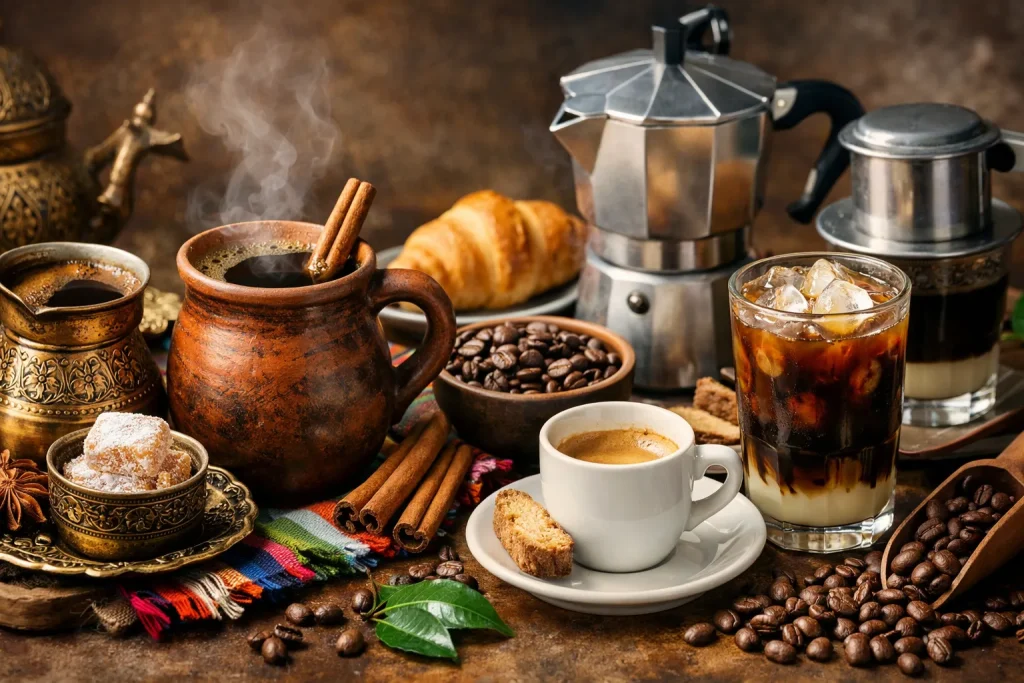
Different places have distinct ways of making and enjoying coffee. These traditions shape equipment, serving style, and social habits that people pass down through generations.
Italian Espresso Culture
Italy centers coffee around quick, concentrated espresso shots served at the bar. People usually stand at the counter, drink a single shot or a short milk drink like a caffè macchiato, and leave within minutes. Espresso machines, high-pressure extraction, and finely ground beans produce a strong, balanced shot with a thin crema on top.
Coffee etiquette matters: cappuccino is typically a morning drink, while after-meal choices favor straight espresso. Italian cafes focus on speed, consistency, and quality beans. For those who want technical detail, the specialty coffee association offers standards on extraction and grind that many Italian baristas follow.
Turkish and Middle Eastern Practices
In Turkey and parts of the Middle East, coffee is brewed unfiltered and served strong and thick. Finely ground beans simmer with water and sugar in a small pot called a cezve (ibrik). The coffee is poured slowly so grounds settle in the cup, and cups are small to concentrate flavor.
Coffee ties to hospitality and ritual. Guests often receive sweetened coffee with dates or sweets. In some places, reading the leftover grounds serves as a folk practice. For cultural background and historical context, resources from the UNESCO listing on traditional Turkish coffee provide credible detail.
Coffee in Asia-Pacific
Asia-Pacific shows wide variety, from Japan’s precision pour-over methods to Vietnam’s sweet condensed-milk coffee. Japan emphasizes clean extraction and single-origin clarity using pour-over drippers or siphons. South Korea blends café culture with specialty coffee shops and fast café chains serving espresso-based drinks.
Vietnam uses a metal drip filter (phin) to drip strong coffee directly over condensed milk, creating a sweet, rich beverage often served iced. In Australia and New Zealand, barista culture centers on the flat white—espresso with velvety microfoam—served in specialty cafes. For brewing techniques and local trends, consult industry sources like the Specialty Coffee Association for comparisons.
Social Spaces and Community
Coffeehouses serve practical needs and shape daily routines. They act as meeting places, informal workspaces, and cultural hubs where people meet, create, and exchange ideas.
Role of Cafés
Cafés function as “third places” outside home and work where people relax and connect. They offer seating arrangements, Wi‑Fi, and a mix of private corners and communal tables that support both quiet work and small-group conversation.
Many cafés host events—open mics, book clubs, and local markets—that draw different community groups. These events help small businesses, promote local artists, and increase foot traffic, which supports neighborhood economies.
Design choices matter: lighting, acoustics, and furniture shape how patrons use the space. A café that balances noise control and social energy encourages longer visits and repeated use by regulars.
Coffee and Social Interaction
Coffee consumption encourages short rituals that lower social barriers, like ordering, sharing a table, or standing in line. These small acts create opportunities for conversation between strangers and strengthen casual ties among neighbors.
Daily routines around coffee—morning meetups, study sessions, business catchups—build predictable social rhythms. Regular contact with baristas and other customers fosters trust and a sense of belonging in the local area.
Cultural practices also shape interaction. In some communities, coffee service follows ceremonial patterns that reinforce identity and hospitality. In urban settings, coffee becomes a neutral ground for people from different backgrounds to interact.
Creative Industries and Coffeehouses
Creative workers often use cafés as flexible workplaces and idea labs. Freelancers, designers, and writers choose cafés for short-term focus sessions, informal meetings, and inspiration from a lively atmosphere.
Cafés support collaboration by providing neutral, low-cost spaces for informal teams to meet. Many small creative projects and partnerships start over coffee, where people exchange feedback and network without formal booking or fees.
Partnerships between cafés and creative groups—gallery nights, pop-up shops, or co-hosted workshops—give artists exposure and cafés a distinct identity. These ties strengthen local creative ecosystems and help cultural projects reach new audiences.
Barista Craft and Expertise
Baristas combine technical skill, sensory knowledge, and customer care to make consistent, high-quality coffee. They train on extraction, milk texturing, and equipment maintenance while honing presentation and competitive techniques.
Barista Skills and Training
Baristas learn espresso extraction, dose, grind, and yield control to hit target brew ratios. They adjust grind size and tamp pressure and time shots to extract desired flavors. Training covers machine basics, steam wand technique, and routine cleaning to keep equipment performing.
Sensory training helps them identify acidity, sweetness, and body. They practice cupping and tasting to recognize defects and roast profiles. Many follow structured programs or modules that build from foundational skills to advanced sensory work.
Shift management skills matter too. Baristas track inventory, manage orders, and keep service flowing during busy periods. Clear communication and quick problem solving keep customers satisfied and cups consistent.
Latte Art and Presentation
Latte art combines milk temperature control, microfoam texture, and precise pouring. Baristas steam milk to 55–65°C for proper sweetness and microfoam. They polish the milk and tap the pitcher to remove bubbles before pouring.
Common patterns include hearts, rosettas, and tulips. Each design needs steady wrist control, correct pitcher spout, and consistent flow. Presentation also covers cup cleanliness, beverage weight, and crema quality.
Visual appeal supports taste expectations. A well-presented drink shows proper milk integration and extraction. Baristas practice repeated pours and adjust milk ratios to suit espresso strength and cup size.
Coffee Competitions
Competitions test technical skill, sensory ability, and showmanship. Events like barista championships require a timed service of multiple signature drinks and a scored sensory evaluation. Judges score extraction consistency, beverage balance, and presentation.
Competitors often prepare detailed recipes and practice shot timing, milk texturing, and plating. They log variables—dose, yield, time—and tweak grind, distribution, and tamp to reach target scores. Sensory calibration and vocabulary training help competitors explain flavor choices.
Entering contests pushes craft forward. It drives experimentation with origin, roast level, and brewing methods, and raises the skill level across cafes through shared techniques and standards.
Coffee and Sustainability
Coffee production affects farm incomes, worker rights, and local ecosystems. Buyers, roasters, and consumers can change practices through prices, certifications, and farming choices.
Ethical Sourcing
Ethical sourcing focuses on fair pay, safe working conditions, and transparent supply chains. Buyers can pay a minimum price or a living-wage premium to cooperatives and smallholders to reduce income volatility. Certification programs like Fairtrade or similar schemes track premiums and social investments, though coverage varies by origin and co-op structure.
Traceability matters: lot-level tracking and direct trade relationships let roasters verify where beans come from and how workers are treated. Ethical sourcing also includes contracts that span multiple seasons to help farmers plan and invest in their farms. Brands can publicly report purchase prices and premiums to increase accountability.
Sustainable Farming Practices
Sustainable farming mixes techniques that protect soil, water, and yields over time. Shade-grown coffee preserves tree cover and biodiversity; agroforestry systems combine coffee with native trees and food crops to diversify income and stabilize microclimates. Soil practices like composting, mulching, and cover crops improve fertility and reduce erosion.
Integrated pest management reduces chemical use by favoring biological controls and monitoring pest thresholds. Water-efficient irrigation and protecting riparian zones cut runoff and conserve freshwater. Training and extension services help farmers adopt these methods, but adoption often requires upfront finance or guaranteed market access.
Environmental Impact
Coffee cultivation and processing can drive deforestation, water use, and greenhouse gas emissions. Converting forest to farmland reduces carbon storage and harms wildlife. Wet-processing mills use large volumes of water and can pollute waterways if wastewater is untreated.
Mitigation steps include restoring tree cover, using water-recycling systems at mills, and improving energy efficiency in drying and roasting. Carbon footprint reductions come from reduced land conversion, renewable energy in processing, and better transport logistics. Companies can measure site-level emissions, set reduction targets, and invest in landscape restoration projects to address these impacts.
Coffee Culture in Popular Media
Coffee often appears as a marker of mood, place, and character. Films, books, and online trends show how coffee scenes shape social rituals and style.
Representation in Film and Literature
Films use coffee to set tone and pace. In many movies, characters meet in cafés to talk, make deals, or show intimacy. Coffee shops act as neutral ground where strangers become friends and rom-coms find turning points.
Writers use coffee to reveal character habits and class. A character who brews single-origin beans signals attention to detail. Another who grabs instant coffee on the run signals urgency. Scenes with specific drinks—espresso, drip, latte—give readers immediate clues about time of day and personality.
Table: Common cinematic and literary coffee cues
| Cue | Meaning |
|---|---|
| Shared table in a café | Connection or new relationship |
| Nighttime espresso shots | Tension, insomnia, work focus |
| Fancy latte art | Affluence or trend-following |
| Disposable cup | Mobility, modern life |
Influence on Lifestyle Trends
Social media and TV push coffee into daily identity. Videos showing pour-over setups or latte-art trends make home brewing feel accessible. Influencers often name gear and beans, which drives sales for roasters and small cafés.
Coffee imagery shapes décor and dress. Rustic mugs, bar stools, and warm lighting become part of a café aesthetic people copy at home. The trend list below shows clear links between media and behavior.
- Equipment people buy after seeing it online: espresso machines, scales, gooseneck kettles.
- Popular flavor trends: oat milk lattes, cold brew concentrates, flavored syrups.
- Social habits: working from cafés, taking “coffee breaks” for social posts.
These media-driven trends change what people expect from a cup of coffee and how they use cafés in daily life.
FAQS
What does “coffee culture” mean?
It refers to the social habits, rituals, and settings that form around drinking coffee. It covers cafes, brewing styles, ceremonies, and how people connect over a cup.
Which countries have strong coffee cultures?
Countries like Italy, Ethiopia, and Turkey are often noted for long-standing traditions. Many other places, including the U.S., Japan, and Brazil, have vibrant modern scenes.
How do coffee rituals differ?
Rituals can be fast and social, like espresso at a bar, or slow and ceremonial, like the Ethiopian coffee ceremony. Each ritual reflects local values and social customs.
What should someone new to coffee know?
Start with simple tastes: try brewed, espresso, and a single-origin pour-over. Learning basic brewing methods helps people notice flavor differences.
Are there health or social effects to consider?
Moderate coffee has known benefits and risks; effects vary by person. Socially, coffee often helps people meet, work, and relax together.
Quick reference
- Common brewing methods: drip, espresso, pour-over, French press.
- Typical venues: cafes, coffee bars, roasteries, home kitchens.
- Cultural roles: social hub, ritual drink, economic product.
How can someone explore coffee culture respectfully?
They should listen, ask questions, and try local styles. Supporting local roasters and learning basic etiquette shows respect.
Conclusion
Coffee shapes daily life in many places. It links rituals, work habits, and social spaces across cultures.
It supports economies from farms to cafés. People find identity and community in how they brew and share it.
Trends keep changing taste and technique. Yet the core stays the same: coffee brings people together.
Businesses and communities both learn from coffee culture. They adapt to values like sustainability, quality, and connection.