Coffee Jargon: Clear Definitions and Practical Tips for Baristas and Enthusiasts
You walk into a café and hear words like crema, single origin, and bloom tossed around. They sound like insider talk, but you can learn them fast and make smarter choices at the counter and at home. Know the key coffee terms and you’ll order, brew, and taste with confidence instead of guessing.
Ethan Cole from Webrewcoffee.com shows how simple jargon links to real choices: beans, grind size, and brew time change flavor. This guide breaks those terms into clear, useful tips so you can spot what matters and skip the fluff.
Key Takeaways
- Learn a few core terms to make better coffee choices.
- Practical tips turn jargon into simple brewing actions.
- Small changes in beans or technique make big taste differences.
What Is Coffee Jargon?
Coffee jargon means the specific words and short phrases people use when they talk about coffee, brewing, and serving. It covers drink names, shop commands, bean types, roast levels, and brewing steps that help baristas and drinkers communicate quickly.
Defining Coffee Terminology
Coffee terminology includes single words and short phrases with clear meanings. Examples: “double shot” (two espresso shots), “cortado” (espresso with equal steamed milk), and “third wave” (a focus on single-origin beans and brewing precision). It also covers technical terms like “extraction” (the process of dissolving coffee compounds in water) and “crema” (the tan foam on espresso).
This vocabulary helps shops run faster and lets home brewers follow recipes. Learning core terms reduces mistakes—like ordering a “latte” when one meant a “flat white”—and helps people discuss taste, such as acidity, body, and sweetness, with more precision.
Origins of Coffee Lingo
Many coffee terms come from languages tied to coffee history. Italian supplies words like “espresso,” “macchiato,” and “ristretto” because modern espresso grew in Italy. Spanish and Portuguese terms appear in Latin American coffee-producing countries and trade routes.
Other terms come from cafe culture and trade. Baristas developed shorthand—like “no foam” or “single origin”—to speed orders. Specialty coffee movements added technical phrases about processing (washed, natural) and roasting (light, medium, dark). Newer slang comes from social media and specialty coffee communities sharing brewing recipes and gear names.
Why Coffee Jargon Matters
Coffee jargon speeds communication and improves consistency. In busy shops, clear commands like “double decaf, no foam” cut errors and keep lines moving. For home brewers, terms like “bloom” or “channeling” let them diagnose problems and follow precise recipes.
Jargon also signals knowledge. Using terms correctly helps buyers choose beans and brewing methods that match their taste. It supports education—barista training and tasting notes use the same language so teams can reproduce drinks and track quality across shifts and locations.
Essential Coffee Terms
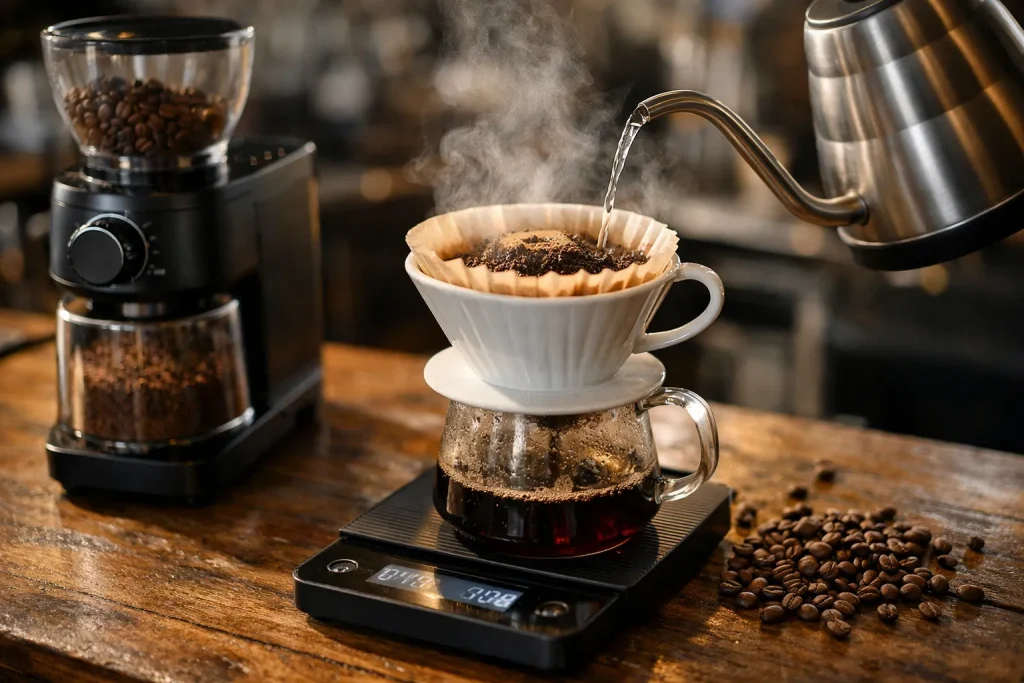
This section names and explains key words people use around coffee, from how beans are brewed to what shows up on a menu. It focuses on clear definitions and practical notes that help with brewing, ordering, and tasting.
Brewing Basics
- Extraction: The process of dissolving coffee solubles into water. Under-extracted coffee tastes sour and thin; over-extracted coffee tastes bitter and dry. Aim for balanced extraction by adjusting grind, dose, and brew time.
- Grind size: Ranges from coarse (French press) to fine (espresso). Grind coarseness controls flow rate and extraction. Use a burr grinder for consistent particle size.
- Ratio: The weight of coffee to water, commonly 1:15 to 1:18 for drip and pour-over. Weigh both coffee and water to repeat results.
- Brew time and temperature: Typical water temp is 90–96°C (195–205°F). Pour-over times vary 2–4 minutes; immersion methods like French press run 4–5 minutes.
- Tools: Key tools include a scale, timer, burr grinder, and gooseneck kettle for pour-over control. For more on brewing methods, see coffee preparation on Wikipedia.
Espresso Vocabulary
- Espresso: A concentrated coffee brewed by forcing hot water through finely ground coffee at pressure. A standard single shot is about 25–30 ml.
- Crema: The tan foam layer on an espresso shot. It signals proper pressure and fresh coffee, though crema quality varies with roast and freshness.
- Dose and yield: Dose is coffee weight in the portafilter; yield is the liquid weight in the cup. Typical dose: 18–20 g for a double; yield: 36–40 g for a 1:2 ratio.
- Tamping and distribution: Even distribution and firm tamping create uniform resistance to water flow. Uneven puck causes channeling and sour or weak spots.
- Ristretto and lungo: Ristretto uses the same dose but less yield for a sweeter, more concentrated shot. Lungo uses more yield for a longer, milder extraction.
- For technical standards and training resources, the Specialty Coffee Association offers detailed guides at Specialty Coffee Association.
Common Beverage Names
- Americano: Espresso diluted with hot water, typically 1–2 shots plus water. It keeps espresso flavor but with a longer cup.
- Cappuccino: Equal parts espresso, steamed milk, and milk foam (roughly 1/3 each). It is smaller and foamier than a latte.
- Latte (Caffè Latte): One or more shots of espresso with a larger amount of steamed milk and a thin layer of foam. Common sizes: 8–16 oz.
- Flat white: Similar to a latte but smaller and with microfoam for a stronger coffee taste.
- Macchiato: An espresso “stained” with a small amount of milk or foam. Variations include the caramel macchiato in many shops.
- Iced variations: Iced latte and iced americano use the same components served over ice. Cold brew uses cold-steeped coffee and tends to be less acidic.
Coffee Bean Related Jargon
This section explains names for bean types, how roast changes flavor, and the usual ways farms process coffee cherries. Readers will learn which terms matter when choosing beans or tasting coffee.
Varietals and Origins
Varietals name the genetic type of the coffee plant, like Bourbon, Typica, or SL28. Each varietal affects sweetness, acidity, and body. For example, SL28 from East Africa often shows bright acidity and berry notes, while Bourbon can be sweeter and rounder.
Origin points to the country, region, and sometimes farm. Terms like single-origin or microlot signal traceability and consistency. A coffee labeled “Yirgacheffe, Ethiopia” implies floral and citrus notes tied to that area’s soil and climate.
Knowing both helps predict cup profile. Buyers looking for specific flavors should seek varietal plus origin information on roast bags or menus. For more on global coffee varieties, see Coffea on Wikipedia.
Roast Levels
Roast levels run from light to dark: light, medium, medium-dark, and dark. Light roasts keep more of the bean’s origin flavors—citrus, florals, or tea-like notes. Medium roasts balance origin character and roast sweetness, often showing caramel or chocolate.
Medium-dark and dark roasts bring more roast-derived flavors like toasted nuts, cocoa, or smoke. Darker roasts usually reduce acidity and can mask subtle origin traits. Roasters use terms like “City,” “Full City,” or “French” to describe specific degrees within these categories.
Baristas and buyers pick roast based on brewing method and taste goals. For pour-over and cupping, lighter roasts often reveal more nuance. For espresso or milk drinks, medium to medium-dark roasts provide body and sweetness.
Processing Methods
Processing describes how farmers remove cherry fruit before drying the green beans. The main methods: washed (wet), natural (dry), and honey (pulped natural). Washed processing ferments and rinses off the pulp, giving cleaner, brighter acidity and clearer fruit notes.
Natural processing dries whole cherries in the sun, which can yield heavy body, fruity ferment flavors, and wine-like notes. Honey processing removes skin but leaves some mucilage; it sits between washed and natural, offering sweetness and moderate fruitiness.
Processing impacts fermentation, sweetness, and defect risk. Buyers should note labeled methods like “washed Colombia” or “natural Ethiopia” to set flavor expectations. For research on processing and world coffee standards, consult World Coffee Research.
Tasting and Flavor Profiles
This section explains how to name what someone smells, feels, and tastes in coffee. It breaks down aroma, body, acidity, sweetness, aftertaste, and how those parts fit together.
Describing Aroma and Body
Aroma refers to the scents a coffee gives off before and while drinking. Common descriptors include floral, citrus, nutty, chocolate, and earthy. Professional tasters often sniff the dry grounds and the brewed cup to note volatile aromas.
Body means the coffee’s weight and texture in the mouth. Words like light, medium, and full help describe it. A thin body feels watery; a full body feels dense or syrupy. Factors that affect body include roast level, origin, and brewing method.
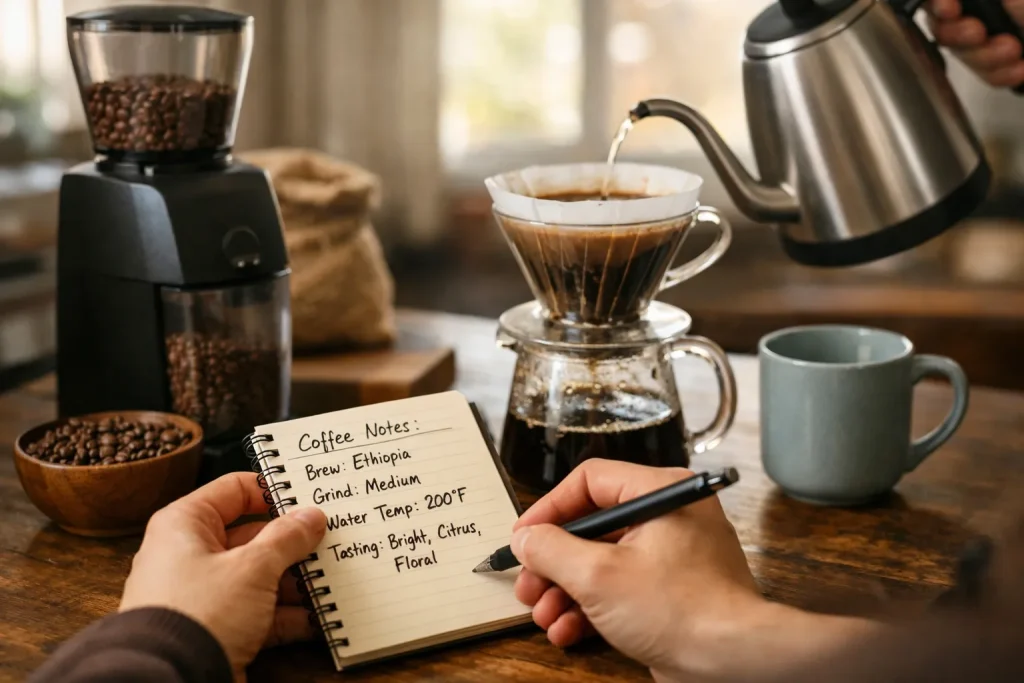
To record observations, use a short checklist: aroma notes (one to three words), body level (light/medium/full), and examples (e.g., “floral, medium body, like black tea”). This keeps tasting notes clear and repeatable.
Acidity and Sweetness
Acidity in coffee is a bright, lively sensation on the front of the tongue. It’s not sour in a bad way when balanced; it often reads as lemon, green apple, or wine-like. Higher-altitude beans and certain processing methods tend to show more acidity.
Sweetness balances acidity and rounds flavors. Good sweetness may taste like brown sugar, caramel, or ripe fruit. Lack of sweetness can make a cup taste flat or sharp.
When tasting, compare acidity and sweetness on a scale: low, medium, high. Note specific fruit or sugar analogies (e.g., “high acidity, like lime; medium caramel sweetness”) to help choose beans and brewing styles.
Aftertaste and Balance
Aftertaste, or finish, is the flavor that remains after swallowing. It can be short and clean or long and lingering. Descriptions include cocoa, citrus peel, or astringent tannin. Pay attention to changes: some coffees shift from fruity to chocolatey on the finish.
Balance means how aroma, body, acidity, sweetness, and aftertaste work together. A balanced coffee has none of these elements overpowering the others. For instance, bright acidity pairs well with clear sweetness and a medium body for a harmonious cup.
Tasters use simple notes to judge balance: list dominant trait, any clashing elements, and whether the finish improves or weakens the initial flavors. This helps choose beans that match personal taste.
Cafe and Barista Lingo
This section explains words baristas use to take and modify orders and the terms they use when heating milk. It focuses on what customers and home baristas need to know to order precisely and understand drink texture.
Order Modifiers
Order modifiers change size, strength, and flavor of a drink. Common modifiers include single/double/triple (number of espresso shots), short/tall/grande/venti (size names used by some chains), and ristretto (shorter, more concentrated shot). Knowing shot counts and size names helps customers get the right caffeine and volume.
Flavor and milk swaps use modifiers like skinny (nonfat milk and no syrup), light (less syrup or milk), extra hot, and no foam. Syrup requests use counts or pumps, e.g., “two pumps vanilla.” Dairy alternatives—soy, almond, oat, coconut—are added by saying the milk name. Temperature and strength can be specified with words like short pull (lighter extraction) or long pull (weaker, more watery shot).
Steaming and Frothing Terminology
Steaming and frothing terms describe milk temperature and texture. Microfoam means tiny, silky bubbles ideal for latte art. Foam refers to thicker, airy bubbles used in cappuccinos. Baristas may ask for wet (more steamed milk, less foam) or dry (more foam, less steamed milk) to match the drink style.
Temperature targets matter: 140–150°F (60–65°C) is common for lattes; 150–160°F (65–71°C) for cappuccinos or extra hot. Words like stretch mean introducing air to create foam; texturize means swirling and heating to make the milk smooth. Asking for “extra foam” or “no foam” tells the barista how much air to add.
Specialty Coffee Terminology
This section defines specific terms used by roasters, baristas, and buyers. It focuses on how coffee is grown, evaluated, traded, and served in specialty markets.
Third Wave Coffee Terms
Third wave describes a movement treating coffee like artisan food. It values transparency, single-origin beans, and distinct flavor profiles. Roasters list origin, harvest year, processing method, and cupping scores so buyers know what to expect.
Key terms:
- Single-origin: Beans from one farm, region, or cooperative that show local flavors.
- Micro-lot: Small, traceable lots with unique quality; often limited in supply.
- Cupping score: Numerical rating (usually 80–100) from professional tasting that signals quality.
- Light roast: Shorter roast preserving origin flavors like fruit, floral, or acidity.
- Processing: Methods such as washed, natural, or honey that shape sweetness, body, and aroma.
Baristas and roasters use these terms to communicate flavor, rarity, and price. Customers learn them to choose profiles they prefer and to understand why some beans cost more.
Direct Trade and Sustainability Terms
Direct trade focuses on buyer–producer relationships that aim for higher pay and quality control. It differs from fair trade by emphasizing direct negotiation and traceability rather than third-party certification.
Important phrases:
- Direct trade: Roaster buys directly from growers, often paying premiums tied to quality.
- Traceability: Ability to follow beans from farm to cup using lot codes and record-keeping.
- Certification: Labels like Organic or Fair Trade that verify practices through audits.
- Sustainability practices: Shade-grown, water reuse, and soil conservation that protect ecosystems.
- Price premium: Extra money paid above market rate to reward quality or fund community projects.
Buyers look for documentation of premiums and farm-level practices. Roasters publish farm names, payment details, and improvements funded by premiums to prove claims.
How to Learn and Use Coffee Jargon
Learning coffee terms helps people order better, make drinks more consistently, and talk clearly with baristas or home-brewing friends. Focus on a small list first, practice with real drinks, and expand to gear and roast terms as confidence grows.
Tips for Beginners
They should start with 10–15 core words: espresso, shot, crema, drip, pour-over, grind, roast, single-origin, blend, and brew ratio. Memorize one group at a time—drinks, equipment, then roast terms. Use a notebook or phone note to record new words and one-sentence meanings.
Practice by ordering or making drinks. Ask a barista to show the grind setting or to pull a shot while watching. At home, compare coarse and fine grinds and note extraction times. Short hands-on sessions teach context faster than only reading.
A simple table helps compare common terms and what to look for:
| Term | Meaning | Quick Check |
|---|---|---|
| Espresso | Concentrated coffee brewed under pressure | 30–40 sec pull, thick crema |
| Grind | Particle size of coffee beans | Finer = slower flow for espresso |
| Roast | Light to dark level of bean heating | Light = acidic, Dark = bitter |
When to Use Technical Language
They should use technical terms when accuracy matters. In a coffee shop, use “single-origin” or “blend” if origin affects price or flavor. Ask for “medium-fine grind” or “double shot” when specifying how a drink should be made.
Avoid jargon when talking with casual drinkers. Say “stronger coffee” instead of “higher extraction” unless the listener knows the terms. Use technical words with colleagues, when troubleshooting equipment, or when reading recipes that list ratios and extraction times.
When teaching or ordering, combine simple language with one key term. For example: “Can I get a double shot, pulled 30 seconds?” This keeps requests clear and lets experienced baristas act on precise instructions.
Evolution of Coffee Jargon
Coffee jargon grew from practical need. Early terms described beans, roast levels, and basic brewing steps so workers and customers could communicate quickly.
As espresso machines spread in the 20th century, new words followed. Short, precise phrases like “shot,” “pull,” and “Crema” became common in cafes and roasteries.
Specialty coffee movements added more precise language. Terms for origin, processing, and tasting — such as single-origin, washed, and cup score — helped professionals describe quality and flavor clearly.
The rise of third-wave coffee brought technical and sensory vocabulary. Baristas learned brewing ratios, extraction percentages, and tasting notes. This made shop-to-shop standards easier to share and compare.
Digital culture accelerated jargon change. Social media and blogs spread slang and trends fast. New phrases can move from niche to mainstream in months instead of years.
Below is a simple timeline of major influences:
- 17th–19th century: Trade and regional terms establish basic names.
- Early 20th century: Espresso era creates café shorthand.
- Late 20th century: Specialty coffee adds precision and tasting language.
- 21st century: Internet and third-wave culture multiply and speed changes.
Many terms now serve both practical and marketing roles. They guide brewing and tell consumers about quality, origin, and style without long explanations.
FAQs
What does “single-origin” mean?
It means the beans come from one country, region, or farm. This helps people trace flavor back to a specific place.
How does “espresso” differ from “drip coffee”?
Espresso is brewed under pressure and is more concentrated. Drip coffee uses gravity and yields a lighter cup.
Why do baristas say “pull a shot”?
They use “pull” from older machines that required pulling a lever. Now it simply means to brew an espresso shot.
What is “crema” and why is it important?
Crema is the tan foam on top of an espresso. It can show freshness and extraction quality, but taste matters more.
What’s the difference between “latte” and “cappuccino”?
Both use espresso and milk. A latte has more steamed milk; a cappuccino has more foam and a stronger espresso presence.
How should someone order if they want less caffeine?
They can ask for a single shot, decaf, or a smaller size. Cold brew and dark roasts also vary in caffeine.
Quick reference table
| Term | Plain meaning |
|---|---|
| Roast level | Light, medium, or dark — affects flavor |
| Cupping | Tasting method to evaluate coffee |
| Origin | Country or region where beans grew |
If a word still confuses them, they can ask a barista or look up a short glossary. Most baristas welcome simple questions.
Conclusion
The glossary helps readers learn common coffee words and feel more confident ordering or talking about coffee. It gives clear definitions for terms like crema, single-origin, and roast levels.
Readers can use the terms to choose beans, compare brewing methods, or speak with baristas. Small steps—learning a few words—make coffee choices easier.
Keeping a short list of favorites makes the vocabulary useful. Practice by reading menus and asking questions at cafes to build comfort and skill.