
Coffee Terms for Beginners: A Clear, Confident Guide to Brewing, Beans, and Equipment
You walk into a café and the menu feels like a foreign language. Ethan Cole from Webrewcoffee.com helps you cut through the noise so you can order, brew, and enjoy coffee with confidence. This guide gives simple definitions of the most useful coffee terms and shows how they affect taste, brewing, and buying beans.
You will learn practical words about beans, roast levels, grind size, common drinks, and basic equipment. Short, clear explanations will help you choose the right gear and make better coffee at home without feeling overwhelmed.
Key Takeaways
- Learn the core terms that affect how coffee tastes and brews.
- Understand basic brewing methods and how grind and roast change flavor.
- Find quick tips for buying, storing, and brewing better coffee.
Essential Coffee Terms
This section explains specific words that help someone order, brew, or evaluate coffee. Each term covers what it means, why it matters, and one clear tip to notice or try.
Espresso
Espresso is a concentrated coffee brewed by forcing hot water through finely ground coffee under pressure, usually 9 bars. A standard espresso shot is about 25–30 ml and takes roughly 25–30 seconds to pull with a properly tamped 18–20 gram dose for a double shot.
Espresso matters because it forms the base for drinks like lattes and cappuccinos and concentrates flavor. If extraction is too fast, the shot tastes sour; too slow, it tastes bitter. Crema, grind size, dose, and tamping directly affect the shot.
Tip: Start with a 1:2 ratio (dose). For 18 g of ground coffee aim for 36 g liquid in ~25–30 seconds and adjust grind by 1 click if the time is off.
Crema
Crema is the thin, tan foam that sits on top of a freshly pulled espresso shot. It forms from emulsified oils, dissolved solids, and tiny gas bubbles released during high-pressure extraction and signals fresh beans and correct extraction.
Crema color and texture indicate shot quality: golden-brown and even suggests balance; pale or thin suggests under-extraction or stale beans; very dark or greasy can mean over-extraction or roast oils. Crema fades quickly, so evaluate it immediately.
Tip: Use beans roasted within 2–4 weeks and wait 3–7 days after roast for degassing. Fine-tune tamp and grind to improve crema.
Single Origin
Single origin means beans come from one country, region, or farm rather than a blend. This label highlights specific flavors tied to a place, such as floral notes from Ethiopia, bright acidity from Kenya, or chocolatey body from Colombia.
Buy single-origin to taste clear, distinct characteristics and learn how origin affects flavor. Expect variation between harvests and farms; seasonality changes the profile, so tasting notes on the bag are a guide, not a promise.
Tip: Try small bags from different origins and brew the same way (same ratio and method) to compare how origin changes acidity, body, and aroma.
Blend
A blend mixes beans from multiple origins, roasts, or lots to create a consistent, balanced cup. Roasters design blends to combine strengths—acidity from one bean, body from another, and sweetness from a third—to meet flavor goals or stability across seasons.
Blends work well for espresso machines because they can deliver a fuller body and reliable crema. They also help businesses keep a stable product when single-origin crops vary. Check the roast level and the roaster’s tasting notes for intended use (espresso vs. filter).
Tip: Use blends if the goal is consistency. For single-cup exploration, compare the same blend across different brew methods to see how it holds up.
Coffee Brewing Methods
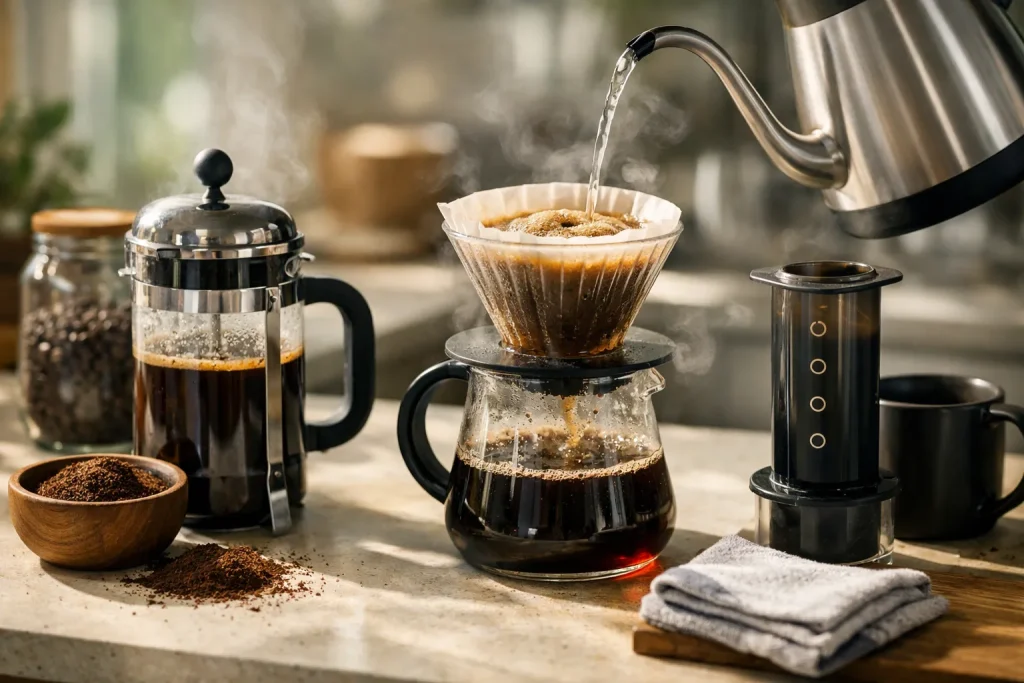
Choose a method based on how much body, clarity, and control the drinker wants. Water temperature, grind size, and brew time shape flavor more than fancy equipment.
French Press
The French press uses immersion brewing: grounds steep fully in hot water before a metal mesh plunger separates liquid from grounds. This method keeps oils and fine particles in the cup, producing a fuller body and richer mouthfeel than paper-filter methods.
Key steps: coarse grind, water near 93°C (200°F), a 1:15–1:12 coffee-to-water ratio, and 3–4 minutes of steep time. Press slowly to avoid extra sediment in the cup. It works well with medium- to dark-roast beans and is forgiving for beginners.
Cleaning matters. Because the mesh doesn’t trap oils, residue can build up and change taste over time. Rinsing the carafe and scrubbing the filter after each use keeps flavors bright.
Pour Over
Pour over relies on a paper or metal filter and a controlled pour to extract clean, bright flavors. It highlights acidity and subtle notes, making it ideal for light- to medium-roast single-origin beans.
Use a medium-fine grind, water around 92–96°C (197–205°F), and a pulse pouring technique for even saturation. Common ratios are 1:16 to 1:17 coffee-to-water. Total brew time usually runs 2.5–4 minutes depending on dripper and grind size.
Pour over demands more attention to technique, but it rewards with clarity and repeatable results. For basics on pour-over equipment and history, see Pour-over coffee on Wikipedia.
Aeropress
The Aeropress uses rapid immersion plus pressure to make a concentrated, low-bitterness cup in 1–2 minutes. It gives control over steep time and pressure, so it suits both espresso-like shots and full-strength filter coffee.
Typical recipe: finely to medium-fine grind, 1:15 to 1:17 ratio for regular brew or 1:7 to 1:10 for concentrated shots, water 80–92°C (176–198°F), and a 30–90 second steep before pressing. Many users invert the device for full immersion before flipping and pressing.
Its quick brew time and easy cleanup make it great for travel and experimentation. The Aeropress community documents many recipes and variations at the official site and forums for troubleshooting and creative approaches.
Common Coffee Drinks
These drinks show how espresso, milk, and water combine to create different flavors and textures. Understanding proportions and preparation helps you pick a drink that fits your taste and strength preference.
Latte
A latte is mostly steamed milk with a single or double espresso shot. It usually has a 1:3 to 1:5 ratio of espresso to milk, giving a mild coffee flavor and smooth mouthfeel.
Baristas steam milk to about 60–65°C (140–149°F) to create microfoam—tiny, glossy bubbles that add slight sweetness and creaminess. Lattes often get simple latte art, since the milk texture is smooth and pourable. A flavored syrup (vanilla, caramel) is common, but it does not change the basic structure.
For stronger taste, someone might order a “short” latte (less milk) or request an extra shot. Home baristas will need a good espresso grind and a steam wand or milk frother to mimic café texture. See the Specialty Coffee Association for brewing standards and milk temperatures: Specialty Coffee Association.
Cappuccino
A cappuccino balances equal parts espresso, steamed milk, and foam. Typically it uses a 1:1:1 ratio—stronger and drier than a latte, with more visible foam on top.
Baristas steam milk to a slightly cooler temperature to create a thicker, drier foam that holds shape. This foam gives cappuccino its airy texture and helps trap aroma. Traditional cappuccinos are about 150–180 ml (5–6 oz) total; variation exists by region and café.
The strong espresso base stands out more than in a latte. Some drinkers prefer a dusting of cocoa or cinnamon on top. At home, aim for a finer grind and firm, velvety foam to replicate the classic cappuccino experience.
Americano
An Americano is brewed by adding hot water to one or two espresso shots. It preserves espresso flavor while producing a longer, milder drink similar in strength to drip coffee.
Common proportions range from 1:2 to 1:4 espresso to water, depending on desired strength. The extra water highlights espresso’s acidity and aromatics without milk. Some people add hot water first to reduce crema break; others pour espresso first to keep crema intact.
This drink suits someone who wants espresso flavor with greater volume. It works well black, or with milk and sugar added to taste. For background on extraction and espresso basics, Wikipedia offers a clear overview: espresso.
Bean Types and Roasts
This section explains the two main coffee species and how roast level changes taste. It shows which beans suit milder, brighter cups versus stronger, bitter ones.
Arabica
Arabica beans come from Coffea arabica plants grown at higher altitudes. They usually have lower bitterness and more acidity than other species. Tasting notes often include fruit, floral, and sweet chocolate-like flavors.
Roasters and shops often label single-origin Arabica to highlight origin flavors. It favors careful processing and lighter roasts to keep bright, complex notes. Arabica also tends to cost more because it is more delicate to grow and harvest.
People who prefer nuanced, balanced coffee choose Arabica. It works well for pour-over, drip, and espresso when a cleaner cup is desired.
Robusta
Robusta comes from Coffea canephora plants and grows at lower altitudes. It has higher caffeine and a stronger, more bitter profile than Arabica. Tasting notes can include earthy, woody, and nutty flavors with less acidity.
Roasters sometimes blend Robusta into espresso to add crema and body. It handles dark roasts well because its bold flavors stand up to intense roasting. Robusta is cheaper and more disease-resistant, so farmers often grow it where conditions are tougher.
People who want a heavy, bold cup or a low-cost blend will often choose Robusta. Instant coffee also commonly uses Robusta for its strong, stable flavor.
Light Roast
Light roast stops the roast cycle earlier, preserving more of the bean’s original flavors. The color is light brown and the surface stays dry. Acidity is higher, and tasting notes emphasize origin traits like fruit, citrus, or floral tones.
Light roast yields a thinner body and brighter cup. Brewing methods that highlight clarity—pour-over, Aeropress, and some drip methods—bring out its best qualities. Freshness matters more because subtle flavors fade with age.
Drinkers who enjoy bright, complex flavors and clear acidity pick light roasts. It is less suitable for those who prefer smoky or heavily caramelized tastes.
Dark Roast
Dark roast continues longer until oils appear on the bean surface and colors reach deep brown to almost black. The roast creates smoky, roasted, and sometimes bitter flavors. Acidity lowers, and body becomes fuller and heavier.
Dark roast tends to mask origin characteristics and bring forward caramel, chocolate, or char notes from the roast itself. It suits espresso and milk-based drinks because the bold roast cuts through milk and sugar. Storage matters less since roast-derived flavors last longer than delicate origin notes.
People who like bold, warm, and robust cups or strong espresso shots usually prefer dark roasts.
Grinding and Extraction
Grinding controls how water interacts with coffee. Extraction is the process of pulling dissolved flavors from those grounds. Tamping helps ensure even water flow through the coffee bed.
Grind Size
Grind size sets how fast water extracts flavor. Coarse grinds (large particles) suit French press and cold brew. They slow extraction and reduce bitterness. Medium grinds work for drip machines and many pour-overs. They balance speed and flavor clarity. Fine grinds fit espresso and Aeropress (short steep times). They increase surface area and speed extraction but can over-extract if too fine.
Adjust grind in small steps and use a consistent grinder. Burr grinders give steady particle size; blade grinders do not. If coffee tastes sour, grind finer or increase brew time. If it tastes bitter or harsh, grind coarser or shorten brew time.
Extraction
Extraction measures how much of the coffee goes into the cup. Aim for balanced extraction: enough soluble compounds for sweetness and acidity, but not too many bitter compounds. Espresso targets high extraction in a short time; brewed methods aim for moderate extraction over longer times.
Use a scale and timer to control dose and brew time. Track Total Dissolved Solids (TDS) or taste to fine-tune. Lower TDS or short shot time can mean under-extraction (sour, thin). High TDS or long contact can mean over-extraction (bitter, dry). Change one variable at a time: grind, dose, water temperature, or time.
Tamping
Tamping compacts coffee grounds for consistent water flow. For espresso, apply firm, even pressure—typically 20–30 pounds—so the puck is level and smooth. Uneven tamping causes channeling, where water finds paths of least resistance and extracts unevenly.
Use a flat tamper that fits the portafilter basket. Check the puck for cracks or loose spots and re-tamp if needed. Clean the basket rim before locking into the group head to avoid leaks. For non-espresso methods, light leveling with a scoop or distribution tool improves consistency but heavy tamping is unnecessary.
Flavor Profiles and Tasting Notes
This section explains how a coffee feels in the mouth, how bright or sour it tastes, and how long flavors stay after a sip. It shows what to notice and how those traits change by origin, roast, and brew.
Body
Body means how thick or thin the coffee feels on the tongue. Light-bodied coffees feel watery and clean, while full-bodied coffees feel heavy and syrupy. Body depends on bean oils, roast level, and brewing method; for example, French press and espresso extract more oils and often produce fuller body than drip or pour-over.
Tasters describe body with simple terms: thin, medium, full, creamy, or velvety. He should note mouth-coating and how long the texture stays after swallowing. Record both the initial texture and any change as the coffee cools.
Acidity
Acidity describes the bright, tangy, or crisp part of coffee flavor—not sourness. High-quality acidity adds liveliness and can remind one of lemon, apple, or wine. Coffees from East Africa, like Kenyan or Ethiopian, often show high, fruity acidity, while many Brazilian beans show lower, chocolate-like acidity.
Tasters should pay attention to where acidity hits: on the tip of the tongue (sharp), on the sides (fruity), or all over (complex). Note balance: pleasant acidity lifts flavors, while harsh acidity feels sharp or unpleasant.
Aftertaste
Aftertaste is the flavor that lingers after swallowing. It can be short (fades quickly), medium, or long (stays for many seconds). Positive aftertastes might be nutty, floral, chocolatey, or citrus; negative ones include burnt, medicinal, or astringent notes.
He should track how flavor evolves: does sweetness appear after a moment? Does bitterness grow? Sipping slowly helps reveal the aftertaste stages. Professional cuppers often score aftertaste separately because it shows coffee quality and processing impact.
Coffee Equipment Basics
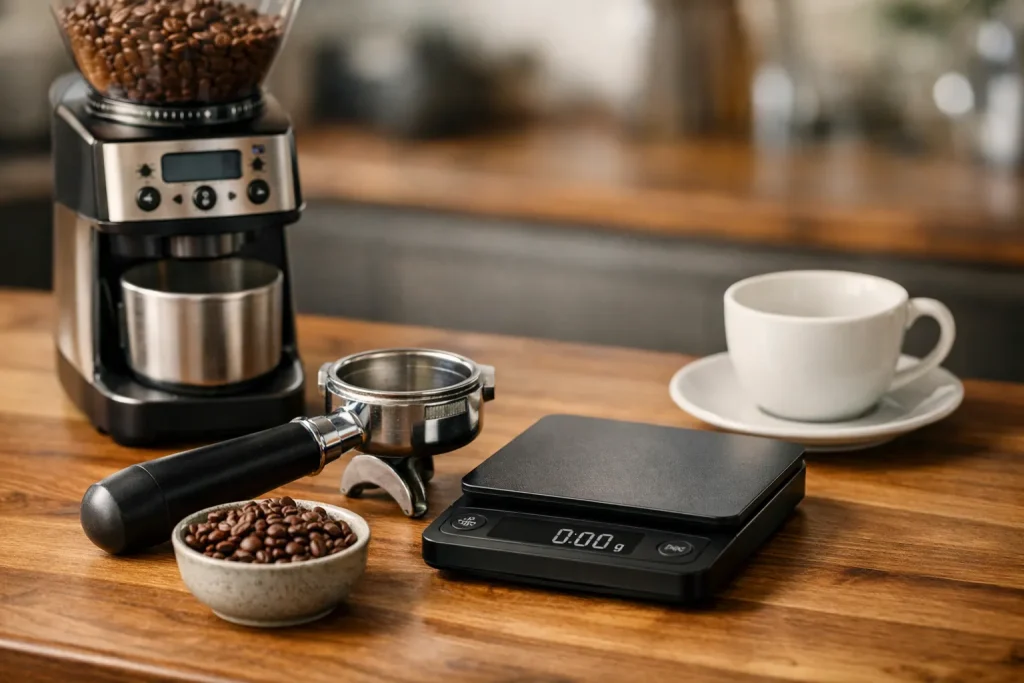
This section explains three key tools that shape brew quality: the part that holds coffee in espresso machines, the device that controls grind size, and the tool that measures dose and yield. Each plays a specific role in extraction, consistency, and taste.
Portafilter
A portafilter is the metal handle with a basket that locks into an espresso machine. It holds the ground coffee and channels pressurized water through the puck to make espresso.
Look for basket size and shape. A standard double basket holds about 18–20 grams for many home machines. Pressed or “stock” baskets vary; a precision basket with even holes improves flow and crema.
The portafilter type matters too. A pressurized portafilter helps beginners get crema with inconsistent grinds, while a non-pressurized (commercial) one requires a good grind and tamp but gives better flavor control. Material and fit affect heat stability; brass or chrome-plated units hold temperature better than thin aluminum.
They should be cleaned after each use. Knock out spent coffee, rinse the basket, and wipe the group head seal. Regular backflushing helps prevent oil buildup and keeps extraction consistent.
Burr Grinder
A burr grinder crushes beans between two abrasive surfaces to create uniform particle sizes. Consistent grind size gives predictable extraction and better taste than blade grinders.
Choose flat or conical burrs. Conical burrs are quieter and less heat-producing. Flat burrs often give slightly more consistency for espresso. Grind range matters: a grinder that adjusts fine enough for espresso and coarse enough for French press covers most needs.
Grind setting is the main control for extraction. Small changes in microns change shot time and flavor. Weigh doses, note settings, then adjust in tiny steps to tune taste.
Clean burrs regularly to remove oils and fines. Replace burrs when they dull to keep consistency. A good grinder is often the best upgrade for a clearer, more balanced cup.
Scale
A scale measures dose and yield to control brew ratios and consistency. Coffee professionals use grams, not volume, because bean density varies.
Look for a scale with a tare function and a 0.1 g resolution for espresso, or 1 g resolution for filter brewing. A timer on the scale helps track extraction time without extra devices.
Use common ratios: 1:2 brew ratio for espresso (e.g., 18 g in → 36 g out) or 1:15–1:17 for filter. Weigh beans before grinding and weigh the cup or shot as it pours to check yield. Small weight differences change strength and balance.
Put the scale on a flat surface and zero the container each time. Consistent dosing and yield tracking make troubleshooting and repeating recipes much easier.
Storage and Freshness
Keep beans away from light, heat, air, and moisture to slow flavor loss. Store small batches in a cool, dark spot and use within 2–4 weeks after opening for best taste.
Degassing
Freshly roasted coffee emits carbon dioxide for several days to weeks. This gas can create pressure inside sealed bags and affect extraction if beans are brewed too soon.
Many roasters recommend waiting 24–72 hours after roast before brewing for peak flavor. For espresso, some prefer 3–7 days depending on roast level and grinder. Lighter roasts often need a few more days than darker roasts.
If beans sit too long after the main degassing period, volatile aromatics will fade. Buy smaller amounts or note roast dates to avoid stale beans. For cold brew, degassing is less critical because long extraction masks some freshness loss.
Airtight Containers
Use an opaque, airtight container with a one-way valve or a tight lid to limit oxygen exposure. Clear bags or jars let light through and speed up degradation.
Store containers in a pantry away from the oven, not in the fridge or freezer for daily-use beans. Moisture and odors in refrigerators can harm flavor. If freezing for long-term storage, divide beans into small, sealed portions and thaw only what will be used that day.
Label containers with roast date and use-by window of 2–4 weeks after opening. Grind beans just before brewing and keep whole beans sealed to preserve oils and aroma.
Advanced Terms for Enthusiasts
These terms help refine brewing and extraction. Each one affects flavor, dose control, and consistency in a visible way.
Bloom
Bloom describes the first few seconds of wetting ground coffee during pour-over or immersion brewing. When hot water first hits the grounds, trapped carbon dioxide escapes and causes bubbling. This release helps even water contact and reduces channeling later.
A typical bloom lasts 20–45 seconds for recently roasted beans. Darker roasts and older beans bloom less. Pour 2× the weight of coffee in water for the bloom (for example, 20 g coffee → 40 g water), then wait before continuing the pour.
Key practical tips:
| Action | Effect |
| Use freshest roast possible | Stronger, visible bloom |
| Weigh bloom water | Repeatable starting point |
| Allow 20–45 s | Improved extraction balance |
They should adjust bloom time and water amount if coffee tastes sour or under-extracted. Short blooms can leave acids; overly long blooms may cool the bed and slow extraction.
Dose
Dose means the amount of ground coffee used for a brew, measured by weight. Small changes in dose cause big changes in strength and extraction. For filter coffee, common dose ranges from 12–18 g per 200–250 ml of water. Espresso uses 18–20 g in many modern baskets.
Consistency matters: use a digital scale and record dose for each recipe. Changing dose without adjusting grind or water ratio alters total dissolved solids (TDS) and taste. Higher dose increases body and strength but can cause over-extraction if grind is too fine.
Reference dose checklist:
- Weigh dry coffee to 0.1 g precision.
- Keep water-to-coffee ratio consistent (e.g., 1:15–1:17 for drip).
- Adjust dose in 0.5–1 g steps when dialing in flavor.
They should track dose, grind setting, and brew time together to build reliable recipes.
Channeling
Channeling is when water finds paths through the coffee bed and extracts unevenly. It creates over-extracted flavors from some zones and under-extracted from others. Common in espresso and pour-over if distribution or tamping is poor.
Causes include uneven grind, incorrect tamp pressure, poor distribution, or using old, degassed coffee. Visual signs: fast, irregular flow in espresso, or dry spots and quick drains in pour-over.
Prevention steps:
| Step | Why it helps |
| Even grind size | Promotes uniform extraction |
| Proper distribution | Eliminates voids |
| Consistent tamping | Creates an even puck |
| Adjust grind finer/coarser | Fixes flow rate issues |
When channeling occurs, they should change one variable at a time—grind, distribution, or tamp—and note how flow and taste change.
FAQs
What is the difference between a single origin and a blend?
A single origin coffee comes from one region or farm and shows specific flavors from that place. A blend mixes beans from different places to balance taste, body, and acidity.
How does roast level affect taste?
Lighter roasts keep more of the bean’s origin flavors like fruit or floral notes. Darker roasts taste richer and more bitter, with toasted or chocolatey notes.
How should beginners choose a brew method?
They should match time and effort to their routine. Drip or pour-over works for clearer flavor; French press gives fuller body; espresso is strong and fast.
What is grind size and why it matters?
Grind size controls extraction. Too fine makes coffee bitter; too coarse makes it weak. Match grind to the brew method for the best taste.
How important is freshness?
Freshly roasted and ground beans make a noticeable difference. Coffee is best within a few weeks of roast, and within minutes of grinding for peak flavor.
What does “brew ratio” mean?
Brew ratio is the amount of coffee to water. A common starting point is 1:15 to 1:17 (grams coffee : grams water). Adjust to taste.
Quick tips:
- Store beans in a cool, dark place.
- Taste with small changes—grind, ratio, or time.
- Ask questions at cafes; baristas can explain drinks and grind choices.
Conclusion
They will feel more confident using coffee terms after learning a few key words. Simple choices like roast level, brew method, and origin help them pick beans and order drinks.
Knowing basic terms also helps them talk with baristas and compare flavors. Small experiments — trying different roasts or brewing styles — teach them what they like.
A short cheat sheet or list of 10 terms can be a handy reference. It keeps learning quick and practical for everyday use.