
Coffee Vocabulary: Essential Terms Every Coffee Lover Should Know
You’ll pick up key coffee words fast and use them with confidence at the cafe or at home. Learn the terms that describe beans, roasts, brew methods, and tasting notes so you can order what you want and make better coffee.
Ethan Cole at Webrewcoffee.com shows practical tips and clear definitions drawn from real brewing experience, so you can spot the right grind, roast, or brew for your taste. The article breaks down essential jargon into plain language, helping you fix brewing problems and try new drinks without guesswork.
Key Takeaways
- Learn core coffee terms to order and brew with confidence.
- Understand roast, grind, and brewing basics to improve flavor.
- Use practical tips to choose beans and troubleshoot brews.
Key Coffee Terms Explained
This section defines four core espresso-based drinks. It shows how each drink is made, how it tastes, and what to expect when ordering or brewing one.
Espresso
Espresso is a small, concentrated coffee brewed by forcing hot water through finely ground coffee under high pressure. A standard single shot is about 25–30 ml and takes roughly 20–30 seconds to pull on a commercial espresso machine.
Key factors that affect espresso:
- Grind size: very fine to allow proper extraction.
- Dose: usually 7–10 g for a single, 14–18 g for a double.
- Extraction time and pressure: typically 9 bars and 20–30 seconds.
Espresso has a strong, bitter-sweet flavor and a layer of crema on top. It serves as the base for many other drinks and should taste balanced — neither overly sour nor overly bitter.
Americano
An Americano is espresso diluted with hot water. It keeps espresso’s flavor profile but reduces intensity and concentrates on clarity and drinkability.
Typical builds:
- Single Americano: 1 shot espresso + 120–180 ml hot water.
- Double Americano: 2 shots espresso + 180–240 ml hot water.
The method changes the mouthfeel and can highlight different flavor notes than drip coffee. It is less milky than cafe-style drinks and works well for people who want espresso flavor in a larger, milder cup.
Cappuccino
A cappuccino combines espresso, steamed milk, and milk foam in roughly equal parts. A common ratio is 1/3 espresso, 1/3 steamed milk, 1/3 microfoam, served in a 150–180 ml cup.
Preparation basics:
- Pull a double shot of espresso.
- Steam milk to create velvety microfoam.
- Pour to layer milk and foam evenly over the espresso.
Cappuccino has a bold espresso presence with a creamy texture. It differs from a latte by having more foam and a drier texture. Baristas often use foam to create simple latte art.
Latte
A latte is a larger milk-forward drink made from espresso and a greater proportion of steamed milk, topped with a thin layer of microfoam. Typical sizes range from 240–350 ml, usually built with one or two espresso shots.
Common structure:
- Espresso: single or double shot.
- Steamed milk: 3–5 times the espresso volume.
- Microfoam: thin, glossy layer on top.
The latte tastes milder and creamier than a cappuccino. It suits flavored syrups and gentle latte art. It emphasizes milk texture while still carrying espresso flavor.
Types of Coffee Beans
Coffee beans differ by species, flavor, and how growers process them. Each major type affects acidity, body, and caffeine, so choosing the right bean changes taste and brewing choices.
Arabica
Arabica (Coffea arabica) makes up most specialty coffee. It grows best at high altitudes with steady rainfall and cooler temperatures. These conditions slow bean development and often produce brighter acidity, more complex flavors, and a sweeter profile than other species.
Producers prize Arabica for floral, fruity, and chocolate notes. It typically has lower caffeine and a smoother mouthfeel. Many single-origin and specialty roasts use Arabica to highlight terroir. For more on growing and genetics, see World Coffee Research.
Arabica is more delicate in handling. It needs careful processing—washed, natural, or honey methods—to preserve nuanced flavors. It also commands higher market prices and is more vulnerable to pests and disease.
Robusta
Robusta (Coffea canephora) is hardier and yields more per plant. It thrives at lower elevations and tolerates warmer, wetter climates. Farmers often choose Robusta where Arabica won’t grow well.
Robusta beans have higher caffeine and more bitterness. They provide a heavy body and strong crema in espresso blends. Flavors lean toward earthy, nutty, and sometimes woody notes. Roasters use Robusta for instant coffee and to add strength to espresso blends.
Robusta plants resist disease and produce larger crops. They are less expensive and more consistent in supply. Quality-focused producers have started improving Robusta through selective breeding and better processing to reduce harshness.
Liberica
Liberica (Coffea liberica) is less common but notable for unique aromas. It grows well in specific regions of West Africa and Southeast Asia. The beans are larger and irregular in shape.
Liberica’s flavor often includes floral, smoky, and fruity notes with a full body. Some drinkers describe a slightly woody or nutty character. It appears in local blends and specialty niche markets rather than global commodity trade.
Cultivation of Liberica can suit hot, humid areas where other species struggle. Limited supply and regional demand keep it rare outside certain countries. For botanical and historical context, consult the Coffea entry on Wikipedia.
Roast Levels and Descriptions
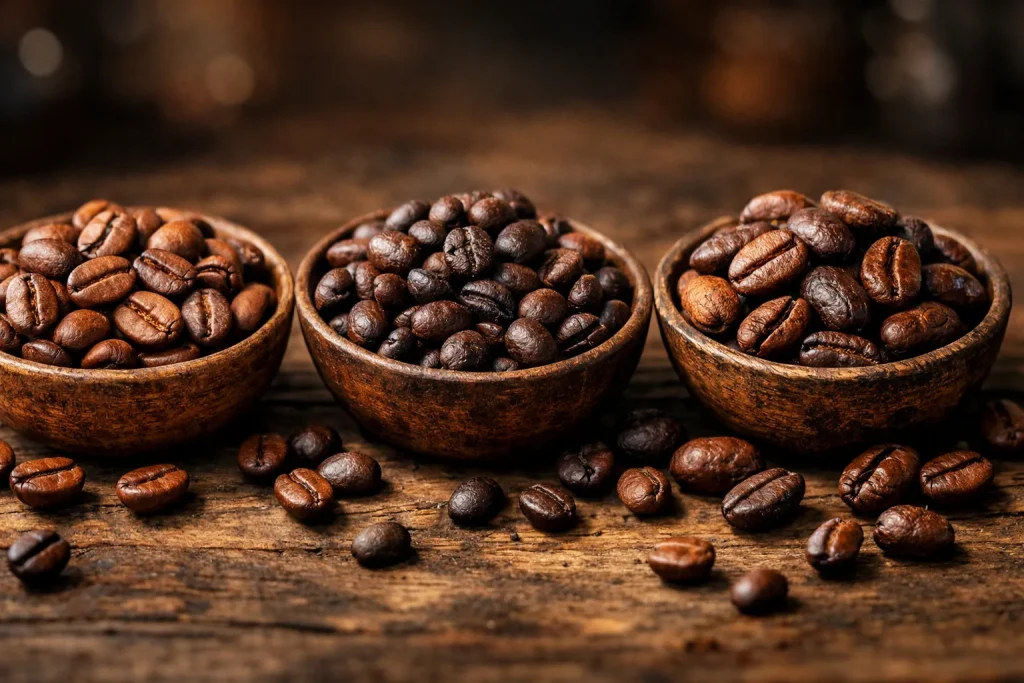
Roast level changes a bean’s color, oil, aroma, and flavor. It also affects acidity, body, and how the coffee pairs with brewing methods.
Light Roast
Light roast beans are pale brown with no surface oil. They reach the first crack but are removed before the second crack, preserving more of the bean’s original, origin-driven flavors. Expect bright acidity, pronounced floral or fruity notes, and a lighter body. Light roasts often show tasting notes like citrus, berry, or tea-like qualities that reflect the coffee’s variety and growing region.
Brewing methods that highlight clarity—pour-over, AeroPress, or filter—work well with light roasts. Light roasting usually keeps slightly more caffeine by weight than darker roasts. Read more about how origin influences flavor at Wikipedia’s coffee page.
Medium Roast
Medium roast beans are medium brown and may have little to no oil on the surface. They hit between the first and second crack, balancing origin character and roast-derived sweetness. Expect a rounded acidity, fuller body than light roasts, and tasting notes like chocolate, caramel, nuts, or mild fruit.
This roast suits many brew styles—drip coffee makers, French press, and espresso—because it yields consistent, approachable flavor. Medium roasts often appeal to people who want both clarity and sweetness without strong roast bitterness. The Specialty Coffee Association provides standards and definitions that help roasters and consumers compare roast profiles.
Dark Roast
Dark roast beans are dark brown to nearly black and often show surface oil. They pass well into the second crack and develop roast-dominant flavors like smoky, toasted, or bitter-sweet chocolate notes. Acidity drops and body becomes heavier; the original origin flavors become less obvious.
Dark roasts match well with espresso and milk-based drinks because their bold, roasted flavors cut through milk. They can taste more uniform across origins since roast flavors mask bean-specific traits. Because prolonged roasting reduces volatile compounds, some delicate aromatics are lost, leaving a stronger roast profile.
Coffee Brewing Methods
These four methods show how water contact time, grind size, and pressure shape flavor. Each method gives a clear path to control strength, acidity, and body.
Pour Over
Pour over uses a cone dripper and a paper or metal filter to extract coffee with a steady pour. It calls for a medium-fine grind and water just off boil (about 92–96°C / 197–205°F). The brewer controls bloom by pouring a small amount of water first to release gases for 30–45 seconds, then continues in slow concentric circles.
Key controls:
- Grind: medium-fine
- Ratio: commonly 1:15–1:17 (coffee)
- Brew time: 2.5–4 minutes
Pour over yields a clean cup with pronounced acidity and clear flavor notes. Filters remove most oils, so body stays light to medium. It rewards attention to technique and consistent pouring.
French Press
French press uses immersion brewing where coffee steeps in hot water before a metal plunger separates grounds. It requires a coarse grind and water near 93°C (200°F). Steep times run 3.5–5 minutes depending on desired strength.
Key controls:
- Grind: coarse
- Ratio: commonly 1:12–1:15
- Brew time: 3.5–5 minutes
Metal mesh filter allows oils and fine particles into the cup, producing fuller body and heavier mouthfeel. It highlights chocolatey and nutty notes while muting some bright acidity. It suits those who prefer rich texture and straightforward technique.
AeroPress
AeroPress is a versatile device that uses pressure and short immersion to extract concentrated coffee. It works with a fine–medium grind and near-boiling water, but recipes vary widely. Typical methods include inverted or standard orientation, with brew times from 30 seconds to 2 minutes and gentle pressing for 20–30 seconds.
Key controls:
- Grind: fine–medium
- Ratio: commonly 1:12–1:16 for regular coffee; 1:6–1:9 for espresso-style
- Brew time: 0.5–2 minutes
AeroPress produces a clean, concentrated cup with low bitterness when brewed properly. The paper filter removes most oils, keeping clarity. It adapts well for single-serve recipes and travel, and it allows experimentation with pressure and timing.
Cold Brew
Cold brew steeps coarse grounds in cold or room-temperature water for an extended time, usually 12–24 hours. It uses a coarse grind and high coffee-to-water ratio when making a concentrate, often 1:4–1:8, then diluted to taste.
Key controls:
- Grind: coarse
- Ratio: 1:4–1:8 (concentrate) or 1:10–1:20 (ready-to-drink)
- Steep time: 12–24 hours
Cold brew yields low acidity and a smooth, mellow flavor with pronounced sweetness and body. It works well served cold over ice or mixed with milk. Cold brew stores well in the fridge for up to a week when kept sealed.
Coffee Grinding Terms
Grind size controls extraction, brew time, and flavor. Match grind to the brewing method to avoid under- or over-extraction and get consistent results.
Coarse Grind
A coarse grind has large, distinct particles about the size of sea salt or kosher salt. It suits methods with long contact times and low pressure, such as cold brew, French press, and percolators.
Using coarse grounds reduces bitterness because water flows around large particles slowly, extracting fewer soluble compounds per minute. For a French press, a 4–5 minute steep with a coarse grind gives balanced body and clarity; for cold brew, 12–24 hours at room temperature or refrigerated yields a smooth, low-acidity concentrate. Coarse grinds can trap less within the grinder, so retention is usually lower, but burr alignment and dosing matter for consistency.
Avoid using coarse grind in espresso or Aeropress (short, high-pressure) because it will under-extract and taste weak or sour. Adjust dose, time, or grind slightly finer if the cup tastes too light.
Medium Grind
Medium grind resembles sand and fits methods that use paper filters or moderate brew times, like drip coffee makers, pour-over (V60, Chemex), and some Aeropress recipes. It balances extraction speed and surface area.
For pour-over, medium grind lets water extract sugars and acids without pulling excessive bitterness. Typical brew times run 2.5–4 minutes depending on dose and filter. Consistent particle size from a good burr grinder improves clarity and mouthfeel; blade grinders often produce uneven particles that make the cup taste muddy.
If the coffee tastes sour, grind slightly finer; if it tastes bitter, grind slightly coarser. Small changes in grind size (one notch on a quality grinder) impact flow and extraction more than tiny dose tweaks, so test methodically.
Fine Grind
Fine grind looks like table salt or powdered sugar and fits short-contact, high-pressure methods like espresso and Moka pot. It increases surface area so water extracts more quickly.
In espresso, fine grind and tamping create resistance that forces pressurized water through dense puck in ~25–30 seconds. This produces concentrated flavor, crema, and body. If the grind is too fine, extraction slows, causing over-extraction and a bitter, burnt taste; if too coarse, the shot runs fast and tastes sour. Moka pots use a slightly coarser fine grind than espresso to avoid clogging and channeling.
Use a calibrated burr grinder and adjust in small steps. Note that retention in the grinder may be higher with fine settings, so purge or weigh doses for repeatable results.
Flavor Notes and Tasting Vocabulary
This section explains how acidity, body, balance, and aftertaste shape what a cup of coffee tastes like. Each term links to what the taster notices in the mouth, how to describe it, and why it matters when choosing beans or brewing.
Acidity
Acidity means the bright, tangy sensations a coffee can give, not how sour or bitter it is. It appears as citrus, green apple, or wine-like notes and can be sharp (lemon), sweet (orange), or mellow (red apple).
Tasters note acidity on the front of the tongue and in the cheeks. High-altitude Arabicas often show lively acidity because slower bean development concentrates acids. Low acidity coffees tend to taste smooth or flat.
Practical cues:
- Fruit type: citrus = high, berry = complex.
- Mouthfeel: crisp acidity feels light; rounded acidity feels syrupy.
- Brewing effects: under-extraction can increase harsh acidity; proper extraction highlights pleasant brightness.
Body
Body describes how heavy or light coffee feels in the mouth. It ranges from thin and tea-like to heavy and syrupy.
Factors that affect body include roast level, grind size, brewing method, and soluble solids. French press and espresso usually give fuller body because more oils and fine particles stay in the cup. Pour-over and drip methods often yield cleaner, lighter body.
Descriptors to use:
- Light: thin, watery, delicate.
- Medium: balanced, round, satisfying.
- Full: heavy, creamy, syrupy. Body affects perception of sweetness and flavor intensity. A fuller body can make bitter notes feel less sharp.
Balance
Balance means how acidity, sweetness, bitterness, and body work together in a cup. A balanced coffee lets no single element dominate.
Tasters look for harmony: bright acidity matched by sweetness, bitterness kept in check, and body that supports flavors. Imbalance examples: overwhelming bitterness from over-roasting, thin body with sharp acidity from over-extraction.
To judge balance, taste the coffee across temperature changes. A well-balanced coffee maintains pleasant flavors from hot to cool. Roaster and brewing choices both play crucial roles in achieving balance.
Aftertaste
Aftertaste (finish) is the flavor that stays after swallowing. It can last a few seconds or linger for minutes.
Quality indicators:
- Clean finish: flavors fade quickly and pleasantly.
- Lingering finish: pleasant notes persist, like chocolate or fruit.
- Off-notes: sour, astringent, or chemical flavors signal defects or poor brewing.
Tasters note texture and flavor shift during the finish. A sweet, clean aftertaste often signals good processing and roasting. An unpleasant aftertaste points to issues such as fermentation defects, uneven roast, or extraction problems.
Coffee Origins and Regional Descriptors
This section explains how where coffee comes from shapes taste, and how producers label beans to show that origin. It focuses on single-origin clarity, why blends are made, and how terroir links land and flavor.
Single Origin
Single-origin coffee comes from one country, region, or farm. It highlights specific flavors tied to that place, such as Ethiopia’s floral and citrus notes or Colombia’s balanced chocolate and caramel tones. Roast and processing still change the cup, but single-origin lets drinkers taste the location first.
Buyers use single-origin to trace quality and support growers. Labels often list country, region, farm, and even lot number. This detail helps roasters and consumers compare vintage differences and microclimate effects.
Single-origin beans suit tasting, brewing methods like pour-over, and education. They also vary more from year to year, so expect seasonal shifts rather than uniform flavor across batches.
Blend
A blend mixes beans from two or more origins to achieve a target profile. Roasters combine bright Central American beans with heavier South American or Asian beans to add body, balance acidity, and create consistent flavor.
Blends solve supply and consistency issues. They let roasters replicate a house taste year-round despite seasonal crop changes. Blends can be labeled by function—espresso blend, breakfast blend—or by flavor goal—nutty, chocolatey, or bright.
Blending also controls cost and complexity. Single-origin lots can be costly or inconsistent, so blends provide predictable cups for cafes and retail. Skilled blenders keep tasting notes and origin data to adjust recipes as harvests vary.
Terroir
Terroir describes how soil, altitude, climate, and farming shape coffee flavor. High-altitude coffees often show brighter acidity and cleaner flavors. Volcanic soils can add mineral or savory notes, while lower-elevation beans may taste fuller and sweeter.
Processing and varietal interact with terroir. Washed processing emphasizes acidity and origin clarity. Natural processing can boost fruitiness tied to local climate conditions. Farmers record microclimate details—rain patterns, sun exposure, shade—to explain flavor differences.
Traders and roasters use terroir terms to signal expected traits. Words like “high-grown,” “mountain,” or “volcanic” guide buyers toward certain sensory profiles without promising exact results.
Coffee Shop and Barista Terminology
This section explains precise drink definitions, serving sizes, and extraction differences that baristas use every day. Each term shows how the espresso is made, what the customer sees, and how it changes flavor.
Doppio
A doppio is a double shot of espresso. It uses about 14–20 grams of ground coffee and yields roughly 50–60 ml of liquid espresso, depending on grind and tamp. Baristas pull a doppio through a portafilter with two spouts or into a single spout using a double basket.
The doppio forms the base for many drinks like lattes and Americanos. It tastes stronger and more concentrated than a single shot, with fuller body and more crema. Adjusting dose, grind size, and extraction time changes strength and balance.
Common order note: customers may ask for a doppio for stronger flavor. In espresso machines, a doppio helps maintain stable brewing temperature and pressure for consistent results.
Ristretto
A ristretto is a short, concentrated espresso shot. It uses the same dose of coffee as a standard shot but extracts less water, usually 15–25 ml. Extraction time is slightly shorter and the grind is finer to slow flow.
Ristretto yields a sweeter, thicker cup with less bitterness. It highlights syrupy mouthfeel and intense aromatics because fewer bitter compounds dissolve. Baristas often use ristretto for single-origin beans to showcase flavor without harshness.
How to order or make:
- Same coffee dose as espresso.
- Finer grind, shorter extraction.
- Smaller liquid yield (about half of a normale).
Cortado
A cortado pairs espresso with an equal amount of warm milk. Typical ratio is 1:1 espresso to milk, often 30–60 ml each. The milk is steamed just enough to remove foam; it should be silky but not frothy.
This drink balances intensity and smoothness. The milk softens the espresso’s acidity while keeping the coffee’s character clear. Baristas serve cortados in small glass cups to show the layered look and proper volume.
Serving tips:
- Use doppio or single depending on cup size.
- Steam milk to 55–60°C (130–140°F) for proper texture.
- Minimal foam — aim for microfoam, not latte foam.
Milk and Coffee Additions Vocabulary
This section explains common milk and texture terms used at coffee shops. It shows how each milk style changes taste, mouthfeel, and appearance so the reader can order or prepare drinks with precision.
Foam
Foam is the airy, large-bubble layer that sits on top of some espresso drinks. Baristas create it by forcing steam into milk until big bubbles form and rise to the surface. Foam is drier and lighter than other milk textures, so it holds its shape and sits atop drinks rather than blending in.
Foam commonly tops a cappuccino or a macchiato. It adds a tactile contrast to the denser espresso beneath, giving a frothy mouthfeel and a visual peak. Customers asking for “extra foam” should expect more volume and less creamy integration with the espresso.
Steamed Milk
Steamed milk is milk heated and slightly aerated with a steam wand until warm and silky, but not frothy. The goal is to raise temperature (typically 60–65°C or 140–149°F) and add small bubbles so the milk tastes sweet and feels smooth. It pours more fluidly than foam and mixes well with espresso.
Steamed milk forms the base of lattes, flat whites, and cortados. It changes texture and temperature without creating a thick top layer. For specific drinks, the ratio of steamed milk to espresso matters: lattes use more steamed milk, cortados use nearly equal parts, and flat whites use steamed milk with a thinner top layer.
Microfoam
Microfoam is finely textured milk with tiny, uniform bubbles that create a glossy, paint-like liquid. Baristas introduce a small amount of air then stretch and polish the milk so it becomes velvety and integrates seamlessly with espresso. Microfoam allows for smooth crema integration and detailed latte art.
Microfoam should feel silky on the tongue and show a mirror-like surface. Drinks made with microfoam—such as a well-poured flat white or latte—have a balanced taste and even mouthfeel. When describing texture, asking for “microfoam” signals a desire for precise technique and a cohesive blend of milk and espresso.
Sustainability and Ethical Sourcing Terms
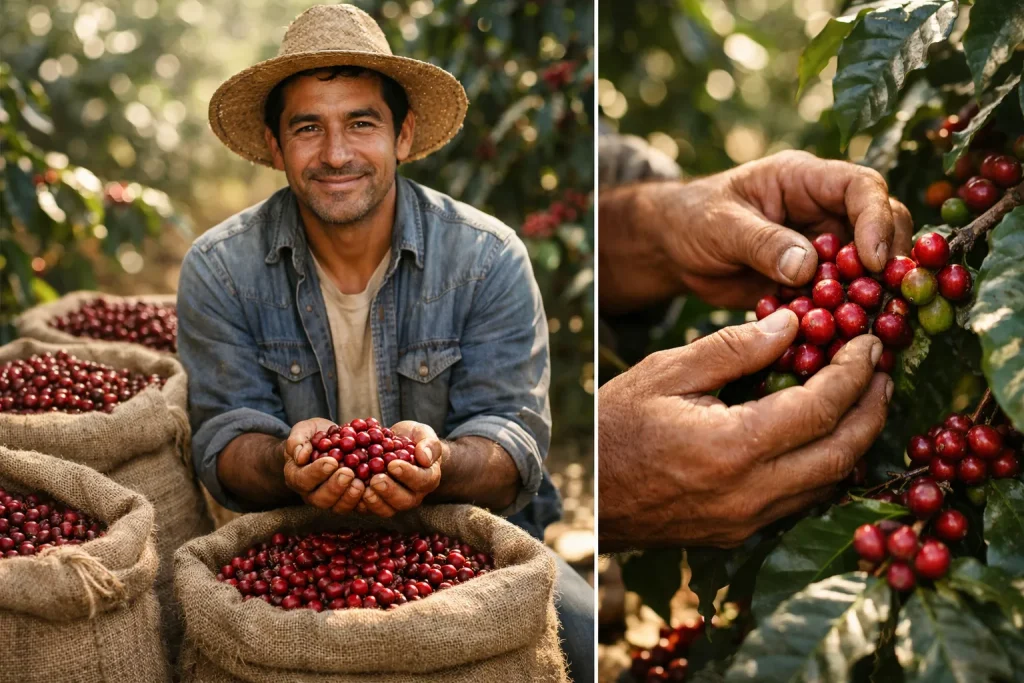
This section defines key terms used when buying and selling coffee that aim to protect farmers, the environment, and product quality. It explains how each term affects pay, farming practices, and traceability so readers can make informed choices.
Fair Trade
Fair Trade sets a minimum price for coffee to protect farmers from volatile markets. It also adds a premium paid to farming communities for social projects like schools or clean water. Certification requires cooperatives to meet labor and democratic governance rules.
Buyers who choose Fair Trade coffee agree to long-term contracts when possible. These contracts reduce risk for smallholders and help them plan crops and investments. Labels show that an independent group audited the farm or cooperative.
Fair Trade does not guarantee organic farming or direct relationships with roasters. It focuses mainly on fair wages and community development. Consumers should look at both price premium use and certification details when evaluating Fair Trade claims.
Direct Trade
Direct Trade describes a sourcing model where roasters buy straight from farms or cooperatives without many middlemen. This model emphasizes higher prices for quality, detailed traceability, and repeated partnerships with specific producers. It often leads to improved farming practices tied to quality goals.
Contracts in Direct Trade are usually flexible and negotiated individually. Roasters may pay premiums tied to cupping scores or specific lot characteristics. They often visit farms, document practices, and share technical support to raise bean quality.
Direct Trade lacks a single independent certification body, so transparency and documentation matter. Buyers should expect farm names, lot numbers, and clear pricing terms. This helps verify claims and track improvements over time.
Organic
Organic coffee comes from farms that avoid synthetic pesticides, herbicides, and chemical fertilizers. Certification requires meeting national or international organic standards and passing regular audits. Soil health, biodiversity, and natural pest management are central practices.
Organic farming can reduce chemical runoff and protect worker health. It may require transition time and often yields lower output per hectare, which can raise costs. Organic labels confirm that crops meet strict handling and processing rules after harvest.
Organic does not automatically mean fair pay or higher quality beans. Buyers should check for combined labels (for example, organic plus Fair Trade) or supplier documents that confirm labor and pricing practices in addition to organic status.
Emerging and Specialty Coffee Vocabulary
This section explains terms tied to modern coffee culture, quality scoring, and professional certification. It shows how brewing choices, bean grades, and trained tasters shape what people call specialty coffee today.
Third Wave Coffee
Third Wave Coffee treats coffee like wine: it values origin, processing, and single-origin lots. Roasters list farm, region, and harvest year. Brewers aim for clarity in the cup, using pour-over, Chemex, V60, or precise espresso dosing to highlight tasting notes like citrus, chocolate, or florals.
Third Wave shops often use light to medium roast profiles to preserve origin flavors. They track traceability — from producer to mill to exporter. Transparent sourcing supports direct trade relationships and sometimes pays growers premiums for quality.
Key consumer cues: single-origin labels, brew method names, roast color, and tasting descriptors. These signal an emphasis on flavor complexity and ethical sourcing, rather than mass consistency.
Specialty Grade
Specialty grade refers to beans that score highly on industry scales and show minimal defects. Graders use the Specialty Coffee Association (SCA) cupping score or similar systems; a score of 80+ (out of 100) commonly defines specialty coffee. Scores consider aroma, acidity, body, sweetness, uniformity, and absence of defects.
Producers aim for meticulous growing, selective picking, and careful processing to meet specialty standards. The result often costs more, reflecting labor and handling. Consumers see specialty grade on packaging, sometimes with numeric cupping scores, altitude, and varietal.
Below is a simple comparison of common grading indicators.
| Indicator | Specialty | Commercial |
|---|---|---|
| Cupping Score | 80+ | Below 80 |
| Defects | Very few or none | Multiple defects |
| Traceability | Farm/lot known | Often blended/unknown |
Q Grader
A Q Grader is a certified coffee taster who assesses green coffee quality using a standardized protocol. They undergo training and pass exams in sensory skills, cupping, and green-bean identification. Certification comes from programs like the Coffee Quality Institute.
Q Graders can assign scores, detect defects, and describe flavor attributes with consistent language. They often work for exporters, importers, roasters, or as consultants. Their evaluations help set prices, guide purchasing, and verify specialty claims.
Typical Q Grader tasks include blind cupping sessions, grading lots by defects, and reporting sensory profiles. Their role adds a standardized, professional layer to buying and selling high-quality coffee.
FAQs
What does “acidity” mean in coffee?
Acidity describes the bright, sharp taste that makes coffee lively. It is not about pH; it refers to flavor notes like citrus or apple.
How do “body” and “mouthfeel” differ?
Body means how heavy coffee feels in the mouth. Mouthfeel covers texture — smooth, syrupy, thin, or creamy.
What is the difference between Arabica and Robusta?
Arabica often tastes sweeter and more complex. Robusta has more caffeine and a stronger, sometimes harsher flavor.
How should a beginner learn tasting terms?
Start with five basic terms: acidity, body, sweetness, aroma, and balance. Practice with different beans and brewing methods to notice differences.
Which brewing factor affects flavor most?
Grind size, water temperature, and brew time change extraction and taste. Small changes in any of these can alter acidity and strength.
Quick reference table
| Term | Simple meaning |
|---|---|
| Aroma | Smell of the coffee |
| Aftertaste | Flavors that remain after swallowing |
| Crema | Foam on espresso |
| Roast level | Light to dark roast, affects flavor and sweetness |
Are coffee defects common to taste?
Some defects are easy to spot, like sour or moldy notes. Many defects come from poor processing or storage.
When should someone use tasting notes?
Use notes to compare coffees or track what they prefer. Notes help choose beans for future brewing.
Conclusion
The glossary helps readers recognize common coffee terms and brewing methods. It makes it easier to order, talk with baristas, and try new beans.
Readers gain confidence by learning simple words like espresso, roast, and acidity. They also learn tasting words that describe flavor and feel.
Using this vocabulary improves coffee visits and home brewing. It connects people to coffee culture and to clearer tasting notes.
A short practice list can help: 1) learn 10 terms, 2) taste with one note in mind, 3) ask a barista one question. Small steps lead to steady progress.