
Specialty Coffee Terms: A Clear Guide to Key Concepts and Industry Jargon
You want to talk like someone who knows coffee without sounding like a barista textbook. This post gives clear, usable definitions of specialty coffee terms so you can understand tasting notes, processing methods, and brewing gear at a glance. You will leave knowing the key words that help you choose better beans, make cleaner brews, and spot quality when you sip.
Ethan Cole from Webrewcoffee.com draws on hands-on experience to explain terms simply and point out what matters for home brewing. Expect short, practical definitions, quick tips for brewing, and clear signs of quality you can use at the coffee shop or at home.
Key Takeaways
- Learn simple, useful terms that improve how you buy and brew coffee.
- Find quick tips to notice bean quality and flavor differences.
- Use hands-on advice to make better coffee at home.
Fundamental Specialty Coffee Terminology
This section defines core terms used by roasters, baristas, and coffee buyers. It explains what qualifies as specialty coffee, why new craft movements matter, how origin affects flavor, and how trade relationships shape quality and price.
Specialty Coffee Definition
Specialty coffee refers to beans scored 80 points or higher on a 100-point scale by a certified coffee grader. It must be free of primary defects and show distinct, desirable flavor attributes when roasted and brewed properly.
Producers, buyers, and roasters track quality from farm to cup. Farms use specific varietals, careful harvesting, and controlled processing to hit high scores. Importers and roasters rely on cupping notes and lab tests to verify scores before purchasing.
Specialty coffee often commands higher prices because of traceability and improved practices. Labels usually include origin, processing method, altitude, and sometimes farmer names. That information helps buyers and drinkers understand why the cup tastes a certain way.
Third Wave Coffee
Third Wave Coffee treats coffee like wine, focusing on origin, transparency, and brewing precision. Shops measure extraction, dose, and water temperature to highlight a bean’s natural flavors rather than masking them with heavy roasting or additives.
Third-wave roasters roast lighter to preserve origin characteristics such as floral, fruity, or tea-like notes. They publish roast dates and tasting notes and often offer single-origin pour-overs and detailed brew guides.
This movement also emphasizes sustainability and relationships. Roasters pay premiums for quality and promote farm practices that improve soil, yield, and bean quality. Consumers expect clear information about where and how the coffee was grown.
Single Origin
Single origin means the coffee comes from one location, such as a single farm, cooperative, or a defined region within a country. This restricts variability and highlights flavors tied to soil, altitude, and local processing.
Buyers choose single-origin coffee to experience distinct tasting profiles—citrus or berry notes from Ethiopia, chocolate and nut from Colombia, or floral from Kenya. Roasters label single-origin lots with country, region, farm, and sometimes lot number.
Single-origin lots can be smaller and less consistent than blends, so roasters often treat them as seasonal offerings. That limits supply but allows drinkers to taste unique, traceable cups linked to a specific place and producer.
Direct Trade
Direct trade describes a buying model where roasters purchase coffee directly from farmers or cooperatives, cutting out middlemen. The goal is clearer pricing, faster feedback, and stronger relationships that can raise quality and farmer income.
Contracts often include quality specs, agreed prices above commodity levels, and support for processing or agronomy. Roasters may visit farms, offer training, or fund infrastructure like washing stations to secure consistent, high-grade lots.
Direct trade lacks a single certification body, so standards vary by roaster. Reputable roasters publish purchase details—price paid, farm names, and photos—to show transparency. This helps consumers judge whether higher shop prices fund real improvements on the farm.
Coffee Grading and Quality Terms
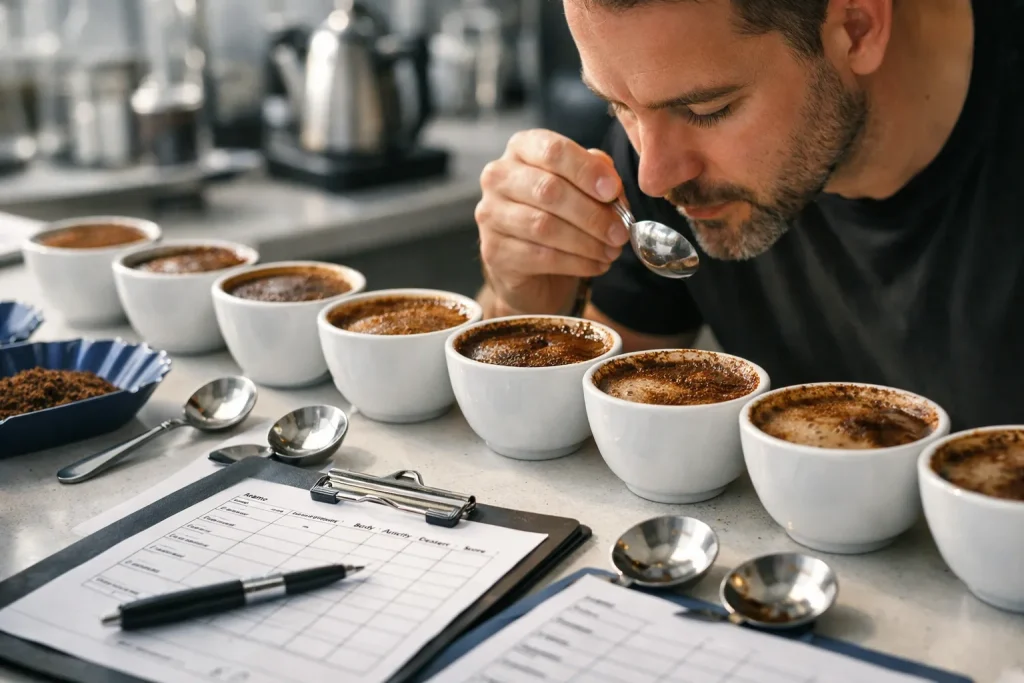
This section explains the key tools and standards used to judge coffee quality. It covers how sensory scoring works, who is certified to score, and the formal rules that define specialty coffee.
Cupping
Cupping is a standardized taste test that uses aroma, flavor, acidity, body, and aftertaste to score coffee. Practitioners roast samples to the same level, grind them to a set size, and steep them in hot water. They break the crust, smell the aroma, and then slurp to spread coffee across the palate.
Scores come from a 100-point scale. Judges mark specific attributes and note defects or off-flavors. A clean cup with balanced acidity and distinct flavors often scores 80 or higher and can be called specialty coffee.
Cupping relies on controlled conditions and trained tasters to reduce bias. It provides a repeatable way to compare lots from farms, mills, or roasters.
Q Grader
A Q Grader is a professional certified to evaluate green and roasted coffee using formal protocols. The program tests sensory skills, grading consistency, and knowledge of defects and green-bean standards.
Candidates complete written exams, blind cupping tests, and practical green-bean assessments. After passing, they can issue quality reports used by buyers and exporters to set prices and choose lots.
Q Graders help create transparent trade by linking sensory scores to contracts. Their reports may include cup score, defects, and flavor descriptors that buyers use when sourcing beans.
SCA Standards
The Specialty Coffee Association (SCA) sets widely used protocols for grading coffee quality and cupping. The SCA 100-point scale defines how to score attributes and what constitutes a specialty coffee.
SCA protocols also describe green coffee grading: sample size, defect counts, moisture levels, and screen-size sorting. Different origins may follow local systems, but many exporters reference SCA methods for consistency. More on SCA standards appears at the Specialty Coffee Association site.
Laboratories and traders use SCA rules to compare lots and certify scores. Following these standards helps buyers trust that a given score reflects repeatable quality.
Processing Methods Explored
Processing changes how the coffee cherry becomes the green bean and shapes flavor, body, and clarity. Key differences come from how much fruit and mucilage stay on the bean, how long fermentation lasts, and whether the beans dry on patios, beds, or in tanks.
Washed Process
The washed process removes the cherry skin and most mucilage before drying. Producers mechanically depulp cherries, then ferment the beans in water for 12–72 hours to loosen remaining mucilage. This step controls acidity and prevents off-flavors. After fermentation, they wash the beans and dry them on raised beds or patios until they reach about 11–12% moisture.
Washed coffees tend to show cleaner, brighter acidity and clearer origin characteristics. They highlight varietal and terroir notes like citrus, floral, or tea-like flavors. For technical detail and standards, the Specialty Coffee Association offers useful guidance on fermentation and drying practices: Specialty Coffee Association.
Natural Process
The natural process dries whole cherries with the beans inside. Farmers spread ripe cherries in thin layers on patios or raised beds and regularly turn them to avoid mold. Drying can take 2–4 weeks depending on climate. No fermentation tanks or washing water get used, so sugars and fruit compounds interact with the bean for a longer time.
Natural coffees often show pronounced fruitiness, fuller body, and sweeter, jammy notes like berry or tropical fruit. They can also develop fermented or winey characteristics if drying or turning is inconsistent. Producers who aim for clean naturals sort carefully and monitor moisture to prevent uneven fermentation and defects. Wikipedia offers a broad overview of this method and its risks: coffee processing.
Honey Process
The honey process leaves some mucilage on the parchment while drying, creating a middle ground between washed and natural. After depulping, beans dry with varying amounts of mucilage: white honey has little, yellow and red have more, and black honey retains the most. Producers control exposure to air, sun, and humidity to steer fermentation and sugar absorption.
Honey coffees often balance sweetness and clarity. They can show caramel, stone-fruit, or brown-sugar notes with moderate acidity and medium body. Careful drying and frequent turning reduce rot and uneven flavors. This method requires more labor than washed coffees but uses less water, which appeals to regions with limited resources.
Roasting and Flavor Profiles
Roast level, time, and heat control shape a coffee’s acidity, body, and aromatic notes. Small changes during roasting move flavors from bright and fruity to sweet and chocolatey or smoky and bitter.
Light Roast
A light roast stops soon after the first crack, keeping more of the bean’s origin character. It shows lively acidity, lighter body, and distinct single-origin flavors like citrus, floral, or stone fruit.
Roasters aim for temperatures that preserve delicate volatile compounds. That often means faster heat ramp early, then gentle drop after first crack to avoid scorching.
Light roasts usually have higher perceived acidity and more complex aromatic layers. They can taste thinner in body, so brewing technique matters: slightly finer grind and cooler water can balance extraction.
Flavor Notes
Flavor notes name specific tastes and smells that come from the bean and roast. Common notes include citrus, berry, chocolate, nut, caramel, floral, and herbal.
Tasting focuses on aroma, acidity, sweetness, body, and aftertaste. Aroma is smelled first; acidity gives brightness; sweetness balances acidity; body describes mouthfeel; aftertaste shows lingering flavors.
Roasters highlight certain notes by adjusting roast profile. For example, a shorter roast preserves floral and fruity notes, while longer roast time develops caramel, chocolate, and roast-derived bitters.
Development Time
Development time is the period after first crack until the roast ends. It controls how much of the bean’s sugars caramelize and how roast flavors form.
Short development (10–20% of total roast time) keeps origin clarity and acidity. Longer development (25–35% or more) increases sweetness, body, and roast character.
Roasters track time, temperature, and rate of rise to hit a target development percentage. Small shifts of 10–30 seconds can change the balance between fruity acidity and roasted sweetness.
Brewing Techniques and Equipment
This section explains key ways to brew coffee and the gear that matters. It highlights how grind, water, and time change flavor, and which tools give consistent results.
Pour Over
Pour-over brewing uses a cone, paper or metal filter, and a steady pour to extract flavors. It relies on grind size (medium-fine to medium), water temperature (92–96°C / 198–205°F), and a controlled pour rate to avoid under- or over-extraction.
He should aim for a 1:15–1:17 coffee-to-water ratio for balanced cups. A gooseneck kettle helps control flow; a scale times and measures dose and yield. Paper filters remove oils, creating cleaner cups; metal filters allow more body and oils.
Brew time usually falls between 2.5 and 4 minutes depending on pour method and grind. They can use bloom pours (30–45 seconds) to release gas, then slow continuous pours. Consistency in technique matters more than brand of dripper.
Extraction
Extraction means how much soluble material dissolves from the grounds into water. It affects taste: low extraction tastes sour or thin; high extraction tastes bitter or hollow.
Baristas measure extraction as a percentage of the coffee mass dissolved into the brew. Typical specialty targets sit around 18–22% extraction for balanced flavor. Variables that change extraction include grind size, water temperature, brew time, agitation, and grind distribution.
To adjust extraction, make one change at a time. If extraction is low, try finer grind, longer contact time, or hotter water. If extraction is high, coarsen the grind, shorten time, or lower temperature. Consistent dosing and even wetting improve predictability.
TDS (Total Dissolved Solids)
TDS measures the concentration of dissolved coffee in the brewed beverage, reported as a percent or ppm. It tells how strong the cup is, separate from extraction percentage which measures how much of the grounds dissolved.
Home and café brewers often target 1.15–1.45% TDS for standard drip or pour-over strength. Espresso sits much higher, often 8–12% TDS. A digital refractometer gives quick, reliable TDS readings and supports recipe control.
They can calculate extraction from TDS, brew yield, and brew dose to see if adjustments are needed. Tracking TDS helps replicate results and diagnose problems like weak taste or over-extraction.
Sustainability and Ethical Sourcing
Sustainability here means protecting farms, people, and the land so coffee can be grown long term. Ethical sourcing means paying fair prices, following labor rules, and tracking beans back to farms.
Fair Trade
Fair Trade sets minimum prices and premiums to protect small farmers from volatile markets. It ensures buyers pay at least a floor price and adds a social premium used for village projects like schools, clinics, or processing equipment.
Certification requires audits and farmer organization. Cooperatives often manage sales, ensuring members share benefits. Fair Trade also bans forced labor and child labor and promotes safe working conditions.
For buyers, Fair Trade signals a commitment to stable income for producers. For roasters, it can add cost but helps secure traceable lots and long-term relationships with supplying communities.
Traceability
Traceability tracks coffee from farm to cup using documents, lot codes, or digital platforms. It identifies the farm, cooperative, processing method, and shipment dates so buyers verify origin and quality.
High traceability means single-origin lots and known farmer groups. Low traceability mixes lots from many sources, making social or environmental claims hard to prove.
Tools include farm-level IDs, blockchain records, and supplier audits. Traceability helps detect fraud, measure sustainability practices, and support premiums for better farming methods. Buyers use it to confirm certifications like C.A.F.E. Practices or Fair Trade and to build direct-trade partnerships.
Popular Coffee Varieties
This section highlights two widely known specialty coffee types, showing where they grow, what they taste like, and why buyers choose them.
Arabica
Arabica (Coffea arabica) accounts for most specialty coffee sold worldwide. It grows best at higher altitudes, typically 1,000–2,000 meters, where cooler temperatures slow bean development and increase sugar concentration. Farms in Ethiopia, Colombia, and Central America often produce high-quality Arabica.
Flavor notes vary by origin and processing. Common descriptions include floral, fruity, and bright acidity for East African lots, and chocolatey or nutty notes for Latin American lots. Arabica generally has lower bitterness and less caffeine than Robusta, which makes it popular for filter brewing and single-origin offerings.
Growers select Arabica varieties like Typica, Bourbon, and Caturra for cup quality and yield. Buyers look for origin, processing method (washed, natural, honey), and lot size when choosing Arabica beans.
Geisha
Geisha (often spelled Gesha) traces its fame to Panama, though it originated in Ethiopia. It thrives at high altitudes and needs careful shade and soil management. Small-lot farms in Boquete, Panama made Geisha famous after award-winning competition scores.
The cup profile is distinct: jasmine and bergamot-like floral notes, pronounced tea-like acidity, and complex fruit flavors such as mango or stone fruit. These traits make Geisha prized for pour-over and tasting flights.
Geisha commands high prices because yields are low and farms often sort and process beans meticulously. Roasters and specialty shops usually sell Geisha as single-origin, limited-release lots with tasting notes and farm details.
Sensory Evaluation and Tasting Terms
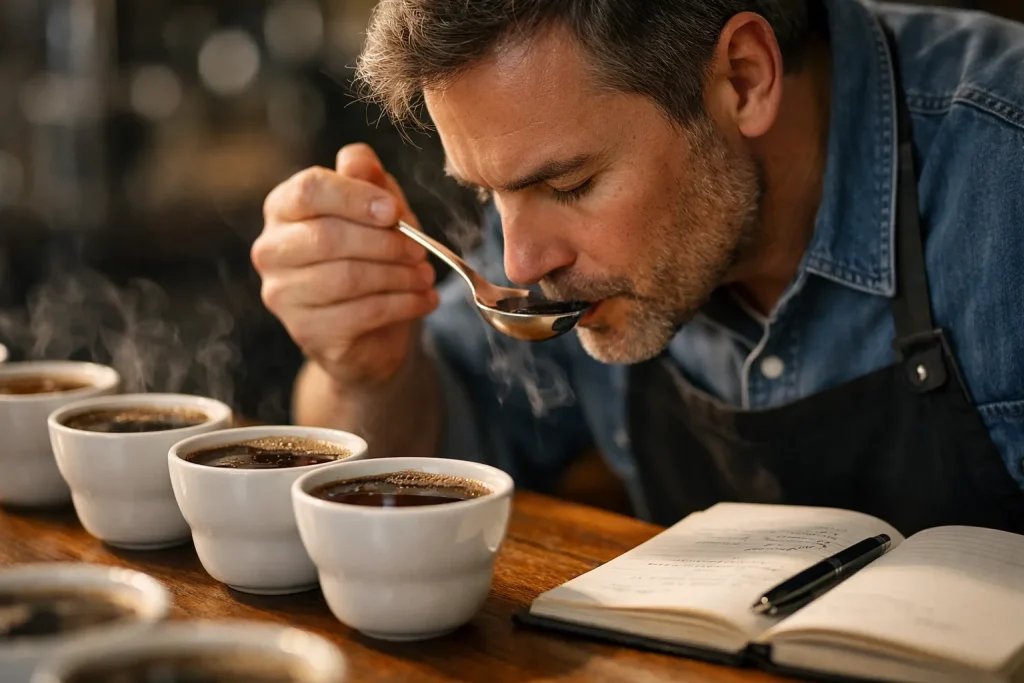
This section defines measurable qualities tasters use when judging coffee. It highlights how mouthfeel, brightness, and lingering flavors shape a cup’s balance and enjoyment.
Body
Body describes how coffee feels in the mouth. It ranges from thin and tea-like to heavy and syrupy. Body depends on bean origin, roast level, and brewing method. For example, an espresso often feels fuller because oils and suspended solids concentrate, while a pour-over can be lighter and cleaner.
Use body to judge texture, not flavor. Common descriptors include:
- Light: watery, low viscosity.
- Medium: rounded, some weight.
- Full: heavy, syrup-like.
| Factor | Effect on Body |
|---|---|
| Grind size | Finer increases extraction and body |
| Brewing method | Immersion yields heavier body than paper-filter pour-over |
| Roast level | Darker roasts can feel fuller but may lose nuance |
Tasters note body to match brewing technique to roast and origin. It helps decide whether a coffee suits milk drinks or single-origin tasting.
Acidity
Acidity refers to perceived brightness and liveliness on the tongue. It is not sourness; good acidity is crisp, clean, and pleasant. Acidity varies by origin, altitude, and processing—high-altitude African coffees often show citrus or floral acids, while some Central American beans show apple or lime notes.
Common acidity types:
- Lively: sharp, citrus-like.
- Mellow: soft, wine-like.
- Tart: more sour, less desirable if unbalanced.
Tasters assess acidity by location (front of tongue vs. sides) and length. They describe acidity with familiar fruit or floral words to make the sensation concrete. Proper acidity balances sweetness and body, giving clarity to flavors without harshness.
Aftertaste
Aftertaste means the flavors and sensations that remain after swallowing. It can last a second or linger for many seconds. Good aftertaste reinforces the coffee’s positive notes; defects appear here too, such as soapiness or chemical off-notes.
Tasters listen for:
- Clean finish: pleasant fruit, chocolate, or floral echoes.
- Lingering bitterness: may signal over-extraction.
- Off-notes: musty, papery, or fermentation faults.
| Descriptor | What It Indicates |
|---|---|
| Sweet finish | Balanced roast and proper extraction |
| Bitter linger | Over-extraction or dark roast |
| Fruity echo | Clean processing and desirable acidity |
Aftertaste guides purchase and brewing choices because it affects overall satisfaction cup after cup.
Emerging Trends and Innovations
Specialty coffee keeps adding new ideas that change how people drink and buy coffee. They focus on flavor, sustainability, and convenience.
Sustainable sourcing and transparency are growing. Roasters share farm and traceability data more often. Consumers ask for clear info on origin and farming methods.
Functional and alternative brews are gaining ground. Mushroom blends, adaptogen-infused coffees, and added vitamins appear in ready-to-drink and bagged products. These aim to offer benefits beyond caffeine.
Technology touches every step of the supply chain. Apps, sensor-based roasting profiles, and automated brewing machines help keep consistency. Small roasters use data to fine-tune flavor without losing craft.
Convenience meets quality in new formats. Specialty instant coffees and high-quality RTD (ready-to-drink) cans bring filtered flavor to on-the-go drinkers. These reduce barriers for those who want specialty taste fast.
Emerging markets and new consumption occasions expand demand. Asia, Africa, and the Middle East show strong growth, while coffee moves beyond mornings into all-day formats. This shift creates room for innovation in flavors and product types.
Bold tasting experiments continue in cafés and at origin. Single-origin microlots, experimental processing (like carbonic maceration), and limited releases let consumers try distinct profiles. They push taste boundaries while keeping a link to farm practices.
- Key areas to watch:
- Sustainability & traceability
- Functional ingredients & RTD formats
- Tech-driven consistency
- Origin-driven flavor experiments
FAQS
What is “specialty coffee”?
Specialty coffee refers to beans that score highly on quality scales and have few defects. It covers the whole process from farm to cup, with attention to variety, processing, and roasting.
How does specialty coffee differ from regular coffee?
Specialty coffee focuses on flavor clarity and traceability. Regular coffee often prioritizes cost and consistency over distinct taste notes.
Are specialty coffee beans always single-origin?
Not always. Some specialty coffees are single-origin to show distinct flavors. Others are blends made to balance or highlight specific traits.
Does roast level change specialty coffee quality?
Roast level affects flavor perception but does not alone determine quality. Light to medium roasts often highlight origin flavors, while darker roasts emphasize roast character.
Is fresh grinding important?
Yes. Grinding just before brewing preserves aromatic compounds and improves taste. Pre-ground coffee loses freshness faster.
Can specialty coffee be brewed in many ways?
Yes. Pour-over, espresso, French press, and Aeropress all work. Each method highlights different aspects of the coffee.
How should one read tasting notes?
Tasting notes describe dominant flavors, acidity, body, and finish. They guide expectations but personal taste still matters.
Quick tips for choosing specialty coffee:
- Look for roast date and origin.
- Try small bags from trusted roasters.
- Note recommended brew methods on the label.
Conclusion
They can use this glossary to recognize common specialty coffee terms and feel more confident ordering, brewing, or tasting. Learning a few key words makes conversations with baristas and roasters easier.
The terms build on each other. Knowing basics like roast levels and brew methods helps with more specific ideas such as processing, acidity, and body.
Practice helps. Tasting different coffees and asking simple questions at cafes turns vague terms into clear experiences.
A short cheat sheet or labeled bag notes can speed learning. They will find that small steps make coffee language useful and enjoyable.