
You travel the world one cup at a time when you try coffees from different places. Ethan Cole from Webrewcoffee.com has tasted many of these brews and shows how small changes in beans, roast, and method make huge differences in flavor. You will learn which styles suit your taste and how to recreate them at home.
Expect stories from coffee farms, quick guides to iconic drinks, and clear tips for brewing better coffee with gear you likely already own. The post points you to practical steps you can use right away, whether you want a stronger morning cup or a delicate pour-over from a faraway region.
Key Takeaways
- Discover how regional methods shape flavor and what suits your palate.
- Learn simple brewing tips and gear choices for home success.
- Find ways to taste responsibly and support sustainable coffee.
The Global Coffee Journey
Coffee began in specific highland regions, moved through trade and empire, and now appears in cafes, offices, and homes worldwide. Its path links Ethiopian forests, Arabian ports, colonial plantations, and modern specialty roasters.
Origins of Coffee
Coffee plants were first used in the Ethiopian highlands where wild Coffea arabica grew. Local communities chewed the berries and brewed them in simple infusions. Evidence points to the 9th–15th centuries for early human use.
Coffee culture took root in Yemen by the 15th century. Sufi communities brewed coffee for long prayers, and the port city of Mocha became a key trading hub. Arab traders refined drying and roasting methods that spread through the Red Sea and Mediterranean.
Genetics and climate shaped early cultivation. Arabica favored higher, cooler lands; robusta later thrived in warmer, lower regions. These species differences still affect flavor, price, and where coffee grows today.
Historical Spread Across Continents
By the 17th century, coffee houses opened in Venice, London, and Constantinople, becoming centers for news and business. European demand grew fast, driving colonial powers to establish plantations in the Americas, Africa, and Asia.
Plants moved via ship routes: the Dutch introduced coffee to Java; the French brought seedlings to the Caribbean; the Portuguese helped spread it in Brazil. Plantation systems often relied on forced labor and large-scale monoculture, altering local economies and environments.
The industrial era added steam-powered mills and global shipping networks. Trade organizations and commodity markets later shaped prices and the livelihoods of millions of smallholders across the Coffee Belt.
Modern Coffee Culture Worldwide
Today, coffee culture splits into mass-market and specialty scenes. Millions drink instant or drip coffee daily, while a growing specialty sector emphasizes single-origin beans, precise brewing, and barista craft. Third-wave cafes focus on transparency, roast profiles, and farmer relationships.
Sustainability and fair trade practices influence buying choices. Certification programs, direct trade, and cooperative models aim to pay farmers better and reduce environmental harm. Climate change, though, pressures growers with shifting temperatures and pests.
Urban café culture varies by city: espresso bars in Milan, long café sit-downs in Istanbul, and vibrant street coffee scenes across Latin America and East Africa. Digital ordering, cold brews, and ready-to-drink cans continue to reshape how people access coffee.
Regional Coffee Traditions
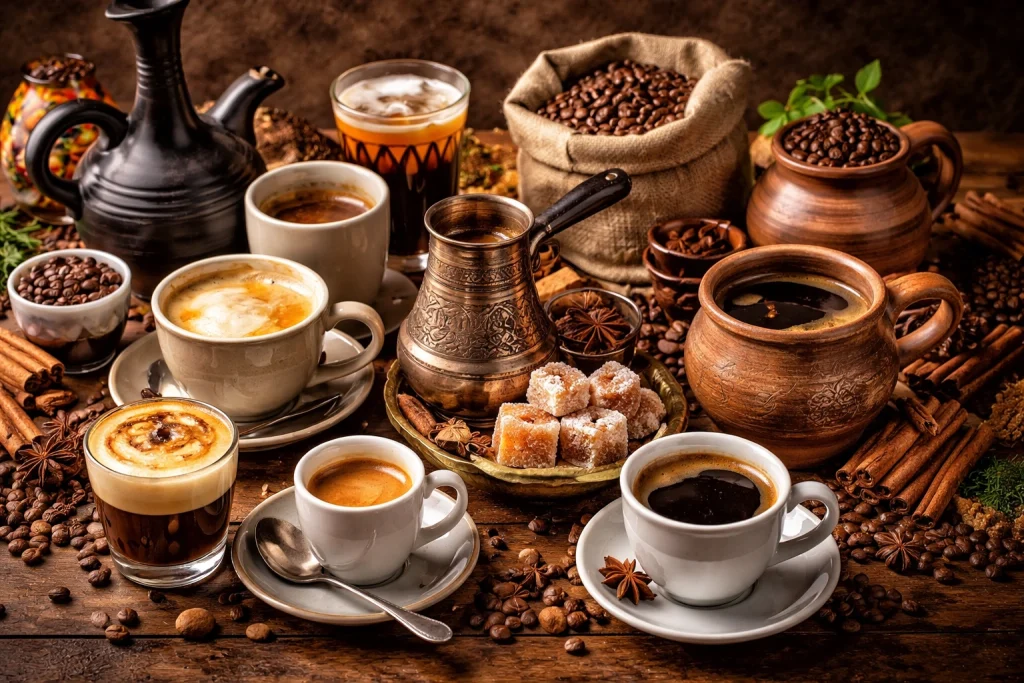
This section highlights distinct preparation styles, typical flavors, and social roles of coffee in four key regions. Each entry names common brewing methods, ceremonial or everyday habits, and the tastes a visitor can expect.
Coffee in Africa
Ethiopia anchors East African coffee culture with the long-standing coffee ceremony. Hosts roast green beans over charcoal, grind them by hand, and brew in a small pot called a jebena. Guests receive several small, strong cups often served with popcorn or sweets. The brew tends to be bright, floral, and complex because many Ethiopian coffees are heirloom varieties grown at high altitude.
In other African countries like Kenya and Rwanda, washed processing and high-altitude farms produce crisp acidity and red-fruit notes. Coffee often appears in markets and small cafés rather than formal ceremonies. Producers and baristas focus on single-origin clarity and traceability today.
Coffee in Latin America
Latin America serves most of the world’s mild, balanced coffee. Brazil grows large volumes of low-acidity, chocolatey beans used in espresso blends. Colombia and Costa Rica emphasize washed processing, producing clean, nutty, and citrus-toned cups. Small farms in Guatemala and Honduras bring higher-altitude acidity and floral notes.
Daily drinking is often simple: filtered drip coffee at home, strong espresso in urban cafés, and coffee with milk at breakfast. Specialty cafés highlight single-farm lots and direct trade. Many buyers look for clear tasting notes, roast dates, and farm origin when choosing beans.
Coffee in Asia
Asia shows wide variety: Indonesia produces earthy, full-bodied coffees like Sumatran and Sulawesi, often using wet-hulling for heavy body and low acidity. Vietnam is a major producer of robusta used in strong, sweet drinks such as cà phê sữa đá—robusta with condensed milk over ice. Japan focuses on precision brewing and subtle flavors, favoring pour-over and light roasts.
In South Korea and Taiwan, café culture blends specialty techniques with social spaces; cold brew and siphon coffee are common. Across Asia, preparation ranges from rustic stovetop methods to meticulous single-cup pours, with flavor profiles spanning smoky and herbal to clean and delicate.
Coffee in the Middle East
The Middle East preserves long social and ceremonial coffee traditions. Turkish and Arabic coffee use very finely ground beans boiled or simmered with water, often in a small pot (ibrik or cezve). Drinks are served unfiltered in tiny cups, sometimes flavored with cardamom or cloves, and sugar level is set during brewing.
Serving coffee remains a sign of hospitality. In Gulf countries, Qahwa accompanies dates and family gatherings. The brew is typically light to medium roast with a spiced aroma and a thick, sediment-bearing finish. Modern cafés mix traditional coffee with Western espresso drinks, but regional rituals still guide serving and etiquette.
Iconic Coffee Drinks by Region
This section highlights distinct brewing styles, key ingredients, and how people serve and drink these coffees. Each entry describes preparation, taste, and cultural context.
Espresso and Italian Specialties
Espresso forms the base for many Italian drinks. Baristas pull a short, concentrated shot using finely ground beans and high pressure. It has a strong, bitter flavor and a layer of crema on top.
Common Italian specialties include:
- Cappuccino: Equal parts espresso, steamed milk, and foam. Often served only in the morning.
- Macchiato: Espresso “stained” with a small amount of milk or foam.
- Latte: More steamed milk than espresso, milder and creamier.
Italian cafés focus on speed and consistency. They use dark-roast blends and precise tamping and extraction times. Service is often at the bar, standing, which keeps orders quick.
Turkish Coffee
Turkish coffee uses very finely ground beans boiled in a cezve (small pot). It is brewed with water and sugar if desired, not filtered, so grounds settle in the cup.
Key points:
- Texture and flavor: Thick, strong, and often slightly gritty due to unfiltered grounds.
- Serving ritual: Poured slowly so grounds remain in the pot, served in small cups. Sweetness levels are specified before brewing.
- Cultural role: Common at social visits and fortune-telling traditions where foam and grounds can have symbolic meaning.
Brewing technique matters: low heat and careful foam control create the best cup. Freshly roasted, medium-dark beans work well for balanced bitterness and aroma.
Ethiopian Coffee Ceremony
The Ethiopian coffee ceremony is a social ritual centered on freshly roasted beans. Hosts roast green beans over an open flame, then grind them and brew in a small pot called a jebena.
Ceremony steps:
- Roasting: Guests smell and watch as beans darken.
- Grinding and brewing: Ground by hand, brewed slowly in the jebena.
- Serving: Poured into small cups, usually three rounds are offered. The first cup is strongest, the last is mildest.
This ceremony emphasizes hospitality and time spent together. Light to medium roasts highlight floral and fruity notes typical of Ethiopian coffee. It serves both as a drink and a way to bond.
Vietnamese Egg Coffee
Egg coffee blends strong coffee with a sweet, whipped egg cream. It originated in Hanoi when milk was scarce, and egg yolk added richness and sweetness.
Preparation basics:
- Coffee: Strong drip or dark-roast espresso-style brew.
- Egg cream: Egg yolk whipped with sweetened condensed milk until frothy and pale.
- Assembly: Egg foam spooned over hot or iced coffee, sometimes served in a small bowl or glass cup set over a saucer.
Taste and texture combine bitter coffee and silky, sweet foam. It reads like a dessert and is often enjoyed slowly. The drink showcases local ingredients and a creative response to wartime shortages.
Coffee Production and Trade
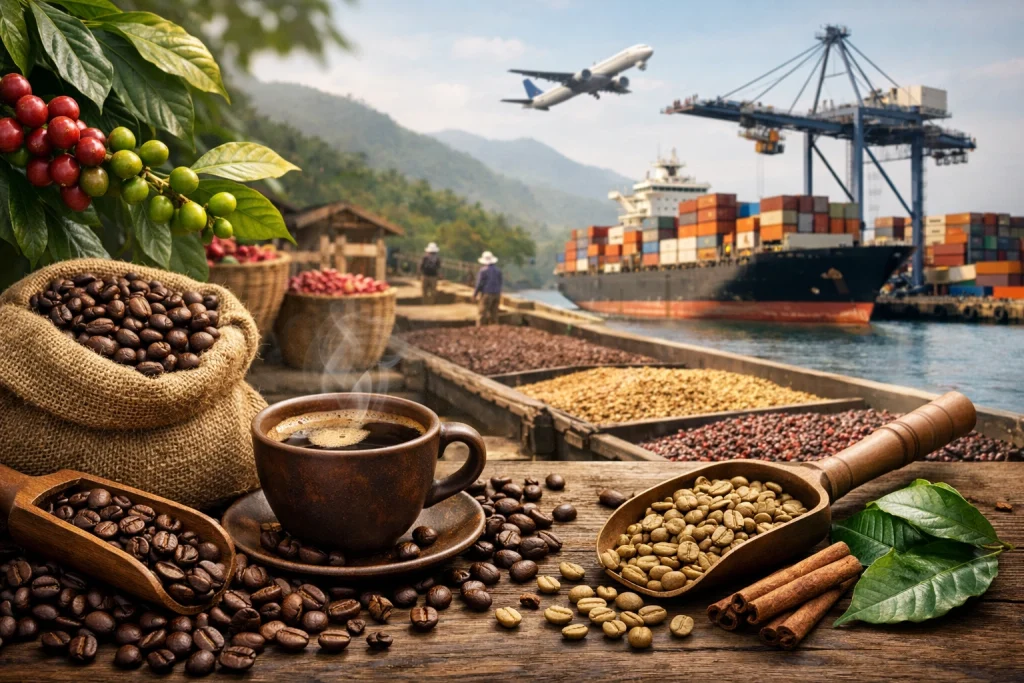
Coffee production concentrates in a few countries and moves through a long trade network from farm to roaster. Key topics include which countries grow most coffee, how cherries are harvested, and the stages coffee passes through before it reaches consumers.
Major Coffee Producing Countries
Brazil leads global production, supplying over a third of the world’s coffee and serving both commodity and specialty markets. Vietnam follows as the second-largest producer, mainly of robusta beans used in instant coffee and blends. Colombia, Indonesia, and Ethiopia round out top producers, each known for distinct bean types and flavor profiles.
Production mixes arabica and robusta. Arabica dominates specialty and higher-value markets. Robusta offers higher yields and disease resistance and feeds bulk markets. Shifts in weather, pests, and global demand can change output year to year, affecting prices worldwide. For production statistics, the International Coffee Organization and the USDA provide authoritative data and trend reports.
Coffee Harvesting Methods
Two main harvesting methods exist: selective hand-picking and strip harvesting. Hand-picking collects only ripe cherries, giving higher cup quality but raising labor costs. Strip harvesting removes all cherries at once, often by machine or hand, which lowers costs but mixes ripe and unripe fruit.
Post-harvest processing—wet (washed), dry (natural), and honey—affects flavor. Washed processing emphasizes acidity and clarity; natural processing boosts sweetness and body. Choice of method depends on farm size, climate, and target market. Labor availability and certification demands (like Fair Trade) also shape harvesting choices and farm income.
Global Coffee Supply Chain
The supply chain moves coffee from small farms to global buyers through several steps: processing, milling, trading, roasting, and retail. Traders and exporters buy processed green beans at origin, often using commodity exchanges and direct contracts. Major importers include the United States, Germany, and Japan.
Logistics include shipping, warehousing, and inventory management; price risk is commonly managed with futures and contracts. Roasters add value by blending and roasting, then sell to cafes, retailers, and consumers. Sustainability and traceability pressures push more firms to use direct trade, certification, and digital traceability tools to link farms to final buyers. For trade rules and statistics, consult the FAO and the International Coffee Organization for global market data.
Sustainability in Coffee Cultivation
Coffee farming affects land, water, and people. Efforts focus on reducing deforestation, improving farmer incomes, and keeping farms resilient to climate change.
Environmental Impact
Coffee production often occurs in tropical forests with high biodiversity. Clearing land for sun-grown coffee can drive deforestation and habitat loss. Shade-grown systems keep tree cover, support birds and insects, and help maintain soil health.
Water use and agrochemical runoff matter for nearby rivers and communities. Farmers who use mulching, compost, and cover crops cut erosion and reduce fertilizer needs. Newer approaches like regenerative practices and climate-smart farming aim to lower greenhouse gas emissions and increase carbon storage on farms.
Breeding and planting climate-resilient coffee varieties also reduces risk. Some programs promote higher-yield or disease-resistant plants so farmers can produce more on less land. That limits pressure to convert more forest to farmland.
Ethical Sourcing Initiatives
Companies and NGOs run programs to trace coffee from farm to cup. Traceability helps ensure origin, quality, and that farmers get better prices. Certification schemes, direct trade agreements, and farmer cooperatives are common tools.
These initiatives fund training in sustainable agronomy, pest management, and post-harvest processing. Training raises cup quality and crop yields, which can boost incomes. Some buyers pay premiums for verified sustainable or specialty lots, giving farmers funds to invest in their farms.
Third-party audits and digital trace systems check compliance and build consumer trust. Still, the effectiveness varies by program and local context. Long-term success depends on consistent market demand and continued technical support.
Fair Trade Practices
Fair trade sets minimum prices and buyer commitments to protect smallholder incomes. It often includes an additional social premium for community projects like schools or clinics. These rules reduce the risk that farmers lose money when global prices fall.
Cooperatives play a key role by pooling harvests, negotiating contracts, and investing in milling equipment. This improves bargaining power and lowers costs per farmer. Fair trade also encourages transparent contracts and timely payments, which stabilize household finances.
Challenges remain: certification costs, paperwork, and access to markets can limit participation. Combining fair trade with training, access to credit, and value-added processing helps farmers capture more of the final coffee value.
Coffee Trends Around the World
Coffee culture now blends craft, convenience, and new markets. Roasters and shops push quality and sustainability while tech and changing tastes open growth in Asia, Africa, and the Middle East.
Third Wave Coffee Movement
The Third Wave focuses on coffee as a craft product, valuing bean origin, processing, and precise brewing. Roasters source single-origin lots and publish farm and mill details. Baristas use scales, timers, and pour-over methods to highlight distinct flavor notes like citrus, chocolate, or florals.
They also adopt transparency on roast profiles and cupping scores. Many cafes offer tasting flights and brewing classes. This movement drives higher prices for specialty lots and encourages direct trade contracts that pay farmers more for quality.
Equipment matters: precision grinders, temperature-stable espresso machines, and manual brewers appear in shops worldwide. Consumers interested in flavor now demand traceability and consistency in every cup.
Specialty Cafés Worldwide
Specialty cafés now combine high-quality coffee with local tastes and design. In cities like Melbourne, Seoul, and Portland, shops pair flat whites or single-origin pour-overs with minimalist interiors and knowledgeable staff. They sell packaged beans with roast dates and brewing guides.
Menus often include coffee styles adapted to regional preferences. For example, Hong Kong’s yuenyeung mixes coffee and tea, while some Middle Eastern cafés offer spiced, cardamom-forward brews. Many cafés also promote plant-based milk, nitro coffee, and cold brews to meet evolving demand.
Sustainability features appear in operations: compostable cups, reusable programs, and partnerships with ethical importers. Loyalty apps and online stores help specialty cafés reach regulars and shipping customers beyond the shop.
Emerging Coffee Markets
Emerging markets show fast growth in consumption and specialty interest. In Southeast Asia, Vietnam and Indonesia expand beyond robusta export farms to build local specialty scenes. African markets like Ethiopia and Kenya see growing domestic cafés that showcase origin coffees once sold mostly overseas.
Middle Eastern markets invest in modern café chains and local roasting. These regions blend traditional coffee rituals with modern preparation, creating hybrid menu items and distinct service styles. Urbanization and higher incomes drive café visits among younger consumers.
Market growth also attracts tech and retail investment. Mobile ordering, cashless payments, and automated equipment help scale service while maintaining quality. Buyers in emerging markets increasingly seek direct-trade beans and local roasting to keep value within producing countries.
Unique Coffee Experiences
Coffee rituals and gatherings shape how people taste and share coffee worldwide. Local shops, historic houses, and lively festivals offer distinct drinks, brewing methods, and social customs to explore.
Traditional Coffee Houses
Traditional coffee houses serve as social hubs and keep old brewing methods alive. In places like Vienna, Istanbul, and Cairo, patrons sit for hours over small cups while conversation and newspapers shape the visit. These houses often follow strict serving traditions—think cezve in Turkey or a thick, cardamom-spiced Arabic brew—so the drink reflects regional flavor and ritual.
Many historic houses keep original interiors and rules, such as no loud music and extended table seating. Visitors should expect slower service, small portions, and chances to learn customs from staff or long-time regulars. Practical tip: check local etiquette—some places reserve certain tables or expect cash.
| City/Region | Typical Brew | Notable Custom |
|---|---|---|
| Vienna | Melange (espresso + milk) | Long sitting, chess or reading |
| Istanbul | Turkish coffee (finely ground) | Served with glass of water, fortune reading |
| Yemen/Levant | Spiced Arabic qahwa | Served in small cups during gatherings |
Coffee Festivals and Events
Coffee festivals showcase producers, roasters, and brewing tech in one place. Events like trade expos and local harvest festivals let attendees sample single-origin beans, watch cuppings, and see barista competitions. These events reveal flavor differences across regions and explain processing steps like washed vs. natural.
Attendees can meet growers and buy fresh roasted beans or learn hands-on brewing techniques. Many festivals list workshops, tasting flights, and market stalls on their program. Tip: bring a notebook or phone for tasting notes, and arrive early for popular demonstrations.
FAQS
What is coffee culture?
Coffee culture means how people prepare, serve, and drink coffee in different places. It also includes rituals, social habits, and local styles that shape daily life.
How do coffee traditions differ by country?
Some places favor quick, small drinks like espresso. Others prefer long, milky brews or strong, spiced pots. Local climate, history, and trade patterns shape these differences.
Is coffee more about caffeine or social life?
Both matter. Many drink coffee for energy. In many cultures, coffee also supports conversation, business, and family time.
Can visitors follow local coffee etiquette?
Yes. Simple steps help: watch how locals order, avoid loud phone calls in a cafe, and match the pace—stand for a quick espresso or linger where people socialize.
What types of coffee should people try?
Try local specialties: single-shot espresso in Italy, long brewed coffee in Sweden, ceremony-style coffee in Ethiopia, and sweet, cardamom-spiced cups in parts of the Middle East.
How does coffee impact local economies?
Coffee supports farmers, roasters, cafes, and exporters. It can boost tourism and local jobs. Prices and trade policies affect livelihoods.
Quick tips for tasting coffee:
- Smell first. Aroma signals flavor.
- Sip slowly. Let it cool a bit to notice subtle notes.
- Try black before adding milk or sugar to learn the base flavor.
Conclusion
Coffee links many lives across the globe. It shapes daily routines, work habits, and social spaces in diverse cultures.
It supports millions of farmers and drives trade in many countries. Economic ties, from small farms to global markets, remain vital.
Preparation styles and rituals show local taste and history. These traditions keep coffee fresh and relevant in new generations.
Sustainability and fair trade are growing priorities. Consumers and producers increasingly focus on long-term environmental and social health.